
This post contains affiliate links. If you purchase through our links, we may earn a small commission at no extra cost to you. See our Affiliate Disclosure for details.
Jumping Spider Care: Start Here
Everything you need to keep a happy, healthy spood — organized by topic. New keepers: read the beginner guide first, then set up the enclosure before bringing your spider home.
New Owner Essentials
- Jumping Spider Care: The Complete Beginner Guide
- Jumping Spiders as Pets: The Ultimate Beginner’s Guide
- Pet Jumping Spider: How to Choose, Set Up & Care for Your First Spider
- Jumping Spiders for Sale: Where to Buy
Habitat & Setup
- Jumping Spider Enclosure: Complete Setup Guide
- Temperature & Humidity: The Ideal Setup
- Best Terrarium Plants for Bioactive Setups
- Bioactive Terrarium Isopods: Setup Guide
- Jumping Spider Supplies: Every Product You Need
Feeding & Health
- What Do Jumping Spiders Eat? Complete Feeding Guide
- Can Jumping Spiders Eat Mealworms?
- Jumping Spider Molt: Signs, Stages & What to Do
- How Long Do Jumping Spiders Live? Lifespan by Species
Species & Behavior
- Types of Jumping Spiders: 10 Amazing Species
- Regal Jumping Spider Care (Phidippus regius)
- Peacock Jumping Spider: Care & Behavior
- Male vs. Female: How to Tell the Difference
- Are Jumping Spiders Friendly?
- Do Jumping Spiders Bite?
- Are Jumping Spiders Poisonous?
The Curious Chronicles of Jumping Spiders: Nature’s Tiny Acrobats
Meet the Marvels of the Microworld
In the vast web of nature’s wonders, one tiny predator stands out not for its size, but for its charisma. They’re the clowns of the arachnid world, the daredevils of the grasslands and garden beds. They go by many names—jumping spiders, salticids, leapin’ legs, or the internet’s favorite: spoods.
Scientifically, they belong to the Salticidae family, a group of spiders containing over 6,000 documented species. With compact, stocky bodies, keen eyes, and legs built for spring-loaded action, jumping spiders have evolved not to build webs for trapping prey, but to hunt like tiny feline stalkers—measuring, crouching, and leaping.
They don’t spin webs to feed. No, spoods are all about that stealth game. They stalk their prey like panthers, then leap with deadly precision. Think of them as eight-legged ninjas with binocular vision and trampoline legs.

Not Your Average Spider
If the word “spider” gives you the chills, it’s time to meet the exception to the rule. Spoods have won hearts across the internet. Why? Their eyes.
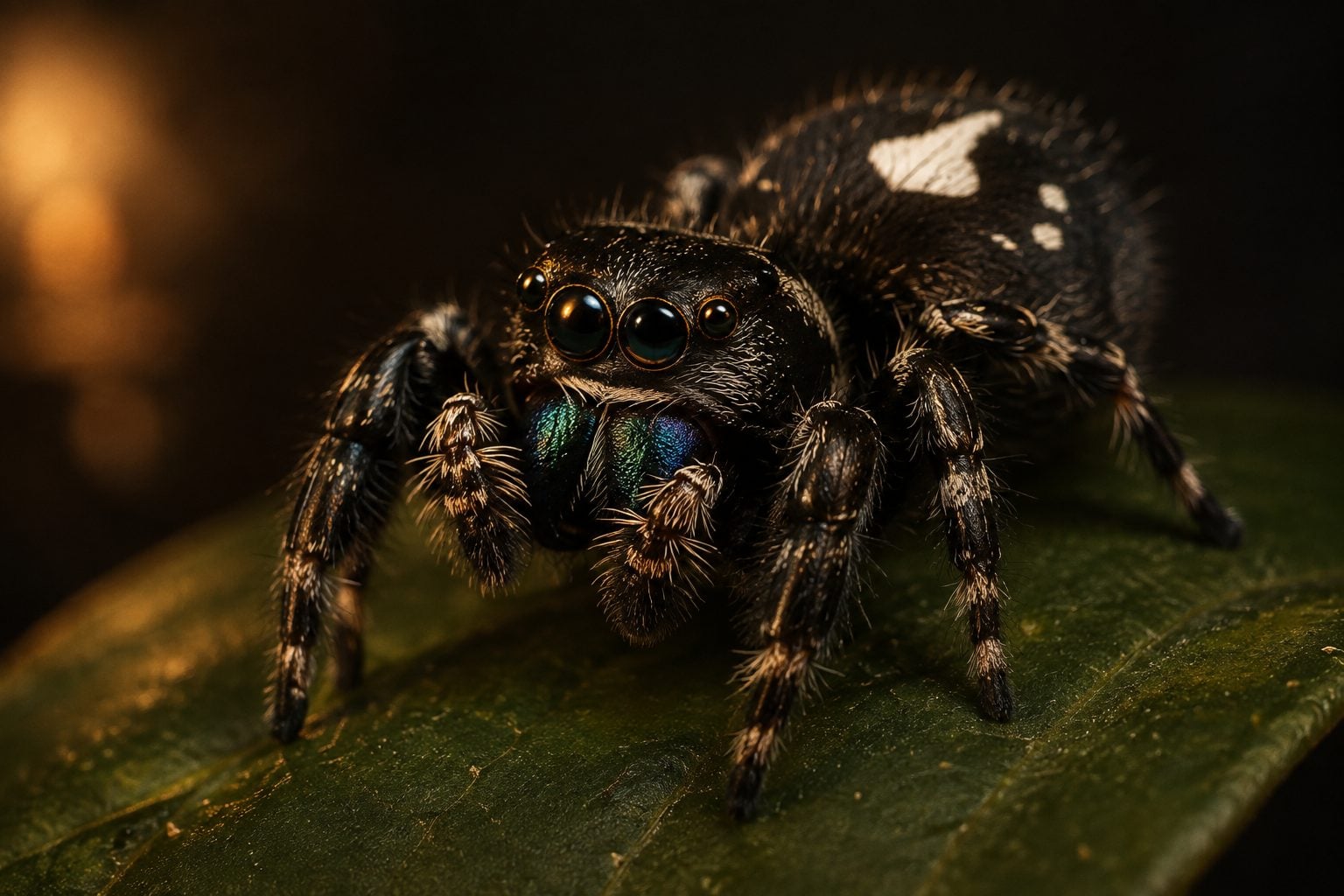
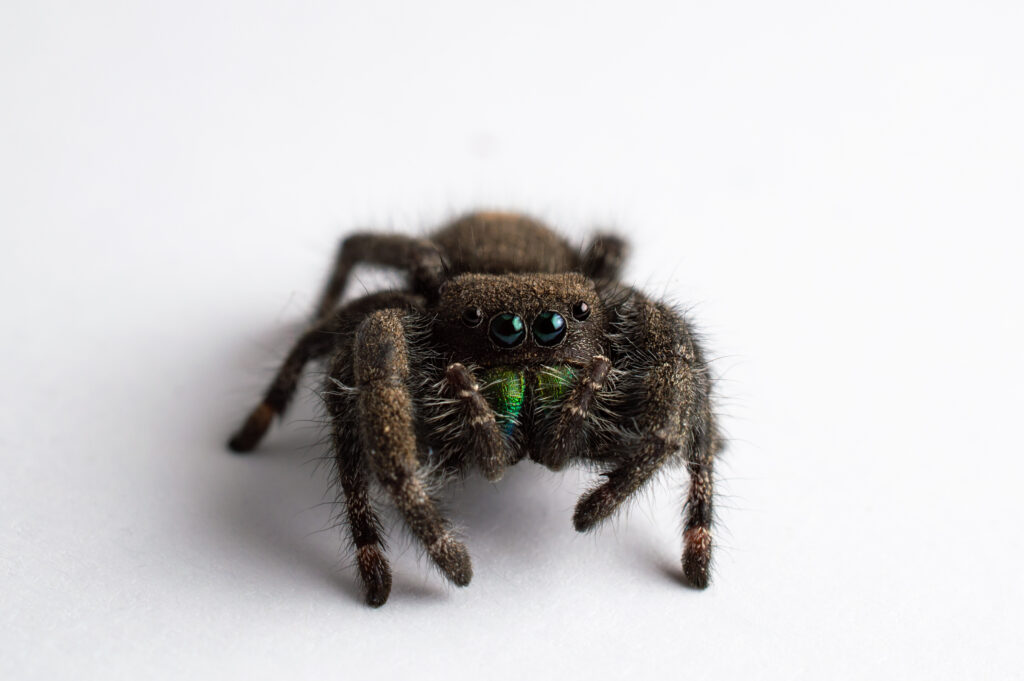
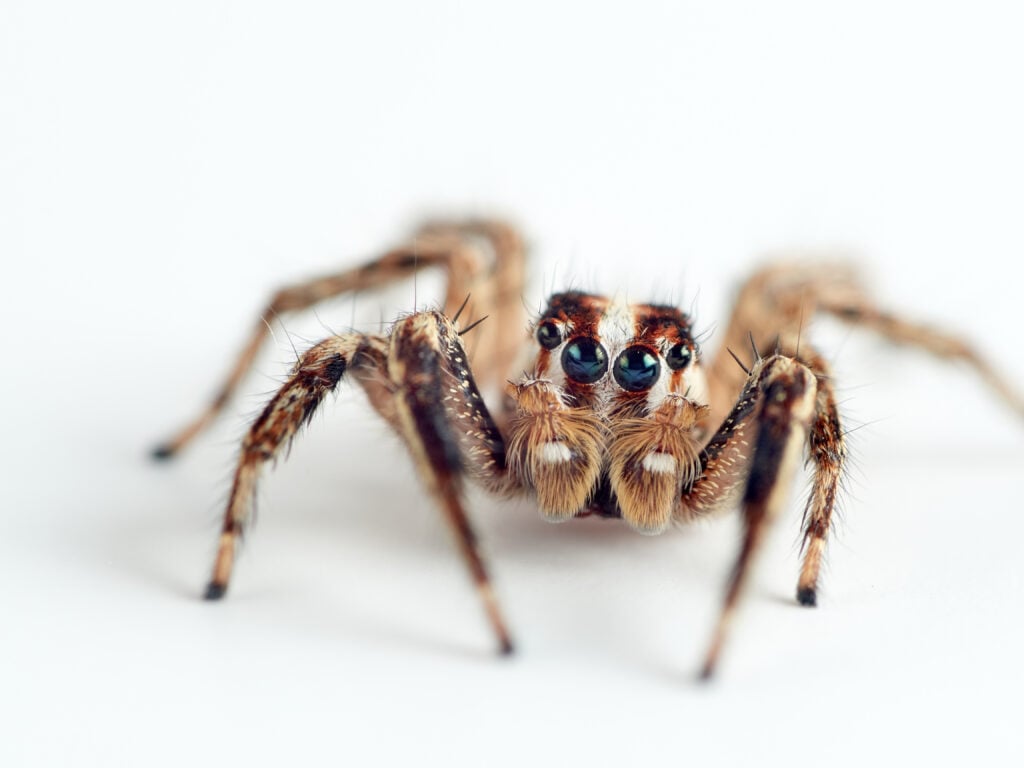
Jumping spiders boast among the best vision in the arachnid world, with four pairs of eyes—two tiny lateral ones, a pair of large frontal lenses, and two more smaller ones on the sides. Their main eyes are huge, expressive, and forward-facing, giving them a curiously human vibe.
They don’t skitter across the floor like your typical house spider. They hop, look at you sideways, tilt their head as if they’re questioning your intentions. People who once feared arachnids now collect Phidippus regius—a regal jumping spider species—as pets.
Built to Jump, Born to Hunt
Why do they jump? Because it works.
A jumping spider’s leap isn’t a simple leg press. It’s a hydraulic explosion. They pump blood into their hind legs, rapidly extending them to spring through the air. They can leap over six times their body length with precision and grace. For perspective, that would be a human jumping across two school buses.
But they’re not reckless. Every leap comes with a safety line—a silk tether anchored before takeoff. Should the spood miss its mark, it swings harmlessly back to its starting point, ready to try again.
They stalk their prey from a distance. Once they calculate the angle, they leap, sink their fangs in, and dinner is served. No web. No waiting. Just raw agility and strategy.
Spoods of Many Colors and Cultures
From the vivid hues of Maratus volans, the peacock spider, to the shimmering green fangs of Phidippus audax, jumping spiders display astonishing diversity. Some wear neon suits of armor. Others blend into bark, leaves, or rocks like little camouflaged ghosts.
Their global distribution spans deserts, rainforests, urban gardens, and even the occasional windowsill. While North America is home to many popular pet species like Phidippus regius and Phidippus otiosus, other continents boast their own eccentric members. In Australia, the male peacock spider courts females with elaborate dances and fan-like abdomen displays that rival any nature documentary.
Each species has its own flair. Some wave their front legs in ritualistic dances. Others bob and weave like prizefighters. Every action, however comical or colorful, serves a specific evolutionary purpose.
The Personality Behind the Pedipalps
Spoods are smart. In tests, jumping spiders have shown the ability to solve puzzles, recognize prey from images, and even display signs of curiosity. Unlike many spiders that rely solely on reflexes, salticids appear to plan their actions.
They’ll circle prey, climb nearby objects to get a better vantage point, and test their jumps before committing. They don’t walk blindly into danger. Instead, they observe, wait, and act with precision.
Pet owners often report distinct personalities among their spoods. Some are bold and inquisitive, marching up to the glass when their human approaches. Others are shy, ducking behind foliage or pretending to be invisible. They may be tiny, but these little leap-lords come packed with charm.
Life in the Wild—and in Our Homes
In the wild, jumping spiders feast on insects like flies, mosquitoes, moths, and even other spiders. Their diet makes them excellent pest control agents. No web tangles, no sticky mess—just active hunting.
In captivity, they’re easy to care for and wildly entertaining. Their habitats are small—often a well-ventilated container with climbing structures and hiding spots. They need access to humidity, warmth, and live prey like fruit flies or small crickets.
Unlike tarantulas, they don’t live for decades. Most jumping spiders only live about one year, with some species stretching closer to two. Despite their brief lifespan, they leave lasting impressions—both in their owner’s hearts and on social media timelines.
The Rise of the Spoodfluencer
In recent years, jumping spiders have leapt into pop culture. Instagram, TikTok, and YouTube are filled with videos of regal jumping spiders waving, peeking through enclosures, or even wearing custom spider hats.
Accounts like “Lucas the Spider,” a fictional animated arachnid, helped dissolve fear and promote affection. Meanwhile, real-life pet jumping spiders have names, personalities, and fanbases. People are naming their spoods everything from “Sir Jumpsalot” to “Noodle.”
The appeal is obvious: these spiders don’t behave like we expect. They show interest. They react. They connect. It’s like keeping a tiny alien adventurer in your room—curious, quirky, and always up to something.
Misconceptions, Myths, and the Truth
No, jumping spiders are not dangerous to humans. Their bite is extremely rare and generally results in a mild, mosquito-like irritation. They’re more likely to flee than fight.
And no, not all spiders build webs. While orb-weavers create intricate traps, salticids rely on stealth and movement. They’re hunters, not fishermen.
Jumping spiders are also not pests. In fact, they’re beneficial. Gardeners often welcome them as natural pest control. Indoors, they’re curious wanderers, not invaders. Most don’t even stay long—just exploring before hopping off to new horizons.
Why We Love the Spoods
So why has the humble jumping spider captured our collective fascination?
Perhaps it’s their faces—so alien yet expressive. Maybe it’s their movements—so deliberate and full of intent. Or maybe it’s the unexpected personality they exhibit: fearless yet cautious, solitary yet engaging, alien yet familiar.
They break the mold. In a world that often vilifies spiders, spoods invite affection. They turn arachnophobia into arachnophilia. They remind us that even the smallest creatures can carry vast complexity, beauty, and wonder.
New keeper? Our complete jumping spider supplies guide covers every product you need — enclosures, feeders, substrate, and more — with Amazon links and pricing.
The Spood Future
As scientific research grows, so does our understanding of jumping spiders. Studies continue to explore their vision, hunting behavior, and even cognition. In the lab, spoods are contributing to new understandings in robotics, vision systems, and motion tracking.
Meanwhile, in homes across the world, more people are discovering the joy of keeping salticids as pets. Breeders offer beautiful morphs. Enclosures become decorated jungles of moss and twigs. Photos and videos flood the internet—each one a snapshot of curiosity, charisma, and charm.
Whether you’re a seasoned arachnophile or a new admirer, one thing is certain: once you meet a spood, you never see spiders the same way again.
Ready to bring home a spood? Explore species like Phidippus regius, Phidippus audax, or even Maratus volans. These pint-sized predators aren’t just fascinating—they’re lovable.
Want help building the perfect spood habitat or choosing your first jumping spider? Head over to our guides and care sheets or jump back to the topic directory above. The world of salticids is waiting, one leap at a time.