
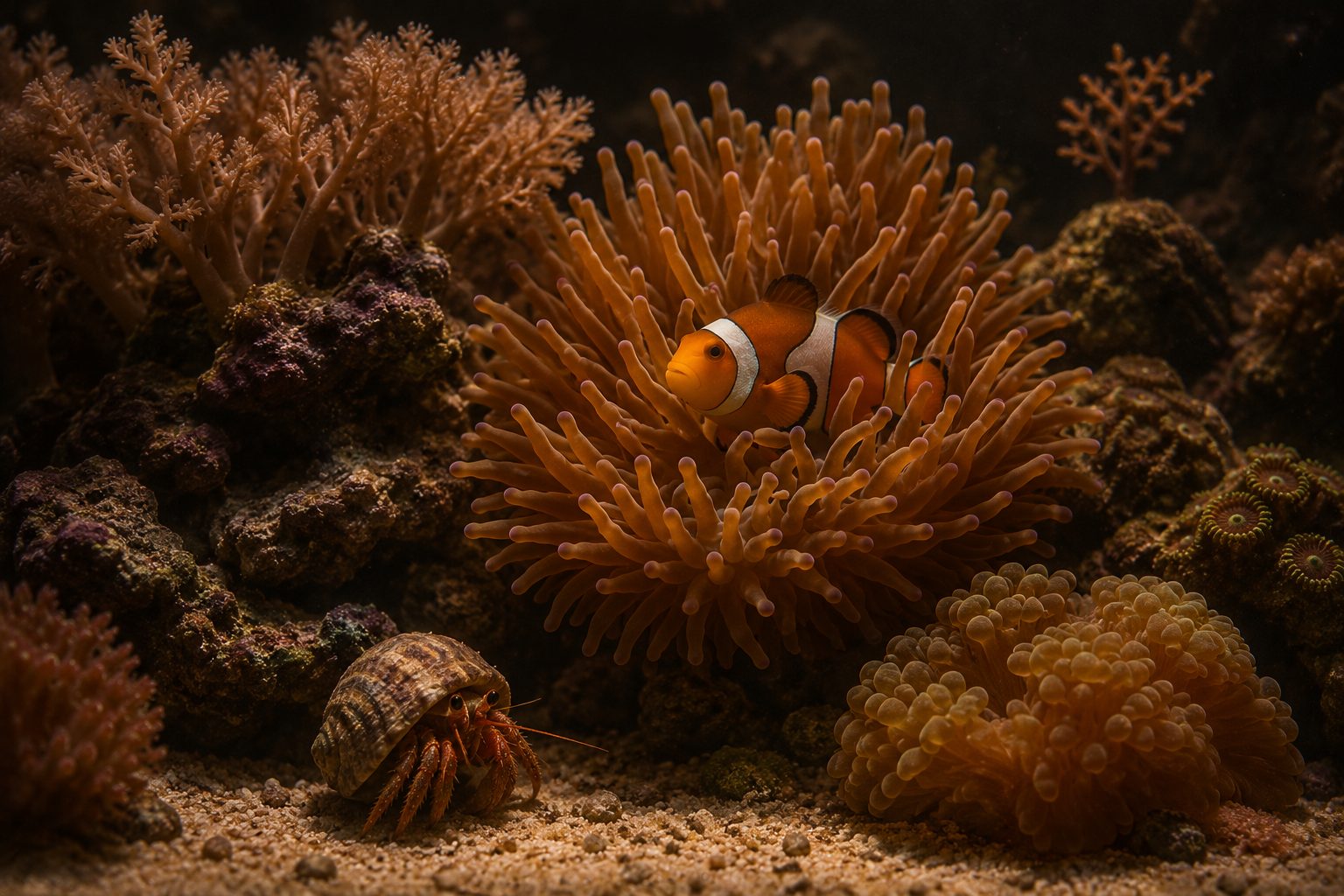
Saltwater Pets 101: Your Guide to Stunning Marine Aquariums
Saltwater pets bring a vibrant slice of the ocean into your home. Their dazzling colors, fascinating behaviors, and the dynamic ecosystems they require make saltwater aquariums both rewarding and complex.
Saltwater Setup Guides
What a marine tank actually involves before you spend anything.
- Saltwater Aquarium Setup — The essential steps, in order, for a first marine tank.
- Cube Saltwater Tank — Setup, stocking and maintenance for a cube build.
This guide covers everything you need to know about saltwater pets, from beginner-friendly species to advanced setup considerations, helping you decide if the marine side of the hobby is right for you.
What Are Saltwater Pets?
Saltwater pets include any marine species kept in aquariums that require a saline environment. These include:
- Saltwater fish like Clownfish, Tangs, Gobies, and Wrasses
- Marine invertebrates such as shrimp, crabs, sea stars, and snails
- Corals and anemones, often part of reef aquarium setups
Unlike freshwater species, these animals are adapted to the unique chemistry of ocean water, which means they require more precise care.
Types of Saltwater Aquarium Setups
There are several saltwater tank styles, each suited to different goals and experience levels:
1. Fish-Only (FO)
- Just fish, no invertebrates or live rock
- Easier to maintain and ideal for beginners
2. Fish-Only with Live Rock (FOWLR)
- Adds live rock, which helps with biological filtration
- Aesthetic upgrade + functional benefits
3. Reef Tanks
- House fish, corals, and invertebrates
- Require strong lighting, stable water chemistry, and regular monitoring
- Best for experienced aquarists
Compare saltwater tank styles →
Is Saltwater Really That Hard?
Saltwater aquariums have a reputation for being difficult, but with the right knowledge, they’re entirely manageable.
Key Challenges:
- Maintaining salinity and stable parameters (pH, KH, calcium)
- Higher startup cost due to specialized gear
- More sensitive species compared to freshwater
Tip: Start with a FOWLR tank before attempting a reef setup.
Popular Types of Saltwater Fish
Choosing the right fish is essential for tank harmony and success. Here are some of the most popular types:
Beginner-Friendly
- Clownfish: Hardy, colorful, and reef-safe
- Damselfish: Tough and inexpensive
- Royal Gramma: Peaceful and vibrant
Intermediate to Advanced
- Tang species (e.g., Yellow Tang, Blue Tang): Require large tanks
- Wrasses: Active and colorful, some reef-safe
- Angelfish: Beautiful but some may nip corals
Full list of saltwater fish types →
Saltwater Invertebrates: Tiny Clean-Up Crew
Invertebrates play a vital role in maintaining your tank’s health:
- Cleaner shrimp: Eat parasites off fish
- Hermit crabs & snails: Control algae and detritus
- Sea stars & urchins: Add diversity, but need stable environments
These critters help automate tank maintenance and add character to your ecosystem.
Meet your marine invertebrates →
What Does ‘Reef-Safe’ Mean?
Some saltwater species are considered reef-safe, meaning they won’t harm corals or inverts. Others are aggressive or may nip.
- Reef-safe fish: Clownfish, Gobies, Blennies
- Use caution with: Angelfish, certain Wrasses, Triggers
Always research compatibility before stocking your tank.
Rare & Exotic Saltwater Fish
For experienced hobbyists, rare marine fish offer the ultimate bragging rights.
Examples:
- Mandarinfish: Stunning, but require a live copepod population
- Flame Angelfish: Bright red/orange, semi-aggressive
- Anthias species: Schooling fish, demanding but beautiful
While not for beginners, these species showcase the ocean’s incredible biodiversity.
Essential Equipment for Saltwater Aquariums
A successful saltwater setup relies on specialized tools:
- Protein skimmer: Removes organic waste
- Reef lighting (LED): For coral growth and vibrant displays
- Powerheads: Simulate ocean currents
- RO/DI water system: Ensures pure, contaminant-free water
- Heaters & chillers: Maintain optimal temperature
View our saltwater equipment checklist →
Common Mistakes to Avoid
Even seasoned hobbyists make errors. Watch out for:
- Skipping the nitrogen cycle
- Mixing aggressive with passive species
- Adding incompatible invertebrates
- Using tap water without RO/DI filtration
- Overcrowding or overfeeding
Patience and research are key to marine success.
Read: Top 10 saltwater aquarium myths →
Ready to Start Your Saltwater Journey?
Saltwater aquariums aren’t just about aesthetics—they’re thriving ecosystems you build and sustain. With proper research and planning, you can enjoy the beauty of coral reefs, curious invertebrates, and stunning marine fish right from your home.
Where to Learn More:
- Saltwater Aquarium Setup Guide →
- Beginner Marine Fish Care →
- Marine Equipment Essentials →
- Reef Tank Maintenance Tips →
Stay Salty, Stay Smart
Join our newsletter for tips, guides, and deep dives into the world of saltwater pets.
⬇Dive into your saltwater journey—start exploring today.
Prefer freshwater setups? Explore our freshwater pets guide, or browse the full aquatic pets hub. You might also enjoy our pages on aquarium snails and jellyfish keeping.