
Disclosure: This page contains affiliate links. If you purchase through our links, we may earn a small commission at no extra cost to you. See our Affiliate Disclosure for details.
If you’ve decided to bring home a jumping spider — congratulations, you’re about to meet one of the most charismatic, curious, and rewarding micro-pets on the planet. Before your spood arrives, you need the right setup. At ItsyBitsyPets, we follow the “setup first, animal second” approach: get the enclosure stable, the food supply ready, and the humidity dialed in before your new eight-legged friend shows up.
This guide covers every supply you need to get started — and only the supplies you actually need. No fluff, no upsells. Just the gear that keepers across the hobby have tested and trusted.
The Enclosure: Your Spider’s Whole World
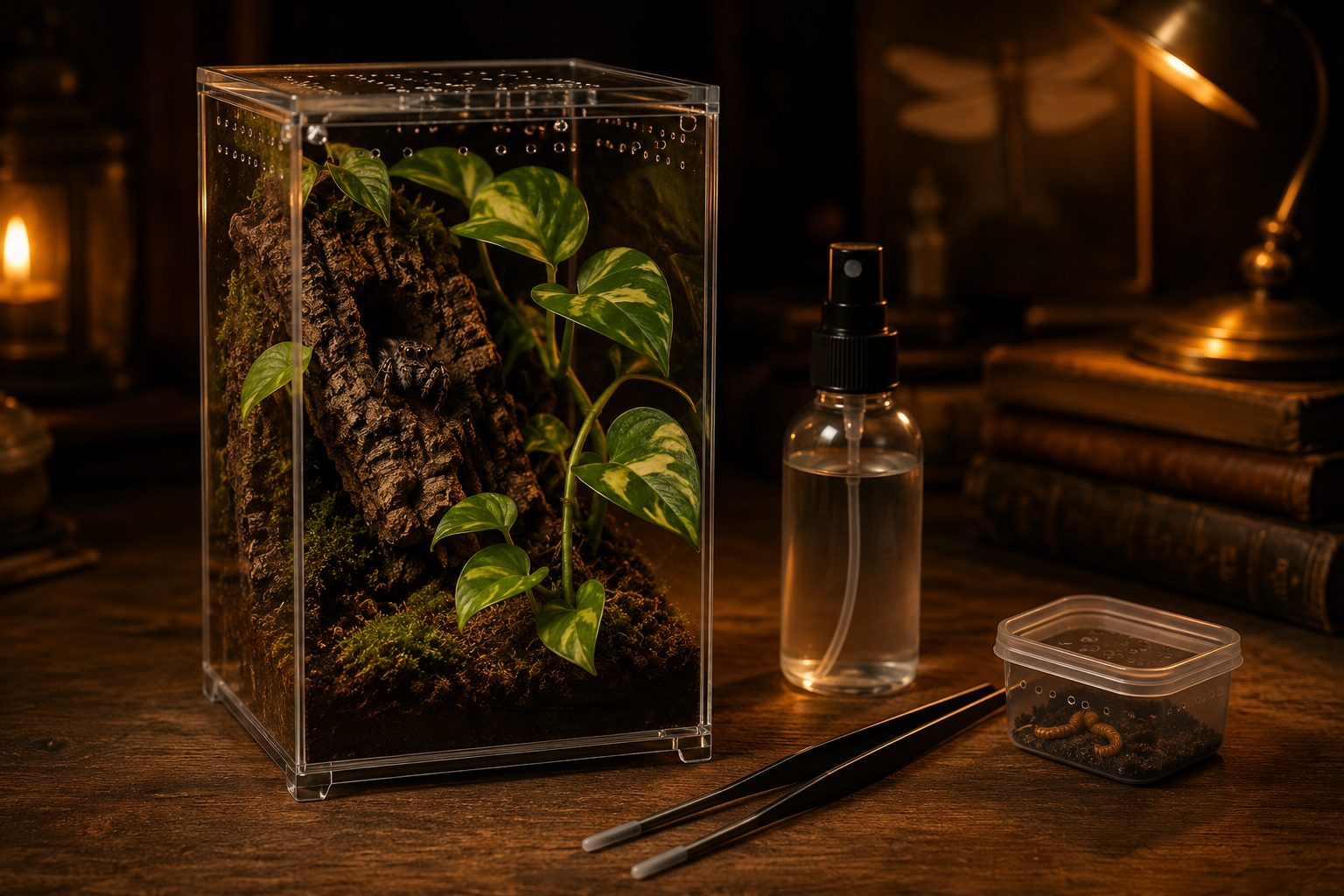
The Beginner Jumping Spider Kit
If you’re setting up your first spider, this is the whole list. Nothing fancy, nothing you’ll outgrow in a month.
- EctoTherm jumping spider enclosure — front-opening, escape-proof, and sized right for an adult
- Magnetic hanging water dispenser — the one thing most beginners skip, and the one they regret skipping
- Exo Terra mini mister — a light misting beats a water bowl your spider can drown in
The single most important purchase you’ll make is the enclosure. Jumping spiders are arboreal — they live and hunt vertically — so height matters more than floor space. A proper enclosure needs front-opening access (to preserve web anchors on the lid), solid ventilation, and an escape-proof seal. Acrylic is the material of choice: lightweight, clear, and easy to clean.
For Slings and Juveniles: EctoTherm Small Enclosure
EctoTherm Jumping Spider Enclosure – Small (approx. 4×4×8″)
⭐ 4.6/5 · 328 reviews · Amazon’s Choice
This is the go-to starter enclosure for new spood keepers, and for good reason. The front-opening sliding door preserves your spider’s web anchors on the lid — a thoughtful design detail that makes daily feeding far less stressful for both of you. The acrylic is seamless, ventilation holes are sized to keep fruit flies in (where they belong), and the magnetic closure is secure without being fiddly.
If your spider is a sling or juvenile, start here. It’s the right size to keep prey items visible and catchable without overwhelming a small spider in too much open space.
Best for: Slings, juveniles, and first-time keepers.
For Adults: EctoTherm Jumping Spider Enclosure
EctoTherm Jumping Spider Enclosure
⭐ 4.6/5 · 328 reviews
When your jumping spider reaches adulthood — typically around 6–9 months depending on species — it’s time to upgrade to the medium. Same trusted EctoTherm build quality: front-opening door, escape-proof seal, premium acrylic. The extra vertical height gives your adult spider room to build a proper sleeping sac up top and stalk prey across the lower levels of the enclosure.
Many keepers buy both sizes upfront to avoid the stress of moving a spider mid-growth.
Best for: Adult jumping spiders (Phidippus regius, P. audax, P. otiosus).
Substrate: What Goes on the Floor
Jumping spiders aren’t burrowers, so substrate isn’t as critical as it is for tarantulas — but it still serves two important purposes: holding humidity and looking good. A thin layer (1–2 inches) of quality coconut fiber keeps the enclosure from drying out too fast and gives any escaped prey insects somewhere to hide temporarily.
Riare Natural Coconut Fiber Substrate
Riare 2-Pack Natural Coconut Fiber Substrate
⭐ 4.6/5 · 1,776 reviews · 2,000+ bought last month
Our pick
tiny feeding dishes — keeps feeders in one place instead of loose in the substrate
Riare is one of the top-selling substrate brands in the terrarium hobby. The compressed coco fiber bricks expand with water to fill your enclosure, hold humidity well without becoming soggy, and are completely safe for invertebrates. One 2-pack will last you months across one or two enclosures.
Pro tip: Expand only what you need and store the rest dry. A damp brick left unsealed can develop mold.
Feeding Dishes: Keep Things Tidy
Dropping live insects loose into an enclosure works, but a feeding dish makes life easier — it corrals prey items, keeps food off the substrate, and makes it easy to remove uneaten insects after feeding time. Magnetic dishes attach to the acrylic wall, keeping them at the height your spider actually hunts.
3-Pack Jumping Spider Feeding Dishes
3 PCS Jumping Spider Feeding Dish – Half Round, Magnetic
⭐ 4.4/5 · 65 reviews · Amazon’s Choice
The Beginner Jumping Spider Kit
If you’re setting up your first spider, this is the whole list. Nothing fancy, nothing you’ll outgrow in a month.
- EctoTherm jumping spider enclosure — front-opening, escape-proof, and sized right for an adult
- Magnetic hanging water dispenser — the one thing most beginners skip, and the one they regret skipping
- Exo Terra mini mister — a light misting beats a water bowl your spider can drown in
These half-round magnetic dishes are specifically designed for jumping spider enclosures — they attach flat to the acrylic wall, sit at a height your spider can access easily, and the shallow profile means prey can’t escape. The 3-pack gives you one for water droplets, one for prey items, and a spare.
Note on water: Jumping spiders don’t drink from standing water bowls easily. Mist one side of the enclosure daily instead (see below). A small dish with a damp cotton ball works as a secondary moisture source.
Live Food: What Your Spider Actually Eats
Jumping spiders are active hunters. They don’t accept dead prey — they want to stalk, pounce, and catch their food. The right feeder insects depend on the size of your spider: prey items should be no larger than half the spider’s body length.
For Slings and Juveniles: Flightless Fruit Flies
Josh’s Frogs Freshly Started Flightless Drosophila Hydei Fruit Fly Culture
⭐ 4.1/5 · 235 reviews · Overall Pick
Our pick
a purpose-made hide — somewhere to retreat means a calmer, more visible spider
Flightless fruit flies (Drosophila hydei) are the staple food for young jumping spiders — small enough to be manageable prey, nutritious, and available in live culture so they reproduce in the cup and stay fresh for weeks. Josh’s Frogs is one of the most respected names in the feeder insect hobby, and their freshly started cultures arrive actively producing flies.
How to feed: Tap a few flies into the enclosure 2–3 times per week. Remove any uneaten prey after 24 hours to reduce enclosure stress.
As your spider grows: Transition to small crickets, waxworms, or small dubia roaches sized appropriately to your spider’s body.
Misting & Humidity: Daily Hydration
Jumping spiders absorb moisture from water droplets — they don’t lap from standing water the way mammals do. Daily misting on one wall of the enclosure is how you keep your spider hydrated. Target humidity around 50–70%, misting once daily and allowing the droplets to evaporate over a few hours.
Exo Terra Mini Mister Spray Bottle
Exo Terra Mini Mister Spray Bottle, 16 oz
⭐ 4.5/5 · 541 reviews · Overall Pick
The Exo Terra Mini Mister produces a genuinely fine mist — not a harsh stream that can startle a small spider, but a gentle cloud of droplets that settles naturally on the acrylic walls. The 16 oz capacity means you won’t be refilling it constantly.
Tip: Use dechlorinated or filtered water to avoid mineral deposits building up on your acrylic.
Daerky Jumping Spider Water Dispenser
Daerky Jumping Spider Water Dispenser ⭐ 4.4/5 · 76 reviews · Reader Favorite
A magnetic hanging dispenser that keeps clean water available around the clock without soaking substrate or webbing. It attaches through the enclosure wall, so refills take seconds and barely disturb your spider — and it has quietly become the most popular item our readers buy.
Tip: Mount it at mid-height away from the silk retreat, and refresh the water every few days.
Your Complete Shopping List
| Item | Price |
|---|---|
| EctoTherm Small Enclosure | |
| EctoTherm Jumping Spider Enclosure (for when they grow) | |
| Riare Coconut Fiber Substrate 2-Pack | |
| Jumping Spider Feeding Dishes 3-Pack | |
| Josh’s Frogs Fruit Fly Culture | |
| Exo Terra Mini Mister | |
| Total (starter setup) | |
| Total (with adult enclosure) |
The Beginner Jumping Spider Kit
If you’re setting up your first spider, this is the whole list. Nothing fancy, nothing you’ll outgrow in a month.
- EctoTherm jumping spider enclosure — front-opening, escape-proof, and sized right for an adult
- Magnetic hanging water dispenser — the one thing most beginners skip, and the one they regret skipping
- Exo Terra mini mister — a light misting beats a water bowl your spider can drown in
Ready to Bring Home Your Spood?
With the right setup in place, jumping spiders are genuinely one of the easiest and most rewarding exotic pets you can keep. Get the enclosure stable, have your fruit flies producing, and do a few test misting sessions before your spider arrives.
For more on what to expect once your spider is home, visit our full Jumping Spider Care Guide.
All products listed were selected based on community recommendations, review quality, and availability on Amazon. Prices are accurate as of publication and may vary.