
This post contains affiliate links. If you purchase through our links, we may earn a small commission at no extra cost to you. See our Affiliate Disclosure for details.
Jumping spiders (family Salticidae) are the largest spider family on Earth, with over 6,400 described species across more than 640 genera. Their compact bodies, oversized forward-facing eyes, and curious hunting behavior have made them the most popular pet spiders in the hobby. But with so many types of jumping spiders out there, choosing the right species for your collection or simply identifying one you spotted in your garden can feel overwhelming.
This guide covers the most popular, most beautiful, and most beginner-friendly types of jumping spiders, whether you want a pet, want to photograph them, or just want to know what kind of jumper you found on your windowsill.
Bold Jumping Spider (Phidippus audax)
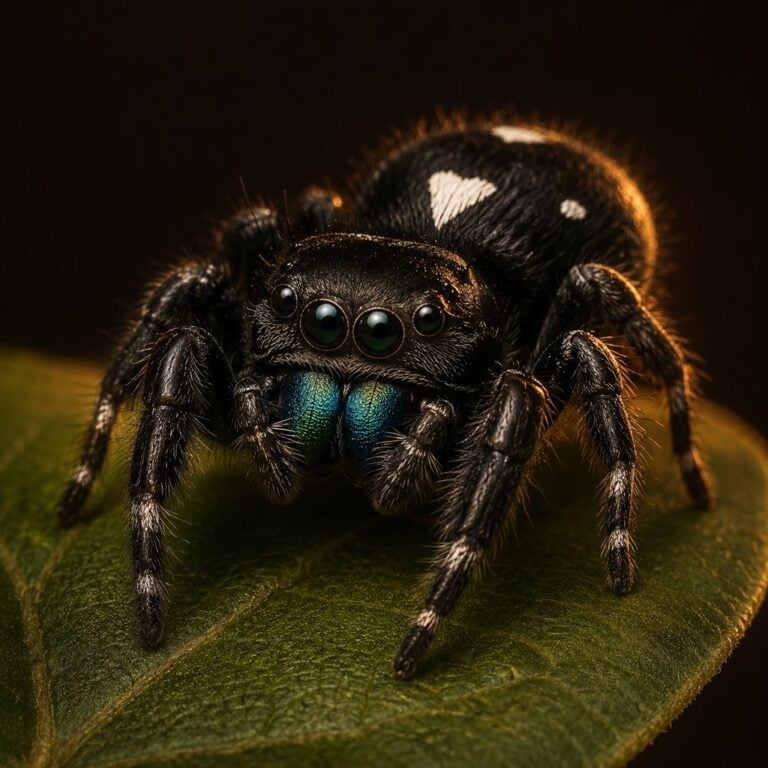
The bold jumping spider is arguably the most recognized jumping spider in North America. Found throughout the United States, Canada, and parts of Central America, these stocky black spiders are easy to spot thanks to the distinctive iridescent green or blue chelicerae (fangs) that shimmer in sunlight. Adults measure 8-19 mm in body length, with females being noticeably larger than males.
Bold jumpers are confident, inquisitive, and tolerate handling well, making them one of the best types of jumping spiders for beginners. They thrive in simple enclosures with moderate humidity and readily accept crickets, fruit flies, and other small feeder insects. Their lifespan is approximately 1-2 years. If you are curious about what to feed your spider, check out our guide on what jumping spiders eat.
Regal Jumping Spider (Phidippus regius)
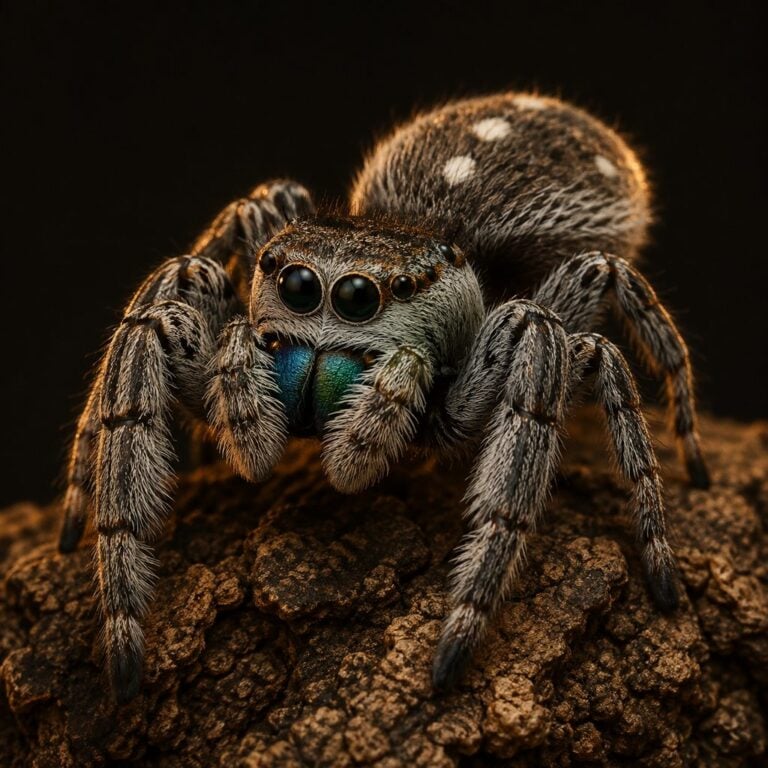
The regal jumping spider is the largest jumping spider in eastern North America, with females reaching up to 22 mm in body length. They are native to the southeastern United States, the Caribbean, and parts of the Bahamas. Regal jumpers display remarkable sexual dimorphism: males are typically black with white markings and iridescent green chelicerae, while females range from light gray to vivid orange with striking abdominal patterns.
Phidippus regius is the most popular pet jumping spider species worldwide, and for good reason. They are docile, easy to care for, and their large size makes them easier to observe and handle than smaller species. Captive-bred color morphs are increasingly available, and breeders have developed lines with enhanced orange, white, and even apricot coloration. If you are looking to add one to your collection, read our guide on jumping spiders for sale.
Recommended enclosure: The EctoTherm Small Arboreal Enclosure is ideal for P. audax — front-opening, escape-proof, with ventilation sized for small prey.
Tan Jumping Spider (Platycryptus undatus)
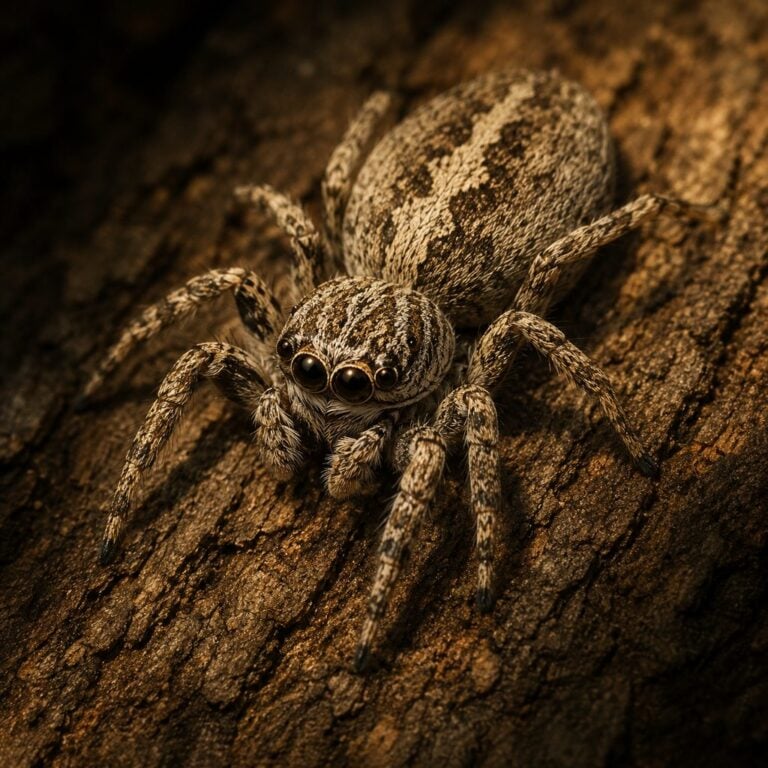
The tan jumping spider is one of the most commonly encountered jumping spiders in North America. They are flattened, bark-colored spiders that typically measure 9-13 mm and are frequently found on the exterior walls of buildings, fences, and tree trunks. Their cryptic brown and gray chevron-patterned markings provide excellent camouflage against wood and stone surfaces.
While not as flashy as Phidippus species, tan jumping spiders are fascinating to observe. They are exceptionally fast and agile, even by jumping spider standards. They can be kept as pets, though their smaller size and quicker temperament make them better suited for experienced keepers who enjoy observing natural hunting behaviors rather than handling.
Recommended enclosure: Regal jumping spiders are one of the largest US species — go straight to the EctoTherm Jumping Spider Enclosure for adults. The extra vertical height lets them build a proper sleeping sac up top and stalk prey below.
Zebra Jumping Spider (Salticus scenicus)
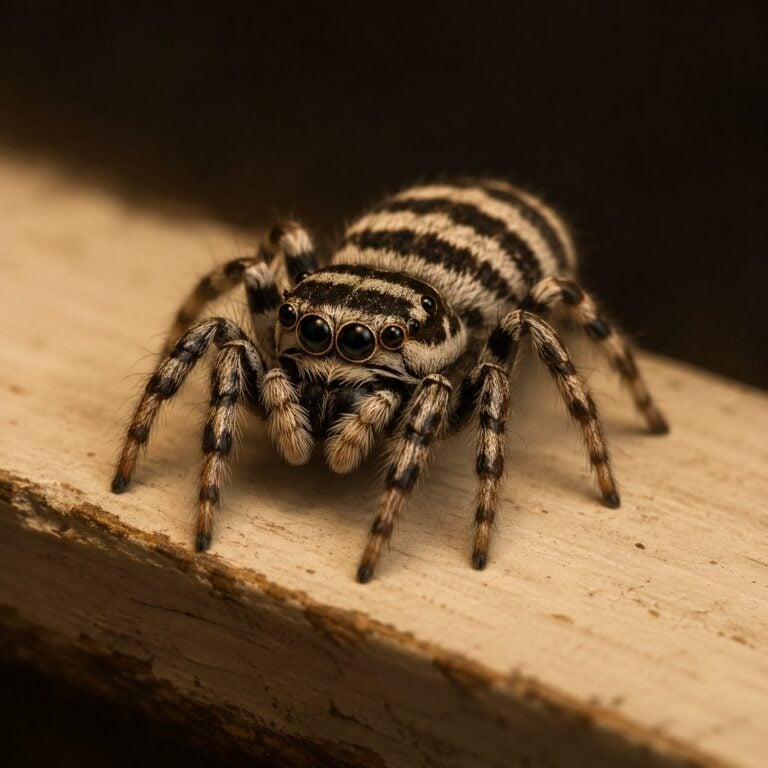
Named for their distinctive black-and-white striped pattern, zebra jumping spiders are found across North America, Europe, and parts of Asia. They are small spiders, typically 5-9 mm in body length, and are among the most commonly seen jumping spiders around human habitations worldwide. You will often spot them on sunny exterior walls, windowsills, and garden fences where they hunt small flies and gnats.
Zebra jumpers are bold hunters that stalk their prey with deliberate, calculated movements before launching themselves with incredible accuracy. Their small size makes them challenging to keep as pets, but they are extremely photogenic and a favorite subject for macro photographers. Concerned about bites? Our article on whether jumping spiders bite covers everything you need to know.
Peacock Jumping Spider (Maratus spp.)
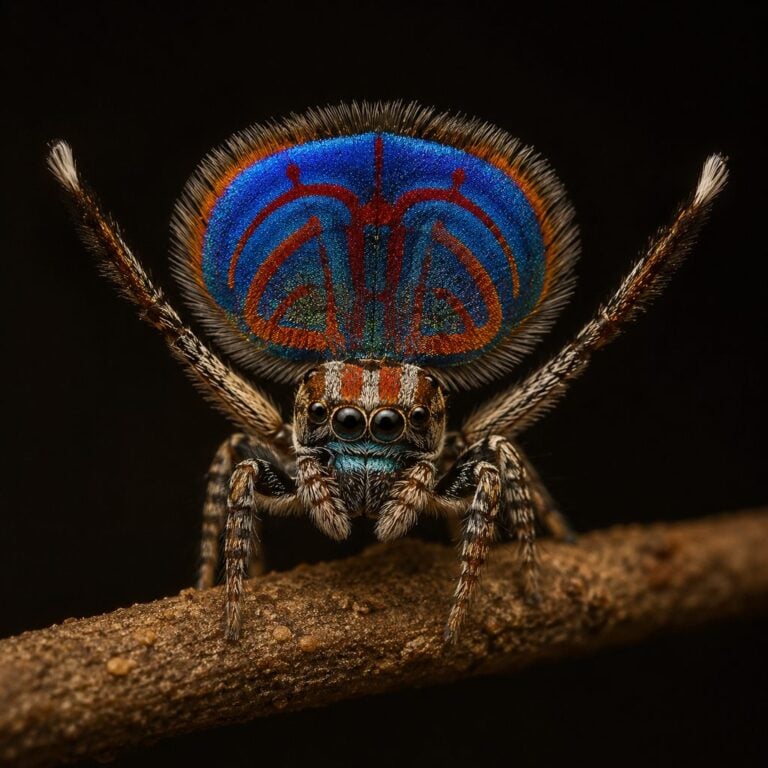
Peacock jumping spiders are arguably the most visually stunning types of jumping spiders in the world. Endemic to Australia, the genus Maratus contains over 90 described species, each featuring males with brilliantly colored abdominal flaps that they raise and vibrate during elaborate courtship dances. Species like Maratus volans, Maratus splendens, and Maratus personatus display electric blues, fiery reds, vivid greens, and complex geometric patterns that rival any butterfly.
Male peacock spiders perform intricate dances involving leg waving, body vibrations, and rhythmic drumming on the substrate. These displays have made them viral internet sensations and the subject of extensive scientific research. Peacock spiders are extremely small (3-5 mm) and not commonly available as pets outside Australia, but they represent the pinnacle of jumping spider diversity and beauty.
Heavy Jumper (Hyllus diardi)
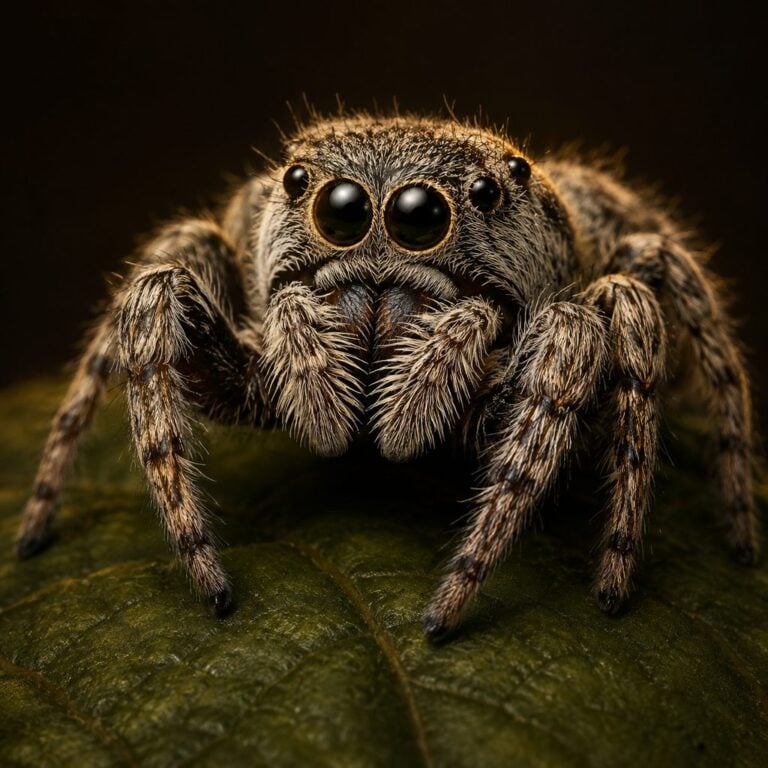
Hyllus diardi, commonly known as the heavy jumper or giant jumping spider, is one of the largest jumping spider species in the world. Found throughout Southeast Asia, these impressive spiders can reach body lengths of 20-25 mm, with a robust, muscular build that makes them look like the bodybuilders of the jumping spider world. They are typically brown or gray with lighter markings and dense body hair.
Heavy jumpers are powerful predators capable of taking down prey nearly their own size. They are gaining popularity in the exotic pet trade due to their impressive size, but they require more space and larger prey items than common Phidippus species. A well-ventilated jumping spider enclosure with vertical climbing surfaces is essential for these active hunters.
Apache Jumping Spider (Phidippus apacheanus)
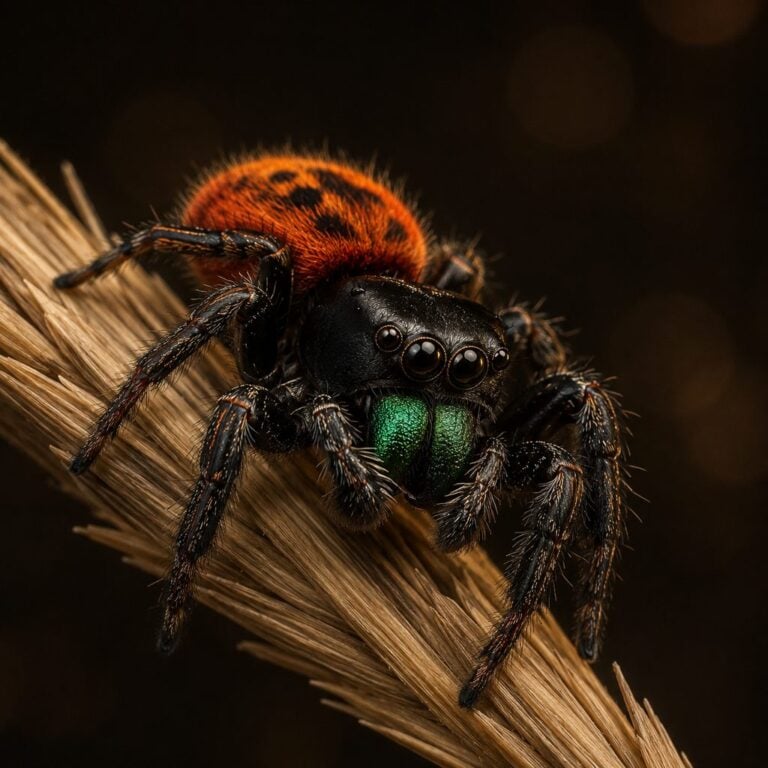
The Apache jumping spider is one of the most strikingly colored North American jumping spiders. Males and females both feature vivid red-orange abdomens, though males tend to have more intense coloration with contrasting black cephalothoraxes. Found throughout the southwestern United States and Mexico, these spiders measure 10-15 mm and inhabit grasslands, desert scrub, and open woodland edges.
Apache jumpers are less commonly available in the pet trade than regal or bold jumping spiders, but they are highly prized by collectors for their fiery coloring. They require warm, dry conditions that mimic their native arid habitats and accept the same feeder insects as other Phidippus species.
Johnson’s Jumping Spider (Phidippus johnsoni)
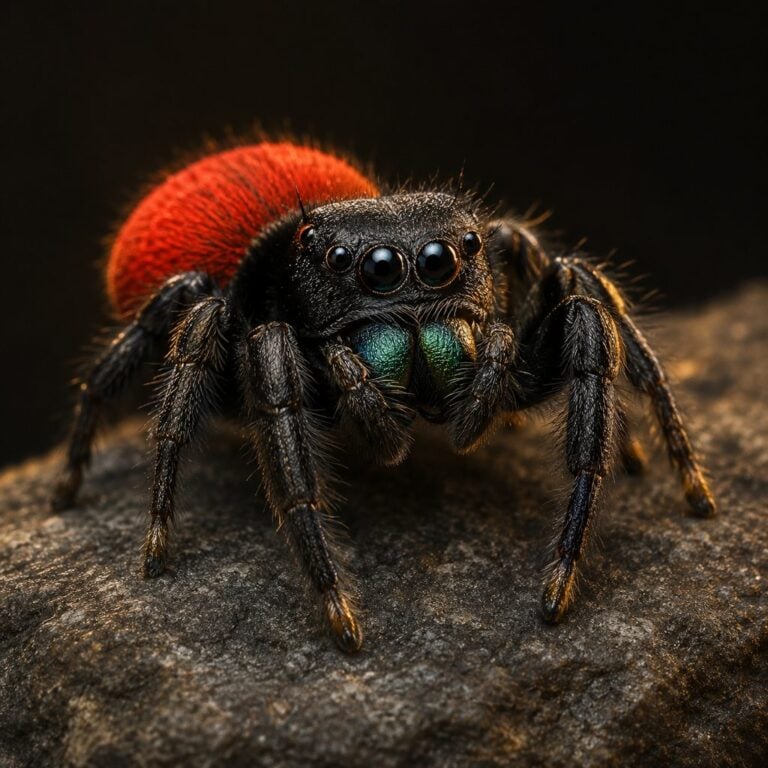
Johnson’s jumping spider, also called the red-backed jumping spider, is the most common Phidippus species in western North America. They are easily identified by their bright red abdomen contrasting sharply with a black cephalothorax and legs. Adults measure 8-14 mm and are found from British Columbia to Central America in diverse habitats ranging from coastal dunes to mountain forests up to 2,500 meters elevation.
These spiders are active, athletic hunters with excellent vision and impressive jumping ability. They are generally docile and make good pets for beginners on the West Coast where they are readily found. Like all jumping spiders, they are completely harmless to humans and their bite, while rare, is comparable to a minor mosquito bite.
Dimorphic Jumping Spider (Maevia inclemens)
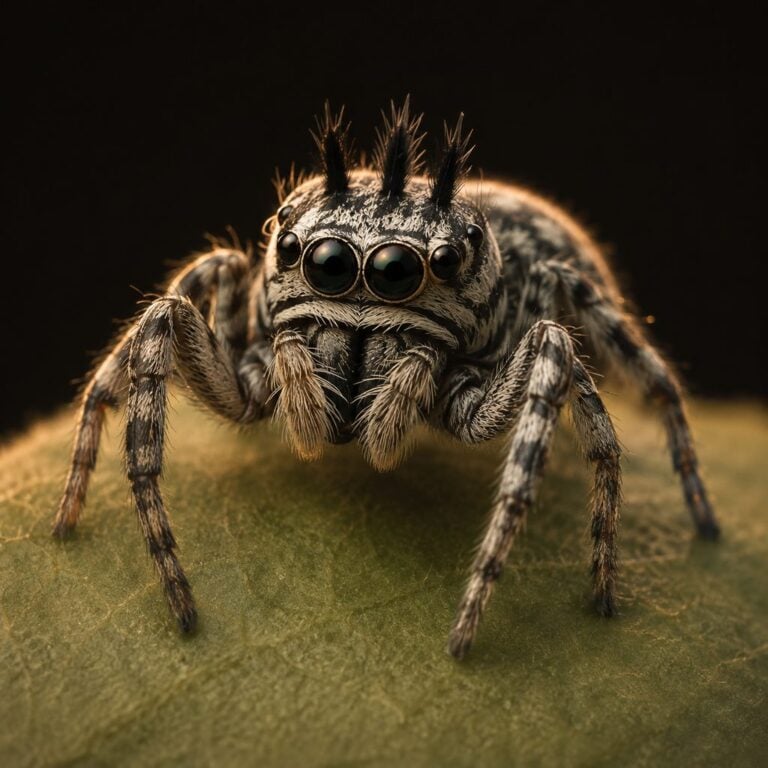
The dimorphic jumping spider is unique among North American types of jumping spiders because males exist in two completely distinct color forms. The “tufted” morph has an all-black body with three prominent tufts of hair on the head, while the “striped” morph has a gray body with orange legs and black-and-white striped markings. Both morphs court the same gray-brown females using different display strategies, a rare example of male polymorphism in spiders.
Found throughout eastern North America, these 6-10 mm spiders are common in meadows, gardens, and forest edges. They are fascinating research subjects and entertaining pets for keepers interested in observing diverse behavioral strategies within a single species.
Fringed Jumping Spider (Portia fimbriata)
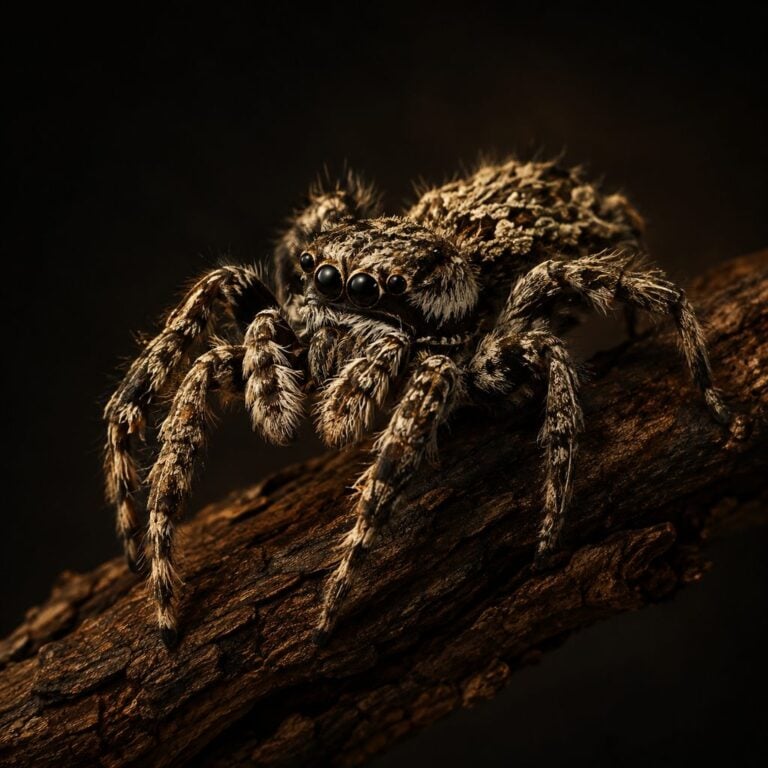
Portia fimbriata deserves special mention because it is widely considered the most intelligent spider in the world. Found in Australia and Southeast Asia, Portia spiders are specialized predators of other spiders, including web-building species. They enter the webs of other spiders and pluck the silk threads in patterns that mimic trapped prey, luring the resident spider within striking distance.
What makes Portia extraordinary is their capacity for trial-and-error problem solving and route planning. Laboratory studies have demonstrated that they can plan detour routes to reach prey, even when the path requires moving away from the target before approaching it. Their cognitive abilities are remarkable for an animal with a brain smaller than a pinhead. Portia spiders are not commonly kept as pets due to their specialized dietary needs, but they are the subject of extensive scientific research on animal cognition.
Pantropical Jumping Spider (Plexippus paykulli)
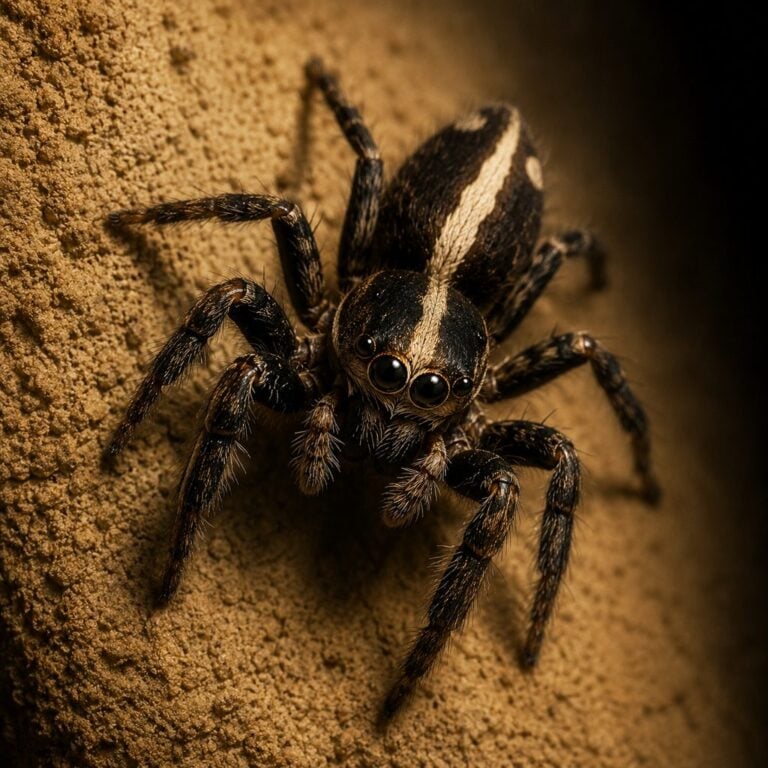
True to its name, the pantropical jumping spider is found worldwide across tropical and subtropical regions, including the southern United States, Central and South America, Africa, Asia, and Australia. These medium-sized spiders (9-12 mm) are often found inside homes and buildings where they help control pest insects including flies, mosquitoes, and moths.
Males have a striking black body with a central white stripe and lateral white bands, while females are brown with similar but less contrasting markings. Pantropical jumpers are among the most adaptable types of jumping spiders, thriving in both natural habitats and urban environments. They are hardy, easy to keep, and readily available in warmer climates.
How to Identify Types of Jumping Spiders
All jumping spiders share several identifying characteristics that distinguish them from other spider families. The most obvious feature is their eye arrangement: jumping spiders have four pairs of eyes, with two large, forward-facing anterior median eyes that give them exceptional binocular vision and that characteristic “face” that makes them look almost like tiny mammals.
Their compact, often fuzzy bodies and short, strong legs are adapted for jumping rather than web-spinning, though many species produce silk for draglines and egg sacs. Jumping spiders move in distinctive short bursts punctuated by pauses where they scan their environment with deliberate head movements. To identify a specific species, pay attention to overall body color, markings on the abdomen and cephalothorax, chelicerae color, size, and geographic location.
Best Types of Jumping Spiders for Beginners
If you are new to keeping jumping spiders as pets, your best options are the regal jumping spider (Phidippus regius), the bold jumping spider (Phidippus audax), and Johnson’s jumping spider (Phidippus johnsoni). These Phidippus species offer the ideal combination of manageable size, docile temperament, straightforward care requirements, and availability from reputable breeders.
All three species thrive in a well-ventilated enclosure with cross-ventilation, a few anchor points for web-building, and consistent access to appropriately sized feeder insects. To learn about how long jumping spiders live and how to maximize their health and lifespan in captivity, explore our dedicated care resources.
The world of jumping spiders is vast, colorful, and endlessly fascinating. Whether you are drawn to the dazzling courtship displays of peacock spiders, the problem-solving intelligence of Portia, or the friendly curiosity of a bold jumper perched on your finger, there is a jumping spider species out there that will capture your imagination.