
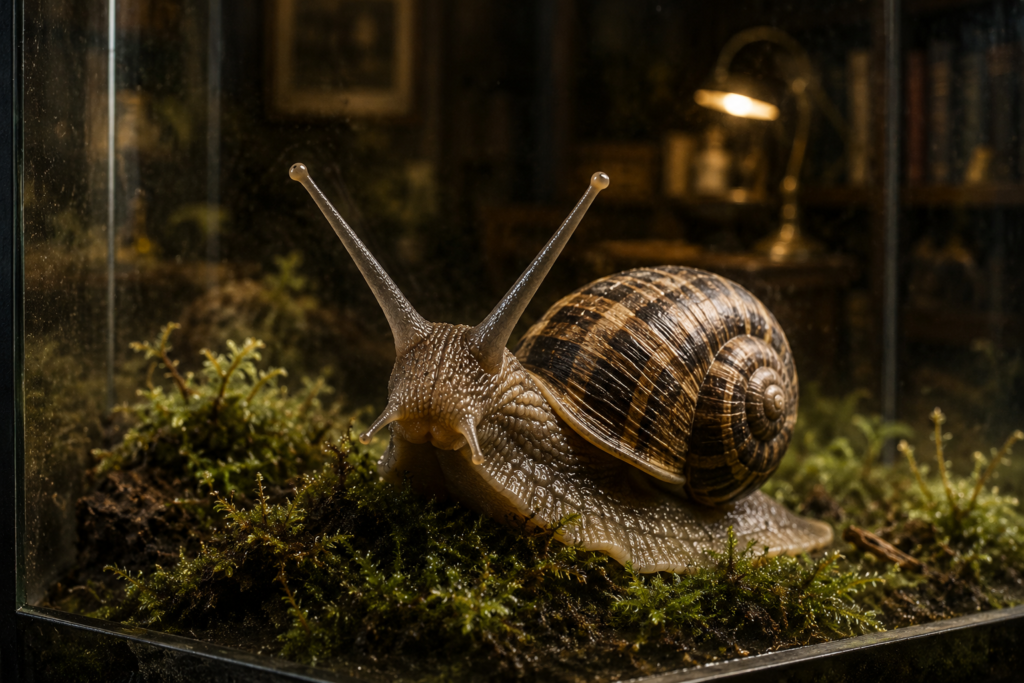
A pet land snail might be the most underrated small pet there is. It’s silent, hypoallergenic, costs pennies to feed, needs no walks and no cage wheel, and watching one glide over moss with its antennae periscoping around is quietly mesmerizing in a way few pets manage. It’s also the rare animal a careful child can help care for start to finish. But land snail keeping in the United States comes with a legal wrinkle most care guides skip entirely — and getting it wrong can mean federal trouble, not just a sick snail. So this guide starts where the others don’t: with which snails you’re actually allowed to keep. Then we’ll set up the terrarium properly.
ItsyBitsyPets is reader-supported. As an Amazon Associate we earn from qualifying purchases — at no extra cost to you. See our affiliate disclosure.
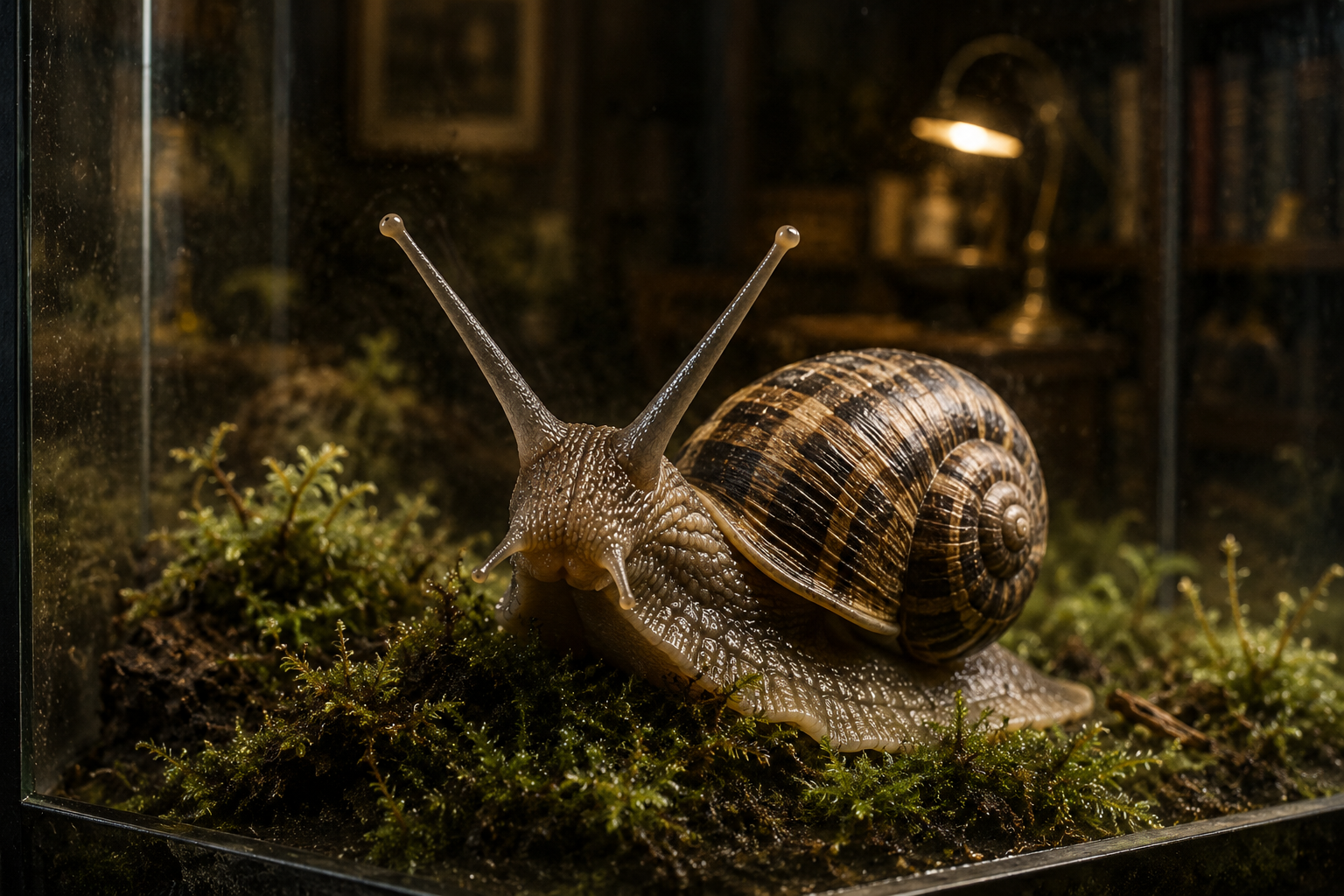
Is a pet land snail legal in the US?
Here’s the wrinkle. The snail you’ve seen all over social media — the dinner-plate-sized Giant African Land Snail, or GALS — is federally illegal to import, sell, or possess in the United States. This isn’t a technicality. The USDA rates Lissachatina fulica among the highest-risk invasive species in the world: it eats over 500 kinds of plants, gnaws stucco off buildings for the calcium, and can carry the rat lungworm parasite, which causes a form of meningitis in humans. Florida has spent millions of dollars a year eradicating outbreak populations — most of which trace back to the pet trade. When agents find GALS, the snails are seized and destroyed.
The rules reach further than GALS, though. Under USDA APHIS regulations, plant-feeding snails in general are classified as plant pests, and moving them across state lines requires a PPQ 526 permit — a document issued for research, education, and farming, not casual pet sales. That online seller offering to ship “captive-bred milk snails” to your door in another state? Without a permit on both ends, that shipment isn’t legal, whatever the listing says.
So what’s the honest path to a legal pet land snail? Go local. The common garden snail (Cornu aspersum) — the one already living in yards, gardens, and parks across most of the US — can be collected where you live, kept where you live, and never crosses a state line. No import, no interstate movement, no permit trigger, and most state agriculture departments have no issue with keeping an animal already established in your area (a quick check of your own state’s rules is still smart). Two matching promises make the whole arrangement responsible: never release a captive snail back outdoors, and never bring snails home from your travels.
The best pet land snail species (that you can actually keep)
Garden snail — the beginner default
The garden snail is the whole package: hardy, active, curious, and free. Adults wear a caramel-swirled shell around 1 to 1.5 inches across and live surprisingly long — five years is normal in captivity, and well-kept snails reach eight to ten. They tolerate the slightly-off humidity and occasional missed misting that beginners inflict, they’re bold enough to cruise the terrarium at dusk while you watch, and replacing or expanding your colony is a walk in the yard after rain. Care stats: 1–1.5 inches; 65–80°F; 70–90% humidity; lifespan 5–10 years; herbivore with a calcium habit.
Native wood and grove snails — the regional option
Depending on your region you may also find handsome native options — banded wood snails, grove snails, and their relatives — under logs and leaf litter. The same rule keeps them legal: collect only where you live, keep them for good, and never restock the wild from your terrarium. Care is identical to the garden snail’s, though some natives run smaller and shyer. A mixed local-species tank, collected from one backyard, is both legal and a genuinely interesting little ecosystem.
The ones to skip
Skip GALS entirely — possession is a federal offense, and the seizure stories are real. Be equally wary of milk snails, Roman snails, and any exotic species a stranger on the internet offers to mail you: interstate shipment without permits is where hobbyists get burned, and sellers shift that risk to buyers. If a snail can’t be sourced from your own area, a freshwater aquarium snail — nerites and mystery snails ship legally through the aquarium trade — scratches the same itch without the paperwork problem.
Enclosure setup
The good news after all that law: the habitat itself is cheap, simple, and nearly silent to maintain. A 10-gallon glass terrarium with a screen lid comfortably houses one to three garden snails — figure a gallon per snail as the absolute floor and more as the goal, since floor space doubles as exercise and foraging ground. The lid matters more than beginners expect. A garden snail is an escape artist with a suction foot strong enough to lift many times its weight, and an unsecured lid is an open door; ventilation holes should be smaller than your smallest snail.
Temperature is easy: 65–80°F, which is to say normal room temperature. No heat lamp, no basking bulb — in fact, keep the tank out of direct sunlight entirely, because glass boxes in sun become ovens fast. Humidity is the one parameter you’ll actively manage: land snails want 70–90%, maintained with a daily spritz of dechlorinated water from a spray mister bottle. Chlorinated tap water straight from the faucet irritates the same moist skin they breathe and glide with, so treat or age the water just as an aquarist would. A digital thermometer/hygrometer combo stuck to the glass turns guesswork into a glance.
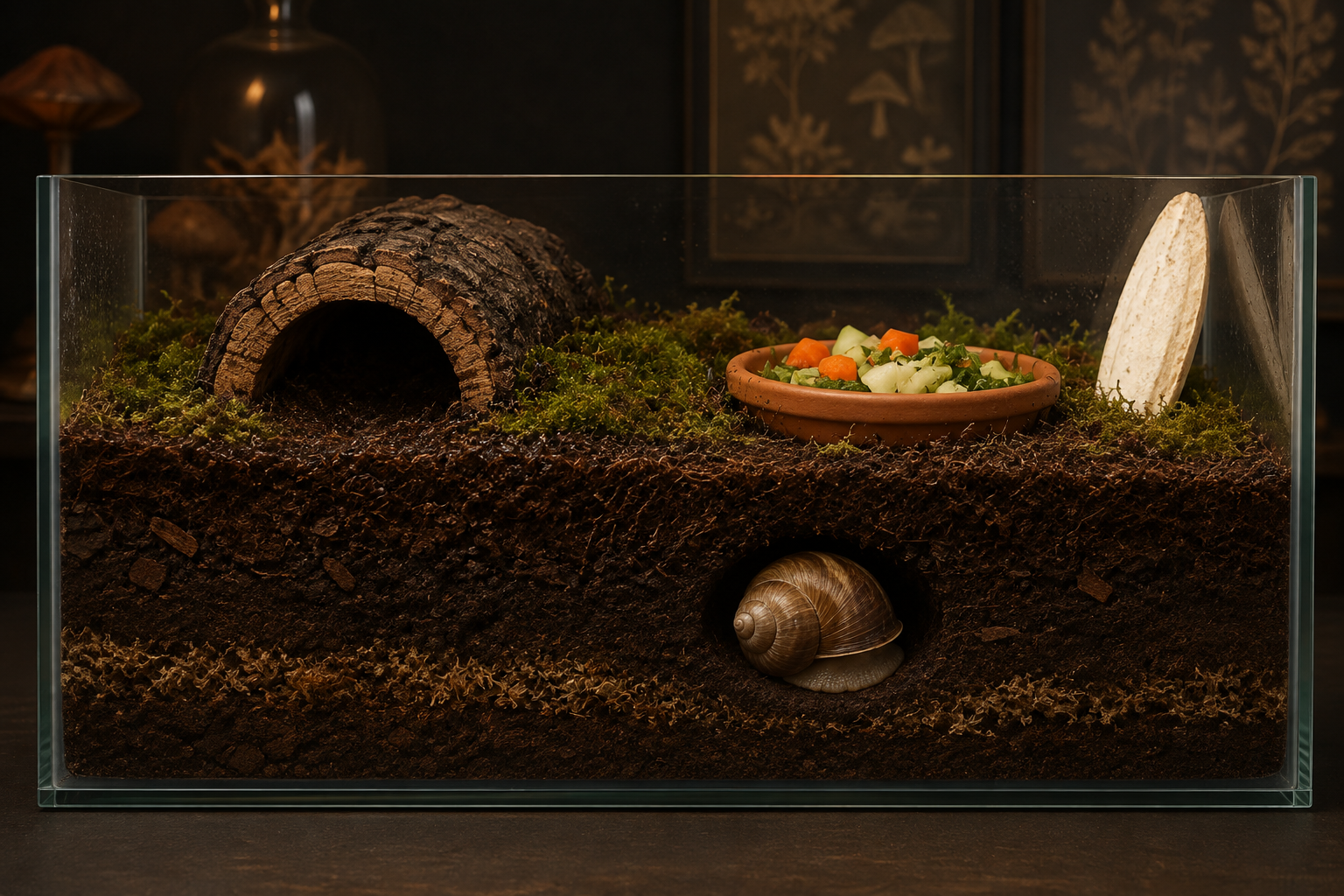
Furnish sparsely but thoughtfully: a piece of cork bark to hide under, a shallow dish for food, maybe a robust pothos cutting to climb (and eat). Skip anything sharp-edged, anything cedar or pine (the oils are toxic to invertebrates), and any decor heavy enough to crush a burrowed snail if it topples.
Substrate: the floor is the furniture
Substrate is where a land snail sleeps, hides, lays eggs, and regulates its moisture, so it deserves more thought than the decor. The proven mix is plain coco fiber, pure or blended with organic, pesticide-free, fertilizer-free topsoil, laid two to four inches deep — deep enough that a snail can bury itself completely, which they routinely do to rest. A handful of sphagnum moss on top acts as a humidity sponge and a snack. Bags of coco fiber substrate are cheap, and one brick expands to fill several tank changes.
Keep it moist, never soggy: squeezed-sponge damp is the target, with no standing water anywhere — a snail can drown in a deep water dish, which is why the food dish stays shallow and a water bowl is unnecessary when humidity is right. Maintenance is a few minutes: lift droppings and abandoned food every day or two, stir and re-mist as needed, and replace the substrate wholesale about once a month, or sooner if it sours. If you ever smell rot, change it that day.
What a pet land snail eats
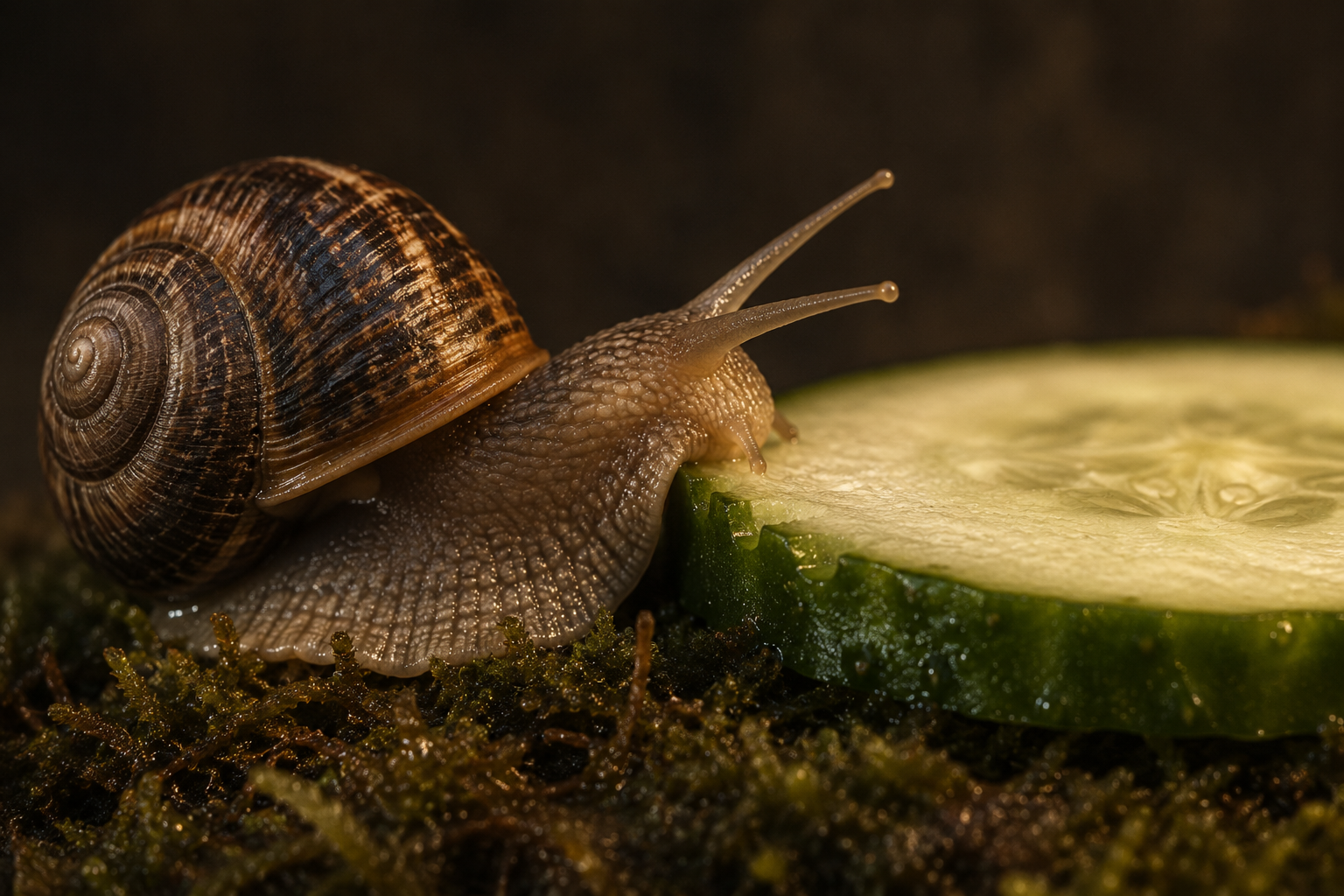
Feeding is the delight of snail keeping, especially for kids: they eat salad, visibly, with a tiny rasping mouth called a radula that you can actually hear on a quiet night. Offer fresh vegetables daily — cucumber, zucchini, kale, carrot (grated or steamed soft), romaine, bell pepper — plus modest amounts of fruit like apple, pear, or melon. Wash everything thoroughly: pesticide residue on a lettuce leaf can kill a snail outright, which is also why grocery-store organic produce or your own unsprayed garden is the safest supply line.
Three hard rules. First, salt is lethal — never salted or processed food of any kind, and keep the salt shaker away from the tank as seriously as you’d keep chocolate from a dog. Second, skip citrus, onion, and garlic, which range from irritating to toxic. Third, calcium is not optional: the shell is calcium, growing at the lip all the snail’s life, and a snail without a calcium source will stunt, crack, or start rasping at its own shell. Leave a cuttlebone — the same one sold for parakeets — in the tank around the clock and let the snail dose itself; clean crushed eggshell works as a backup.
Once or twice a week, add a protein topper for shell and body growth: a crumb of plain boiled egg, a fish-food pellet, or an insect-based gel food. Guides like VetVerified’s land snail overview credit the veg-plus-calcium-plus-occasional-protein pattern as the difference between a snail that survives and one that grows glossy and lives out its full decade.
Handling and hygiene
Snails are watch-more-than-touch pets, but handling is fine in short, respectful sessions. Wet your hands first — a dry palm can tear the moist foot — then let the snail glide onto you at its own speed rather than lifting it. If you must pick one up, slide a wet finger under the front of the foot to break suction; never pull by the shell, and never pry at a snail that has sealed itself in. The shell attaches to muscle, and a shell injury is a body injury.
The hygiene rule is simple and non-negotiable: wash your hands before handling (lotions and soap residue harm them) and after handling, every time. In some US regions, wild snails can carry the rat lungworm parasite; transmission requires getting snail slime or tissue into your mouth, so thorough handwashing — and supervising young children so no snail ever goes near a face — is the complete, boring, effective defense. It’s the same reasoning behind our handling advice for aquatic pets: respect the animal, wash your hands, and the risk column rounds to zero.
Health, behavior, and the epiphragm surprise
Land snails are nocturnal. Expect a quiet terrarium by day — snails dozing in their shells under the cork bark or buried to the shell-tip in substrate — and an active one after dusk, which conveniently matches when most households have time to watch. A healthy snail moves nightly, eats visibly, and keeps a glossy, unpitted shell with a clean growth edge at the lip.
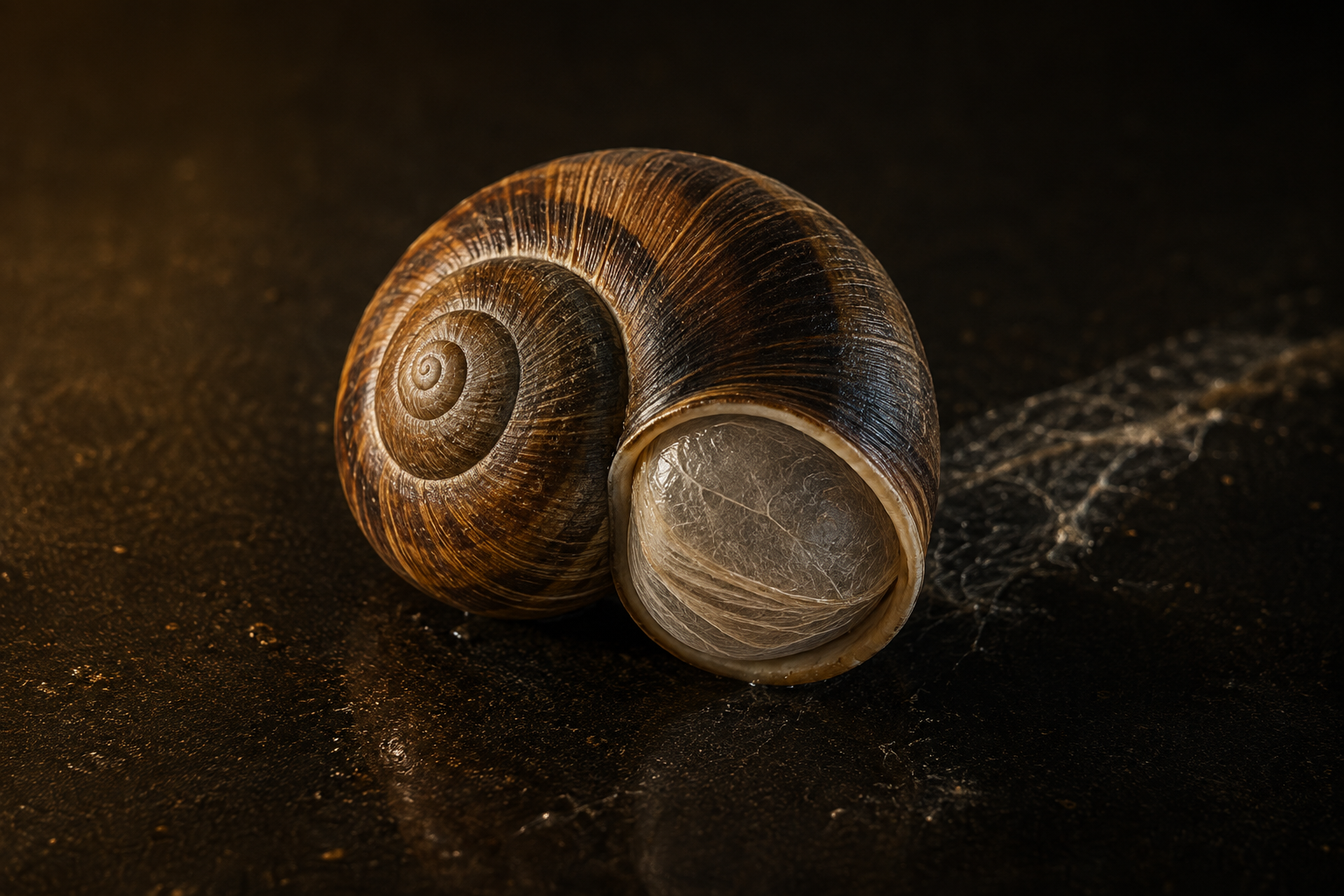
The behavior that panics every new keeper: one day the snail glues itself to the glass or a log, seals its opening with a papery white membrane, and stops. This is estivation, not death. In dry or cold conditions a snail secretes an epiphragm — a parchment-like door — and waits out the weather, sometimes for weeks. The fix is the checklist: warmth, fresh substrate, and a good misting; most estivating snails wake within hours of humidity returning. (A truly dead snail smells unmistakably dead and hangs loose in the shell — your nose will not be in doubt.)
Shell chips and cracks heal from the inside out when calcium is available, so minor damage plus cuttlebone usually resolves itself; keep the tank extra humid during repairs. And know that garden snails are hermaphrodites: any two adults can produce eggs, buried in little soil nests of 50 or more. Unwanted clutches should be scooped and frozen — freezing is the humane standard — and never, ever discarded outdoors, which is how invasive populations start. Keeper communities like My Happy Snails cover egg management in detail if you’d rather hatch a generation on purpose.
Pet land snail FAQ
Can a pet land snail live in an aquarium?
Yes — an empty glass aquarium makes a fine snail home, and “land snail aquarium” setups are common. The two changes that matter: the water stays out (substrate and misting provide all the moisture a land snail needs), and the open top gets a secure ventilated lid, because a standard aquarium rim without one is an escape ramp. A 10-gallon tank you already own converts in an afternoon with substrate, moss, and a hide.
Do snails recognize their keepers?
Honestly, no — a snail’s brain runs on smell, touch, and moisture gradients, not faces. What they absolutely do learn is routine: snails come out for feeding times, follow the smell of a fresh cucumber slice across the tank, and grow noticeably bolder about being watched. It reads as personality, and for a pet you mostly observe, that’s plenty.
Are they smelly or loud?
A well-kept tank smells like clean forest floor — faintly earthy at an open lid, nothing across a room. Odor means missed cleanup: soured substrate or a forgotten vegetable, both fixed in five minutes. As for noise, the loudest thing a snail does is rasp a cuttlebone at 2 a.m., a faint scratching that light sleepers sharing a bedroom with the tank do occasionally report. By small-pet standards, that’s silence.
How many snails should I start with?
One is fine — snails don’t get lonely in any way science can find — but two or three make the tank livelier and fit comfortably in ten gallons. The catch is eggs: any two adult garden snails will eventually produce them, hermaphrodites that they are, so pairs come with the egg-management chore described above. Start with one if you want zero surprises, and add a companion later once the routine is second nature.
What does a pet land snail cost to keep?
Setup runs modest double digits: tank, lid, substrate brick, mister, hygrometer, cuttlebone. After that, the running costs are vegetable scraps you were composting anyway, a cuttlebone every few months, and a monthly substrate refresh from a brick that costs less than a coffee. There is no cheaper pet with a lifespan measured in years — the entire hobby costs less per decade than one vet visit for a furrier animal.
Can I take my snail outside for fresh air?
Resist the urge. An outdoor excursion offers a captive snail nothing it needs and adds real risks in both directions: pesticide residue and parasites coming in, and — the serious one — escape going out. A captive snail that wanders off doesn’t just lose a home; it can carry unfamiliar microbes into the local snail population, the small-scale version of the exact problem that makes releasing pets illegal. The terrarium is the outdoors, curated.
The routine: what keeping a pet land snail actually takes
Daily, it’s five minutes: mist the tank, swap yesterday’s vegetables for fresh, glance at the hygrometer, count your snails (check the lid’s reputation regularly). Weekly, a few minutes more: wipe the glass, top up or replace the cuttlebone, offer the protein snack, spot-clean the substrate corners. Monthly: full substrate change, rinse the decor in plain hot water, and give the empty tank a wipe with water only — never cleaning chemicals, whose residue lingers in a sealed humid box.
Total running cost after setup is close to zero — vegetable scraps, a cuttlebone a season, a brick of coco fiber — for a pet that lives as long as a hamster three times over and asks for nothing at 7 a.m. If you’re already deep in the snail-keeping rabbit hole on the aquatic side, our nano snail aquarium guide and the rest of our snail articles make good companion reading; the terrestrial and aquatic hobbies share the same rhythm of small, patient, oddly absorbing care.
The verdict, keeper to keeper: a legally collected garden snail in a properly humid ten-gallon terrarium is one of the easiest, cheapest, most durable pets in the entire hobby, and one of the most frequently botched — almost always by dry tanks, missing calcium, or an illegally shipped animal that should never have been bought. Get those three right, and a creature you found on a fence post after the rain will spend the better part of a decade unhurriedly winning over everyone who stops to watch it.