
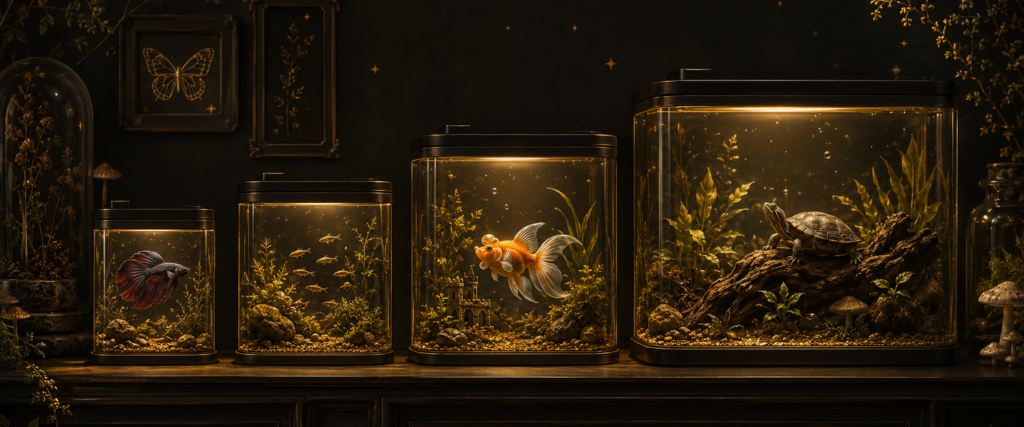
Here’s the truth pet stores won’t lead with: the tank picks your aquarium pets, not the other way around. A five-gallon on a desk and a forty-gallon on a stand are different universes with different rules, and almost every heartbreak in this hobby starts with an animal stuffed into a volume that could never support it. So instead of listing pretty species and letting you find out the hard way, this guide works the way real decisions do — start from the tank size you actually have room for, and see which aquarium pets will thrive in it, from a single betta to a turtle with a fifty-year plan.
ItsyBitsyPets is reader-supported. As an Amazon
Associate we earn from qualifying purchases — at no extra cost to you. See our
affiliate
disclosure.
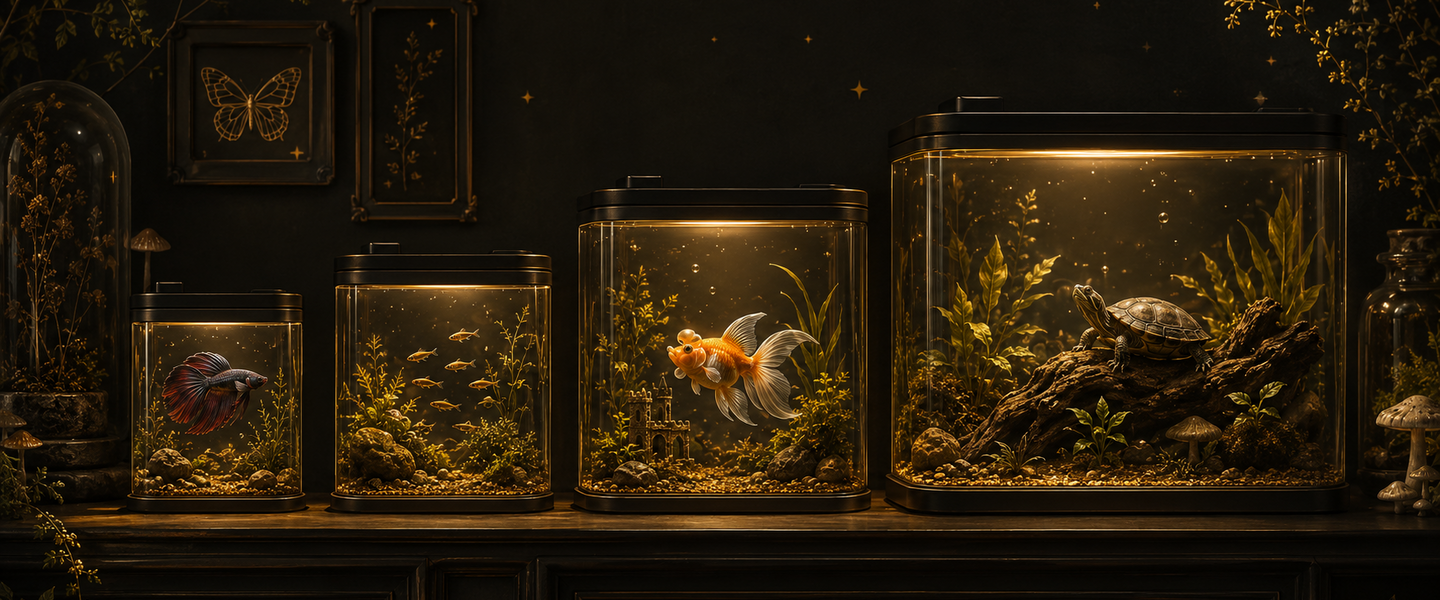
Why tank size picks your aquarium pets for you
Water volume is stability. Every gram of food and every dropping dissolves into however much water you’ve got — in forty gallons a mistake is a rounding error, in five gallons it’s a spike. That’s why Shrimp & Snail Breeder’s stocking guide calls weekly water changes the single most important task in a nano tank, and why small tanks are the easiest to overstock: the honest ceiling for a five-gallon is one small fish plus invertebrates.
There’s a second, sneakier rule: adult size and adult lifespan are what you’re stocking for, not the cute juvenile in the store cup. Every recommendation below uses full-grown numbers. If you haven’t set up a tank before, our beginner’s guide to pet fish walks through cycling — the few weeks of bacterial setup that everything below depends on.
5 gallon aquarium pets: small tank, real options
The five-gallon is the most popular tank in America and the most abused. Kept understocked and planted, it’s a jewel box. Here’s what actually works as pets for a small aquarium this size — and nothing else does, no matter what the label on the box says.
A single male betta
The classic five-gallon resident, and still the best. Per PetMD’s betta care sheet, he needs 76–81°F water — so an adjustable 25-watt heater is mandatory, not optional — plus a gentle filter and a lid, because bettas jump. Expect around three to five years with a fish that learns your face and flares at your finger.
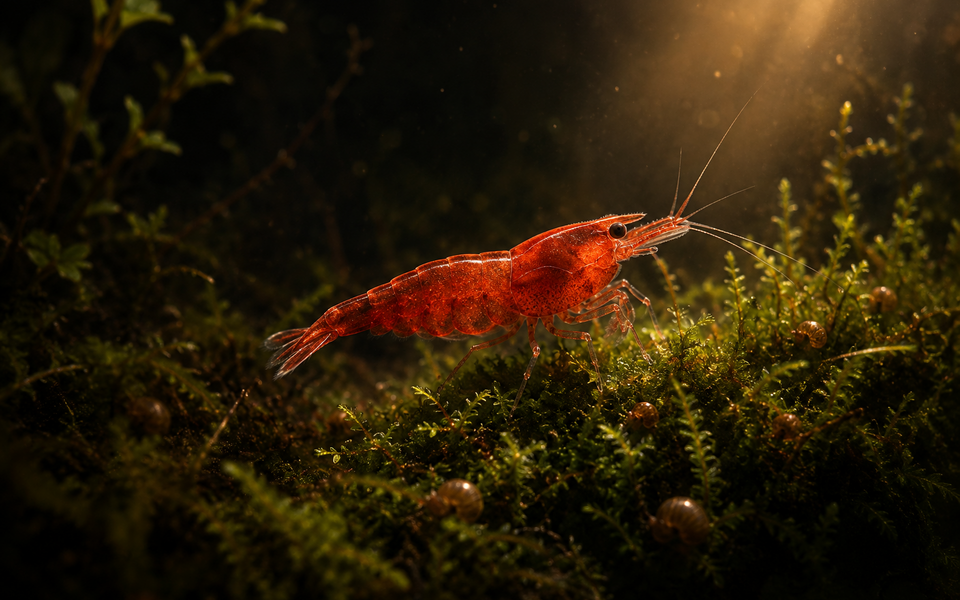
A cherry shrimp colony
Ten cherry shrimp today is fifty in six months — a self-sustaining, algae-grazing colony with a bioload so tiny that Aquarium Co-Op considers five gallons comfortable permanent housing. They accept 65–80°F but punish instability, and in soft water they need added calcium (a cuttlebone chunk) to molt. Our pet shrimp guide ranks all the beginner species if you want options beyond red.
The pet snail aquarium
Yes, a snail-only tank is a real and delightful thing. A nerite snail is the hobby’s best algae eater and can’t reproduce in freshwater, so the population stays exactly what you bought. A mystery snail is the opposite personality — two inches of golden, glass-cruising drama that needs 68–82°F and hard, calcium-rich water to keep its shell sound, per Aquarium Care Basics. Pair either with a few shrimp and you have a complete, nearly silent ecosystem. Species comparisons live in our freshwater snails guide.
A chili rasbora school
The one true schooling fish for five gallons: ten to twelve chili rasboras in a planted tank over dark substrate glow like embers, and they’re peaceful enough to share the tank with shrimp and snails. They’re the smallest of the small — more like kept fireflies than kept fish.
10 gallon aquarium pets: the sweet spot for freshwater aquarium pets
Ten gallons doubles your stability for about twenty more dollars, which is why it’s the size we recommend most new keepers actually start with. It opens two doors the five-gallon keeps shut.
African dwarf frogs
Fully aquatic frogs that hunt, dig, and float spread-eagled at the surface like tiny sky-divers. Aquarium Source gives them five to eight years; a ten-gallon comfortably houses two to four. They want warm (68–78°F), shallow, low-current water, and they’re so slow and near-sighted at dinner time that you should target-feed sinking carnivore pellets right in front of them. Anything under an inch long counts as food, so choose tankmates accordingly.
The nano community
Ember tetras, endler’s livebearers, pygmy corydoras — a ten-gallon supports a proper multi-species neighborhood of micro fish, which is where fishkeeping starts feeling like ecosystem design. We’ve profiled the eight best in our micro fish guide, including which ones school and which just loiter attractively.
20 gallon aquarium pets: where the classics live
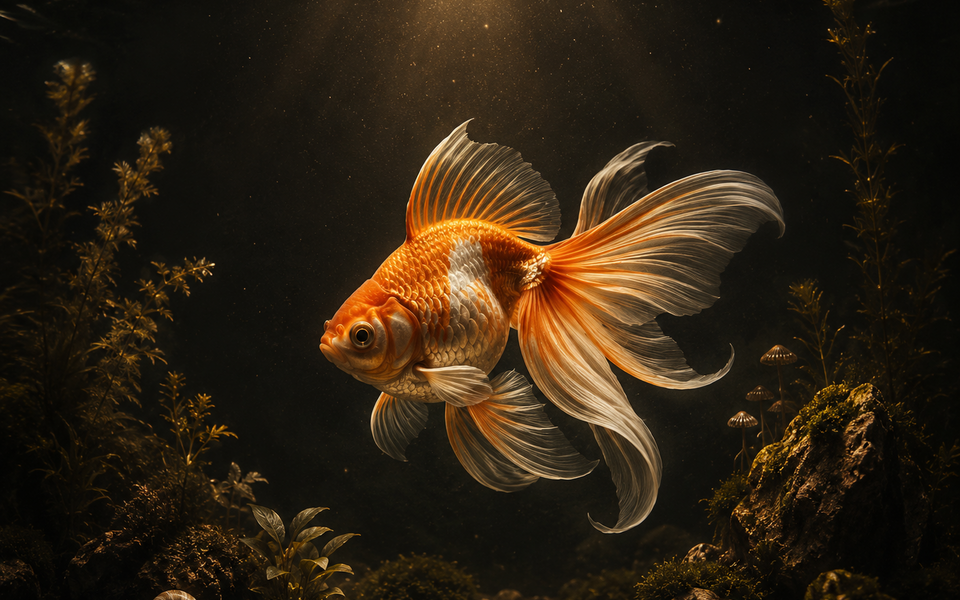
One fancy goldfish (really)
The goldfish is the most underestimated pet in the hobby. Aquarium Co-Op’s guide is blunt: twenty gallons for the first fancy goldfish, ten more per additional fish, and filtration rated five to ten times the tank volume, because they produce waste like animals three times their size. In exchange you get an unheated (50–70°F) pet that lives ten to fifteen years and begs at the glass like a labrador. Skip the heater, invest in a quiet oversized power filter.
An axolotl
A twenty-gallon long is the entry ticket for the internet’s favorite smiling salamander — but it’s a cold-water animal (60–68°F, still water, sand or bare-bottom only) with a decade-plus lifespan, and most failed axolotls die of warm water. Read our full axolotl tank setup guide before buying anything; it covers chilling, cycling, and the substrate rules that keep them out of the emergency vet.
The classic community starter
Twenty gallons is also where the traditional starter community lives — platies, corydoras, a small tetra school. That’s a whole article of its own: our best beginner freshwater fish ranks the ten hardiest species and what each needs.
30–40 gallon aquarium pets: the lifetime tier
Common musk turtle
At three to five inches of adult shell, the musk turtle is the one genuinely apartment-scale pet turtle. Reptile Direct’s care guide calls for roughly 30 gallons for an adult (40 is better), a basking dock under a heat-and-UVB lamp, and a canister filter rated for at least double the water volume — turtles eat messily and apologize never. Feed aquatic turtle pellets as the staple with earthworms and greens on rotation.
The number that matters: thirty to fifty years. A musk turtle is not a starter pet that happens to be a reptile; it’s a decades-long housemate that will attend your retirement party. Buy it knowingly or not at all. Fair warning from every keeper ever: they can nip, and the “stinkpot” nickname was earned.
Saltwater aquarium pets: should a beginner go marine?
Saltwater is not the impossible expert realm it used to be, but it’s roughly double the cost and half the forgiveness of freshwater at every tank size — salt mixing, more testing, pricier livestock, and stability demands that punish small volumes hard. If the ocean is calling anyway, start at 40 gallons or more and stick to the proven-hardy species in our saltwater fish for beginners guide. Clownfish really are as tough as their reputation; most of their neighbors are not.
Our honest advice for a first tank: run a freshwater setup for a year, then bring your habits — not just your enthusiasm — to the marine side.
The stocking rules that keep aquarium pets alive
Whatever size you land on, five rules do most of the work. Cycle the tank before any animal arrives — the nitrogen cycle takes weeks, not days, and skipping it is the number-one killer of new aquarium pets. Verify with a liquid water test kit rather than paper strips.
Dechlorinate every drop of tap water. Never dose anything containing copper in a tank with shrimp or snails. Change 20–30 percent of the water weekly — and the smaller the tank, the less negotiable that is. Finally, stock for the adult animal, and when in doubt, stock less: an understocked tank is a stable tank, and a stable tank is a boring, wonderful thing.
What each tank size costs to set up and run
The five-gallon tier is the cheapest door into the hobby: tank, heater, sponge filter, light, dechlorinator, and a test kit land between seventy and a hundred dollars, with livestock adding five to thirty more. Running costs are almost comically low — a few dollars a month in electricity and pennies in food, especially for shrimp and snails, which will happily eat the algae you were going to scrub off anyway.
Ten and twenty gallons cost surprisingly little more — often just twenty to forty dollars over the nano price for double or quadruple the water, which is the best stability-per-dollar trade in the hobby. The exceptions are the twenty-gallon specialists: an axolotl needs cooling strategies (a fan, a chiller in warm climates), and a goldfish needs that oversized filter, both of which add real cost to the same glass box.
The 30–40 gallon turtle tier is where budgets change shape. The tank is the cheap part; the canister filter, basking platform, heat lamp, and UVB lighting (replaced yearly, because UVB output dies long before the bulb does) can double the price of everything below it. Budget two hundred to four hundred dollars before the turtle, then remember the turtle costs thirty dollars and lives fifty years — the best cost-per-year of any pet in this article.
Common stocking mistakes, size by size
In five gallons the classic error is the “just one more fish” spiral: a betta plus a couple of guppies plus a small pleco, in a volume that supports exactly the first item on that list. The second is skipping the heater because the room “feels warm” — room temperature swings are exactly the instability that small volumes amplify. In a small aquarium, restraint is the entire skill.
In ten and twenty gallons the mistake changes species: buying juveniles on size-at-the-store. That one-inch common pleco becomes almost two feet of fish; those cute dime-sized goldfish become the bioload of a small dog. Stock for adult sizes — every number in this guide already is one.
At the turtle tier the mistake is under-filtering. A musk turtle in forty gallons with a filter sized for forty gallons of fish lives in a slowly composting soup. Double the rating, add a monthly filter rinse (in tank water, never tap), and the whole system stays sweet.
And across every size: never dose medications or fertilizers containing copper in a tank with shrimp or snails. One treatment can erase an entire invertebrate colony overnight.
Your first week with new aquarium pets
Day one is the drip: float the sealed bag in the tank for fifteen to twenty minutes to match temperature, then add small amounts of tank water to the bag over half an hour before gently netting the animal across. Shrimp deserve a slower version of the same ritual — an hour of drip acclimation — because they feel parameter swings more sharply than fish do. Never pour store water into your tank; it’s a free sample of someone else’s problems.
Days two through seven are about restraint. Feed lightly — a new animal that skips a meal or two is normal, and uneaten food is the fastest route to an ammonia spike in a fresh setup. Test the water every day or two, expect slightly odd, shy behavior while everyone maps the territory, and resist rearranging anything. Most “mystery deaths” in week one are either skipped acclimation or a tank that was never cycled — both completely preventable, both covered above.
Frequently asked questions about aquarium pets
What are the best aquarium pets for a total beginner?
A single betta or a shrimp-and-snail tank in a cycled, planted five-to-ten gallon. Both forgive early mistakes, cost little to run, and teach the water-quality habits every bigger tank depends on. Between them: pick the betta if you want a pet that interacts, the invertebrates if you want an ecosystem that runs itself.
Is the “one inch of fish per gallon” rule real?
It’s a rough starting sketch, not a law — and it fails hard at the extremes. Ten one-inch neons and one ten-inch oscar are wildly different bioloads, and the rule says they’re equal. Stock by species requirements (the numbers in this article), by adult size, and by filtration capacity, and let the inch-per-gallon rule retire with the fish bowl.
How many animals can I add at once?
A few at a time, a week or two apart. Your filter’s bacteria colony grows to match the waste it’s fed, so every new arrival briefly outpaces it. Add the whole shopping list in one afternoon and the bacteria fall behind, ammonia climbs, and the newest, most stressed animals pay first. Slow stocking is dull and it works — the aquarium rewards patience more reliably than any gadget you can buy for it.
Can I mix the pets in this guide?
Some combinations are classics: shrimp, snails, and chili rasboras coexist beautifully; African dwarf frogs pair with snails (too big to swallow). Others are famous mistakes — anything small enough to fit in a frog’s mouth, shrimp with most fish larger than a rasbora, and axolotls or turtles with basically everyone, since both treat tankmates as a buffet. When in doubt, the single-species tank is never wrong.
What about tanks under 5 gallons?
Bowls, one-gallon “starter kits,” and desktop cubes under five gallons are decor, not habitats — too small to hold a stable cycle, too small for a heater to regulate, and too small for any fish sold in this country, bettas included, whatever the packaging shows. The honest exceptions are a snail-and-plants jar for an experienced keeper, or a shrimp colony in a heated, filtered three-gallon run by someone who already understands water chemistry. As a beginner, five gallons is the floor, and ten is the friendlier floor.
Do smaller tanks really mean less work?
The opposite, and it’s the most expensive misunderstanding in fishkeeping. Less water means faster ammonia spikes, faster temperature swings, and less room for error — the five-gallon needs its weekly water change more urgently than the forty does. Buy the biggest tank your space and budget allow; your maintenance schedule gets easier, not harder.
Aquarium pets by tank size: the cheat sheet
| Tank size | Best aquarium pets | Temp | Lifespan |
|---|---|---|---|
| 5 gallons | One betta, OR cherry shrimp colony, OR snails, OR chili rasboras | 65–81°F by species | 1–5 yrs |
| 10 gallons | 2–4 African dwarf frogs, OR nano fish community | 68–78°F | 2–8 yrs |
| 20 gallons | One fancy goldfish, OR an axolotl, OR starter community | 50–70°F / 60–68°F / tropical | 10–15 yrs |
| 30–40 gallons | Common musk turtle, OR first saltwater tank | 72–78°F water | 30–50 yrs |
Notice the pattern in that table: as the glass gets bigger, the commitment gets longer. Five-gallon pets are one-to-five-year relationships; the forty-gallon tier is measured in decades. Match the tank to your space, match the animal to your timeline, cycle first, and you’ll be the rare keeper whose first tank thrives — right up until you catch yourself pricing a second one. Everyone does.