
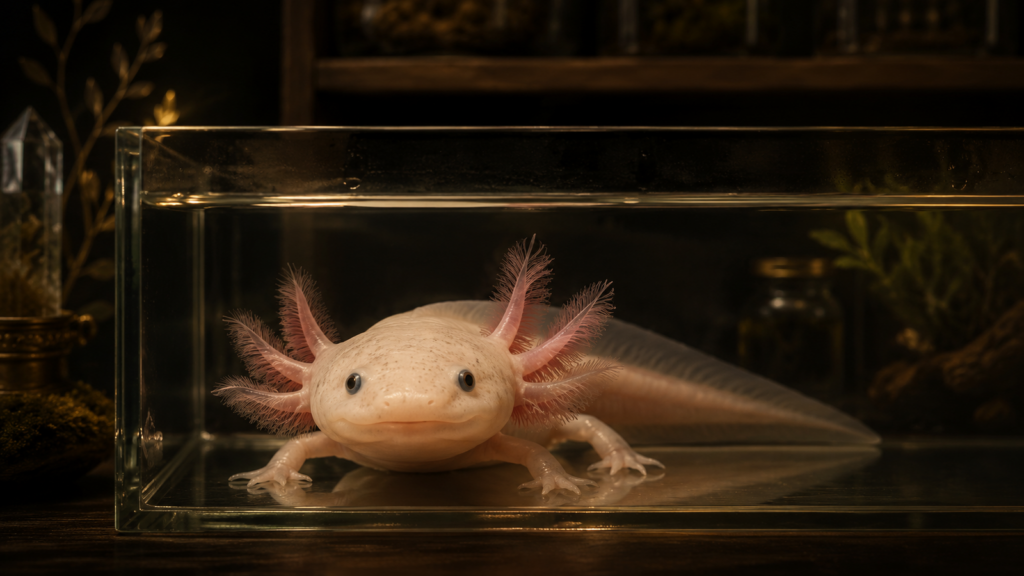
So you’ve fallen for the little smiling salamander — welcome to the club.
The next question is the one that trips up more new keepers than any other:
where to buy an axolotl that’s actually healthy, legally kept, and set up to
live its full ten-to-fifteen-year life with you. The short answer is a dedicated
breeder, almost every time. The long answer — including what a healthy axolotl
costs, how overnight shipping really works, and the red flags that should send
you walking — is this guide.
ItsyBitsyPets is reader-supported. As an Amazon
Associate we earn from qualifying purchases — at no extra cost to you. See our
affiliate
disclosure.
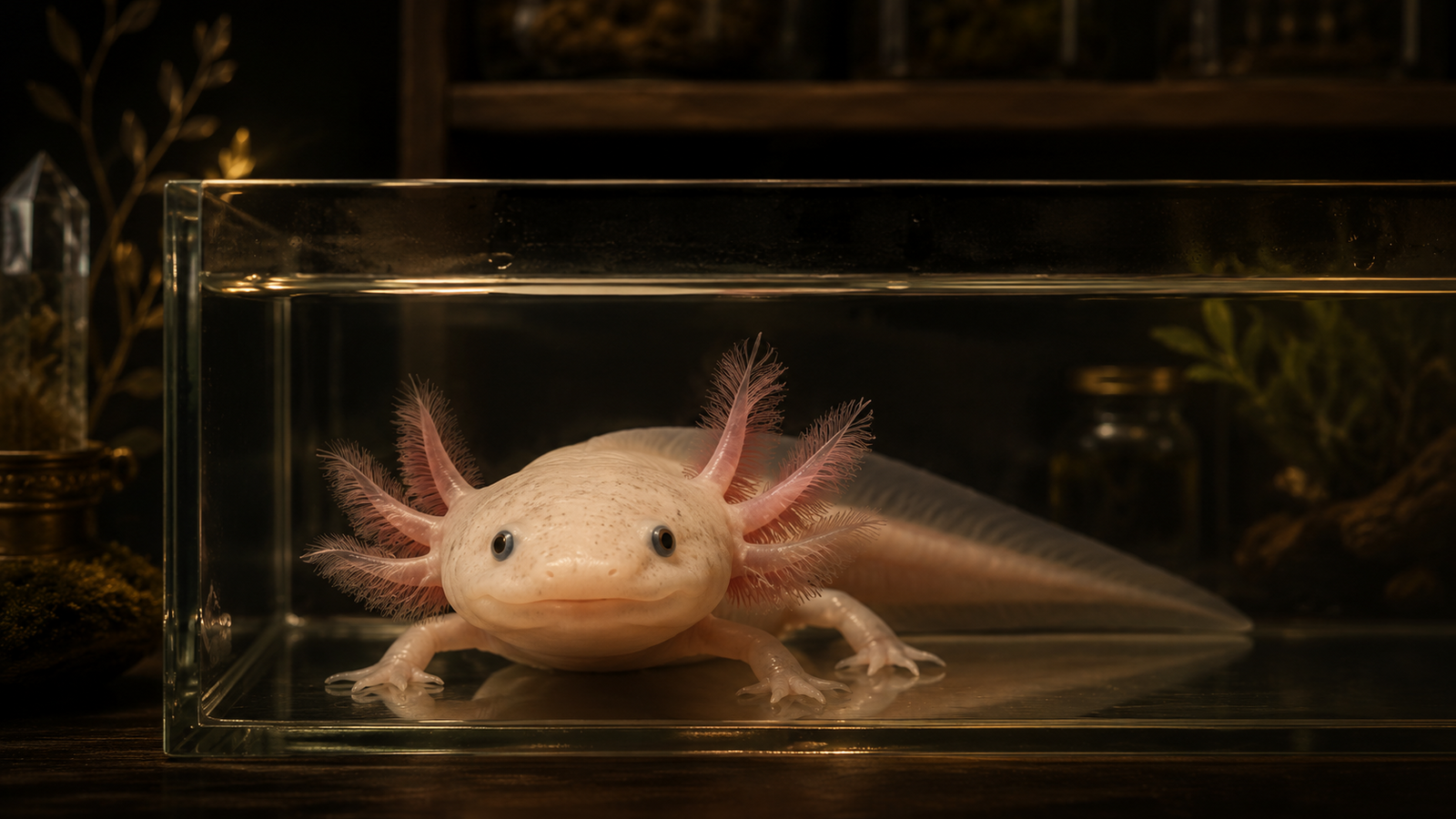
First things first: is an axolotl legal where you live?
Before you compare a single price, check your state. Axolotls are illegal to
own in California, Maine, New Jersey, and Washington, D.C., and
Hawaii and New Mexico allow them only with a permit. California
and Maine classify them as a threat to native salamander populations, while New
Jersey’s ban exists to prevent crossbreeding with its native tiger salamanders,
as tracked by World
Population Review’s state-by-state legality data.
Every other state allows axolotls without a permit, though a handful of
cities and counties layer on their own exotic-pet rules. We keep a full,
plain-English breakdown — including what the permits in Hawaii and New Mexico
actually involve — in our axolotl
laws by state guide. Reputable sellers will not ship to banned states, so
if a seller happily offers to send one to Los Angeles, you’ve already learned
something important about that seller.
Breeders vs. pet stores: why the source matters so much
Axolotls look tough, but the first months of their lives set the trajectory
for the next decade. An axolotl raised in cool, clean water on proper food, by
someone who tracks genetics, is a fundamentally different animal from one
mass-produced for chain-store shelves and held in a warm community tank over
gravel.
The keeper-run resource Axolotl
Central puts it bluntly: pet-store axolotls tend to die prematurely and
suffer more health problems than those from dedicated breeders. General pet
stores also routinely hand out incorrect care advice — warm water, gravel
substrate, fish tankmates — that quietly harms the animal after you get it
home. A dedicated breeder, by contrast, breeds for strong genetics, screens
buyers with a question or two, and will answer your setup questions for years
afterward.
That doesn’t make every small seller a saint or every shop a villain — a
genuine exotics specialist with cold, clean axolotl tubs can be a fine source.
The rule of thumb: buy from someone whose axolotls are their specialty, not
their inventory.
Where to buy an axolotl: 7 safe options
Here’s where experienced keepers actually shop, roughly in order of how
often we’d recommend each to a first-time buyer wondering where to buy an
axolotl.
1. Dedicated axolotl breeders that ship
Specialist breeders are the gold standard. They raise axolotls in cycled,
chilled systems, feed proper diets, photograph the exact animal you’re buying,
and ship overnight with live-arrival guarantees. Because axolotls are their
whole business, their reputation lives and dies on reviews from keepers like
you — which keeps standards high. Most publish their DOA policy, weather rules,
and minimum juvenile size right on the website.
2. Local hobby breeders
Searching “axolotl breeders near me” often turns up hobbyists who raise a
few clutches a year. Local pickup means no shipping stress, you see the
animal’s tub and water with your own eyes, and you gain a nearby mentor.
Vet the animal the same way you would from anyone: fluffy gills, plump tail,
eager feeding response.
3. Vetted breeder directories
The hardest part of buying online is knowing who’s legitimate, and a
directory only helps if you know what it screened for. Before you trust any
list, check that it verifies four things: that the breeder publishes a
live-arrival guarantee, that animals are captive-bred rather than wild-caught,
that they ship with cold packs and name both the courier and the transit window,
and that the listing was checked recently rather than five years ago. A
directory that takes payment for placement without labelling it is not a
directory, it is an ad page.
Apply those four tests yourself and you can vet a breeder from any source in
about ten minutes, which is faster than waiting for someone else’s list to be
updated.
4. Reptile and exotics expos
Expos let you inspect dozens of animals in person in one afternoon and talk
directly to the people who raised them. Look for vendors whose axolotls sit in
cool, clean, individual tubs — not crowded, cloudy ones — and who ask you
questions about your tank. Bring a cooler and an insulated bag for a safe ride
home; a hot car can undo a healthy purchase in an hour.
5. Axolotl rescues and rehoming
Axolotls are a ten-plus-year commitment, and plenty of owners discover that
too late. Rescue groups and keeper forums regularly rehome healthy adults who
simply need a properly cycled, cold tank. You’ll often pay only a modest
adoption fee, and an adult’s personality and size are already known quantities.
It’s the budget-friendly option that also does some good.
6. Specialty exotic and aquatics shops
A true exotics or dedicated aquatics shop — the kind with chilled amphibian
systems and staff who keep axolotls themselves — can be a legitimate source.
Judge the shop by its water: cold, clean, bare-bottom or fine-sand tubs, no
fish crammed in with the axolotls, and staff who can tell you the animal’s age
and diet without checking a label.
7. Keeper communities and axolotl clubs
Online axolotl communities are where breeders announce upcoming clutches
and experienced keepers sell juveniles they’ve raised well. Buying through a
community adds a layer of accountability — a seller with years of post history
and happy buyers is a far safer bet than an anonymous marketplace listing. The
same communities are gold for post-purchase support, too.
Where not to buy: big-box chain stores (warm tanks, gravel, volume
genetics) and anonymous classified-ad marketplaces where you can’t verify the
seller, the animal, or the conditions it was raised in. If you can’t see the
actual animal, its water, and a live-arrival policy, keep scrolling.
Axolotl price: what a healthy one costs
Axolotl cost is mostly about morph (color variety) and quality of rearing,
not size. Expect roughly:
| What you’re buying | Typical price |
|---|---|
| Common morphs (wild type, leucistic, golden albino) | $30–$100 |
| Well-bred wild type from a quality breeder | $40–$60 |
| Rare/show morphs (copper, mel, chimera, GFP lines) | $100–$300+ |
| Overnight shipping (if not local pickup) | $40–$80, sometimes flat-rate |
Be suspicious of the $20 axolotl. At that price, someone cut a corner —
usually food quality, water temperature, or genetics — and you’ll pay the
difference later in vet stress and heartbreak. On the flip side, the animal
itself is the cheap part of this hobby: a proper cold-water setup (tank,
filtration, cooling, testing) usually costs several times the axolotl price,
so budget for the habitat first.
Choosing your first morph (and what it changes)
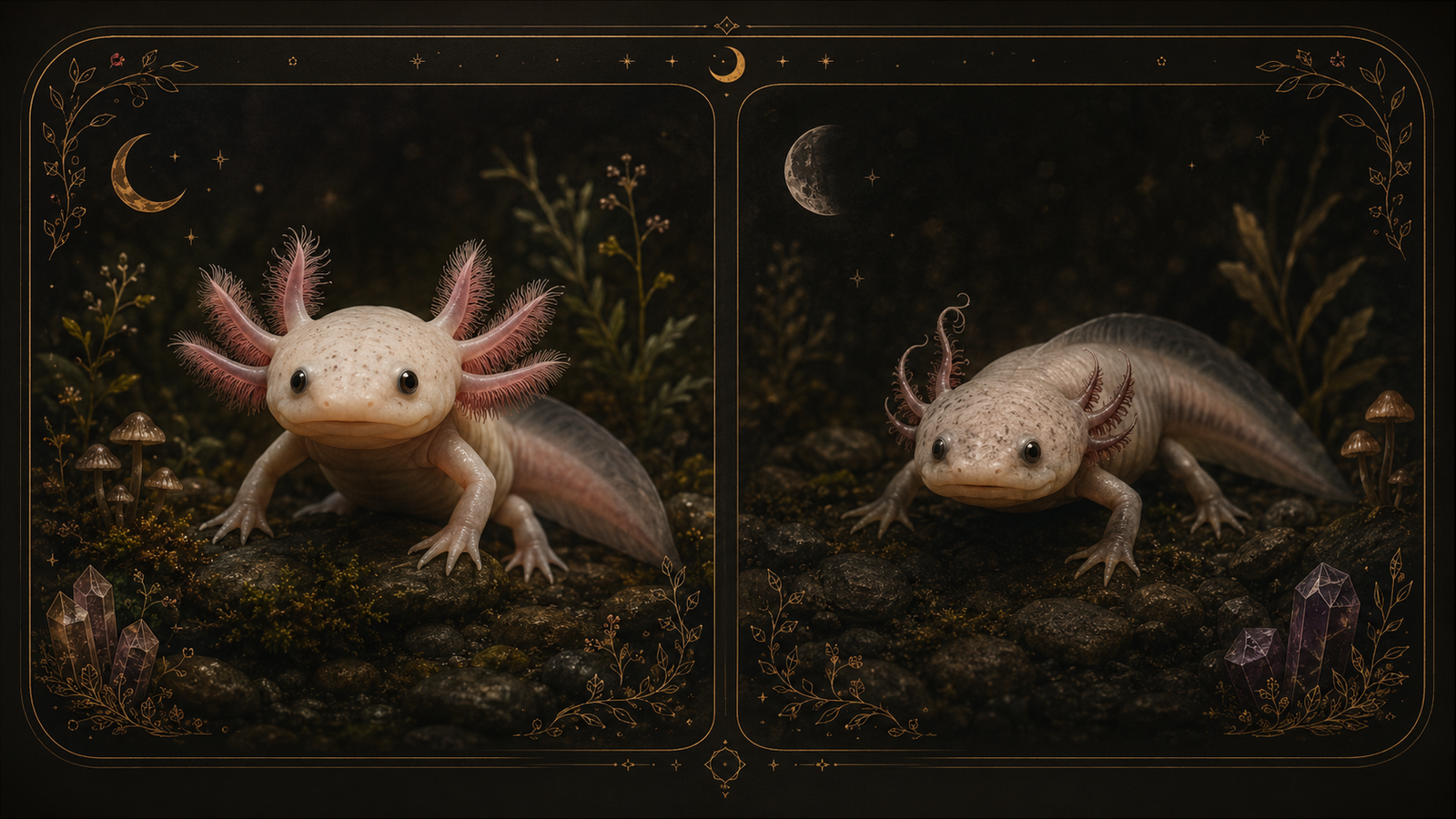
Good news: morph is purely cosmetic. A $45 wild type and a $250 copper need
the exact same tank, temperature, and earthworms, and both have the same odds
of a long healthy life if they came from a careful breeder. Wild types wear
mottled olive-brown with shimmering gold flecks; leucistics are the famous pale
pink with dark eyes; golden albinos glow yellow-gold. All three are widely bred,
affordable, and hardy — perfect first axolotls.
The rarer morphs are where axolotl cost climbs. Coppers, melanoids, mosaics,
and chimeras command collector prices because the genetics are harder to
produce, not because the animals are better pets. Our advice for a first-time
buyer: spend on the breeder, not the morph. A common morph from an excellent
source will bring you every bit of the joy — and you can chase a showpiece
morph for tank number two, because there is always a tank number two.
Questions to ask any seller
Five minutes of questions tells you more than an hour of photos. Any seller
worth your money can answer these without hesitation:
- How old is this axolotl, and what exactly has it been eating?
- What temperature and water parameters is it kept at right now?
- What’s your live-arrival policy, and how do you pack for summer heat?
- Can you send a photo or video of this specific animal, today, eating?
- Has it ever been housed with fish or on gravel?
Just as telling is what they ask you. A conscientious breeder wants
to know your tank size, whether it’s cycled, and how you’ll keep it cold in
July. A seller who takes your money without a single question is treating a
fifteen-year animal like a trinket — and that attitude usually shows up in the
animal’s condition, too.
How axolotl shipping actually works
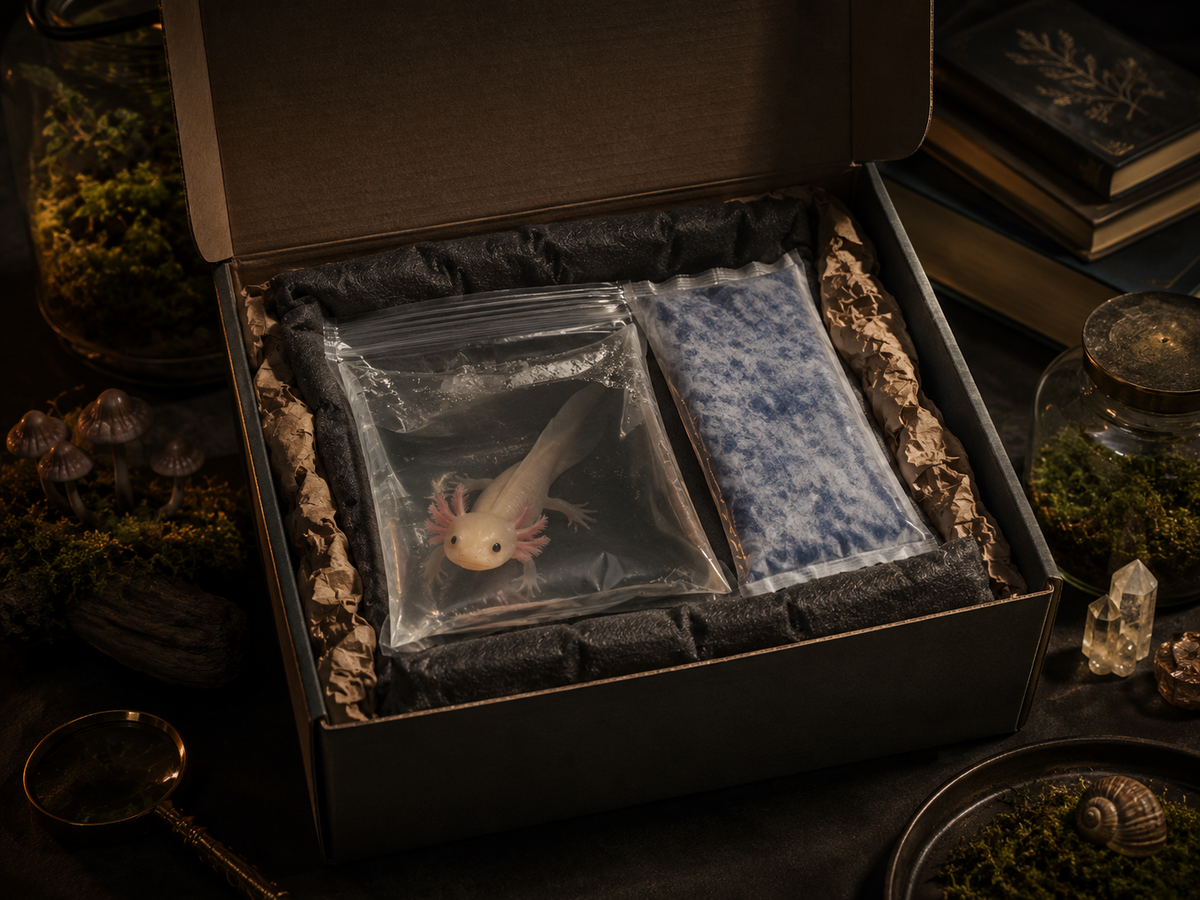
Shipping a fully aquatic amphibian sounds alarming, but the industry has
this down to a science. Reputable sellers ship overnight courier, in a breather
or oxygen-packed bag, inside an insulated box with a heat pack or cold pack
matched to the weather. Many ship only Mondays and Tuesdays so a delay can’t
strand an animal in a warehouse over a weekend, and they’ll hold shipments
during heat waves or deep cold snaps.
The live-arrival guarantee is the piece you must read before paying.
A typical DOA policy requires you to contact the seller within about an hour
of delivery, with clear photos and video of the animal in the unopened bag,
for a replacement or refund. That means: be home on delivery day, open the box
immediately, and document before you touch anything. A seller with no
live-arrival policy at all is telling you how confident they are in their own
packing.
Red flags — and what a healthy axolotl looks like
Whether you’re standing at an expo table or squinting at listing photos,
the same checklist applies.
Walk away if you see:
- No live-arrival/DOA policy, or refusal to show photos of the actual
animal you’re buying - Juveniles under about 3 inches — too fragile to ship or rehome safely
- Curled, shriveled, or fuzzy gills, a thin tail, or ribs showing
- Axolotls housed in warm tanks, over gravel, or with fish
- A seller who asks you nothing about your tank or cycling
Look for: full, fluffy gill filaments, a plump rounded tail and belly, alert
posture, an eager strike at food, and a seller who volunteers the animal’s age,
diet, and water parameters before you ask. Healthy axolotls are curious little
vacuum cleaners; a listless one slumped in a corner of a bare warm tank is a
medical bill in waiting.
Get the tank ready before the axolotl
The single biggest killer of new axolotls isn’t shipping — it’s an uncycled
tank waiting at home. Axolotls produce a surprising amount of ammonia, and a
tank whose beneficial bacteria aren’t established yet will poison a healthy
animal in days. Start your setup two to six weeks ahead, and only order your
axolotl once ammonia and nitrite have read zero for several consecutive days.
Our full axolotl
care guide walks the whole setup step by step.
The pre-arrival shopping list is short but non-negotiable. You’ll want a
liquid test kit like the
API Freshwater
Master Test Kit to prove the cycle is done, a bottle of
Seachem Prime
water conditioner to neutralize chlorine and chloramine, and a
digital
aquarium thermometer so you know — not guess — that the water sits in the
60–68°F range axolotls need.
For filtration, a gentle air-driven
sponge
filter gives you biological filtration without the strong current that
stresses axolotls. If your home runs warm, a
clip-on
aquarium cooling fan can pull water temperature down a few crucial degrees
before you resort to a chiller.
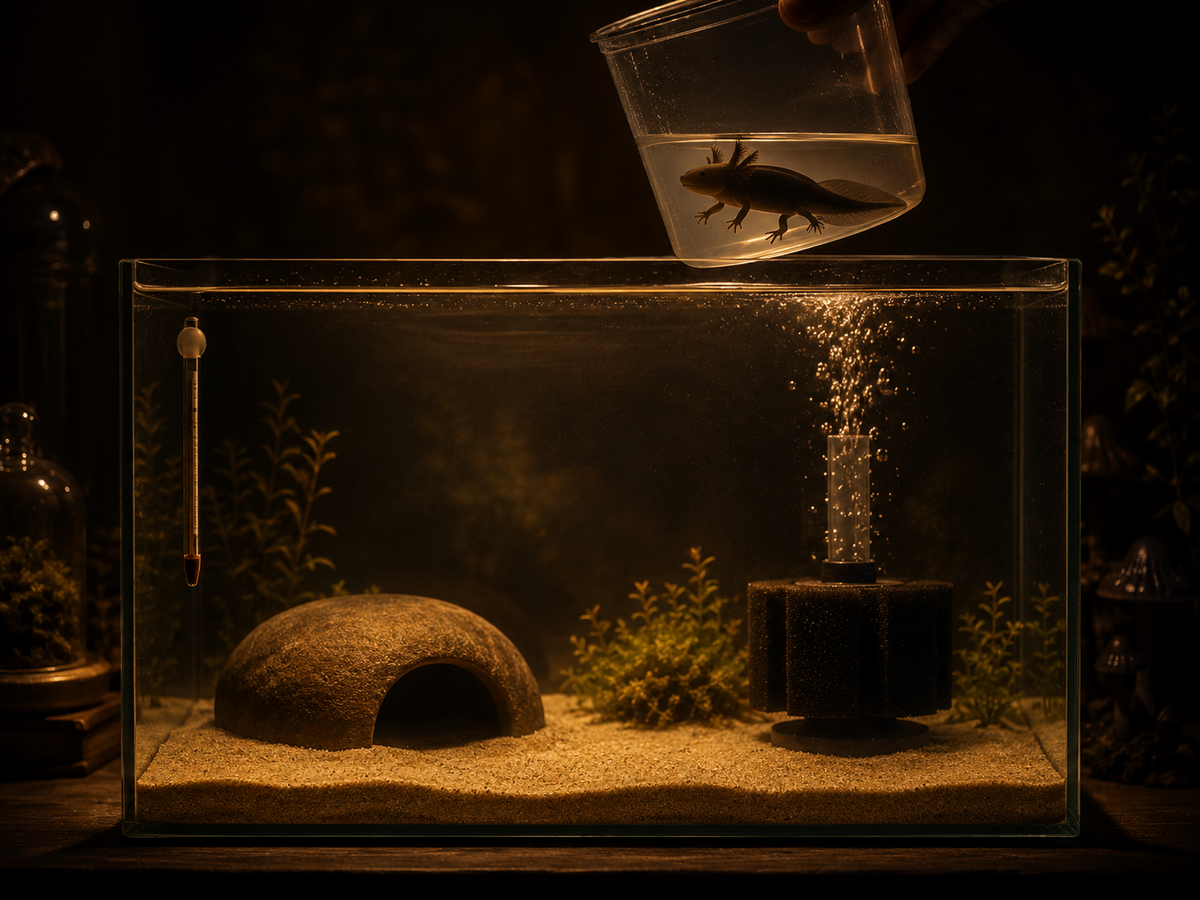
Arrival day: acclimating your new axolotl
When the box arrives, open it right away, photograph the bag as your DOA
policy requires, then float the sealed bag in the tank for fifteen to twenty
minutes to equalize temperature. Rather than dumping bag water into your tank,
move the axolotl gently over with clean hands or a soft cup, and discard the
shipping water. Keep the lights dim and resist feeding for the first day —
a shipped axolotl wants darkness, stillness, and cold clean water more than it
wants a meal.
One more habit worth borrowing from experienced keepers: if you already
have an axolotl at home, quarantine the newcomer in a separate cycled tub for
two to four weeks before they share water. It protects your established animal
from anything the new arrival might carry, and it gives you a low-stress window
to watch the newcomer eat, poop, and behave normally before the big move.
Most healthy juveniles are exploring and eating within twenty-four to
forty-eight hours. If yours hides longer, don’t panic; check your temperature
and parameters, keep the tank quiet, and offer a wiggling earthworm piece at
dusk. Patience on day one buys you a confident, hand-feeding little dragon by
week two.
Common questions from first-time buyers
Is it safe to buy axolotl online?
Yes — buying axolotl online from an established breeder is often
safer than buying locally from a general pet store, because specialist
breeders control every variable from genetics to water temperature to packing.
The overnight-shipping system, done properly, is far less stressful on the
animal than weeks in a warm retail tank. The safety lives entirely in your
vetting: verified reviews, a published live-arrival policy, weather holds, and
photos of the actual animal. Skip any online listing missing even one of
those.
Is searching “axolotl for sale near me” a good way to shop?
It’s a fine starting point, as long as you treat the results as leads to
vet rather than a shopping cart. That search surfaces everything from superb
hobby breeders to impulse rehomers to marketplace flippers, all mixed together.
Apply the same checklist you’d use for a shipped animal — see the actual
axolotl, its water, and its food response before money changes hands. Local
pickup’s real advantage is that nothing can be hidden from you if you know
what to look for.
What size axolotl should you buy?
Three inches is the practical floor. Below that, juveniles are fragile,
still on tiny live foods, and prone to nipping each other’s limbs when raised
in groups — reputable breeders won’t ship them that small anyway. A 3-to-5-inch
juvenile is sturdy enough to travel, young enough to grow up in your water, and
already converted to easy foods like chopped earthworm and pellets. Adults from
rescues are even more forgiving, since their size and temperament are known.
Do axolotls need a friend?
No — axolotls are solitary and feel zero loneliness. A single axolotl in a
properly sized, cold, cycled tank is a completely happy axolotl. Pairs and
groups are possible for keepers with big footprints and equal-sized animals,
but juveniles especially will nibble each other’s gills and toes when housed
together. Buy one, get everything right, and expand later if the hobby grabs
you (it will).
The bottom line
If you remember one thing about where to buy an axolotl, make it this: buy
the seller, not the salamander. A slightly pricier juvenile from a breeder who
chills their water, feeds earthworms, publishes a live-arrival policy, and asks
about your cycle is the cheapest axolotl you’ll ever own — because it’s the one
that lives fifteen years. Check your
state’s laws, vet the seller against the four tests above,
cycle the tank first, and you’ve dodged nearly every mistake new keepers make
before your axolotl ever gets in the water.