
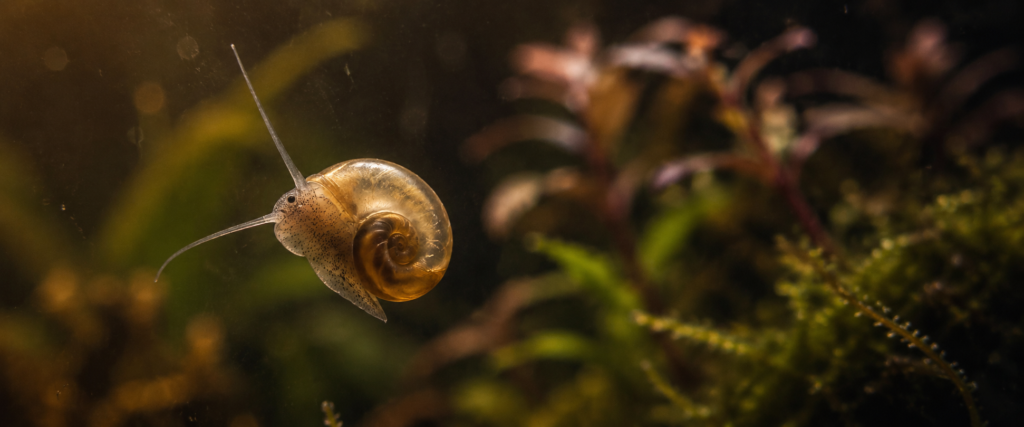
Spotting a tiny snail in aquarium glass you never bought is one of the hobby’s great rites of passage. One day the tank is exactly what you stocked; the next, a translucent speck the size of a rice grain is cruising the front pane like it pays rent. Where did it come from? Is it dangerous? Are there more? The short answers: it hitchhiked in on a plant, it is almost certainly harmless, and yes — there are definitely more. This guide identifies the four snails that appear uninvited, explains how they got in, and gives you an honest keep-or-remove verdict for each, plus the control methods that actually work without poisoning your tank.
ItsyBitsyPets is reader-supported. As an Amazon Associate we earn from qualifying purchases — at no extra cost to you. See our affiliate disclosure.
One important distinction before we start: this article is about the snails that show up on their own. If you’re shopping for snails on purpose — nerites, mystery snails, and the rest of the welcome guests — our freshwater aquarium snails guide covers the species worth buying, and our small snail aquarium guide matches them to nano tanks.
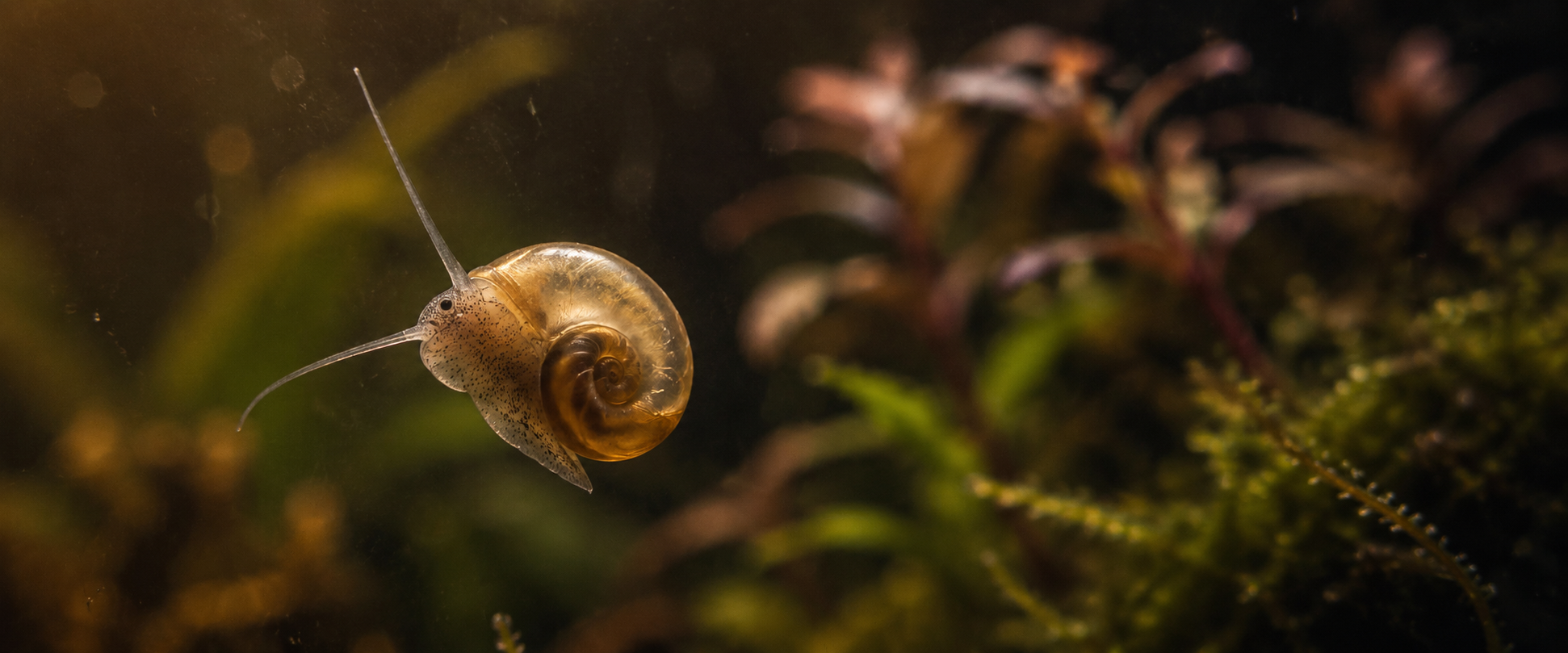
What that tiny snail in aquarium glass actually is
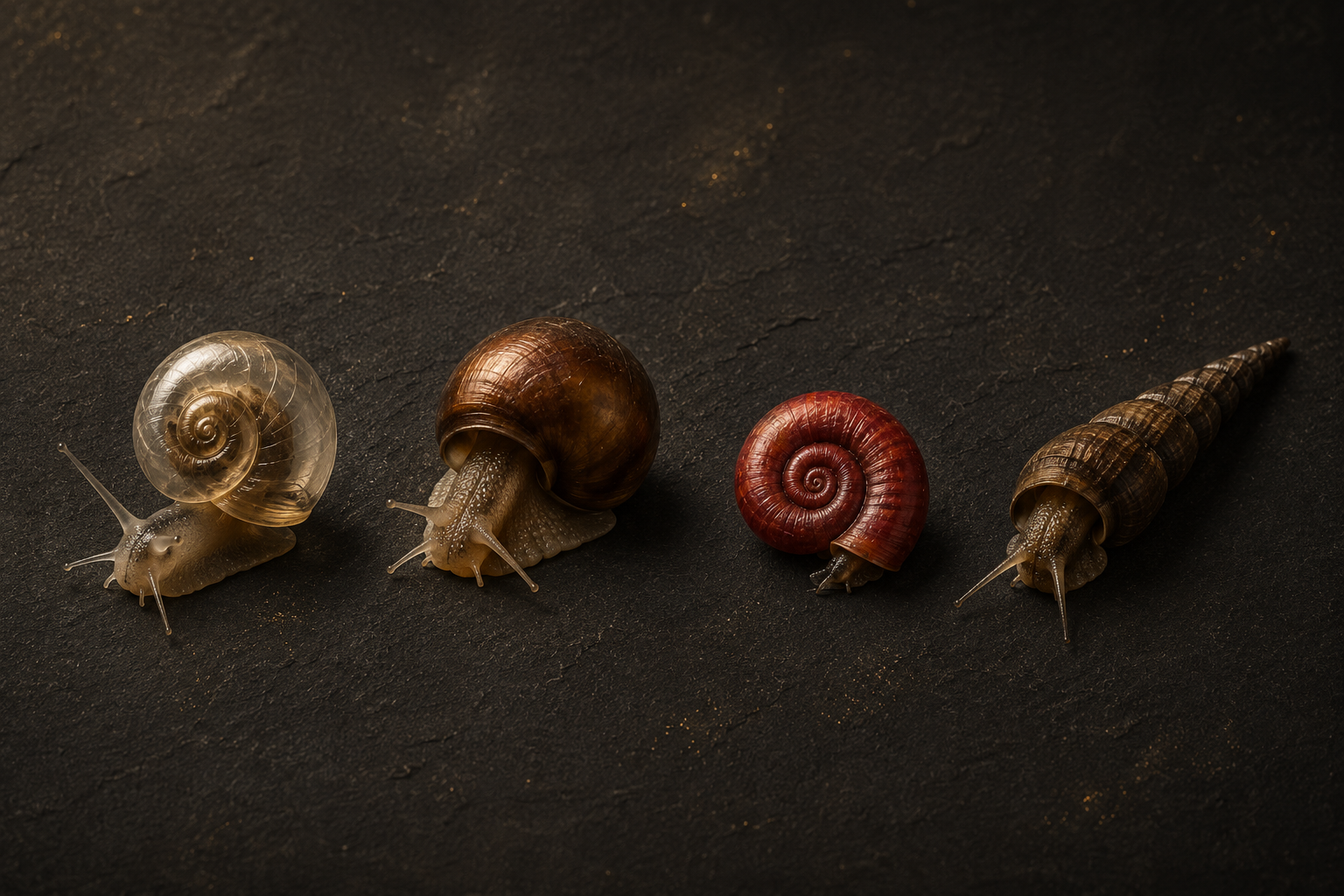
Four species account for nearly every uninvited snail in the hobby. Telling them apart takes about ten seconds once you know what to look for — and it matters, because they don’t all deserve the same verdict.
1. Bladder snail — the one it probably is
The bladder snail (Physella acuta) is the most common hitchhiker in freshwater tanks, full stop. Look for a thin, glossy, slightly translucent shell under two-thirds of an inch, a gray body flecked with tiny glitter-like speckles, and two long, thread-thin antennae. The giveaway is the spiral: hold one up and the shell coils to the left — bladder snails are sinistral, one of the few snails in your tank that ever will be. They breathe air, so you’ll see them jet up to the surface, and they can even glide upside-down along the underside of the water’s surface.
Their reproductive math explains why you never find just one. According to the USGS species profile, Physella acuta is a hermaphrodite capable of self-fertilization — over twenty generations in laboratory conditions — and a mature adult can lay 50 to 100 eggs a week in clear jelly clutches of 10 to 40. Every snail is a founding colony. Care stats, for the curious: under 0.6 inch; any tank; 64–84°F; eats algae, biofilm, leftovers, and decaying leaves; ignores healthy plants.
2. Pond snail — the one worth removing
Pond snails (Lymnaea and their relatives) are the bladder snail’s bigger, duller cousin, and the two are confused constantly. The differences: pond snails coil to the right, wear a thicker matte brown shell, grow past an inch, and have short triangular tentacles instead of long threads. They share the bladder snail’s party trick — self-fertilizing hermaphrodites, so one stowaway becomes hundreds — but not its table manners. Pond snails are the one hitchhiker with a real appetite for soft, healthy plant tissue, and a colony of inch-long snails produces meaningful waste. If you keep live plants, this is the species to remove early, while the count is still countable.
3. Ramshorn snail — the accidental pet
Young ramshorn snails arrive at just 3–4 millimeters — a flat, coiled disc like a tiny ammonite fossil, in red, brown, or leopard-spotted morphs. As Aquasabi’s hitchhiker guide notes, their egg clutches are so small they’re barely noticeable on plants, which is exactly how they get in. Here’s the twist: ramshorns are also sold on purpose, at real prices, because they’re genuinely useful algae-and-detritus grazers and honestly pretty. They breed to the food supply — restrained in a lightly fed tank, prolific in an overfed one. Many keepers who found their first ramshorn by accident now consider them stock. Care stats: up to ~1 inch; any tank; 70–80°F; peaceful; ignores healthy plants.
4. Malaysian trumpet snail — the one you see at night
If your mystery guest is a narrow, inch-long cone that only appears after lights-out, you have Malaysian trumpet snails. They spend the day burrowed in sand or gravel eating the detritus that settles there, then surface at night in numbers that can startle a keeper who thought they had three. MTS are livebearers — no eggs to spot, ever — and armored with a trapdoor operculum that defeats most predators. They’re also, quietly, the most useful snail on this list: their constant tunneling aerates the substrate and keeps waste from rotting in anaerobic pockets. Care stats: ~1 inch; any tank; 70–82°F; nocturnal burrower; population tracks food supply.
How a snail you never bought got into your tank
Pest snails almost never walk in as adults. They arrive as eggs — tiny, gelatinous, glass-clear clutches glued to plant stems, the undersides of leaves, driftwood, gravel, decorations, even the inside of a used filter or net. A clutch the size of this letter o can hold a dozen eggs, and on a bushy stem plant it is functionally invisible. You did not miss anything obvious; nobody sees them.
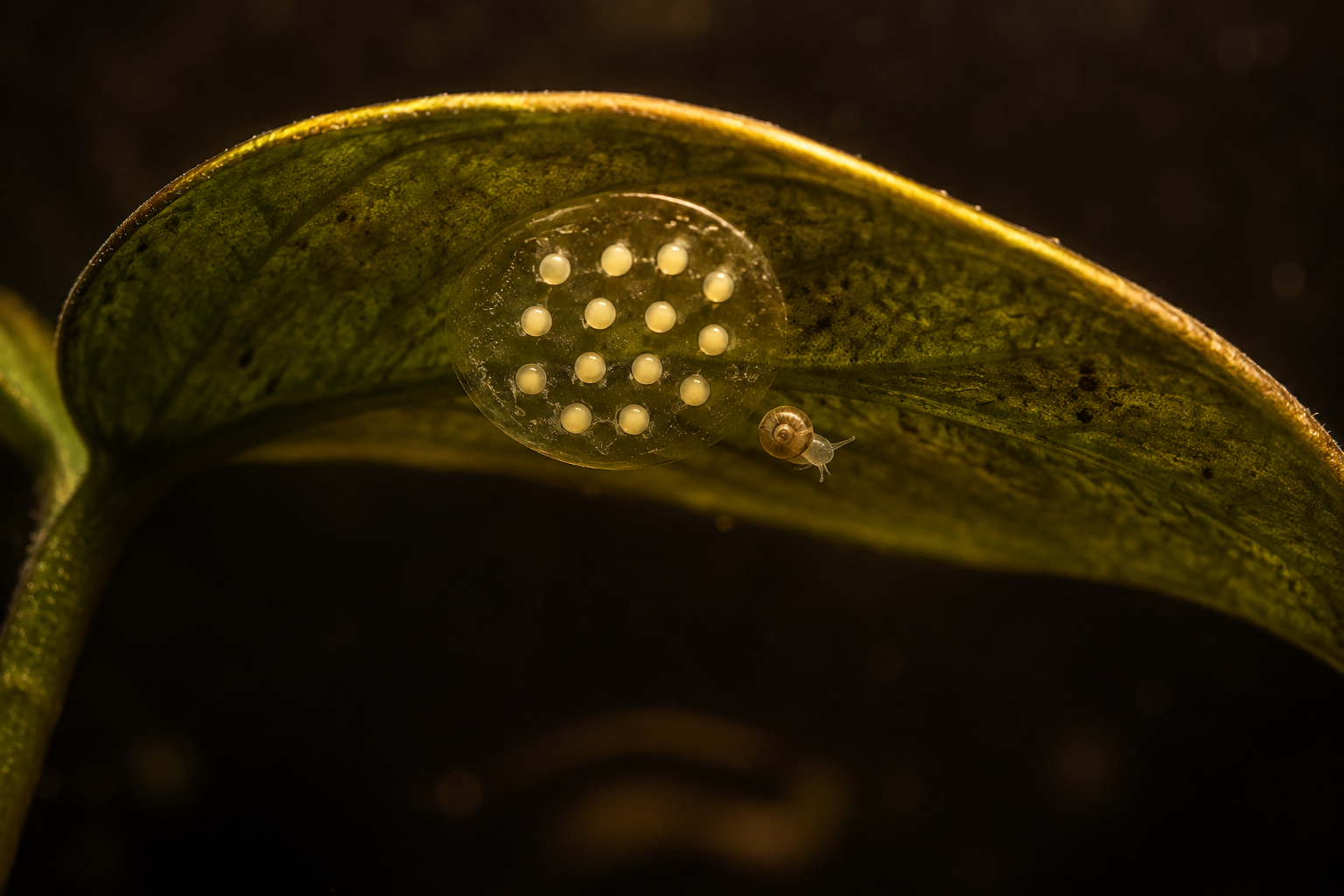
The eggs hatch one to four weeks later depending on species and temperature, which is why the first tiny snail in aquarium plants often appears a month after the plants did — long after you’ve stopped being suspicious of them. And because bladder and pond snails self-fertilize, the colony doesn’t need two founders. One egg that survives the trip is enough.
Plants are the main vector, but not the only one. Gravel and decor from an established tank, secondhand equipment that never fully dried, and bagged water from the fish store all carry eggs or pinhead juveniles. The only plant source that is truly snail-proof is tissue culture plants — grown sterile in sealed cups of gel, no eggs, no pesticides, no hitchhikers of any kind.
Are they actually bad? The honest verdict
Here is the part the panic-flavored forum threads skip: none of these four snails will hurt your fish, your shrimp, or — with the pond snail exception — your plants. They don’t bite, they don’t spread disease to fish in any way that matters in a home aquarium, and they physically cannot eat a healthy plant leaf apart from the pond snail’s nibbling. What they eat is algae, biofilm, uneaten food, and decaying plant matter. That is a cleanup crew’s job description. A modest population of bladder or ramshorn snails is doing, for free, what people pay for.
Trumpet snails go further: substrate aeration is a service planted-tank keepers actively want, and plenty of aquarists buy MTS deliberately. In our shrimp tank guide we make the same point about scavengers generally — small detritivores are the janitorial staff of a balanced tank, not its enemies.
So why the bad reputation? Numbers. A snail population is a readout of the food supply, and as Aquarium Co-Op’s pest snail guide puts it, excessive breeding is almost always caused by excessive feeding. Three hundred snails on the glass isn’t a snail problem — it’s an overfeeding-and-detritus problem wearing three hundred shells. Kill every snail today and change nothing else, and the uneaten food they were converting simply rots instead.
The verdict, species by species: ramshorns and trumpets are worth keeping at reasonable numbers. Bladder snails are harmless and useful, if less pretty — keep or remove by taste. Pond snails, remove: the plant nibbling and the pace of breeding make them the one true pest of the four.
Getting rid of tiny aquarium snails without chemicals
Start with the food supply, because nothing else works while it’s abundant. Feed what your fish finish in two minutes, net out anything left after that, and vacuum the substrate weekly with a gravel vacuum siphon to pull out the mulm and leftovers a snail colony runs on. Population follows food downward with a few weeks’ lag. This single change ends most “infestations” by itself.
Manual removal speeds things up. The classic bait trick: drop a slice of blanched zucchini or a leaf of romaine in the tank at lights-out, and lift it out the next morning carrying a crowd of snails. Repeat nightly for a week and the numbers fall fast. A purpose-built snail trap does the same job in a tidier package, and a fine-mesh aquarium net handles the ones on the glass. Crushed snails, for the unsentimental, are eagerly eaten by most fish.
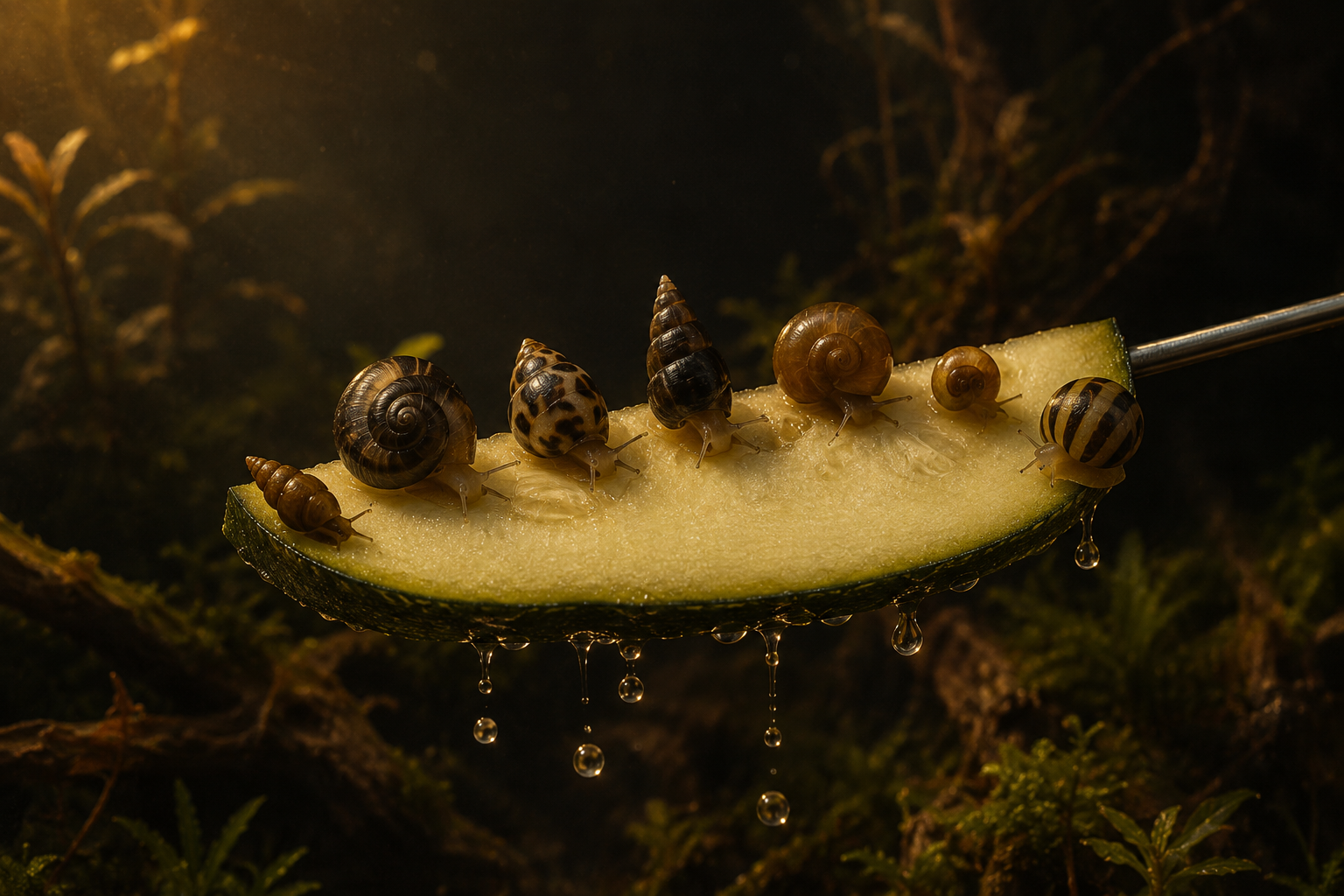
For a true boom, enlist a specialist. Two or three assassin snails will methodically clear bladder, pond, and young ramshorn snails from a 10–20 gallon tank over a few weeks, as covered in Buce Plant’s removal guide — and because assassins breed slowly, laying single eggs rather than clutches, the cure doesn’t become the next plague. Trumpet snails are the exception; that operculum makes them a frustrating meal even for assassins.
Snail-eating fish exist, but be honest about what you’re buying. Zebra and dwarf chain loaches love snails — and need groups of five-plus in twenty to thirty gallons or more, for years, long after the snails are gone. Add a loach because you want loaches, not as pest control with fins. And skip copper-based snail killers entirely: copper is lethal to shrimp, to the nerites and mystery snails you actually paid for, and a mass snail die-off fouls water fast enough to take fish with it. The chemical shortcut is the most expensive option in the store.
Prevention: the next plant you buy
Every tiny snail in aquarium history arrived the same way, so prevention happens at the plant bag. Inspect new plants under bright light, checking stem joints and leaf undersides, and rinse them thoroughly in dechlorinated water. Better, quarantine them: a bare plastic quarantine tub with a clip-on light for two to four weeks lets any eggs hatch where you can see and remove them — remember, clutches can take a month to hatch, so a one-week quarantine proves nothing.
Dips are the aggressive option — bleach solutions and alum soaks kill eggs but stress delicate plants, and they’re overkill for most purchases. The gentler guarantee is buying tissue-culture cups for your next scape, and drying any secondhand hardscape or equipment completely before it touches your water. If you’re setting up from scratch, our aquarium startup guide covers quarantine as part of the first-month routine.
Hitchhiker snail FAQ
Does a tiny snail in aquarium water mean my tank is dirty?
Not by itself. A single snail means a plant carried an egg — that’s luck, not hygiene. What tracks your maintenance is the population curve. If the count holds steady at a handful for months, your feeding and gravel-vacuuming are dialed in. If it climbs week over week, the tank is producing more leftover food and decaying matter than its cleanup crew can use, and the snails are simply the most visible symptom. Treat a snail boom the way you’d treat an algae bloom: as free diagnostics.
Will they overrun my filter?
Small snails do graze inside filters — the intake grille and sponge are biofilm buffets — and in a heavy infestation, bladder snails can colonize a hang-on-back filter’s box. They won’t break anything: impellers chop the rare snail that reaches them, unpleasant but harmless. A pre-filter sponge over the intake keeps them out entirely, and it’s the same modification that makes a filter safe for shrimp and fry. If you find dozens in the filter box at cleaning time, read it as the overfeeding signal it is.
Are they safe with a betta? With shrimp?
Safe with both, with an asterisk each. Bettas and other curious fish will pick at small snails, eat pinhead juveniles, and occasionally tug at a bladder snail’s antennae — which is population control, not a problem. Shrimp and hitchhiker snails coexist perfectly; they eat the same detritus without competing meaningfully at sane numbers. The asterisk: in a tiny, heavily infested tank, hundreds of snails do compete for the biofilm shrimp graze, one more reason to manage numbers with the feeding dial.
How long do they live?
Individually, not long — roughly a year for bladder and pond snails, one to two for ramshorns, and two or more for trumpet snails. Colonially, forever: with self-fertilizing species, any survivor restarts the line, which is why “I removed them all last spring” stories usually end with a new sighting by fall. Plan on management rather than eradication, or use assassin snails if you want a genuinely empty glass.
Do they carry anything dangerous?
The parasites that make wild-collected snails a real concern — the flukes behind swimmer’s itch, for instance — need birds or other outdoor hosts to complete their life cycle, so they die out in a closed indoor tank. Captive-bred, tank-raised hitchhikers pose no meaningful risk to fish or people. The sensible precautions are the ones you should use anyway: wash hands after tank work, and never release aquarium snails (or plants, or water) into local waterways — Physella acuta is already one of the world’s most widely invasive freshwater snails, spread exactly that way.
I want them gone today. What’s the fastest safe method?
Stack the methods from earlier in one week: cut feeding to every other day, bait with blanched zucchini nightly and remove the catch each morning, vacuum the substrate twice, and add two or three assassin snails to patrol what the bait misses. That combination collapses a bladder-snail boom in seven to ten days without a drop of chemical anything — faster than copper, and nothing else in the tank gets hurt.
Keep or remove? The quick comparison
| Snail | ID giveaway | Plants safe? | Breeding | Verdict |
|---|---|---|---|---|
| Bladder snail | Left-spiral, translucent, thread antennae | Yes | Explosive (eggs, self-fertilizing) | Keeper’s choice — harmless janitor |
| Pond snail | Right-spiral, brown, triangular tentacles | No — nibbles soft plants | Explosive (eggs, self-fertilizing) | Remove early |
| Ramshorn | Flat ammonite coil, red/brown | Yes | Fast, tracks food | Keep at sane numbers |
| Malaysian trumpet | Narrow cone, nocturnal, burrows | Yes | Fast, livebearer | Keep — substrate aerator |
Some keepers take it a step further and promote the stowaways to stock. A colony of red ramshorns in a planted jar, or trumpet snails turning the sand in a shrimp tank, costs nothing and does honest work — and culling back an overgrown colony takes one zucchini slice a week. If the accidental snails have won you over, a deliberate setup is a short step away: the species, tank sizes, and population-control tricks are all in our nano snail tank guide, which covers the bought-on-purpose side of the same coin, from half-inch horned nerites to the assassin snails that police everyone else.
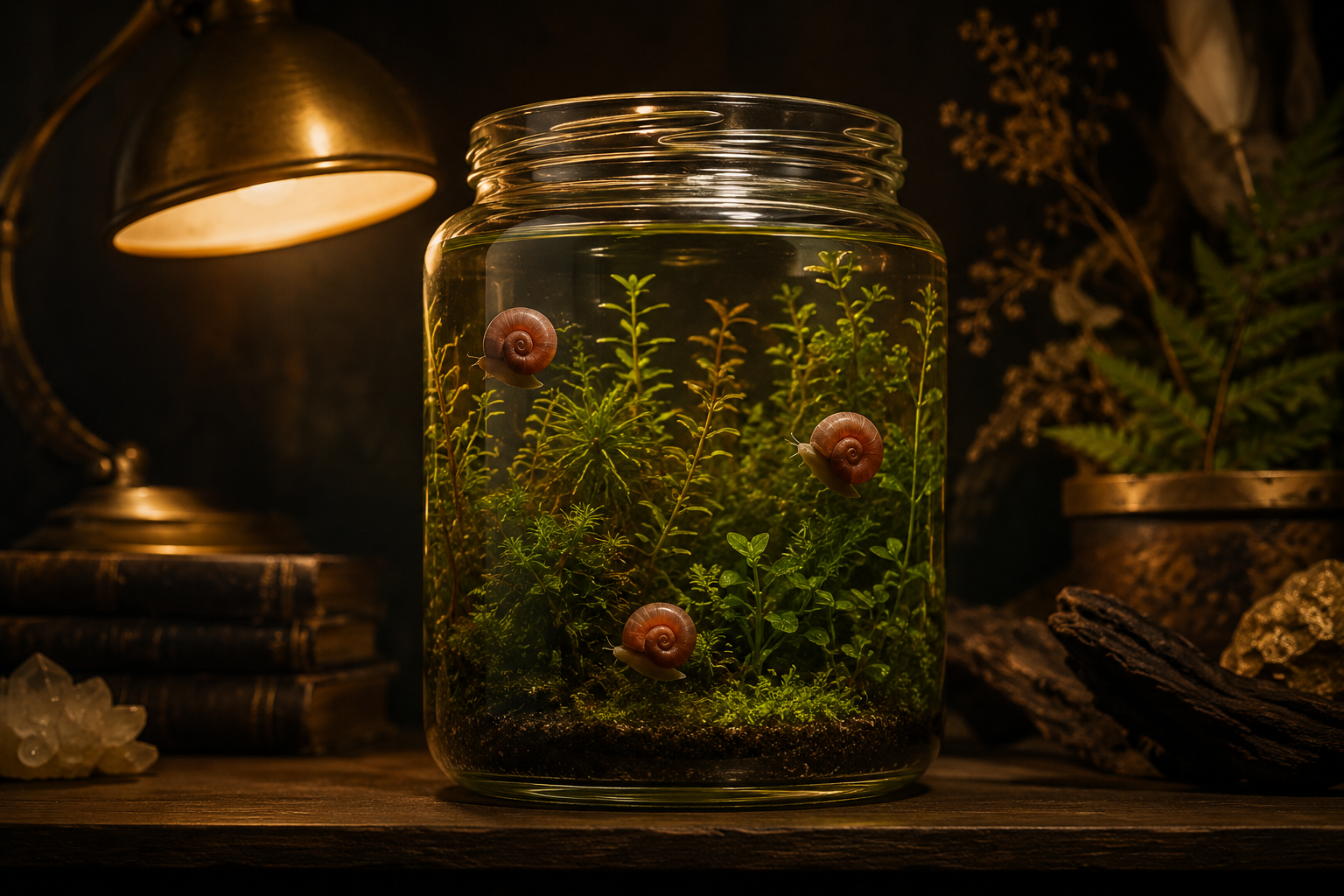
The reasonable middle path: identify your guest, remove pond snails on sight, and manage the other three with the feeding dial rather than the panic button. A dozen volunteer snails quietly eating the waste in your substrate are not an infestation — they’re the tank telling you its cleanup crew had a vacancy. Fix the food supply and the population settles at whatever your maintenance habits can feed. In a hobby full of things that go wrong expensively, a free snail that eats leftovers is a strange thing to declare war on.