
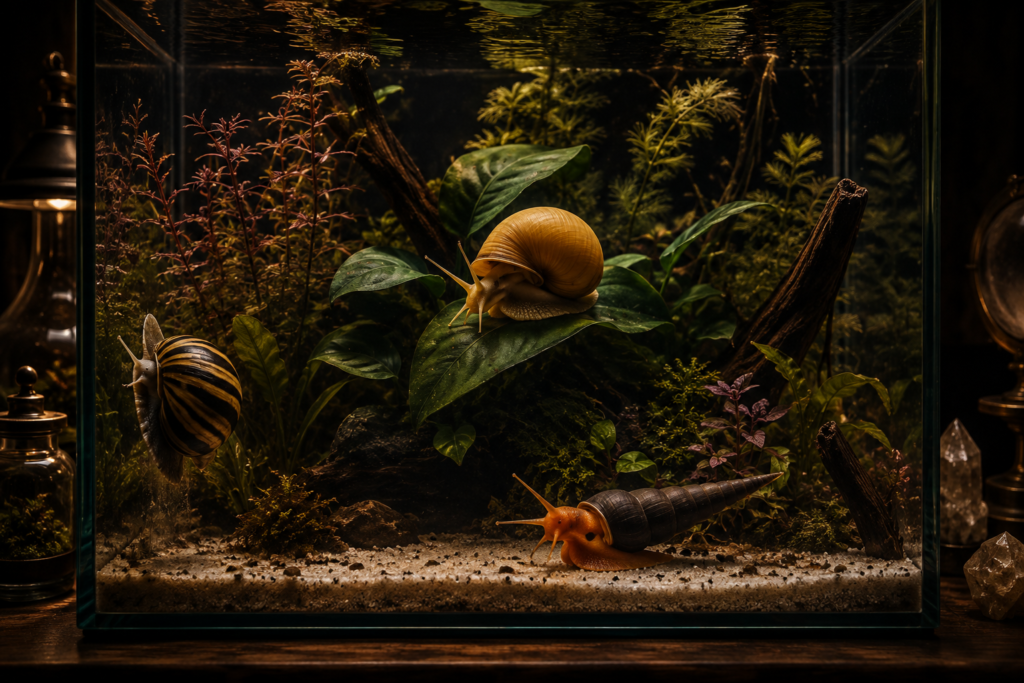
Ask a room of fishkeepers to name the good snails for aquarium cleanup duty and you’ll get a surprisingly consistent answer — because after a century of the hobby, the roster has sorted itself. A handful of species do real, visible work: they clear algae, eat what the fish miss, turn the substrate, even hunt pest snails. A different handful eat your plants and breed like a rumor. The trouble is that pet store labels rarely tell you which is which, and two of the worst offenders are dead ringers for two of the best. This guide is the sorted list: seven snails that earn their keep, matched to the job each does best, and the three you should never add to a tank on purpose.
ItsyBitsyPets is reader-supported. As an Amazon Associate we earn from qualifying purchases — at no extra cost to you. See our affiliate disclosure.
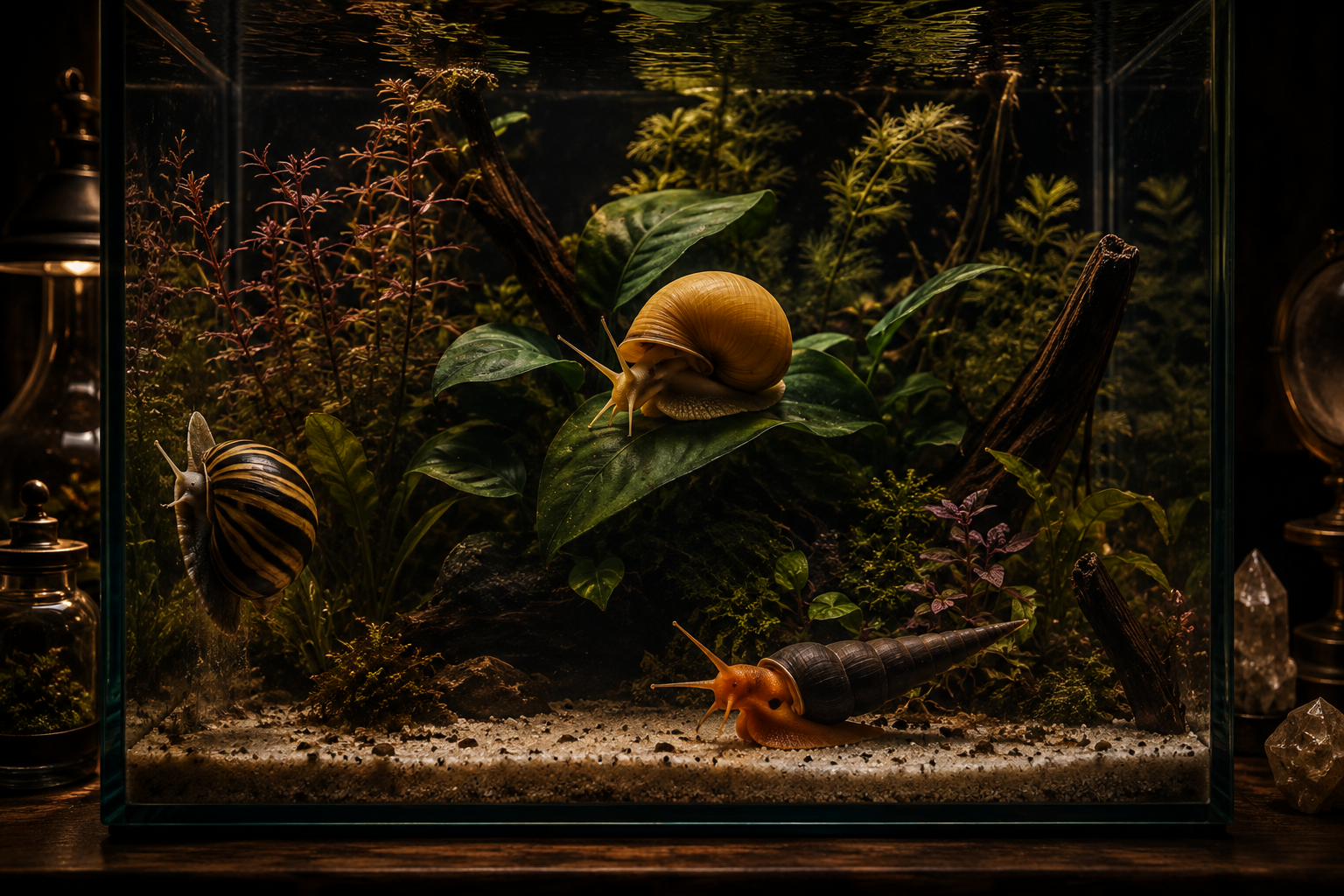
What makes good snails for aquarium cleanup duty?
Three tests separate a working snail from a future problem. First, it does a job: eats algae, scavenges leftovers, aerates substrate, or controls pests — it pays rent. Second, it fits the tank: adult size and bioload the aquarium can actually carry, because a snail is livestock, not decor. Third — the test most buyers skip — its population stays under your control, not the food supply’s.
That third test is where the roster earns its shape. The best-behaved species have built-in brakes: nerite eggs cannot hatch in freshwater at all, rabbit snails deliver a single baby every month or so, and assassin snails lay one egg at a time. The middle tier — ramshorns and trumpet snails — breed to the size of the food supply, which makes them excellent workers in a well-run tank and a carpet in an overfed one. And the avoid list breeds explosively while eating the plants you bought. Same body plan, wildly different outcomes; if you’ve already got uninvited guests, our hitchhiker snail guide covers the ones that show up on their own.
The 7 good snails, matched to the job
1. Nerite snail — the algae specialist
Hire a nerite when the job is algae, full stop. Nothing else in the freshwater hobby matches its appetite for glass film, diatoms, and the stubborn green spot algae that laughs at scrapers — a nerite works surfaces in tidy grazing rows like a tiny zamboni. Zebra, tiger, and olive patterns make it the best-looking janitor in the store, too. The famous quirk is the built-in population brake: females scatter hard white eggs that cannot hatch in freshwater, so the colony never grows by even one. Care stats: ~1 inch; 5 gallons and up; 72–78°F; pH 7–8.5; moderately hard water for shell health; peaceful with everything; lives 1–3 years.
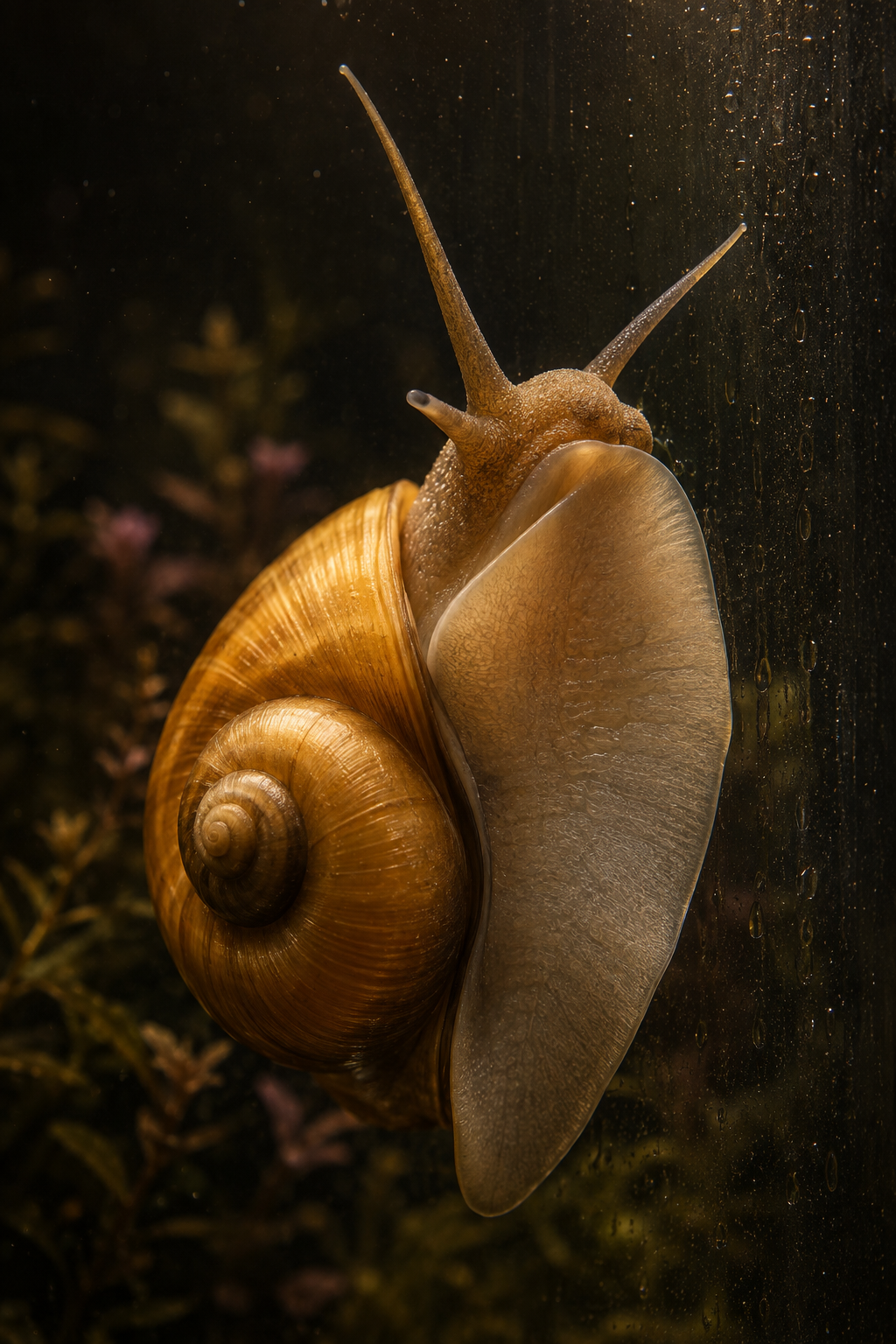
2. Mystery snail — the personality pet
The mystery snail is the one you keep for its own sake — a big, expressive grazer in gold, blue, ivory, or magenta that cruises the glass waving antennae like a parade float. Aquarium Co-Op’s care guide calls one snail fine for a 5-gallon with a tight lid; give it ten for comfort, hard water with a GH above 150 ppm, and pH at 7.2 or better, because that big shell is a calcium project its whole life. Population control is charmingly manual: females lay pink egg clutches above the waterline, where you can simply remove them. Care stats: 2–2.5 inches; 5–10 gallons and up; 70–78°F; scavenger of leftovers and soft algae; plant-safe; lives 1–3 years.
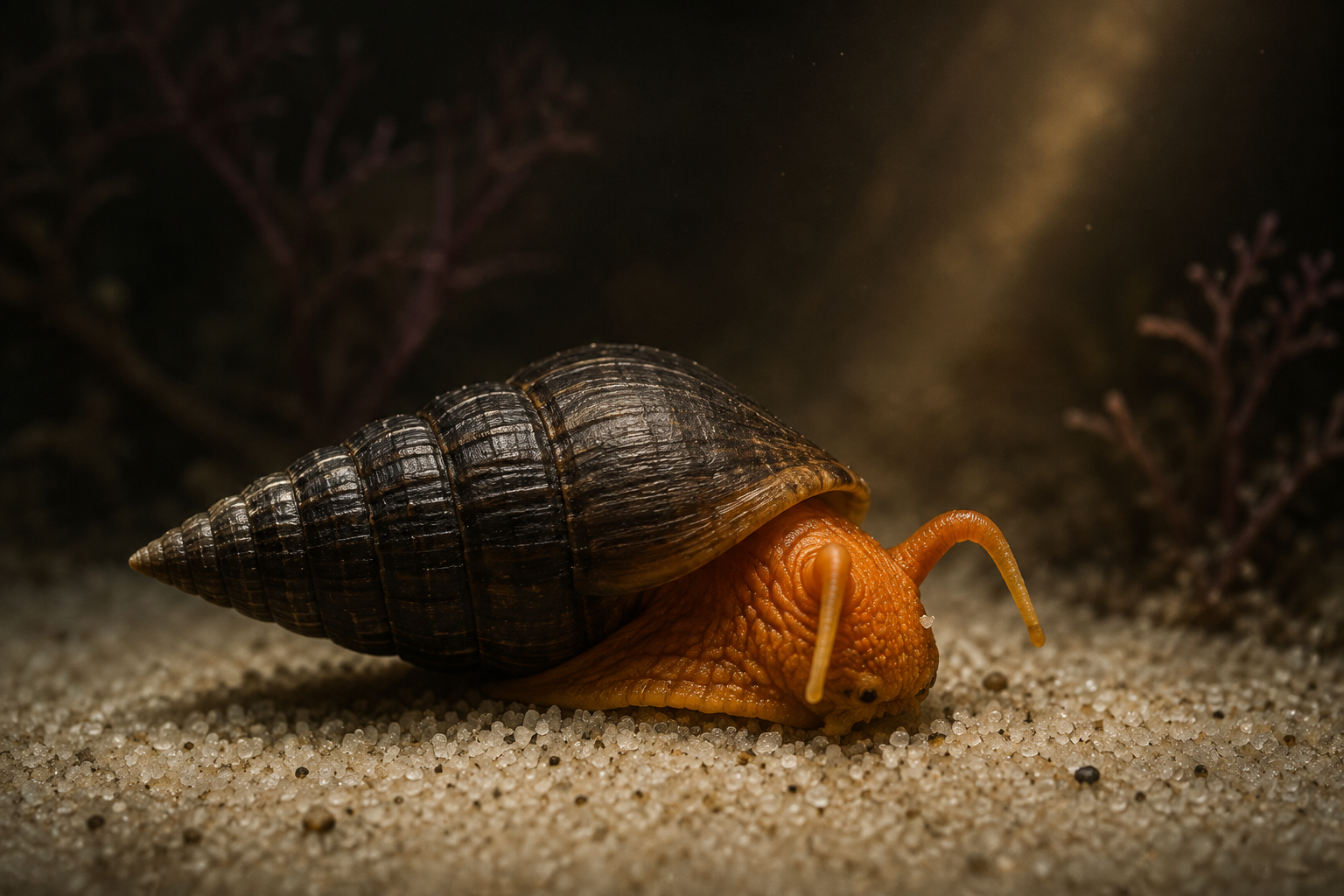
3. Rabbit snail — the gentle giant
From the mineral lakes of Sulawesi, Indonesia, rabbit snails (Tylomelania) are the exotic pick: three to five inches of spiraled cone shell pushed around by a wrinkled, droop-faced snail that looks uncannily like its namesake. They’re peaceful detritus-and-algae grazers with one of the best breeding brakes in the hobby — livebearers that deliver a single fully formed baby every four to six weeks, as FishLab’s rabbit snail guide details. Two demands are non-negotiable: warmth and room. Care stats: 3–5 inches; roughly 10 gallons per snail, 20-plus for a group; 76–84°F — genuinely warm; pH 7.5–8.5; plant-safe apart from occasional nibbles on delicate mosses; lives 3–5 years.
4. Japanese trapdoor snail — the coldwater workhorse
Most working snails want tropical warmth; the Japanese trapdoor snail doesn’t care. Comfortable from pond-cool water up through 80°F, it’s the cleanup crew for unheated tanks, coldwater goldfish setups, and outdoor tubs — a two-inch tank of a snail with an operculum “trapdoor” it slams shut against threats. It grazes algae and detritus steadily, leaves live plants alone entirely, and reproduces the polite way: a livebearer, slowly, with no egg clutches ever. Per Aquarium Source’s profile, they’re also marathon pets, living three to ten years. Care stats: ~2 inches; 10 gallons and up; 72–80°F and well below; pH 7.0–7.6; peaceful; plant-safe.
5. Assassin snail — the pest patrol
The assassin snail is the roster’s specialist contractor: a handsome yellow-and-brown striped whelk whose job is eating other snails. Seeded two or three to a ten-gallon, assassins methodically clear bladder snails, pond snails, and young ramshorns from an infested tank in a few weeks — no chemicals, no collateral damage, as Aquarium Co-Op’s assassin guide lays out. Because they lay single eggs rather than clutches, the cure never becomes the next infestation. Once the buffet runs out, feed them like the carnivores they are: sinking protein, bloodworms, leftover fish food. Care stats: ~1 inch; about 2 gallons per snail, 5 and up; 72–80°F; safe with fish and adult shrimp; slow, deliberate, oddly fun to watch hunt.
6. Ramshorn snail — the colorful generalist
The ramshorn is the utility infielder: a flat, ammonite-coiled inch of snail in red, pink, blue, and leopard morphs that eats a bit of everything — soft algae, uneaten food, decaying plant leaves — around the clock. In a planted tank with sane feeding, a ramshorn crew is tireless and pretty. The caveat is the breeding strategy: ramshorns breed to the food supply, so the feeding dial is the population dial, and an overfed tank will demonstrate that within a month. Buy them knowing the deal. Care stats: ~1 inch; 5 gallons and up; 70–80°F; peaceful; plant-safe when healthy plants are the only option left, which in a fed tank they never are.
7. Malaysian trumpet snail — the night-shift substrate crew
The trumpet snail works the one shift nobody else covers: inside the substrate. By day it tunnels through sand and gravel eating settled detritus, aerating the bed, and keeping anaerobic dead spots from forming; after lights-out it surfaces like a tiny second crew clocking in. Planted-tank keepers add them on purpose for exactly this. Like the ramshorn, it’s a breed-to-food-supply species — a livebearer, so there are never even eggs to spot — and feeding discipline is what keeps the night shift a crew instead of a crowd. Care stats: ~1 inch armored cone; any tank size; 70–82°F; nocturnal; effectively indestructible.
The 3 snails to avoid buying
Pond snail — the plant nibbler
The pond snail fails two of the three tests at once: it nibbles soft, healthy plants, and it breeds explosively — a self-fertilizing hermaphrodite whose single stowaway becomes hundreds. It arrives free on plants often enough that nobody should ever pay for the privilege. If they’re already in your tank, remove them early; the bait-and-trap routine in our hitchhiker guide clears them without chemicals.
Apple snail — the illegal lookalike
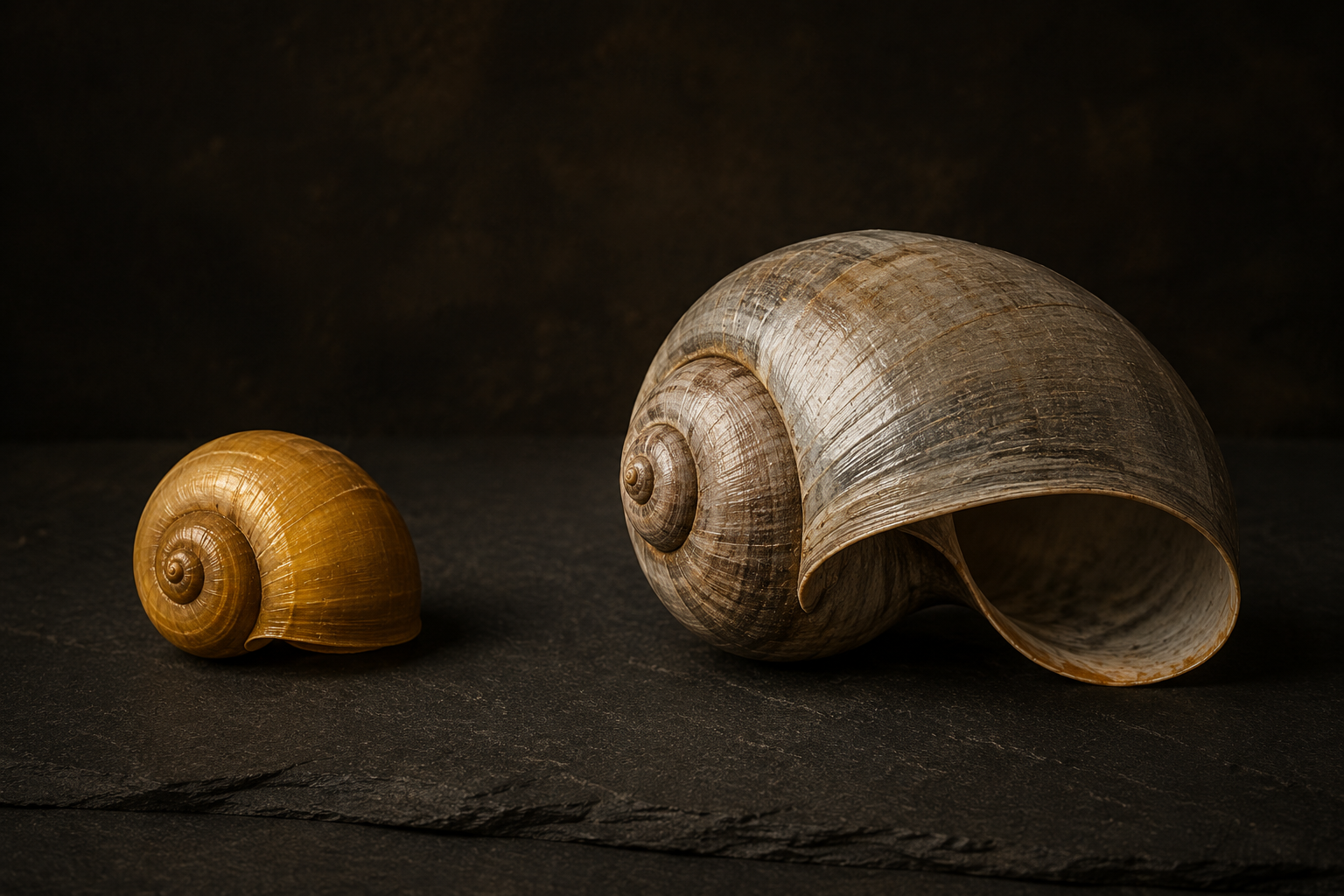
Here’s the trap on the store shelf: the channeled apple snail (Pomacea canaliculata) looks like a mystery snail’s big brother, and it is — the mystery snail is literally its well-behaved cousin. But apple snails grow toward softball size, mow planted tanks to stubble, and are such destructive invasives that US federal law prohibits importing or transporting them across state lines. The mystery snail (Pomacea diffusa) is the legal, plant-safe member of the family; anything sold as an “apple snail” that promises giant size deserves a hard pass, both for your plants and for the law.
Giant Colombian ramshorn — the impostor
Despite the name, Marisa cornuarietis isn’t a true ramshorn at all — it’s another apple snail relative wearing a ramshorn’s coil, and it grows past two inches with an appetite to match. Where a real ramshorn grazes dead leaves, a Marisa eats living plants down to the stems. In an unplanted tank they’re manageable; in the planted tanks most people put snails in, they’re a slow-motion lawnmower. Check the size on the label: a “ramshorn” bigger than a quarter is the impostor.
Matching the snail to your tank
Stocking math first. In a 5-gallon, choose from the inch-and-under crew: a nerite or two, a few ramshorns, or an assassin pair — sized options our small snail aquarium guide covers tank by tank. A 10-gallon opens the door to a mystery snail or a Japanese trapdoor snail alongside them. Rabbit snails wait for a warm 20-gallon or better. As a cleanup-crew baseline, one or two snails per five to ten gallons is plenty; snails eat waste, but they also make some, and a crowd of janitors is its own mess.
Shell care is shared across every species on the roster. Keep pH at 7 or above with moderately hard water — acidic water dissolves shells in slow motion — and verify with a GH/KH liquid test kit rather than guessing. Soft-water homes can offer a cuttlebone or calcium supplement so shells get their building material. Gentle filtration like a sponge filter spares small snails from strong intakes, and a glass aquarium lid is cheap insurance — nerites and mystery snails are dedicated escape artists. The one absolute: no copper, ever. Copper medications and copper-heavy fertilizers kill every snail on this page.
Feed the job, not the label. In a mature tank, algae and biofilm carry most of the roster, but a brand-new tank is too clean to support grazers — a nerite added in week one of a sparkling setup can starve in plain sight. Supplement with algae wafers or blanched vegetables until the tank matures (our aquarium startup guide covers the timeline), keep supplementing the big appetites like mystery and rabbit snails permanently, and remember the breed-to-food species are watching your portions: with ramshorns and trumpets in the tank, the food you remove is as important as the food you add.
Roster at a glance
| Snail | The job | Size | Min tank | Population brake |
|---|---|---|---|---|
| Nerite | Algae removal | ~1 in | 5 gal | Eggs can’t hatch in freshwater |
| Mystery | Personality + scavenging | 2–2.5 in | 5–10 gal | Removable above-water clutches |
| Rabbit | Gentle giant grazer | 3–5 in | 10 gal/snail, warm | One baby per month |
| Japanese trapdoor | Coldwater cleanup | ~2 in | 10 gal | Slow livebearer |
| Assassin | Pest snail control | ~1 in | 5 gal | Single eggs, slow |
| Ramshorn | All-purpose grazing | ~1 in | 5 gal | None — feed lightly |
| Malaysian trumpet | Substrate aeration | ~1 in | Any | None — feed lightly |
Good snail FAQ
Are snails good for aquarium water quality?
Indirectly but meaningfully, yes. Snails don’t filter water — nothing about a snail removes ammonia or nitrate — but they intercept the things that would have fouled it: uneaten food before it rots, dead plant leaves before they dissolve, algae before it dies back in sheets. Every gram of waste a snail converts into snail is a gram your filter bacteria didn’t have to process at rot-speed. The honest framing: good snails for aquarium water are a maintenance crew, not a filtration upgrade, and they never replace water changes.
Which snail is best for a beginner’s first tank?
The nerite, and it isn’t close. It does the most visible job, survives beginner water chemistry sins better than most fish, cannot multiply even in theory, and costs a few dollars. The only way to fail a nerite is to starve it in a too-clean new tank — so add it after the tank has a month of age and a little film on the glass, and it will take the maintenance shift from there.
Will good snails eat my live plants?
The seven on this roster, no — with two footnotes. Every snail eats dying plant tissue, so a snail “caught” on a melting leaf is doing cleanup, not damage; and rabbit snails will occasionally sample delicate mosses and stem tips in a sparse tank. Plant destruction as a habit belongs to the avoid list — pond snails, apple snails, Marisa — which is most of the reason it’s an avoid list.
Can I mix several snail species in one tank?
Freely, with one obvious exception. Nerites, mystery snails, ramshorns, trumpets, trapdoors, and rabbits all ignore each other completely — there’s no territorial behavior anywhere in the group, and a 20-gallon can run four species without friction. The exception is the assassin snail, which considers smaller tankmates a food group: it can’t crack a full-grown mystery or rabbit snail, but ramshorns and young anything are fair game. Hire the assassin alone or accept the attrition.
Are aquarium snails good snails for pets in their own right?
More than most people expect. A mystery snail is a legitimately engaging animal — it learns feeding time, wanders with visible intent, and manages more personality per gram than a fair number of fish. Rabbit snails have the same watchable quality at triple the size and lifespan. If what appeals is the snail itself rather than the cleanup, tilt your pick toward those two; and if you’d rather skip the water entirely, a terrestrial garden snail in a terrarium offers the same slow charm on land.
How long do good aquarium snails live?
Budget one to three years for nerites, mysteries, ramshorns, and assassins; three to five for rabbit snails; and up to a decade for a well-kept Japanese trapdoor. Two levers stretch every one of those ranges: hard, neutral-or-better water that spares the shell, and steady food that isn’t feast-or-famine. A snail found motionless isn’t necessarily gone, either — check for the smell test before you mourn; a healthy snail sometimes just sleeps sealed up for a day.
The verdict
If you want the short version of the good snails for aquarium keeping: a nerite for the algae, a mystery snail for the charm, and an assassin on retainer covers most tanks beautifully. Go rabbit or trapdoor when your temperature runs hot or cold of the usual, and add the self-multiplying generalists — ramshorn, trumpet — only once your feeding discipline has earned them. Skip the three plant-eaters entirely, and double-check any “apple snail” label twice.
Snails pair especially well with the rest of the invertebrate crew — they work the surfaces while shrimp work the crevices — and the full species-by-species care detail for the freshwater lineup lives in our freshwater aquarium snails guide. Choose by the job, respect the population brakes, keep the copper out, and a few dollars of gastropod will do quiet, faithful work in your tank for years — the rare pet that cleans up after your other pets.