
Most people think aquatic pets means fish, full stop. It doesn’t. Some of the most rewarding animals you can keep in water aren’t fish at all: frogs that hunt like tiny crocodiles, salamanders that never grow up, snails with more personality than they have any right to, and a turtle the size of your palm that may outlive your mortgage. This guide walks through twelve of the best aquatic pets for beginners — fish, invertebrates, amphibians, and one reptile — with the honest care numbers for each, so you pick the animal that fits your life instead of the one that happened to be nearest the pet-store door.
ItsyBitsyPets is reader-supported. As an Amazon
Associate we earn from qualifying purchases — at no extra cost to you. See our
affiliate
disclosure.
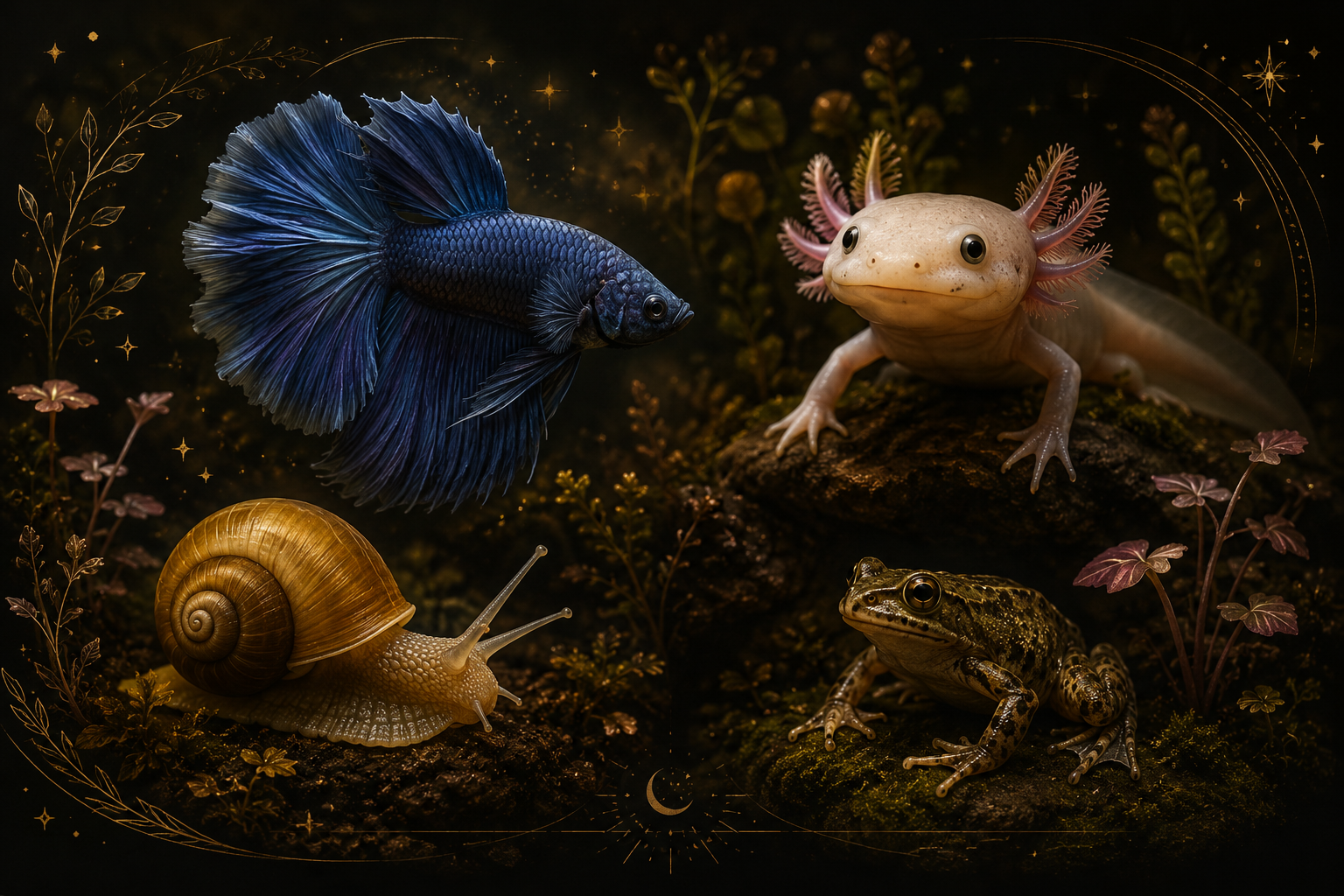
How to choose among aquatic pets (read this first)
Every animal below lives in water, but that’s where the similarity ends. The single most important question isn’t “which is coolest” — it’s how long are you signing up for? A betta is a three-to-five-year companion. A fancy goldfish, kept properly, is a ten-to-fifteen-year commitment. A common musk turtle can live thirty to fifty years — that animal may need to be in your will.
The second question is temperature, because it splits the list neatly. Bettas and African dwarf frogs want warm, heated water. Goldfish, white clouds, and axolotls want it cool to cold — an axolotl in betta-temperature water will slowly cook. You cannot fix a temperature mismatch with good intentions, so decide up front whether you’re running a heated tank or a cold one.
Third: water volume buys forgiveness. In a big tank, mistakes dilute; in a small one, they concentrate fast. That’s why “start small” is backwards advice — the tiniest tanks are actually the least forgiving. If you’re brand new to keeping anything aquatic, our complete beginner’s guide to pet fish covers cycling and setup in depth, and everything in it applies to frogs and snails too.
The best aquatic pets that are fish
1. Betta (Betta splendens)
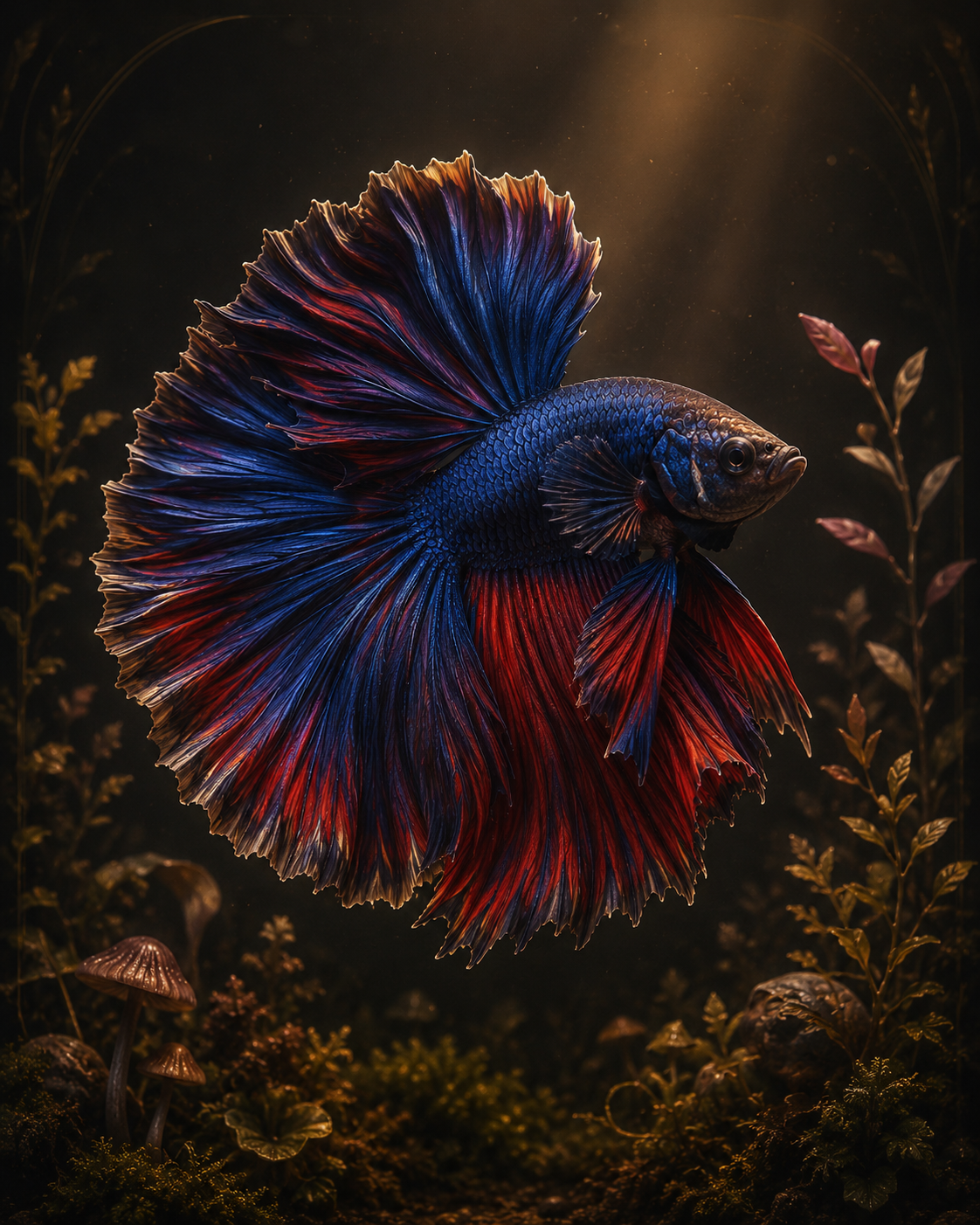
The betta is the gateway animal for a reason: a single male in a planted five-gallon tank is one of the most striking displays you can own, and he’ll greet you at the glass like a puppy. Per PetMD’s betta care sheet, bettas are tropical — keep the water between 76–81°F, which means a heater is not optional, sized at roughly 3–5 watts per gallon. Typical lifespan is around three years (bettas are usually already a year old at purchase), with five possible with excellent care.
- Size: ~2.5 inches
- Tank: 5 gallons, heated and filtered, with a lid — they jump
- Temperament: males are solitary; keep one per tank
A reliable adjustable 25-watt aquarium heater is the one piece of gear that separates thriving bettas from merely surviving ones.
2. Fancy goldfish
Forget the bowl — that myth has killed more goldfish than disease. Aquarium Co-Op’s fancy goldfish guide puts the real numbers at 20 gallons for the first fish and another 10 for each additional, with filtration rated at five to ten times the tank volume, because goldfish are legendary waste machines. The payoff for doing it right: a room-temperature (50–70°F, no heater) pet that lives 10–15 years and genuinely recognizes its keeper.
- Size: 6–8 inches as adults
- Tank: 20 gallons minimum for one; wide footprint beats tall
- Temperament: peaceful, social, endlessly food-motivated
3. Nano schooling fish (white clouds and chili rasboras)
If you want motion — a living lava lamp — a school of tiny fish delivers. White cloud mountain minnows thrive unheated; chili rasboras want a heater and reward you with ember-red color in a planted five-gallon. Both need groups of eight or more to behave naturally. We ranked our favorites in the micro fish guide, and several also appear in our best beginner freshwater fish roundup.
Interesting aquatic pets that aren’t fish: the invertebrates
Here’s where it gets fun. Invertebrates are the cheapest aquatic pets to house, the easiest on filtration, and — watched closely — the most interesting. They’re also the reason to be paranoid about one word: copper. Many fish medications contain it, and it’s lethal to every animal in this section.
4. Cherry shrimp
A colony of cherry shrimp is a tiny, self-renewing ecosystem: they graze algae all day, breed readily, and produce so little waste that Aquarium Co-Op rates a five-gallon as comfortable long-term housing. They tolerate 65–80°F but hate swings — stability matters more than any exact number. In soft water, add calcium (a cheap cuttlebone works) so they can molt cleanly. Our full pet shrimp guide covers cherry, amano, and ghost shrimp in detail.
5. Mystery snail
Ask anyone who keeps aquatic snails as pets: mystery snails are the golden retrievers of the snail world. They’re big (about two inches), boldly colored, and surprisingly active, cruising the glass on a two-inch foot and occasionally parasailing dramatically off the top. Per Aquarium Care Basics, they want 68–82°F and hard, calcium-rich water — a thin or pitted shell is a calcium deficiency waving a flag. Offer a natural cuttlebone and they’ll keep their shells glossy.
6. Nerite snail
The nerite is the working professional of aquatic snails: the best algae-eater per inch in the freshwater hobby, and it physically cannot overrun your tank because its eggs only hatch in brackish water. One or two will keep a five-gallon’s glass spotless. We compare all the best species in our freshwater snails for aquarium guide.
7. Dwarf Mexican crayfish (CPO)
Full-size crayfish are tank bulldozers, but the dwarf Mexican crayfish stays about 1.6 inches and keeps its claws to itself, making it one of the few crays safe for a small community. Bright tangerine-orange, busy, comedic — a genuinely cool aquatic pet that most beginners have never heard of. A five-gallon with caves and hiding spots suits a single CPO or a pair.
Aquatic pets with lungs: the amphibians
8. African dwarf frog
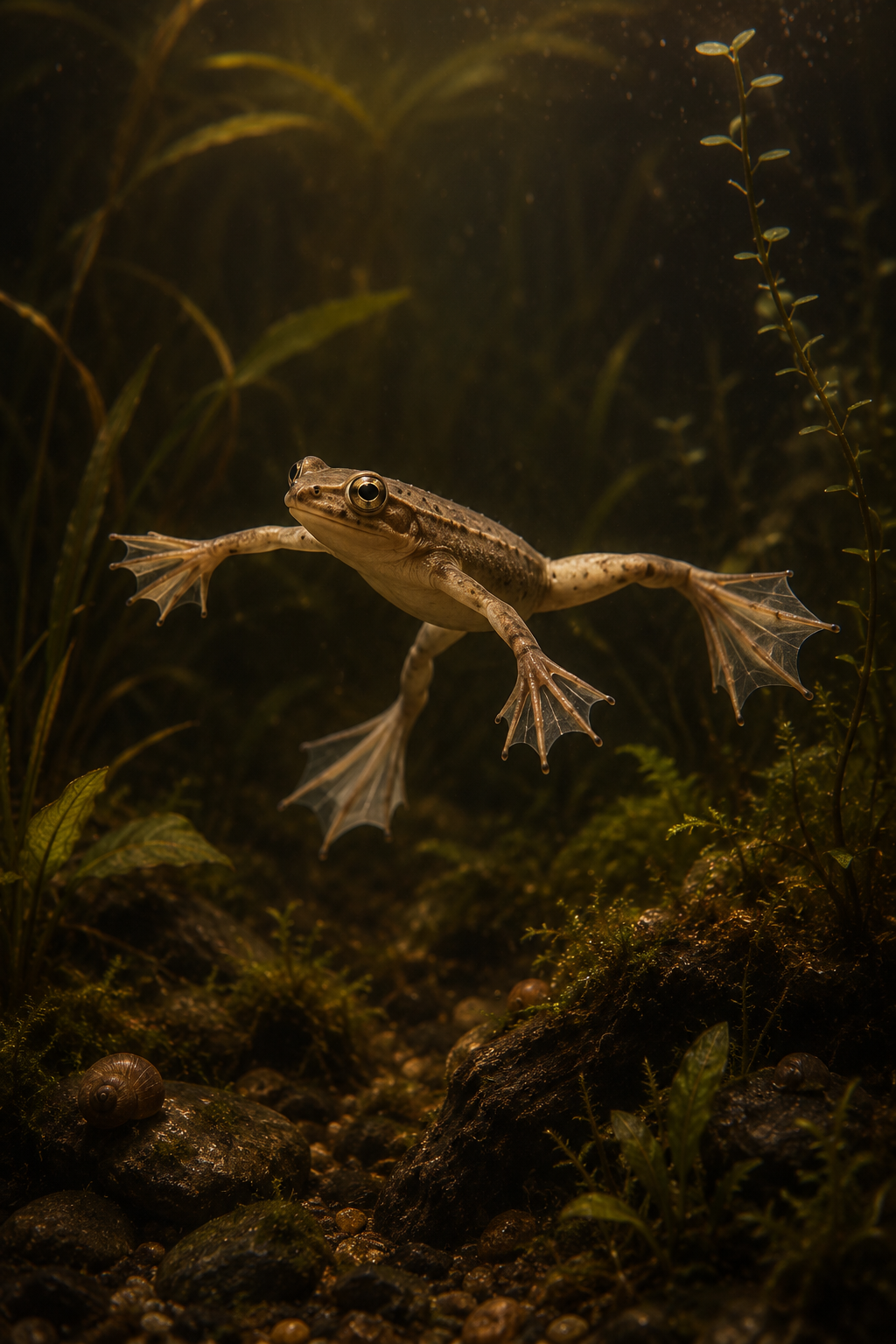
Fully aquatic, absurdly charming, and active in a way fish never are — African dwarf frogs “zen float” at the surface, dig, and hunt with terrible eyesight and boundless optimism. Aquarium Source gives them 5–8 years with good care. Keep them in shallow, warm (68–78°F), low-current water: they’re weak swimmers that must reach the surface to breathe. A 10-gallon suits two to four frogs.
Two honest warnings. First, they’ll eat anything that fits in their mouths, so any tankmate under an inch is lunch. Second, they’re nearly blind and slow to feed — target-feed sinking carnivore pellets and frozen bloodworms right in front of them, or faster tankmates will starve them without malice.
9. Axolotl
The axolotl is the internet’s favorite salamander — a permanently juvenile amphibian that keeps its feathery external gills for life and wears a permanent small smile. It’s also the most commonly mis-kept animal on this list, because it’s a cold-water pet: 60–68°F, still water, no gravel it can swallow. Kept correctly, axolotls live well past ten years. Everything you need is in our complete axolotl care guide — read it before you fall for that smile, not after.
- Size: 10–12 inches
- Tank: 20-gallon long minimum, cycled, cool, gentle flow
- Temperament: solitary; housing two invites nipped limbs
Aquatic pets and reptiles: the turtle question
10. Common musk turtle
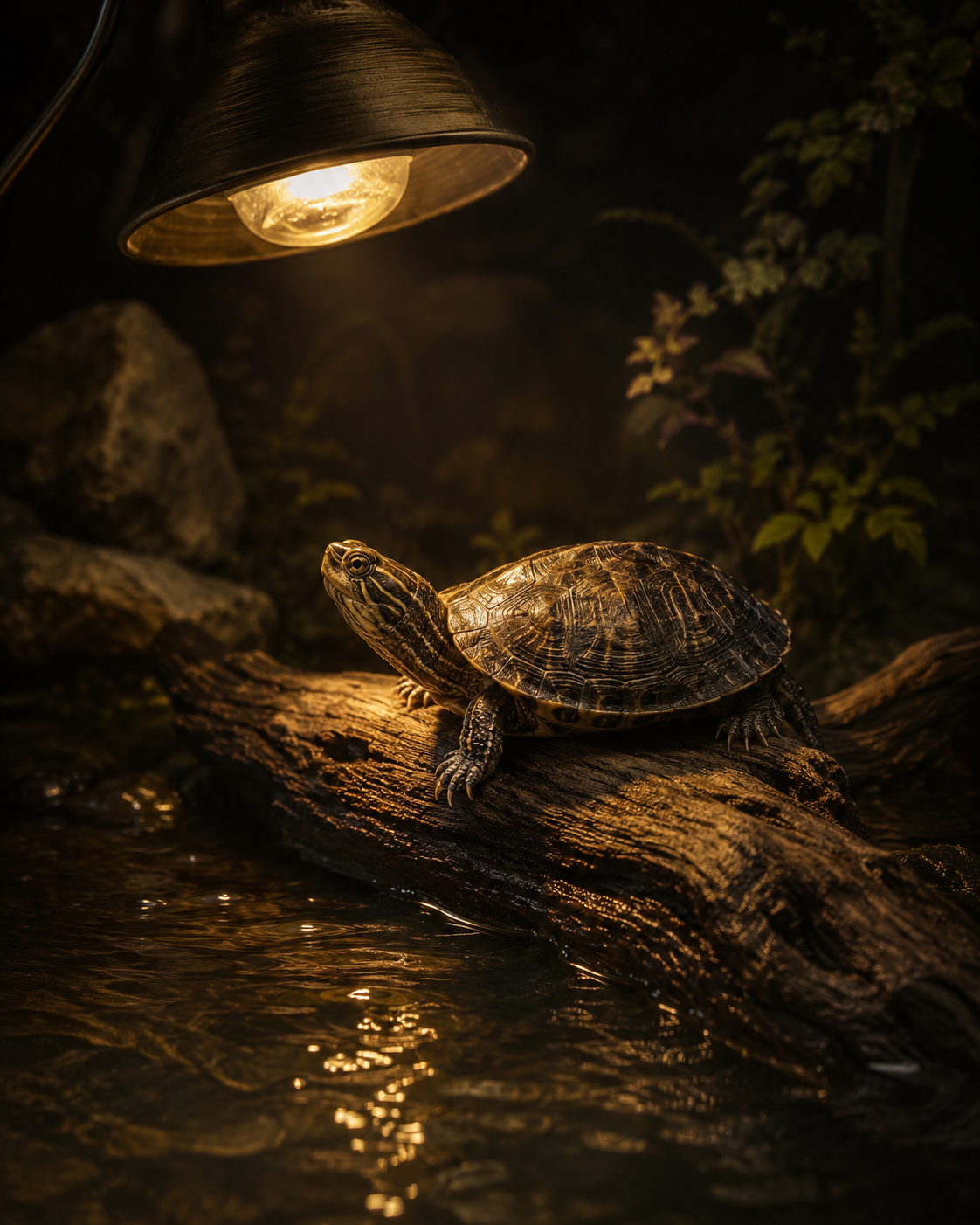
Most pet turtles are a bad beginner idea — red-eared sliders need ponds, not tanks. The exception is the common musk turtle, one of the smallest freshwater turtles in the hobby at 3–5 inches of shell. Reptile Direct’s care guide recommends about 30 gallons for a single adult (40 is kinder), a basking dock with a heat-and-UVB lamp even though they rarely use it, and a canister filter rated for at least twice the water volume, because turtles are gloriously messy.
The two numbers that should give you pause: 30 to 50 years of lifespan, and one occasionally grumpy temperament — musk turtles can nip, and when alarmed they release the musky odor that earned the name “stinkpot.” For the keeper who wants a reptile without a room-sized enclosure, though, nothing else this manageable exists. Feed a staple of high-quality aquatic turtle pellets plus earthworms and the odd leafy green.
11–12. The honorable mentions: ghost shrimp and paludarium newts
Ghost shrimp are the budget starter invertebrate — under a dollar each, glass-clear, and a good rehearsal before pricier cherry shrimp. Fire-bellied newts, meanwhile, are the classic half-land half-water pet for keepers ready to build a paludarium; they’re hardy but need cool water and escape-proof lids. Both are good aquatic pets, with the newt being the bigger project of the two.
Setup basics every one of these animals shares
Whatever you pick, the tank must be cycled before the animal arrives — beneficial bacteria that convert toxic ammonia to nitrite to relatively harmless nitrate take several weeks to establish, and skipping this step is the number-one killer of new aquatic pets. A liquid water test kit tells you where the cycle stands; strips fade and lie.
Tap water needs a dechlorinator every single time, because chlorine and chloramine kill the good bacteria along with the bad. And once more for the people in the back: if you keep shrimp, snails, or crayfish, check every medication and plant fertilizer for copper before it goes anywhere near the tank.
Weekly partial water changes of 20–30 percent are the whole maintenance routine for most of these animals. Small tanks concentrate waste faster, so the smaller the water volume, the less you can afford to skip a week.
Aquatic pets to avoid as a beginner
The list of good aquatic pets is long, but the list of animals routinely sold to beginners who should never buy them is longer. The red-eared slider tops it: those quarter-sized hatchlings become dinner-plate turtles needing 100-plus gallons or a pond, which is why they’re the most surrendered reptile in the country. Common and comet goldfish belong in ponds too — they’re the twelve-inch cousins of the fancies above, and no indoor tank short of a monster suits them for life.
Skip anything sold as a “tank cleaner” without a species name, skip the common pleco (two feet of eventual catfish), and skip dyed or tattooed fish entirely — the color is literal injected paint and the practice is cruel. Finally, be suspicious of any animal the store can’t name precisely. “Some kind of crab” usually means a land crab that will slowly drown, and “assorted turtle” means a mystery that outgrows everything you own.
None of this is meant to scare you off — it’s the opposite. Every animal in the sections above is on the list precisely because it stays a manageable size, tolerates beginner mistakes, and thrives in equipment you can buy in one trip.
What aquatic pets actually cost
Budget surprise number one: the animal is the cheapest part. A betta is five to twenty dollars; his proper home — tank, heater, filter, light, conditioner, test kit — runs sixty to a hundred. Shrimp and snails are a few dollars each, but the same supporting hardware applies. The axolotl and musk turtle sit at the expensive end, not because of purchase price but because chilling equipment (for the axolotl) and basking-plus-UVB lighting with serious filtration (for the turtle) add real money.
Running costs, though, are where aquatic pets quietly embarrass cats and dogs. Electricity for a heater and filter is a few dollars a month, food is nearly free at the invertebrate end, and there are no vaccinations, no litter, and no boarding fees. Set up correctly once, a small aquarium costs less per year than a single vet visit for a dog.
Where you shouldn’t economize: the filter, the test kit, and the dechlorinator. Where you can: décor, whose main critic is you, and plants, which multiply on their own once established.
Frequently asked questions about aquatic pets
What is the easiest aquatic pet to keep alive?
For pure survivability, a nerite snail or a small colony of cherry shrimp in a cycled, planted five-gallon — no heater drama, near-zero bioload, and nothing to do but top up water and drop in occasional food. Among fish, the betta wins as long as the heater is non-negotiable and the tank is cycled first.
Are aquatic pets good for kids?
Excellent — with one adjustment to expectations. These are watch-and-learn animals, not handle-me animals. A goldfish or betta that begs at the glass teaches responsibility on a daily feeding schedule a child can own, while the nitrogen cycle is a genuinely great science lesson. Skip the turtle for young children: decades of commitment plus salmonella-conscious handwashing rules make it a poor first pet.
How much daily attention do they need?
Minutes. Feed once daily (many keepers fast their fish one day a week), glance at behavior and temperature, and do the real work — a partial water change — once a week. That low daily overhead is exactly why aquatic pets suit renters, students, and anyone whose landlord draws the line at fur.
Do aquatic pets smell?
A healthy, properly stocked tank smells like almost nothing — a faint, pleasant earthiness at most, like a garden after rain. A bad smell is a message, not a feature: rotting uneaten food, an overdue water change, or a filter that needs rinsing. Fix the cause and the smell leaves with it. The one exception on this list is the musk turtle’s defensive odor, which it saves for moments of genuine alarm and almost never uses on a keeper it trusts.
Can I leave them for a vacation?
A healthy adult fish, snail, or shrimp handles a week without food far better than it handles a week of a neighbor’s generous overfeeding. For longer trips, an automatic feeder for fish — or pre-portioned pill-organizer doses for the neighbor — solves it. Frogs, axolotls, and turtles need an actual caretaker beyond about five days.
Which of these aquatic pets is right for you?
| Pet | Min. tank | Temp | Lifespan | Best for |
|---|---|---|---|---|
| Betta | 5 gal | 76–81°F | 3–5 yrs | First-ever aquatic pet |
| Fancy goldfish | 20 gal | 50–70°F | 10–15 yrs | A long-term, unheated companion |
| Nano schoolers | 5–10 gal | varies | 2–5 yrs | Motion and color |
| Cherry shrimp | 5 gal | 65–80°F | 1–2 yrs | A breeding colony ecosystem |
| Mystery snail | 5–10 gal | 68–82°F | ~1 yr | Personality on a budget |
| Nerite snail | 5 gal | 72–78°F | 1–2 yrs | Algae control |
| Dwarf crayfish | 5 gal | 65–75°F | 1.5–3 yrs | Something nobody else has |
| African dwarf frog | 10 gal | 68–78°F | 5–8 yrs | An active, fully aquatic amphibian |
| Axolotl | 20 long | 60–68°F | 10+ yrs | The dedicated cold-water keeper |
| Musk turtle | 30–40 gal | 72–78°F water | 30–50 yrs | A lifetime reptile commitment |
If you’re still torn, here’s the keeper-to-keeper shortcut. Want your first tank to succeed with minimal drama? Betta or cherry shrimp. Want the most interesting aquatic pets per dollar? Mystery snail plus a nerite in the same tank. Ready for a real multi-year relationship? African dwarf frogs. Prepared to plan decades ahead? The musk turtle will still be judging you in 2056.
Whichever animal you choose, the pattern is the same: cycle the tank first, match the temperature to the species, keep the water stable, and the “hard” part of keeping aquatic pets mostly evaporates. Start with one tank done properly — the second tank always follows on its own. Nobody stops at one.