
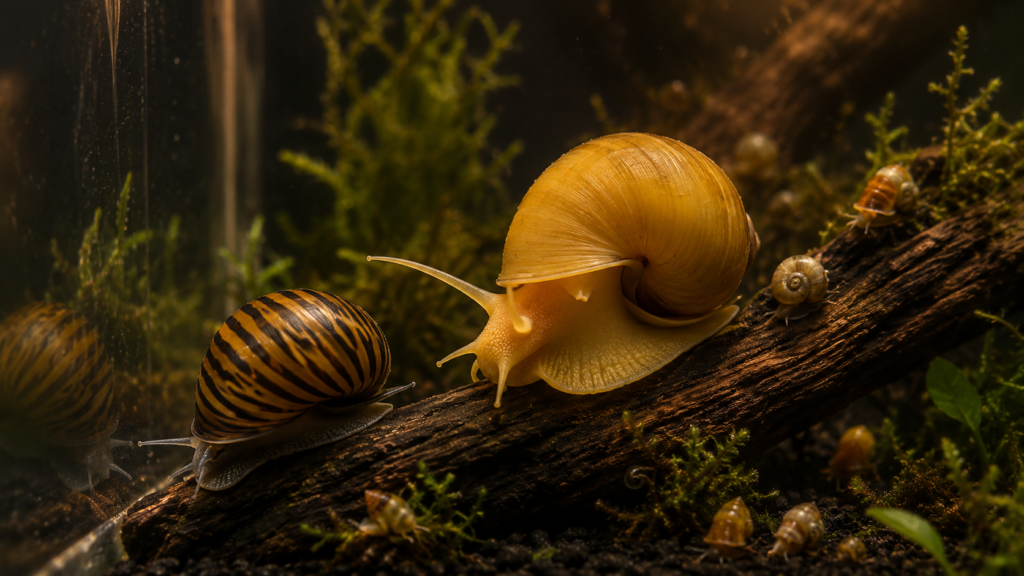
A good freshwater snail is the quietest, hardest-working member of your
cleanup crew — grazing algae off the glass, scavenging leftover food, and adding
a little slow-motion character to the tank while it works. But “snail” covers
everything from a thumbnail-sized algae specialist to a four-inch giant, and the
difference between a snail that thrives and one that dissolves comes down to a
few facts most beginners never hear. This guide walks you through the seven best
freshwater snails for aquarium keepers, what each one needs, and the shell-care
basics that keep them healthy for years.
ItsyBitsyPets is reader-supported. As an Amazon
Associate we earn from qualifying purchases — at no extra cost to you. See our
affiliate
disclosure.
What freshwater snails actually do in an aquarium
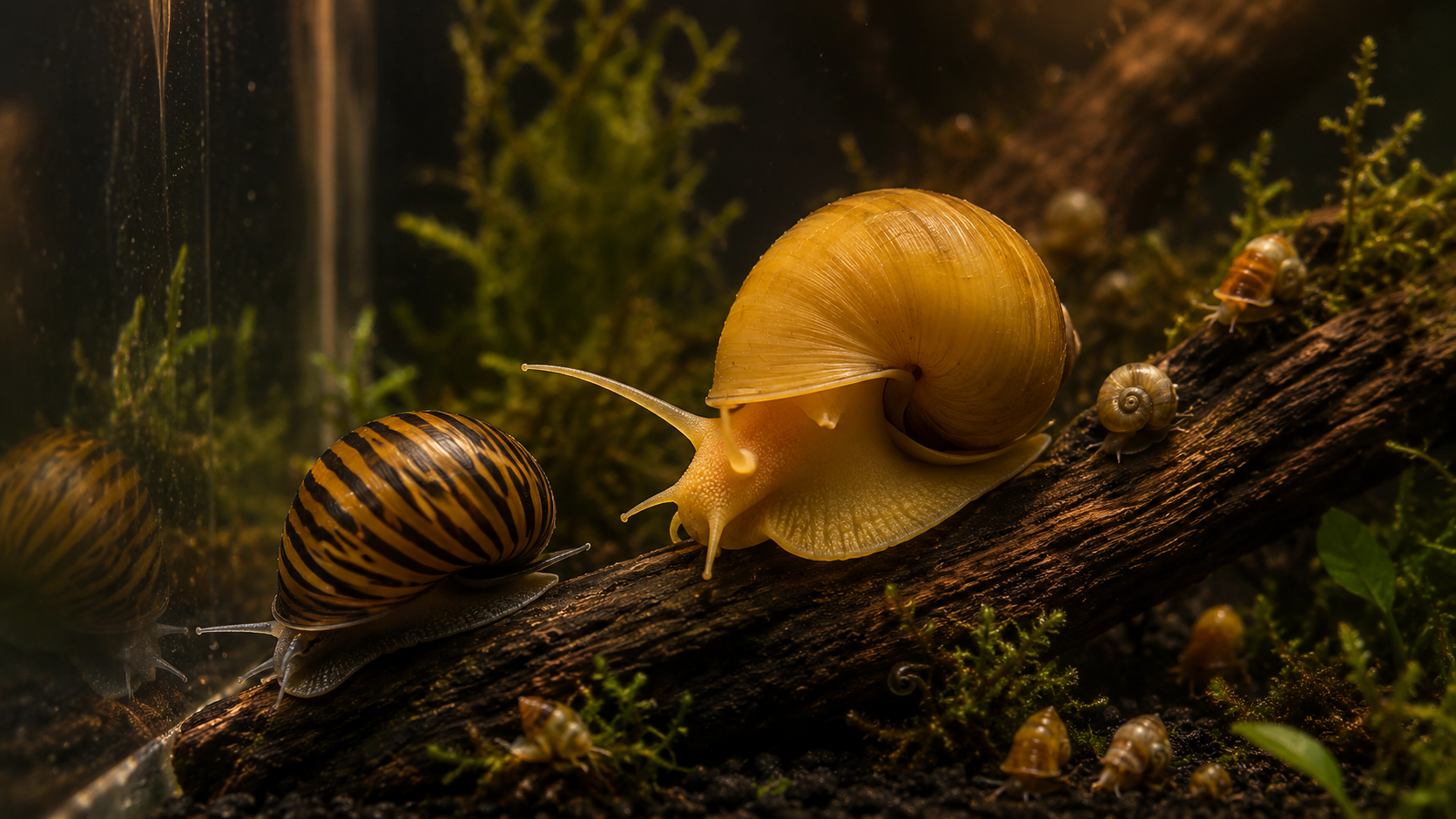
Freshwater snails earn their keep as janitors. They graze the film of algae
that hazes your glass and decorations, break down uneaten food before it fouls
the water, and clean up decaying plant leaves that would otherwise rot in the
substrate. A small team of the right freshwater snails for aquarium duty can
meaningfully cut how often you scrape algae or vacuum debris — which is exactly
why so many keepers add them.
Beyond the cleanup work, snails add a slow, calming kind of movement that fish
don’t. Watching a nerite methodically clear a pane of glass, or a mystery snail
extend its long siphon to breathe at the surface, is part of the appeal — these
are genuinely interesting animals, not just living equipment. And because they
occupy the substrate and hard surfaces rather than the open water, they fill an
ecological niche most fish ignore, making better use of the whole tank.
They are not a filter, though, and they are not a fix for a dirty tank. Snails
process what is already there; they do not remove the underlying nutrients that
feed algae in the first place. Think of them as detailing, not plumbing. If your
tank is still cycling or your maintenance routine is shaky, start with our guide
on how to
start an aquarium before you add livestock of any kind.
What every freshwater snail needs: hard water, calcium, and no copper
Before any single species, three rules apply to nearly all aquarium snails.
Get these right and most snails are genuinely easy. Get them wrong and even the
hardiest species will slowly decline.
1. Hard water beats soft water
A snail’s shell is built from calcium carbonate, and it pulls the raw material
straight out of the water. Aquatic snails do better in hard water than soft, and
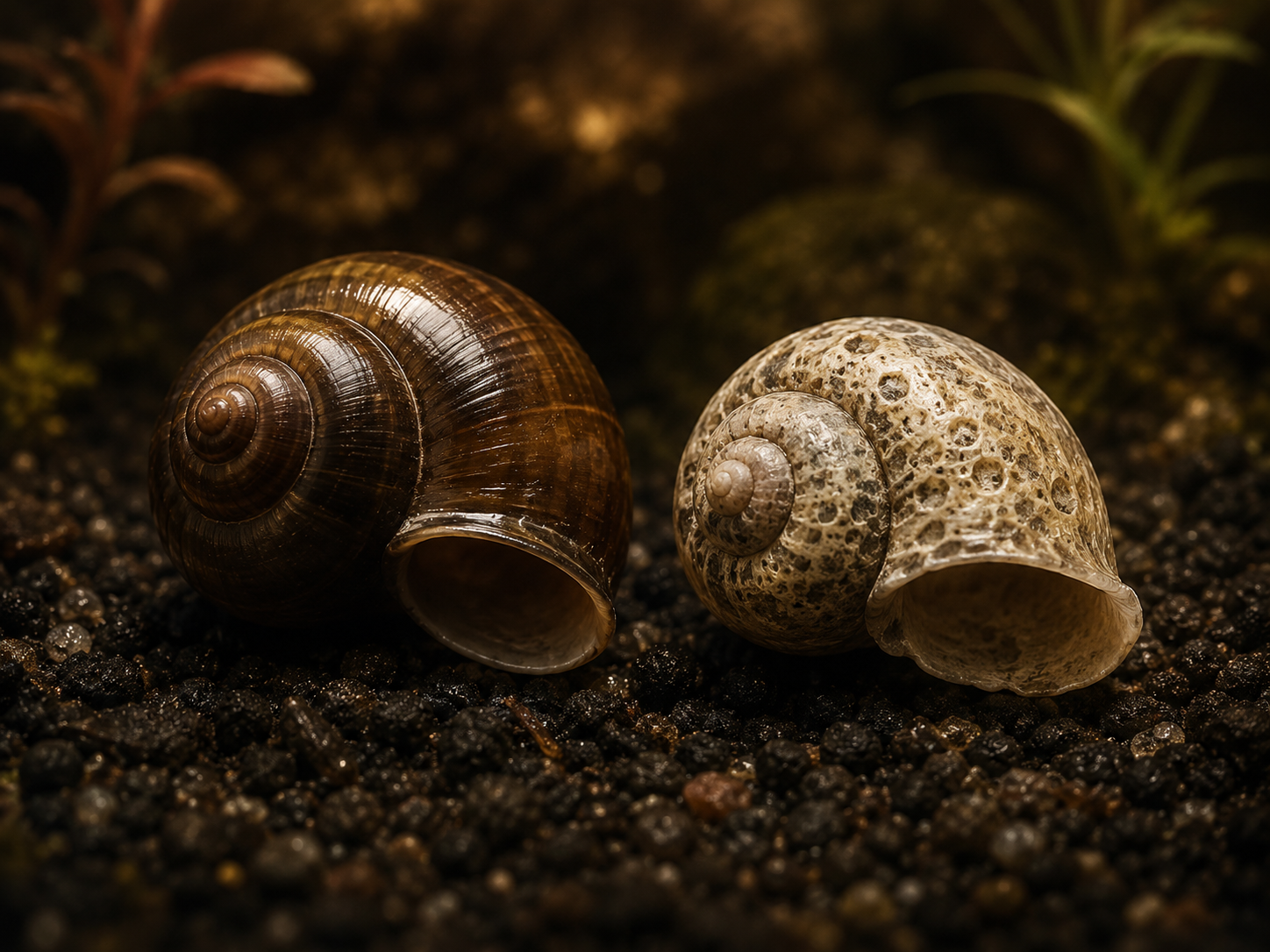
soft water or pH swings can cause the shell to pit and erode. As a working
target, source water with roughly 70–90 mg/L of calcium hardness is enough for
healthy shells, provided the tank is not overcrowded and you refresh about 25% of
the water every couple of weeks, according to water-chemistry guidance from Hanna
Instruments. Most snails also prefer a pH at or above 7.0. If you keep soft,
acidic tap water, this is the single parameter most worth correcting before you
add snails.
2. Calcium keeps shells hard
Calcium is not optional — it is the shell. Controlled studies on apple snails
found that snails raised at higher calcium concentrations grew larger and
developed significantly harder shells than those kept in low-calcium water. In a
home tank you can top up calcium with a piece of cuttlebone floated
in the tank, a small amount of crushed coral in the filter, or a dedicated invertebrate calcium
supplement. A simple GH and KH test kit tells you whether you actually need to. A snail
that’s getting enough calcium shows it: smooth new shell growth at the opening,
and a steady, confident glide rather than a sluggish crawl.
3. Copper is lethal
This is the one that catches people off guard. Copper kills snails and other
invertebrates at concentrations far too low to bother a fish. It sneaks in
through fish medications, algaecides, some plant fertilizers, and even tap water
that has sat in copper plumbing. Before you dose anything in a tank with snails,
read the label — and when you buy a calcium supplement, confirm copper is not in
the ingredient list. When in doubt, do a water change with dechlorinated water
rather than reaching for a chemical. This single rule quietly prevents more snail
deaths than any feeding or tank-size mistake.
How to choose the right freshwater snails for your aquarium
Before the species list, it helps to know what you’re actually shopping for.
The best freshwater snails for aquarium keepers vary enormously by job, so start
with your goal rather than looks. If your main problem is a hazy film of algae on
the glass, you want a dedicated grazer. If you’re fighting an outbreak of tiny
pest snails, you want a predator. If you simply want an eye-catching animal that
adds color and character, you want a display species. Very few snails do all
three jobs well, which is why keepers often run a small mix.
Tank size is the next filter. A nano tank can happily house a nerite or two,
while a four-inch rabbit snail needs real floor space. And temperature matters
more than beginners expect: pairing a tropical snail with an unheated tank, or a
cool-water species with a warm one, is a slow route to a stressed animal. With
those three filters — job, size, and temperature — the right choice from the list
below usually picks itself.
The 7 best freshwater snails for aquarium keepers
Every snail below is widely available and beginner-appropriate, but they are
not interchangeable. Match the species to your tank size and your goal — algae
control, pest control, or simply a striking display animal. These are the seven
freshwater snails for aquarium use that we recommend most often to new keepers,
and the industry care sheets from Aqueon line up
closely with what we’ve seen keeping them ourselves.
1. Nerite snail — the algae-eating champion
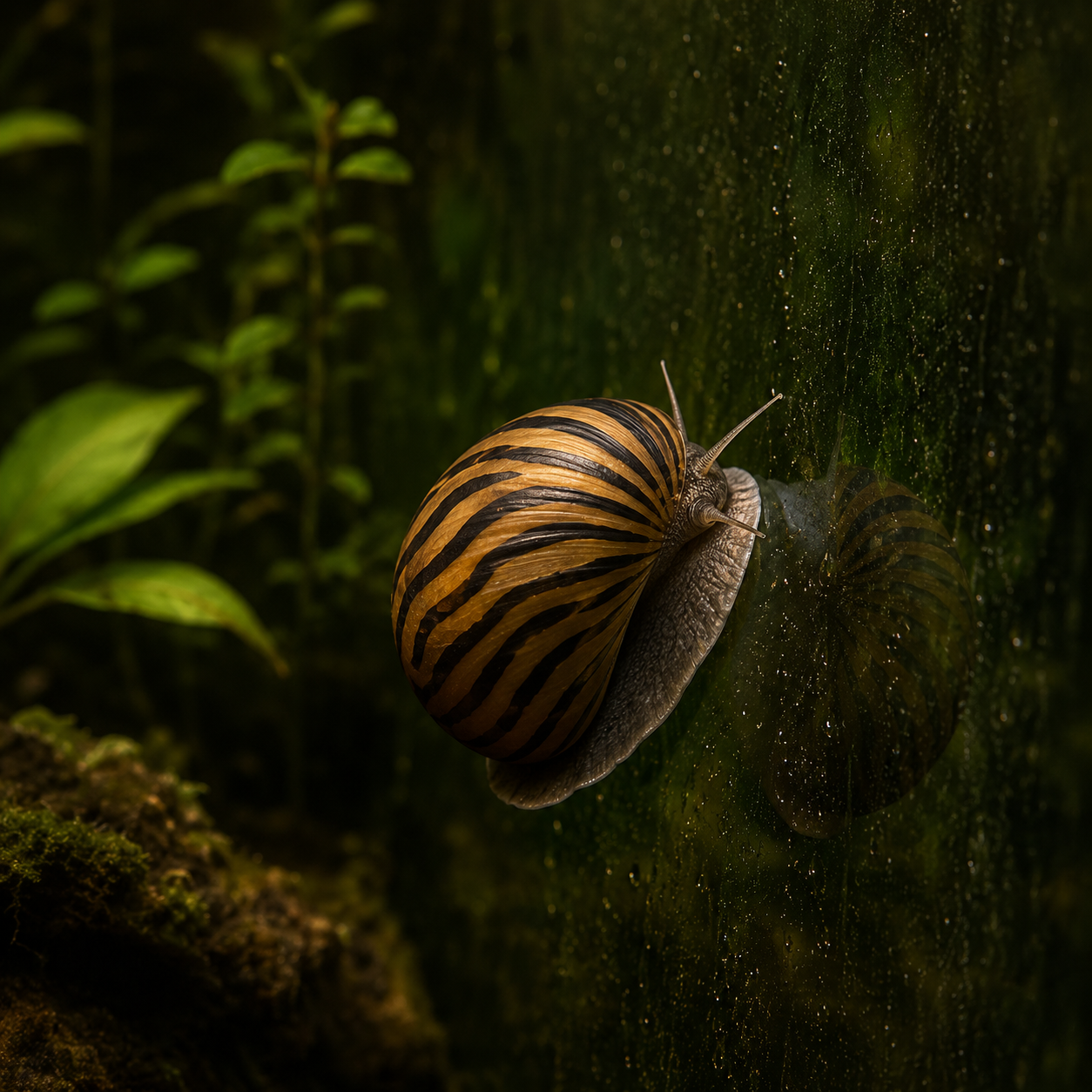
If you want one snail for clean glass, this is it. The nerite is the best
freshwater snail for algae control, grazing film algae and biofilm off glass and
hard surfaces with real efficiency, and it is especially good on the stubborn
soft types like green spot and green slime algae, as the algae-eating care guide
from Aquarium
Co-Op also emphasizes. It stays small at about 0.5–1.5 inches and is
comfortable in a nano tank as small as 2–3 gallons across a wide temperature band
of 65–85°F, with pH anywhere from 6.5 to 8.5.
Its best trick is what it won’t do: nerite larvae need brackish or
salt water to develop, so nerites simply cannot overpopulate a freshwater tank.
You get relentless algae control with zero risk of a population explosion. The
one quirk — females may dot hard surfaces with tiny white eggs that won’t hatch,
which some keepers find unsightly on driftwood and glass. Nerites are ideal for a
planted nano
tank, where their small size and appetite for film algae shine.
2. Mystery snail — the friendly showpiece
Mystery snails are the crowd-pleasers: peaceful, active, and available in gold,
ivory, blue, and deep purple shells that pop against a planted background. They
reach about two inches and are among the most beginner-friendly snails you can
buy, living around one to two years. Give each snail roughly 2–3 gallons of space
so their larger appetite for leftover food and soft algae doesn’t outstrip the
tank.
Breeding is easy to see and easy to manage because they lay pink egg clutches
above the waterline — if you don’t want babies, you simply remove the clutch. Do
keep a lid on the tank, though; mystery snails are enthusiastic climbers and will
occasionally go exploring over the rim. A snug lid and a small air gap at the
water’s surface, which they use to breathe through their siphon, keep them safe
and happy.
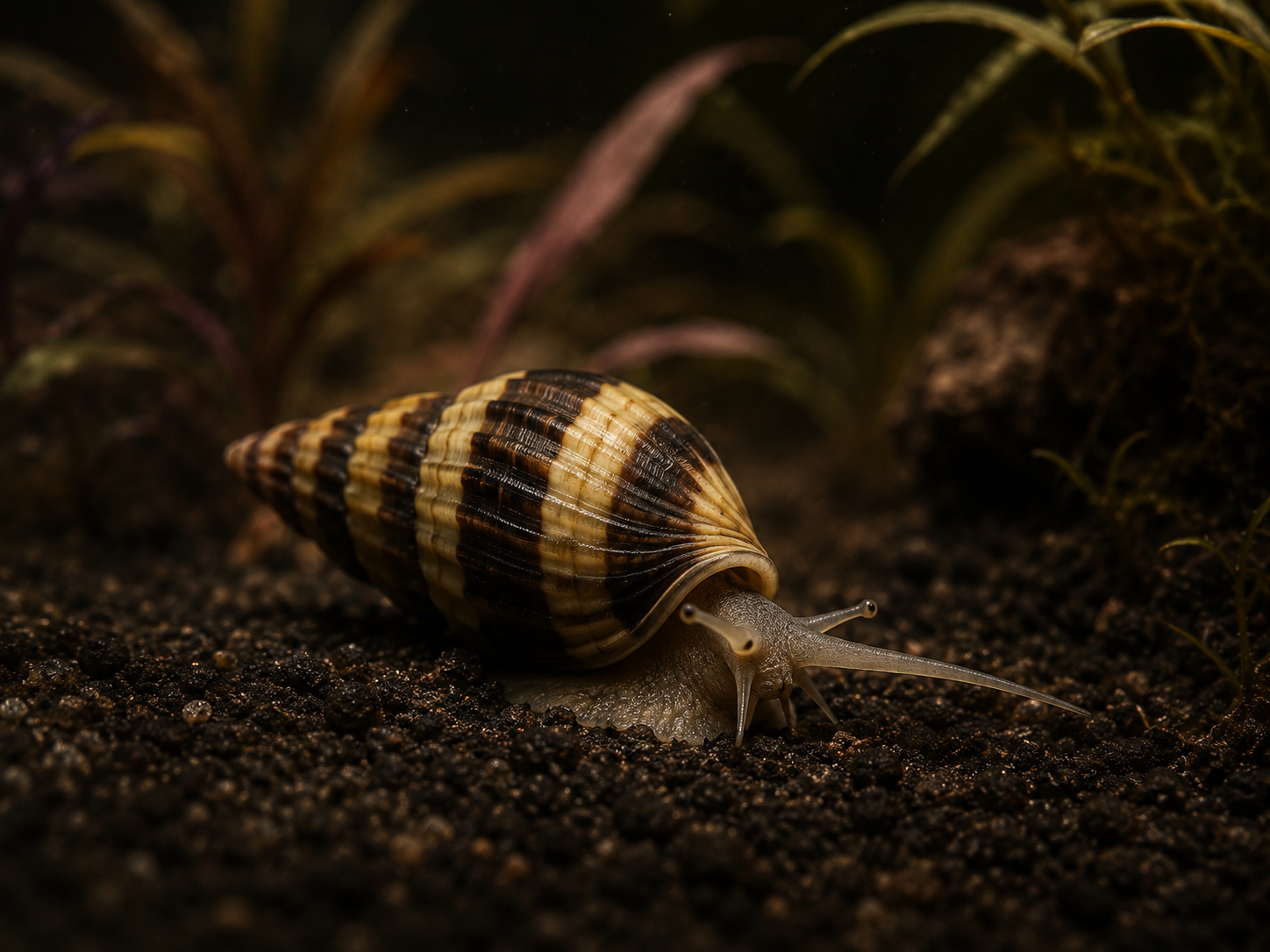
3. Assassin snail — the pest-control specialist
Have a tank overrun with tiny pest snails? The assassin snail is the natural
answer. This handsome carnivore — cone-shaped, gold with dark brown stripes —
buries itself in the substrate and hunts down Malaysian trumpet, ramshorn, and
pond snails. It prefers 75–80°F and does best with at least 30 gallons of space.
Larger snails such as mature mystery, nerite, rabbit, and Japanese trapdoor
snails are generally safe, since assassins only take prey smaller than
themselves.
4. Rabbit snail — the gentle giant
For a genuine display animal, rabbit snails bring personality. They grow up to
four inches with elongated, textured shells and wrinkled “faces” that give them
their name, and they can live around three years. They want a bigger footprint —
20 gallons or more — plus warmer, alkaline water at 76–84°F and pH 7.8–8.4. A big
plus for planted-tank keepers: rabbit snails breed slowly, usually one live baby
at a time, so they will never swamp your tank.
5. Ramshorn snail — the workhorse recycler
Ramshorn snails, named for their flat coiled shells, are excellent at
processing soft algae, dead plant matter, and leftover food. The trade-off is
speed: in a tank with lots of organic debris and overfeeding, they multiply
quickly. Managed well — modest feeding, good maintenance — a small ramshorn
population is a useful cleanup crew. Overfeed, and you’ll get a boom. They pair
naturally with other peaceful beginner
invertebrates like dwarf shrimp.
6. Malaysian trumpet snail — the substrate aerator
These slim, cone-shelled snails spend the day burrowed in the substrate and
emerge at night, and in doing so they aerate the sand or gravel and prevent
harmful gas pockets from forming in a planted tank. Like ramshorns, they
reproduce readily when food is abundant, so they are best thought of as a
self-regulating substrate crew whose numbers you control through feeding. They
are also the assassin snail’s favorite prey, which makes the two a natural pair.
7. Japanese trapdoor snail — the pond-and-tank all-rounder
Rounding out the list, Japanese trapdoor snails are hardy, cold-tolerant
grazers named for the operculum “trapdoor” they seal behind them for protection.
They handle a wide temperature range, making them popular for both aquariums and
outdoor ponds, and they are live-bearers that reproduce slowly enough to stay
manageable. Their calm, unfussy nature makes them a reliable choice for a
community tank.
Will snails take over my tank?
This is the fear that keeps people away from snails, and it is almost entirely
a matter of which species you choose. The runaway-population stories come from
prolific breeders — bladder, pond, and to a degree ramshorn snails — that thrive
on overfeeding. The species built not to overpopulate a freshwater tank
are the ones to reach for: nerites (their larvae can’t survive in freshwater),
rabbit snails (one baby at a time), and Japanese trapdoors (slow live-bearers).
Mystery snails sit in the middle — they breed only above the waterline, so a lid
and a quick clutch-removal keep them in check.
The real lesson underneath the myth: snail booms are a feeding problem, not a
snail problem. Snails multiply to match the food available, so a population
explosion is your tank telling you it is being overfed.
Tank mates: who’s safe, and what eats snails
Most snails are perfectly peaceful and mix well with small, calm fish such as
tetras, rasboras, and corydoras, plus similar-sized invertebrates like dwarf
shrimp. The caution runs the other way — plenty of aquarium residents view snails
as a snack. Loaches, pufferfish, some larger cichlids, and assassin snails will
all hunt smaller snails. Before adding snails, make sure your existing stock
won’t treat them as lunch, and remember that assassin snails, by design, don’t
belong with the small snails you want to keep.
A simple maintenance routine that keeps snails healthy
Snails don’t need much, but they reward consistency. A light weekly rhythm
keeps their shells strong and their world stable. Once a week, test your GH, KH,
and pH so you catch a slow slide toward soft, acidic water before it starts eating
at shells. Change about 25% of the water with temperature-matched, dechlorinated
water — never a big sudden swap, which shocks invertebrates far more than fish.
While you’re in there, do a quick head-count. Snails are easiest to find at
night or right after the lights come on, and a missing snail is worth
investigating: check behind equipment and along the rim, since climbers like
mystery snails sometimes wander. Wipe the inside of the lid and glass lip so
escapees have less traction, and skim off any egg clutches you don’t want. Keep
feeding honest — only what’s eaten in a few hours — and your freshwater snails for
aquarium cleanup duty will stay healthy for their full lifespan instead of
quietly declining from water that drifted out of range.
Feeding and long-term shell care
In an established tank, algae and leftovers cover most of a snail’s diet, but
a dedicated algae grazer in a clean tank will need help. Supplement with algae wafers and
blanched vegetables like zucchini or spinach a couple of times a week. Feed only
what’s eaten within a few hours — leftover food is exactly what fuels a pest-snail
boom.
For the shell itself, keep water on the harder side, maintain steady calcium,
and watch for the early warning sign of trouble: a white, pitted, or thinning
shell tip. That’s shell erosion, and it points to soft water, low calcium, or a
low pH. Correcting the water chemistry lets new growth come in healthy, even if
the old erosion doesn’t reverse. A snail with a smooth, intact shell and a healthy
appetite is a snail doing its job.
Acclimating new snails the right way
How you introduce a snail matters as much as which one you pick. Snails are
sensitive to sudden shifts in water chemistry, so never just tip a bag into the
tank. Float the sealed bag for fifteen minutes to match temperature, then add a
little tank water to the bag every ten minutes over the next hour so the snail
adjusts gradually to your pH and hardness. This slow drip acclimation is the
single biggest thing you can do to avoid losing a new snail in the first week.
Don’t be alarmed if a new snail stays sealed inside its shell and motionless
for a day or two after arriving — that’s normal settling-in behavior, not death.
Give it time in a stable, well-established tank and it will emerge and start
grazing. A genuinely dead snail announces itself unmistakably with a strong foul
smell, so when in doubt, sniff before you assume the worst.
Do freshwater snails need live plants?
No — snails don’t require live plants, and healthy snails generally won’t
destroy them either. Unlike some fish, most aquarium snails eat algae, biofilm,
and decaying matter rather than healthy plant tissue, so they coexist beautifully
with a planted tank. In fact, freshwater snails for aquarium planting setups are
a real asset, cleaning algae off leaves that would otherwise smother them. If you
ever see a snail nibbling a live plant, it’s almost always finishing off a leaf
that was already dying, not attacking a healthy one.
Frequently asked questions
How many freshwater snails can I keep?
A rough guide is one small snail (nerite, ramshorn) per 2–3 gallons and one to
two gallons per larger snail such as a mystery snail, adjusted down if your tank
is heavily stocked with fish. Crowding raises the calcium demand on the water and
speeds up shell problems.
Do freshwater snails need a heater?
Tropical species like mystery, rabbit, and assassin snails do best with a
stable heater in the mid-to-high 70s°F. Nerites and Japanese trapdoor snails
tolerate cooler water. Match the snail to your tank’s existing temperature rather
than the other way around.
Can I keep just one snail?
Yes. Most aquarium snails are not social and are perfectly content alone, so a
single nerite or mystery snail is a completely normal — and popular — choice for a
small tank.

Whichever species you start with, the pattern is the same: hard water,
steady calcium, no copper, and honest feeding. Get those four right and freshwater
snails are among the most rewarding low-effort animals in the hobby — quietly
keeping your aquarium cleaner while you enjoy watching them work. For more on
building the kind of stable, planted setup snails love, see our guides on aquarium setup
and beyond.