
New to the hobby? Welcome. Keeping freshwater fish is one of the most
rewarding ways to bring a little living wilderness into your home — and the good
news is that some of the most beautiful fish in the trade are also the toughest.
This guide walks you through ten beginner freshwater fish that forgive early
mistakes, plus the simple setup that keeps them thriving for years, not weeks.
ItsyBitsyPets is reader-supported. As an Amazon
Associate we earn from qualifying purchases — at no extra cost to you. See our
affiliate
disclosure.
What makes a freshwater fish “beginner-friendly”?
Not all easy fish are easy for the same reasons. Before you fall for a pretty
face at the store, the hardy beginners on this list share four traits worth
looking for in any fish:
- They tolerate a range of water conditions. Beginners
inevitably get temperature and water chemistry slightly wrong at first. Forgiving
fish shrug it off. - They stay peaceful. Aggressive or fin-nipping fish create
stress and injuries that lead to disease. - They’re widely available and captive-bred. Hardy, ethically
sourced fish start healthier — which matters to us at ItsyBitsyPets far more than
a bargain price. - They stay a manageable size. A fish that outgrows your tank
is a welfare problem waiting to happen.
The 10 best beginner freshwater fish
Each profile lists the essentials at a glance. “Min tank” is a responsible
minimum for a happy fish — not the smallest jar it can survive in.
1. Betta (Betta splendens)
Care level: Easy · Adult size: ~2.5 in
· Min tank: 5 gallons · Temperament:
Solitary (one male per tank) · Temp: 78–80°F ·
Diet: Carnivore (betta pellets)
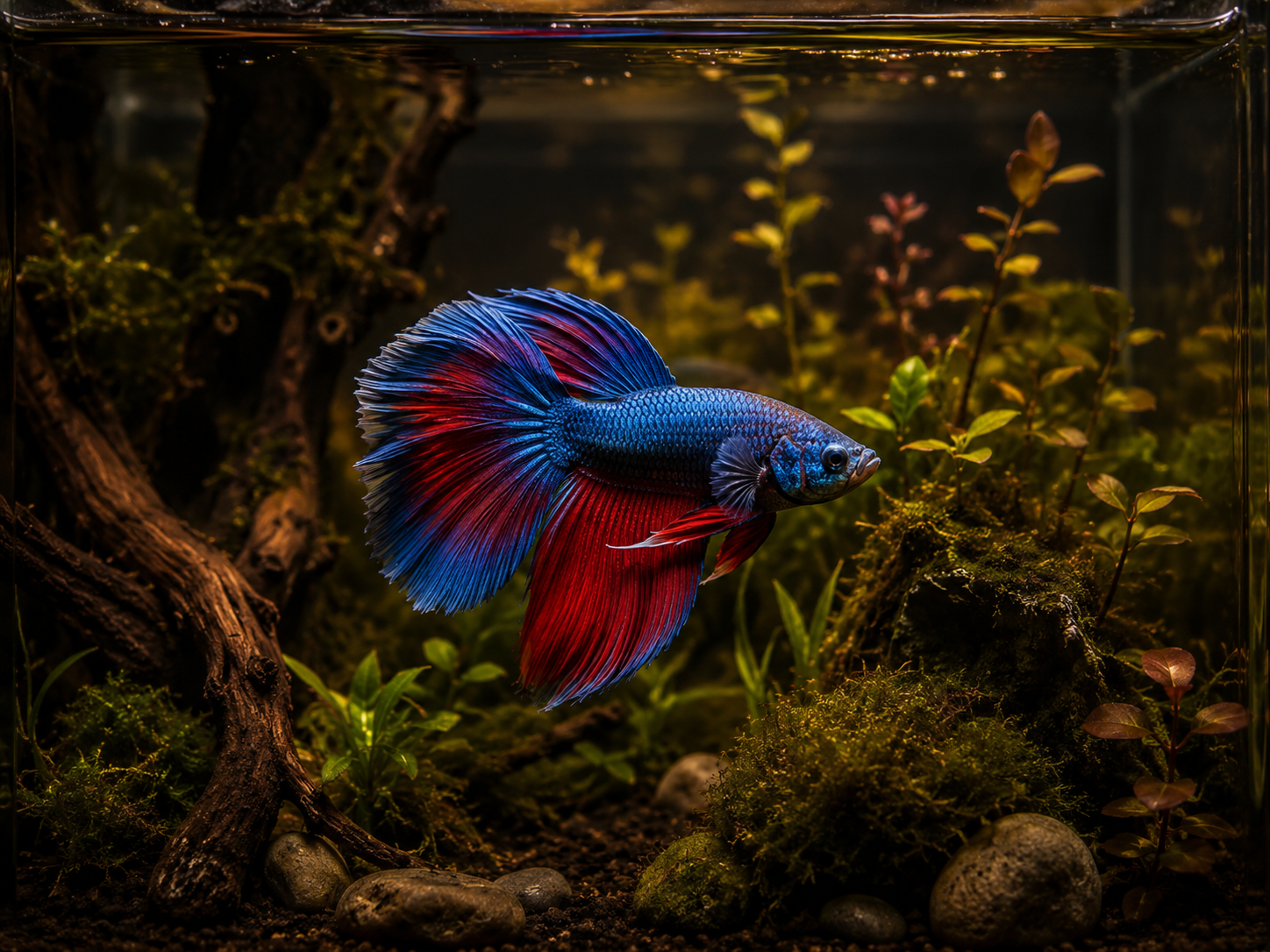
The betta is the fish that hooks most people — flowing fins, real personality,
and a face that seems to watch you back. Forget the myth of the tiny bowl: a betta
wants a heated, filtered 5-gallon tank with gentle flow and plants to rest on. Give
it that and it will reward you with color and character for years.
2. Guppy (Poecilia reticulata)
Care level: Very easy · Adult size:
~2 in · Min tank: 10 gallons ·
Temperament: Peaceful, social · Temp:
72–82°F · Diet: Omnivore (flakes)
Endlessly colorful and almost impossible to discourage, guppies are the classic
first fish. They’re livebearers, so be warned: a mixed group will give you babies.
Keep a small group and you’ll always have movement and color in the tank.
3. Platy (Xiphophorus maculatus)
Care level: Very easy · Adult size:
~2.5 in · Min tank: 10 gallons ·
Temperament: Peaceful · Temp: 70–80°F
· Diet: Omnivore
Platies bring bold reds, oranges, and yellows with none of the drama. Hardy,
active, and community-friendly, they’re a fantastic companion for guppies and other
gentle fish.
4. Molly (Poecilia sphenops)
Care level: Easy · Adult size: ~3–4 in
· Min tank: 20 gallons · Temperament:
Peaceful · Temp: 72–80°F · Diet:
Omnivore (needs some plant matter)
A little bigger than its livebearer cousins, the molly is calm and personable.
It appreciates slightly harder water and a touch more room, so give it a 20-gallon
home and it’ll settle right in.
5. Zebra Danio (Danio rerio)
Care level: Very easy · Adult size:
~2 in · Min tank: 10 gallons ·
Temperament: Peaceful, very active · Temp:
64–77°F · Diet: Omnivore
One of the hardiest fish you can buy, the zebra danio tolerates cooler water and
handles the ups and downs of a new tank better than almost anything. Keep them in a
group of five or more — they’re happiest zipping around as a shoal.
6. White Cloud Mountain Minnow (Tanichthys albonubes)
Care level: Very easy · Adult size:
~1.5 in · Min tank: 10 gallons ·
Temperament: Peaceful, schooling · Temp:
60–72°F · Diet: Omnivore
The rare beginner fish that doesn’t need a heater. White clouds actually prefer
cooler water, making them perfect for an unheated room. Understated at first glance,
they light up with subtle reds and iridescence in a planted tank.
7. Corydoras Catfish (Corydoras spp.)
Care level: Easy · Adult size: ~2–3 in
· Min tank: 20 gallons · Temperament:
Peaceful, social · Temp: 72–78°F ·
Diet: Omnivore (sinking pellets)
Every community tank deserves a squad of corys patrolling the bottom. These
charming little catfish are endlessly busy and endearingly clumsy. Keep six or more
over a soft or smooth substrate to protect their delicate barbels.
8. Neon Tetra (Paracheirodon innesi)
Care level: Easy (in a cycled tank) ·
Adult size: ~1.5 in · Min tank: 15 gallons
· Temperament: Peaceful, schooling ·
Temp: 70–81°F · Diet: Omnivore
That electric blue-and-red stripe is iconic for a reason. Neons are inexpensive
and peaceful, but they do best once your tank is fully cycled and stable — so add
them after the tank has matured a few weeks. In a school of ten, they’re mesmerizing.
9. Cherry Barb (Puntius titteya)
Care level: Easy · Adult size: ~2 in
· Min tank: 20 gallons · Temperament:
Peaceful · Temp: 73–81°F · Diet:
Omnivore
Unlike some of its nippy barb relatives, the cherry barb is gentle and calm. The
males glow a deep ruby red, especially in a planted tank with a dark substrate.
Keep a small group for the best color and behavior.
10. Harlequin Rasbora (Trigonostigma heteromorpha)
Care level: Easy · Adult size: ~2 in
· Min tank: 15 gallons · Temperament:
Peaceful, schooling · Temp: 72–80°F ·
Diet: Omnivore
Copper-orange bodies with a bold black wedge, moving together in a tight school —
harlequins are one of the most elegant beginner fish there is. Peaceful and
undemanding, they round out a community tank beautifully.
Your beginner setup: the 6 essentials
The fish are the easy part. Keeping them alive comes down to a stable tank. Here’s
the short list of what you actually need — skip the gadgets, get these right.
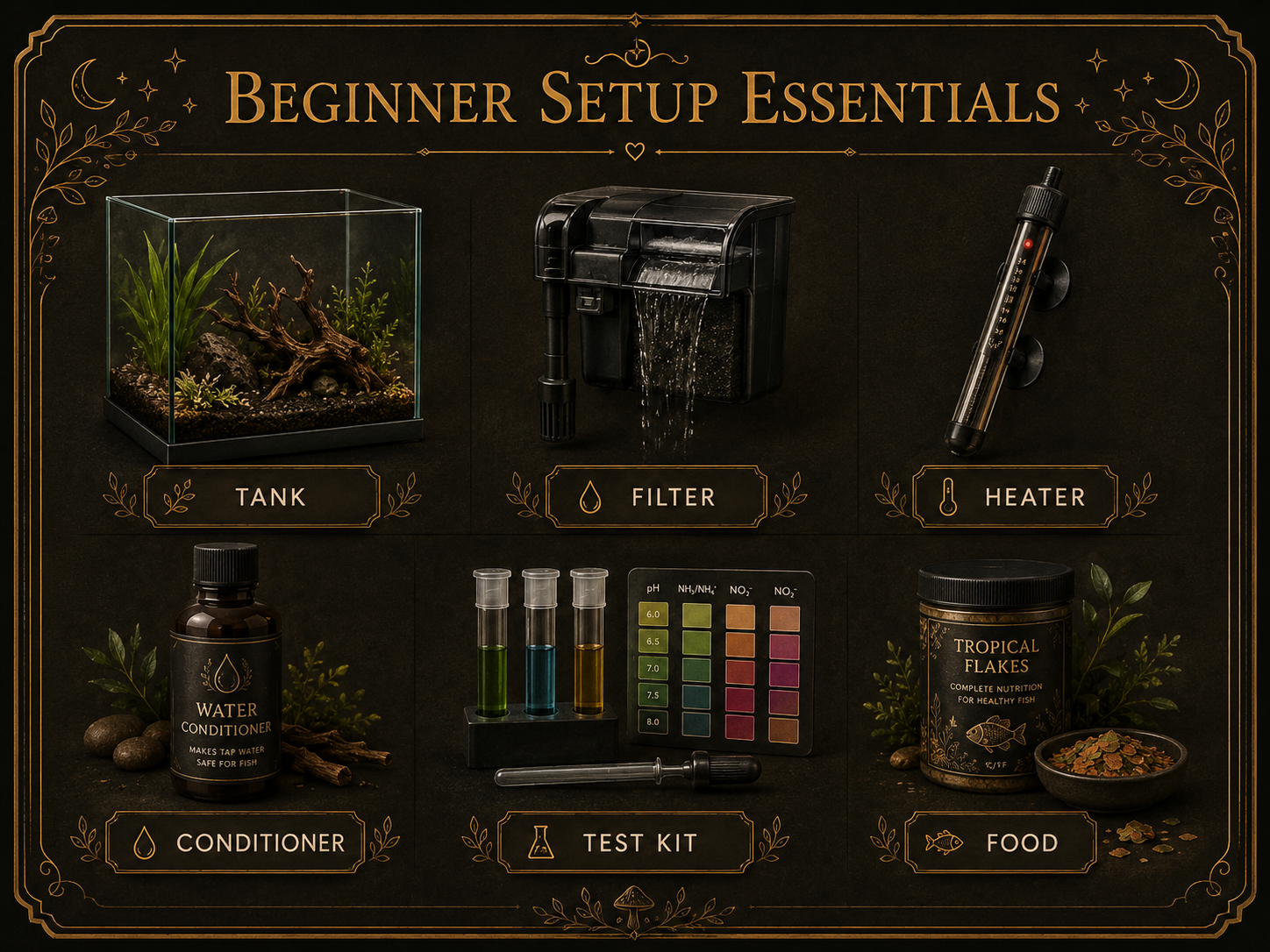
- A 10–20 gallon aquarium. Bigger is genuinely easier — more
water is more stable water. Skip anything under 5 gallons.
See beginner aquarium kits on Amazon. - A gentle filter. It houses the beneficial bacteria that keep
your water safe. Size it for your tank.
Tetra Whisper IQ 20 power filter (tanks up to 20 gallons). - A heater (for tropical species). An adjustable heater holds a
steady 76–80°F. White clouds are the exception — they don’t need one.
Browse aquarium heaters. - Water conditioner. Tap water contains chlorine that must be
neutralized before it touches your fish. A few drops per fill.
See water conditioners. - A liquid test kit. The single most important tool a beginner
can own — it lets you see the invisible (ammonia and nitrite) before it harms fish.
See freshwater test kits. - Quality food. Match it to your fish — flakes for guppies and
platies, pellets for bettas, sinking wafers for corys.
Browse fish food.
The #1 beginner mistake: skipping the nitrogen cycle
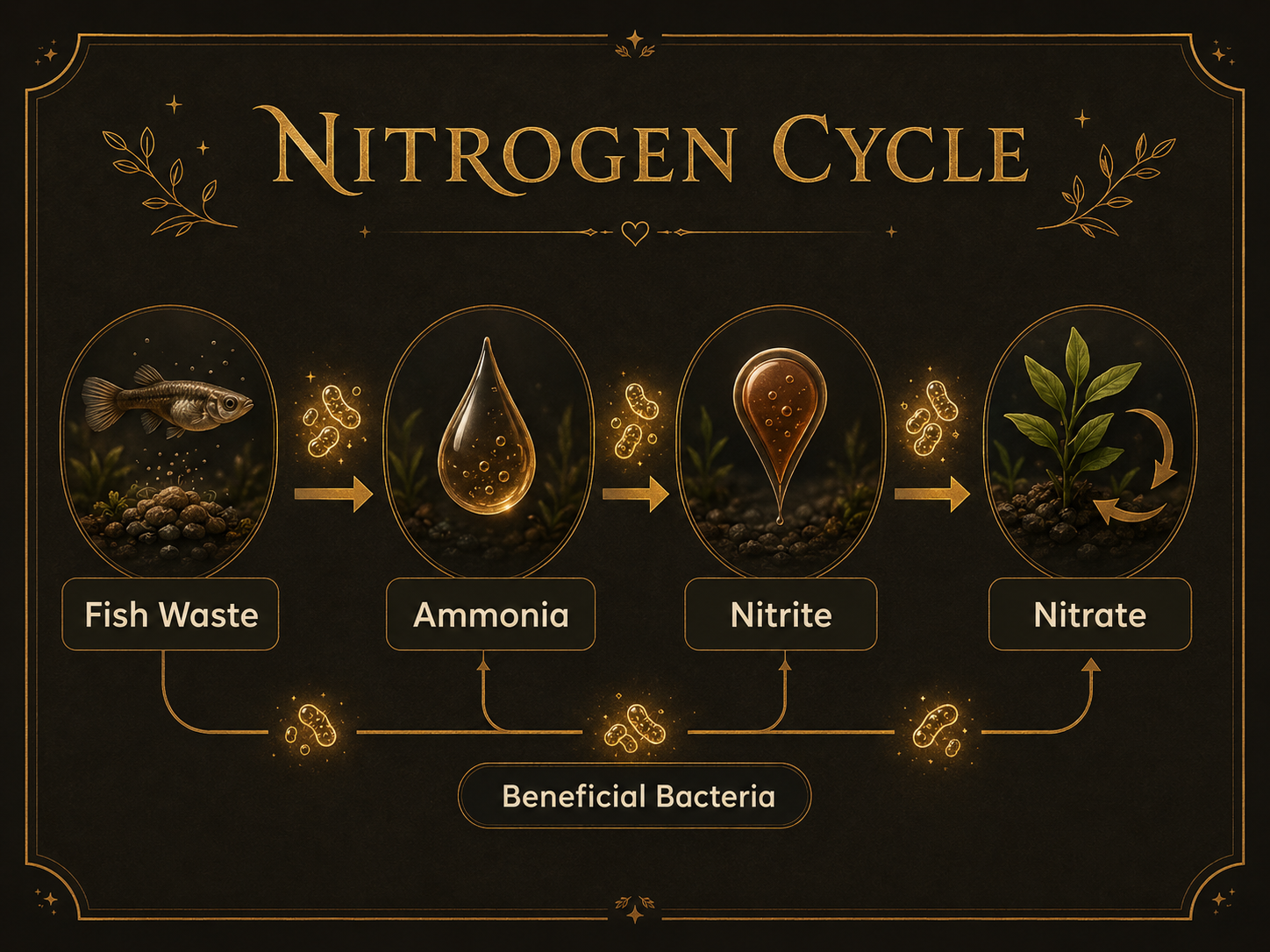
More new fish die from this one thing than from any disease. A new tank has no
beneficial bacteria yet, so fish waste turns into toxic ammonia with nowhere to go.
“Cycling” the tank means growing that bacteria colony before you add fish,
usually over two to six weeks. Do a fishless cycle, test your water
until ammonia and nitrite read zero, and you’ll have skipped the heartbreak that ends
most people’s first attempt. This is where that test kit earns its keep.
Common beginner mistakes to avoid
- Overfeeding. Feed a small pinch once a day; uneaten food fouls
the water. Fish are fine being a little hungry. - Overstocking. Add fish gradually and don’t crowd the tank. A
lightly stocked tank is a stable tank. - Impulse buying. Research a fish’s adult size and needs before
it comes home — the heart of responsible fishkeeping, and something we take
seriously here at ItsyBitsyPets. - No water changes. Swap ~25% of the water weekly to keep nitrate
in check. It’s the single best habit you can build.
Frequently asked questions
What is the easiest freshwater fish to keep?
Guppies, platies, and zebra danios top the list — all are hardy, peaceful, widely
available, and forgiving of beginner mistakes.
What freshwater fish can live together?
Peaceful community fish of similar size mix well: guppies, platies, mollies, corys,
neon tetras, and harlequin rasboras all coexist happily. Avoid housing bettas with
fin-nippers or other male bettas.
How many fish can I keep in a 10-gallon tank?
A good starting point is a small school of one nano species — for example, six to
eight guppies or danios — once the tank is fully cycled. Under-stock rather than
over-stock while you learn.
Do beginner fish need a heater?
Most tropical beginners (bettas, guppies, tetras) do. The main exceptions are
coldwater-tolerant fish like the white cloud mountain minnow and zebra danio, which
are comfortable at room temperature.
What is the hardiest freshwater fish?
The zebra danio and white cloud mountain minnow are among the toughest — both
tolerate temperature swings and less-than-perfect water while you find your footing.
Start small, start right
You don’t need a fish-room full of gear to succeed — you need one stable, cycled
tank and a couple of hardy species you genuinely enjoy watching. Pick two or three
fish from this list that get along, set up the essentials, cycle the tank, and take
it slow. Do that, and you’ll be well past the point where most beginners give up.
Ready for the next step? Explore our
freshwater fish guides, learn
how live plants make care easier over on
aquatic plants and
aquascaping, or add some cleanup
crew with our snails and
shrimp guides.
As an Amazon Associate, ItsyBitsyPets earns from
qualifying purchases. Product links help support our care guides at no cost to you.