
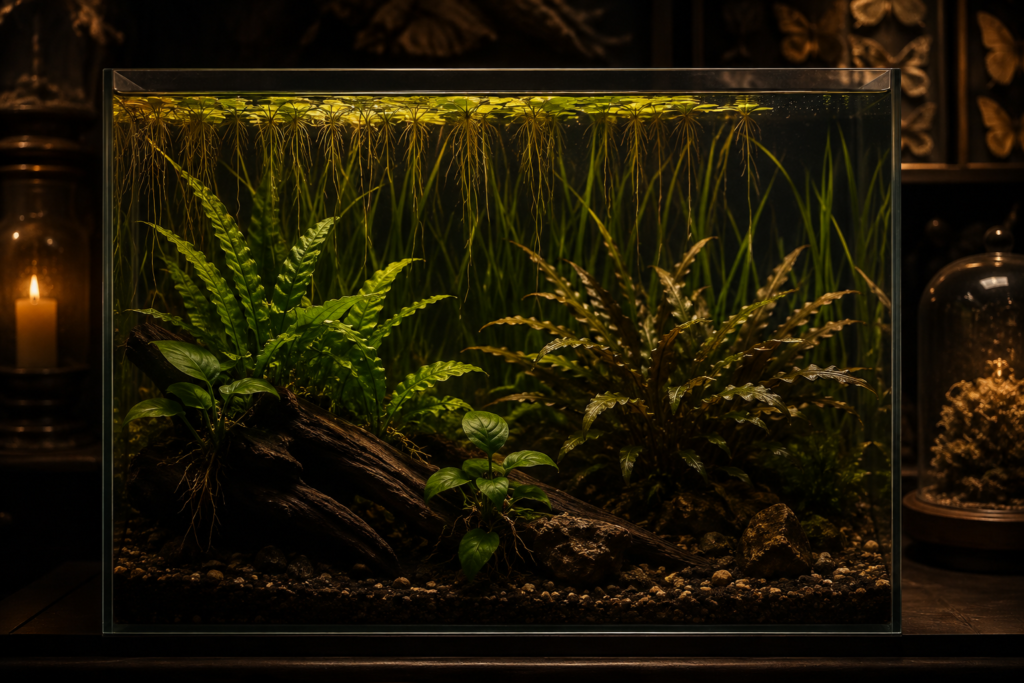
Here is the quiet secret of the aquarium hobby: live freshwater plants are easier than fish. They do not need feeding on a schedule, they cannot jump out of the tank, and the right species will forgive weeks of neglect that no animal would. Yet most beginners keep plastic plants for years because their first real plant died — and it almost always died for one fixable reason: it was planted the wrong way for how that species grows. This guide fixes that. Ten nearly unkillable species, organized by how they actually grow, with the technique that keeps each one alive.
ItsyBitsyPets is reader-supported. As an Amazon Associate we earn from qualifying purchases — at no extra cost to you. See our affiliate disclosure.
Everything here is low-tech on purpose: no CO2 injection, no high-powered lighting, no dosing schedule taped to the wall. Every species in this list grows in ordinary tanks with ordinary equipment, exactly as the folks at Aquarium Co-Op have been demonstrating for years.
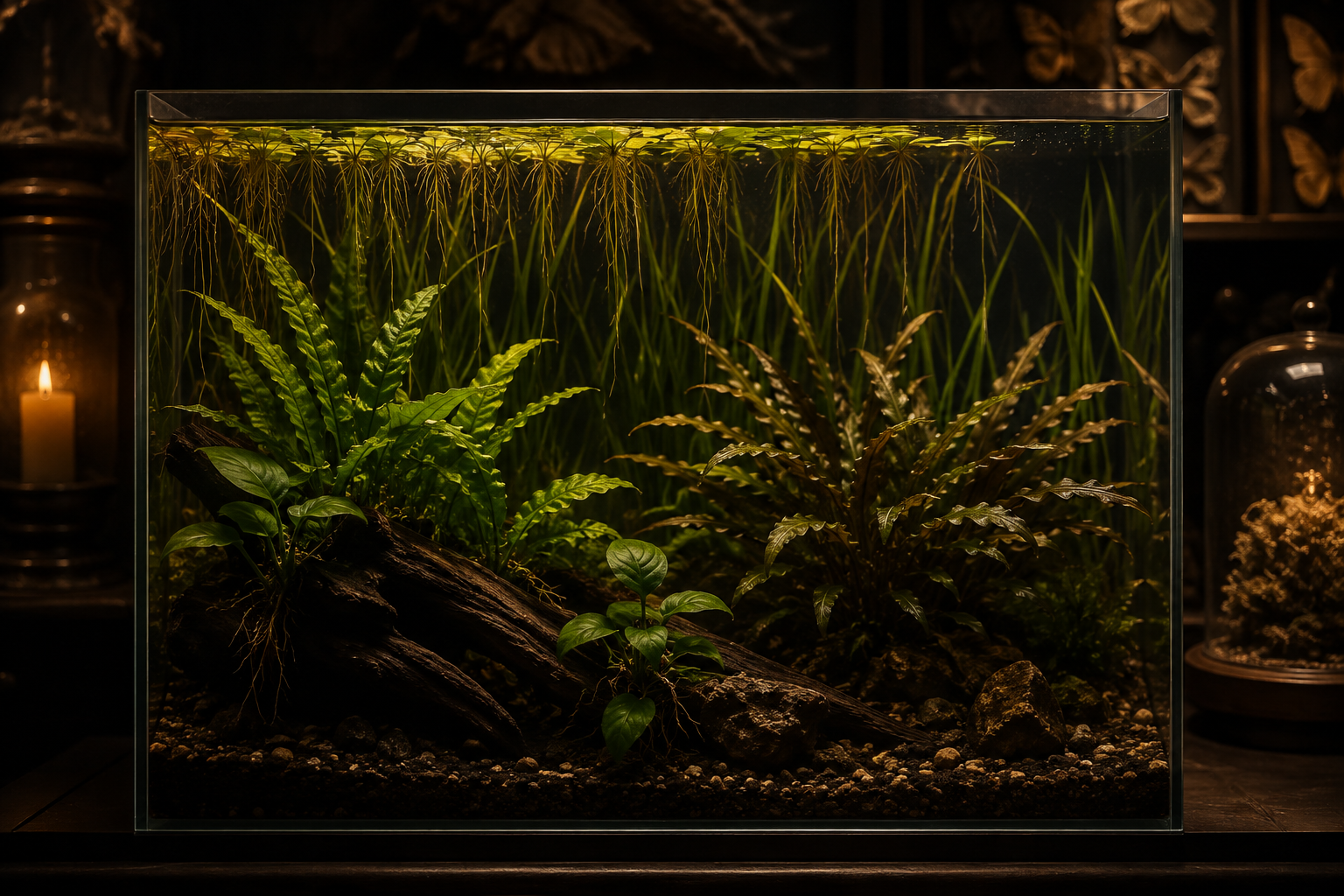
Why live freshwater plants beat plastic
Plastic plants decorate a tank; live plants run part of it. Growing freshwater plants absorb ammonia and nitrate — the same pollutants your filter bacteria and water changes exist to fight — which makes a planted tank measurably more forgiving between maintenance days. They compete with algae for the same nutrients, which is why well-planted tanks stay cleaner-looking than bare ones. And every leaf surface grows biofilm, the invisible grazing layer that shrimp, snails, and fish fry feed on constantly.
There is also the part nobody measures: a planted tank looks alive in a way plastic never does. Leaves sway in the filter current, new shoots unfurl week by week, and shy fish behave differently — bolder, more colorful — when real cover exists. If you keep any small animal we write about, live plants are the single best habitat upgrade you can make.
The four ways freshwater plants grow (this is the part that matters)
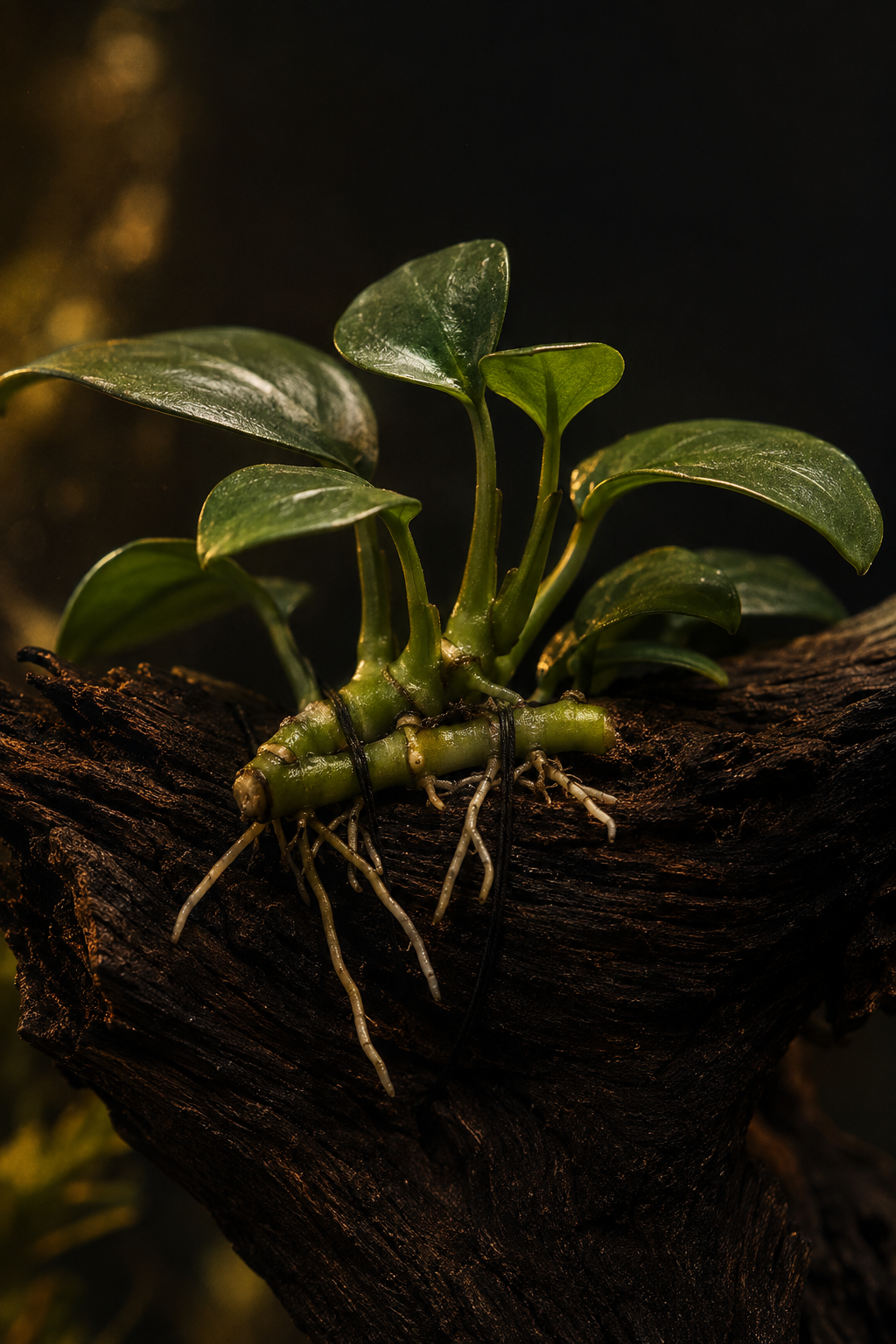
Nearly every dead beginner plant died of a category error, so learn the four categories before the ten species. Epiphytes — anubias, java fern, mosses — grow from a thick horizontal stem called a rhizome, and that rhizome must never be buried. Buried rhizomes rot, and the plant dies from the middle out. Epiphytes get attached to rock or driftwood instead, with thread or a dab of aquarium-safe super glue gel, as the Petco anubias caresheet stresses.
Rooted plants — cryptocorynes, Amazon swords, vallisneria — do the opposite: they feed heavily through their roots and belong in the substrate, planted so the roots are buried but the crown (where leaves meet roots) sits just above the sand line. Stem plants — water sprite, hornwort — are the cut-and-grow group: snip a healthy top, replant it, and it roots. Floaters — frogbit and friends — simply drift at the surface with roots dangling, no planting required at all. Match the technique to the category and the “hard part” of planted tanks disappears.
Lighting: six to eight hours on a timer
Easy freshwater plants want less light than beginners expect. Every species here thrives in low to moderate light — the ordinary LED that came with your tank is very likely enough. Anubias actually prefers subdued lighting: under intense light, its slow-growing leaves become magnets for algae, a point the caresheets repeat because it defies intuition.
The photoperiod matters more than the fixture. Run your light six to eight hours a day on a cheap outlet timer and never touch it again. Longer light days do not grow plants faster — they grow algae, which is happy to use hour nine even when your plants are done with it. A timer also gives plants the consistent rhythm they genuinely respond to, and it removes the one lighting job humans reliably forget.
Substrate and fertilizer without the chemistry degree
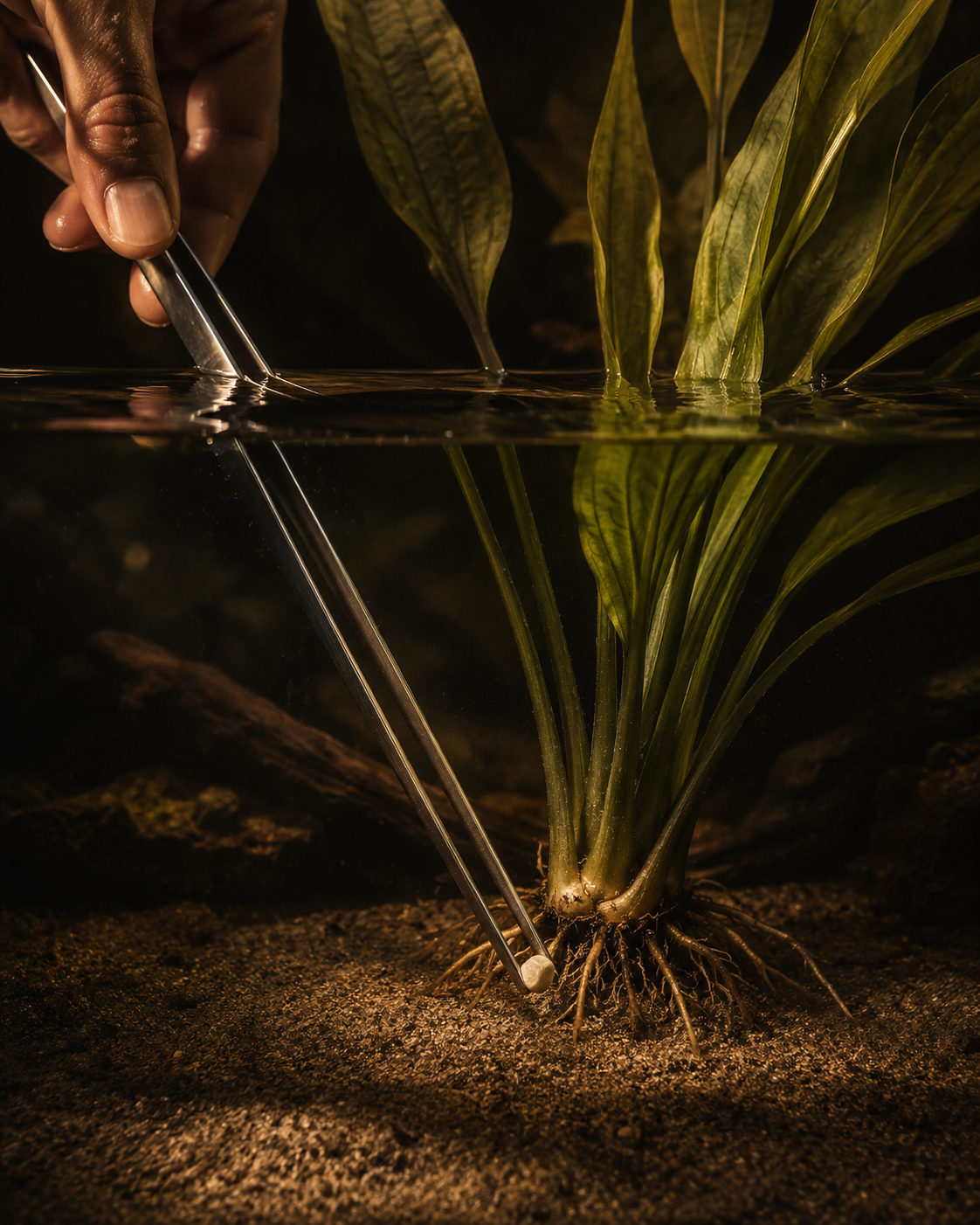
You do not need expensive aquasoil. Plain inert gravel or sand grows every plant in this list, provided the root feeders get fed — and that is what root tabs are for. A root tab is a capsule of slow-release nutrients you push into the substrate near a plant’s roots. The routine from Aquarium Co-Op’s root tab guide: insert tabs a couple of inches from the plant, spaced every four to six inches of planted area, and refresh them every two to three months as they deplete.
The best low-tech feeding routine splits the work in two: root tabs under the heavy root feeders (crypts, swords, vallisneria), and a weekly squirt of liquid aquarium fertilizer in the water column for everything that feeds through its leaves — epiphytes, stems, and floaters. That is the entire program. No CO2 tank, no drop checkers, no dosing calculator. Species that demand those things exist, and they are wonderful — later. Not one of them is in this list.
The 10 best beginner freshwater plants
Grouped by how they grow, so the right technique is attached to every name.
Epiphytes: attach, never bury
1. Anubias nana is the closest thing to an unkillable plant in the hobby. Thick, dark, waxy leaves; growth so slow you measure it in months; total indifference to light level and water hardness. Glue its rhizome to driftwood, and it will still be there — slightly larger — years from now. The tough leaves also make it one of the very few plants that survives goldfish and cichlids.
2. Java fern matches anubias for toughness and adds an elegant, ribbony profile. Same rule: attach the rhizome, never bury it. Its party trick is propagation — mature leaves sprout tiny plantlets right on their tips, which grow roots midwater and can be plucked off and attached somewhere new. It grows acceptably with no fertilizer at all, though it appreciates the weekly liquid dose.
3. Java moss is the workhorse of shrimp keepers everywhere: a tangled green cushion that clings to wood and rock, grows in nearly any light, and hosts more grazing biofilm per cubic inch than anything else in the tank. Tie a clump to hardscape or just wedge it in place; it does the rest. If you keep shrimp or plan to breed fish, moss is closer to essential equipment than decoration.
Rooted plants: bury the roots, feed with tabs
4. Cryptocoryne wendtii is the easiest of the crypts, a bushy rosette in bronze, green, or brown that tolerates almost any substrate and any light without CO2, and then looks good for years with nothing but an occasional root tab. One warning that saves a hundred plants: after planting, crypts often “melt” — the old leaves brown and dissolve. This is normal. The roots are fine and new leaves adapted to your tank grow back within weeks. The number-one crypt mistake is throwing away a healthy plant mid-melt.
5. Amazon sword is the classic centerpiece: a fountain of broad blades that can fill the entire background of a 20-gallon tank. It is a heavy root feeder — of everything on this list, the sword is the plant that genuinely needs its root tabs — and given them, it rewards you with constant new leaves and, eventually, runners carrying baby swords. Plant it with the crown above the substrate and give it room; it means to be large.
6. Vallisneria is the background grass: tall green ribbons that reach the surface and lean with the current. Fed with root tabs and a little liquid fertilizer, it spreads by runner — sending shoots sideways under the sand that pop up as new plants — until the back of your tank is a gently waving curtain. If you have ever admired a “jungle” tank, vallisneria was probably doing most of the work.
Stem plants and floaters: the fast growers
7. Water sprite is a lacy, bright-green fern you can either plant in the substrate or leave floating, where it grows even faster. That speed is the point: fast growers are nitrate sponges, actively cleaning the water between changes. Snip a healthy stem, replant it, and you have two.
8. Hornwort may be the fastest plant in the hobby, a bottle-brush stem that can grow inches in a week. It has no true roots — anchor it loosely or let it float. Fair warning: hornwort often sheds needles messily while adjusting to a new tank before growing back in. Forgive it once; it earns the mess.
9. Amazon frogbit floats like a fleet of tiny lily pads, trailing long feathery roots that shrimp and fry shelter in. It shades the tank below — useful for subduing algae and comforting shy fish — and pulls its nutrients straight from the water column. Keep the tops of its leaves dry (splashing rots them) and thin the fleet by the handful when it conquers too much surface.
10. Marimo moss balls are the honest cheat on the list: not a plant at all, but a velvet sphere of slow-growing algae. They demand literally nothing — any light, cold water included — and only ask to be turned over now and then so all sides see light. For a desktop nano or a first “is it alive” purchase, nothing is gentler. They fit beautifully in the small setups from our nano tank guide.
Planting day, step by step
New plants usually arrive in plastic pots stuffed with rock wool. All of that goes: slide the plant out, peel and rinse every scrap of rock wool from the roots, and trim any mushy brown roots or leaves. Then apply the category rule. Epiphytes get glued or tied to hardscape — a piece of spider wood or driftwood makes an instant centerpiece with an anubias and a fern on it. Rooted plants go into the substrate, roots buried, crown exposed. Stems get their bottom inch of leaves stripped and go in as a small group. Floaters, you drop.
A pair of long aquascaping tweezers makes substrate planting dramatically easier than fingers, especially in sand. And a timing note that surprises people: plants can go in during the nitrogen cycle — they help, absorbing ammonia while the tank matures. Our aquarium startup guide covers where they slot into the sequence, and the aquascaping section is where to go when arranging them stops being logistics and starts being art.
Freshwater plants and your animals
Plants and small animals are a mutual admiration society. Shrimp graze the biofilm on every leaf and raise their young in moss. Snails patrol leaf surfaces without harming healthy tissue. Fish fry survive at meaningfully higher rates in planted tanks simply because they can hide. The fish in our beginner freshwater fish guide all appreciate plant cover, and none of them harm plants.
The exceptions are the diggers and the grazers-of-plants themselves: goldfish and large cichlids uproot rooted plants and eat soft leaves. For their tanks, use the armored options — anubias and java fern attached high on hardscape, and cheap fast hornwort you can afford to sacrifice. One more habit worth building: rinse and briefly quarantine or dip new plants before they go in, because pest snails ride in on nursery plants, and copper-based snail treatments cannot be used later if you keep shrimp — copper is toxic to every invertebrate in the building.
Trimming, propagation, and free plants forever
Live plants come with a benefit plastic can never offer: they multiply, and the surplus is yours. Trimming a low-tech tank takes minutes a month. Stem plants like water sprite and hornwort get topped — cut the healthy upper half of a leggy stem, replant the top, and discard or share the tired base. Vallisneria and Amazon swords send out runners; once a baby plant on a runner has a few leaves and roots of its own, snip the runner and you have a new plant to place wherever you like. Java fern hands you plantlets from its leaf tips, and a moss clump can simply be pulled into two.
Epiphytes barely need scissors at all. Remove an old yellowing anubias leaf at its base now and then, and split the rhizome itself when it grows long — each piece with a few leaves becomes an independent plant. Crypts thicken into clumps that can be lifted and divided every year or so. None of this is required; it is just the point in the hobby where maintenance quietly turns into gardening.
What to do with the extras? Trade them. Local fish stores often give store credit for healthy trimmings, aquarium clubs run plant swaps, and a bag of surplus frogbit is the traditional way one hobbyist recruits another. A single modest purchase of the species in this list can realistically stock every tank you will ever own — the planted hobby is one of the few where your supplies grow themselves.
Floaters are the one group to manage with a firmer hand. Frogbit doubles quickly in a happy tank, and a fully covered surface steals light from everything below and slows gas exchange at the water line. Skim off a generous handful whenever coverage passes half the surface. It feels wasteful the first time; by the third time, it is just weeding the garden.
Common mistakes (each one preventable)
The same five mistakes account for nearly every beginner plant failure. Burying an anubias or java fern rhizome — the plant rots in a month. Planting a sword or crypt crown too deep — same ending, slower. Running lights ten or twelve hours to “help” — the help goes entirely to algae. Yanking a melting crypt that was two weeks from regrowing. And forgetting that root tabs run out — the sword that thrived for three months and then stalled is not diseased, it is hungry.
Notice what is not on the list: water chemistry, CO2, expensive equipment. Easy freshwater plants genuinely do not care. Technique and patience are the whole game.
Which freshwater plants should you start with?
| Plant | Type | Light | Feeding | Best for |
|---|---|---|---|---|
| Anubias nana | Epiphyte | Low | Liquid (optional) | Everyone; rough fish |
| Java fern | Epiphyte | Low | Liquid (optional) | Everyone |
| Java moss | Epiphyte/carpet | Low | Liquid | Shrimp, fry |
| Cryptocoryne wendtii | Rooted | Low-med | Root tabs | Midground color |
| Amazon sword | Rooted | Moderate | Root tabs (needs) | Centerpiece |
| Vallisneria | Rooted | Low-med | Root tabs + liquid | Background jungle |
| Water sprite | Stem | Low-med | Liquid | Nitrate control |
| Hornwort | Stem/floating | Low-med | Liquid | Instant cover |
| Amazon frogbit | Floater | Any | Liquid | Shade, fry shelter |
| Marimo moss ball | Algae ball | Low | None | Nano tanks, kids |
If you want the one-sentence answer: glue an anubias and a java fern to a piece of driftwood, plant three crypts in front of it, add a marimo ball, and put the light on a six-hour timer. That little scene costs less than a video game, survives nearly anything, and quietly makes every animal in your tank healthier. Live freshwater plants are not the advanced level of this hobby — they are the easy mode that most people find last. Start with these ten, and by the time one of them outgrows its spot, you will not be a beginner anymore.