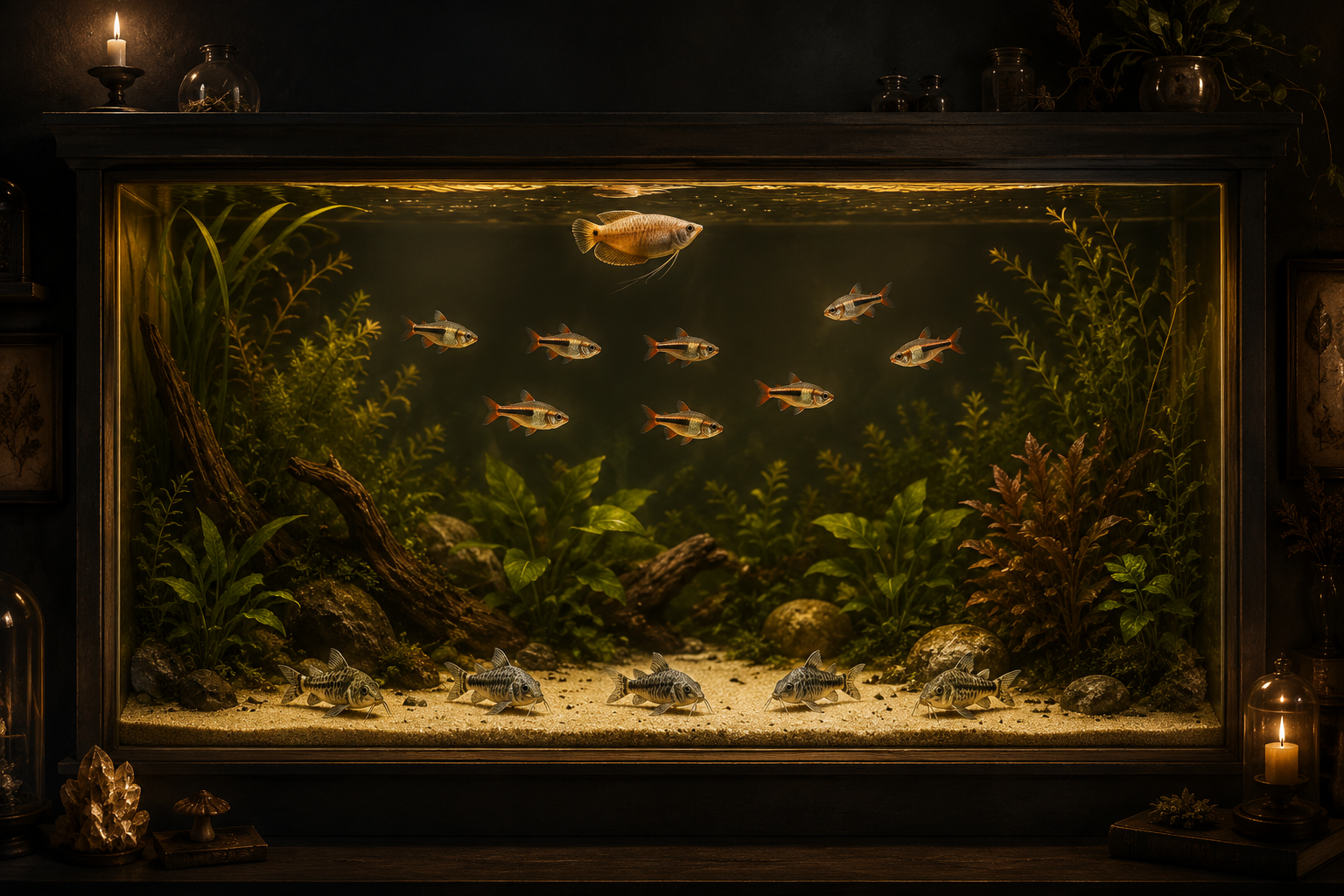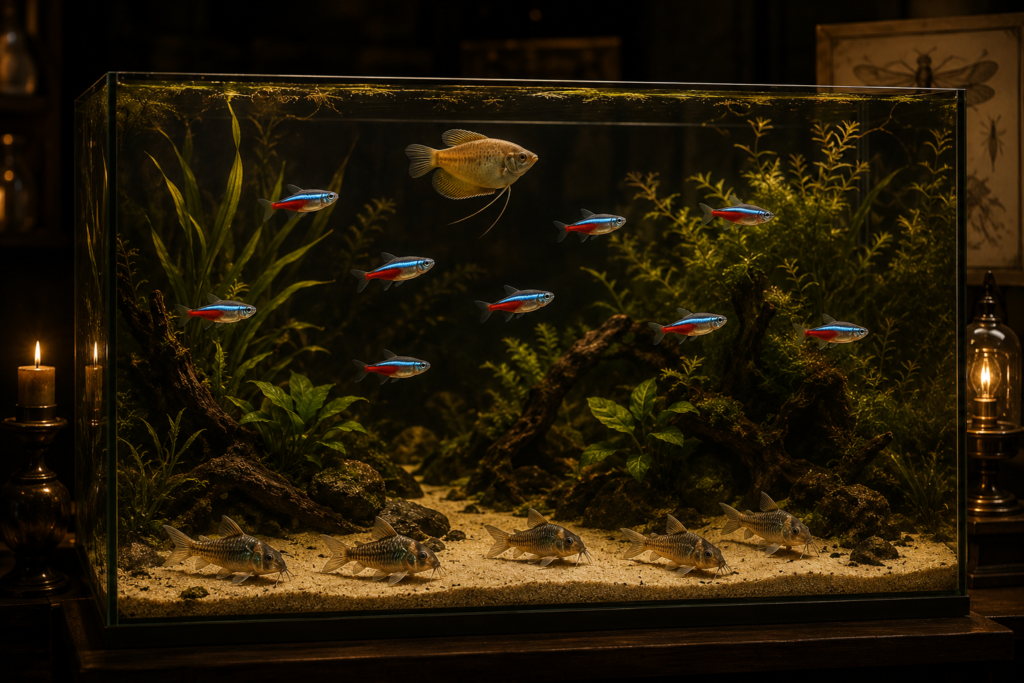
Walk into any fish store and you’ll see a wall of possibilities — and no warning labels. The tetras that school like living confetti, the betta in his cup, the tiny catfish nobody notices: they can’t all live together, and the store won’t always stop you from finding that out the expensive way. Choosing fish tank species is really two decisions, not one — which fish you love, and which fish can share water without a war. This guide covers both: twelve species that have earned their beginner reputation, and the combination rules that turn a list of fish into a community.
ItsyBitsyPets is reader-supported. As an Amazon
Associate we earn from qualifying purchases — at no extra cost to you. See our
affiliate
disclosure.
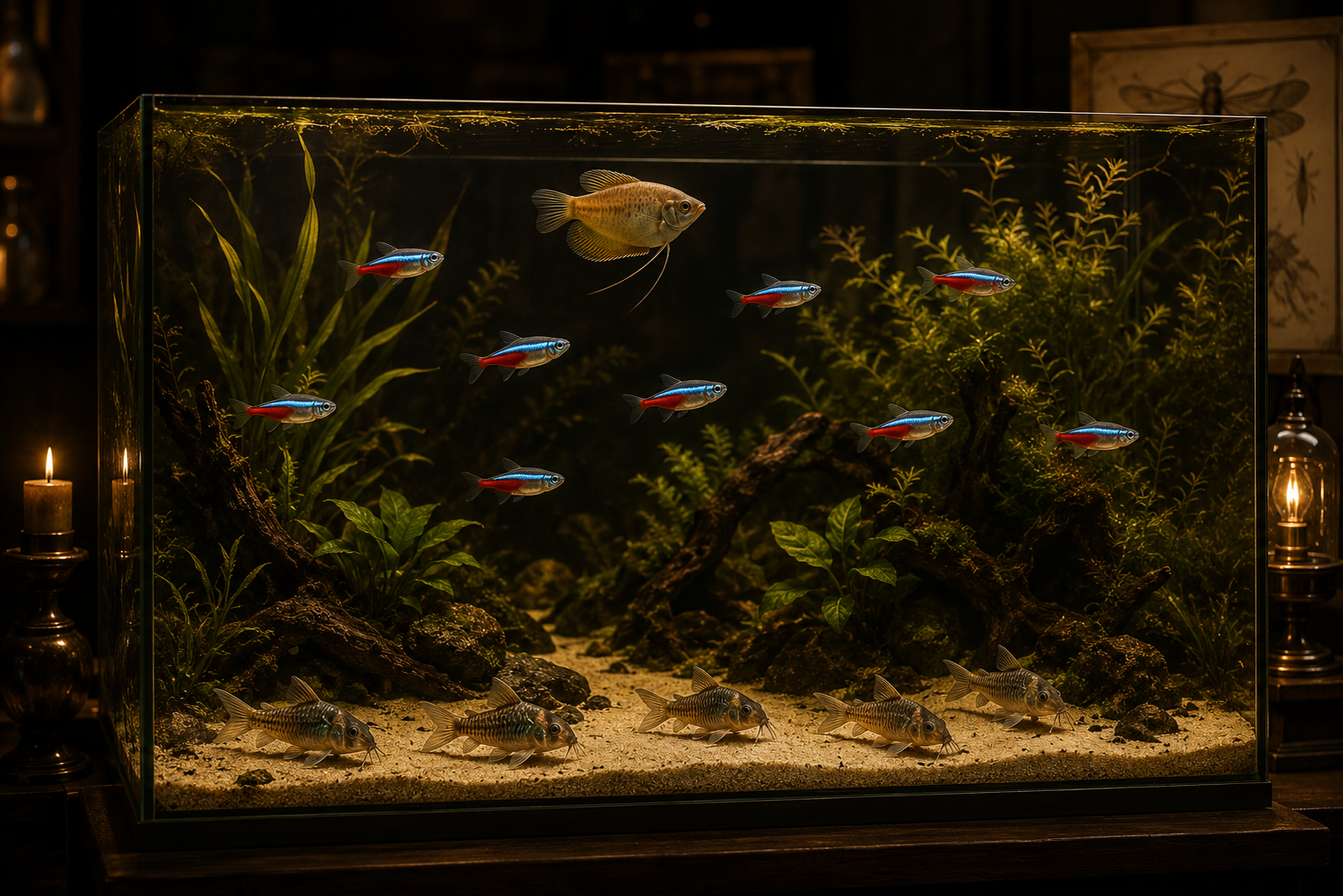
How to choose fish tank species that live together
Every stocking disaster we’ve ever helped untangle broke one of three rules. They’re not complicated, and they’re worth more than any species list — because once you can apply them, you can evaluate any fish the store throws at you.
Rule one: stock for adult size. The fish in the store is a juvenile, often sold at a fraction of its adult length. That “small” common pleco is an eighteen-inch tank-buster in two years; the bristlenose next to it stays under five inches forever. Every number in this guide is a full-grown number, and the habit of asking “how big does it get?” before “how pretty is it?” will save you more money than any sale.
Rule two: match temperament tiers. Fish sort roughly into peaceful schoolers, peaceful centerpieces, semi-aggressive personalities, and fin-nippers. The tiers mix badly: nippy species shred long-finned tankmates, and a semi-aggressive fish will bully a shy one out of the food. A community works when everyone in it comes from the same tier — which is why eleven of our twelve picks below are peaceful, and the twelfth comes with a warning label.
Rule three: match water parameters. Temperature and hardness ranges must overlap for every species in the tank — not “close enough,” overlap. A cold-water minnow slowly cooks at tropical temperatures even though it survives the first month. Stability matters more than chasing an exact number: fish handle 76°F beautifully and handle 74-then-79-then-75 badly.
Underneath all three rules sits the nitrogen cycle. Fish waste becomes ammonia; beneficial bacteria convert ammonia into nitrite and then into nitrate, and according to Texas A&M AgriLife Extension, both ammonia and nitrite are toxic to fish while nitrate is the far-less-toxic end product you remove with water changes. A new tank has none of those bacteria yet. Our step-by-step aquarium startup guide walks through cycling before you add a single fish — it’s the unglamorous month that makes everything below possible.
The 12 best fish tank species for beginners
These twelve earn their spots the same way: hardy, forgiving, widely available, and honest about their needs. For each one you get adult size, minimum tank, temperature, and the temperament note that tells you who it can live with.
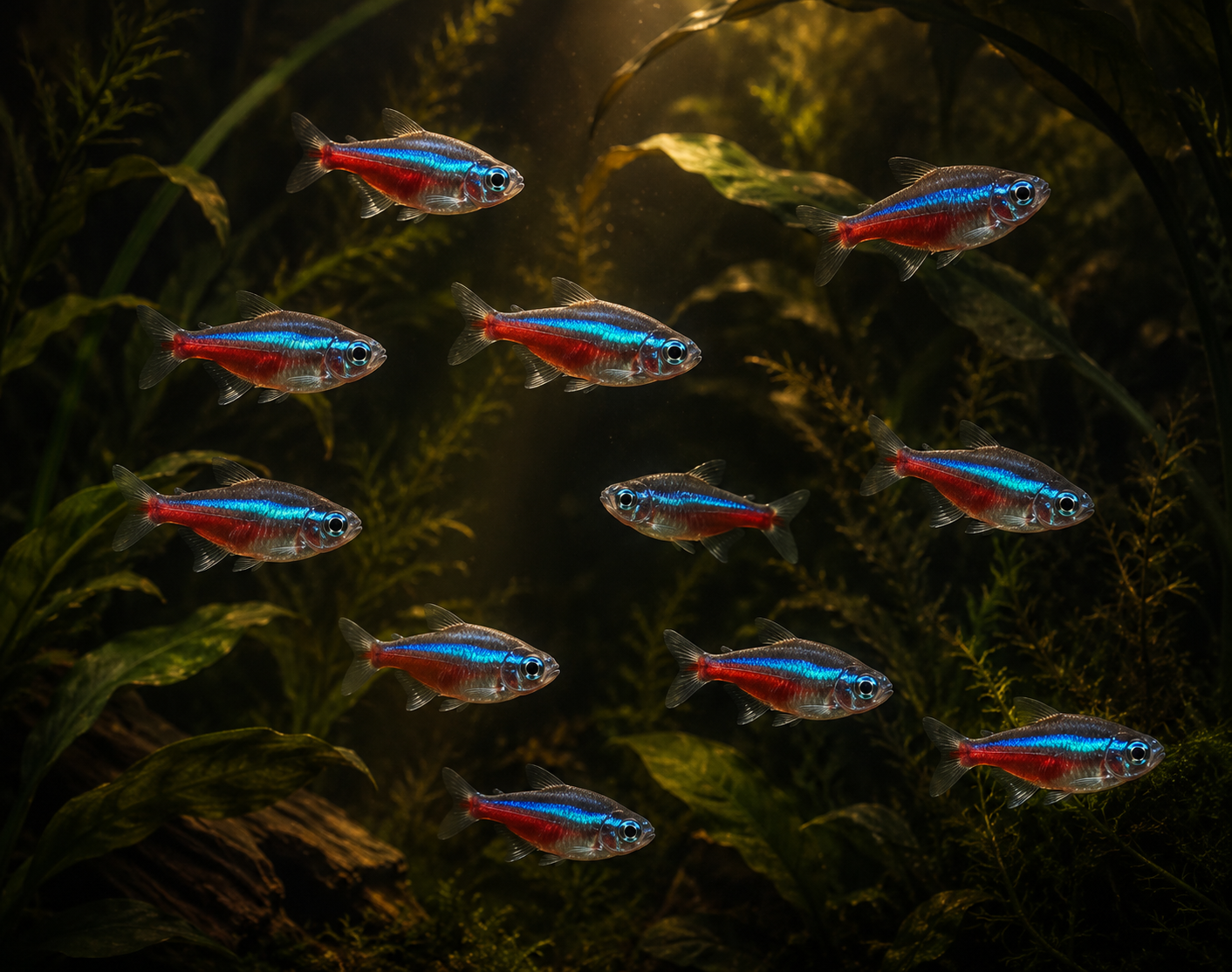
1. Neon tetra
The gateway fish for a reason. An inch and a half of electric blue and red that only makes sense in numbers — keep ten or more and they move as one animal. PetMD’s tetra care sheet puts them at 72–78°F in soft, stable water; a 15–20 gallon tank suits a proper school, though a smaller school squeaks by in a well-planted ten. Feed a quality micro pellet or crushed flake. Peaceful to a fault — they threaten nobody and nothing.
2. Harlequin rasbora
The neon’s copper-and-black cousin and arguably the easier fish: harder to stress, less fussy about water, just as tight a schooler in groups of eight or more. At 1.75 inches and 72–80°F they fit a ten to twenty gallon community, and they’re one of the few schooling species calm enough to share a tank with a betta without lighting his fuse.
3. Zebra danio
Striped, hyperactive, and nearly indestructible — zebra danios tolerate 64–77°F, which means they thrive in unheated tanks that would chill a tetra. The catch is energy: they’re fast, constant swimmers that need a 20-gallon long’s length more than its volume, and their zoomies stress slow, shy tankmates. Six minimum; more is better.
4. Guppy
Two inches of tail and confidence. Guppies handle 72–82°F, eat everything, and breed with the enthusiasm of an animal that knows it’s snack-sized — buy males only unless you want a nursery. Those flowing tails make them targets, so never house them with nippy species. A trio of males brings constant color to a ten gallon.
5. Platy
The livebearer for people who want substance over flash: two and a half inches, brick-solid hardy, happiest at 70–80°F in the harder water that much of the country has on tap. Platies are peaceful, plump, and endlessly patient with beginner mistakes. Same livebearer math as guppies — single-sex groups unless you want fry.
6. Corydoras catfish
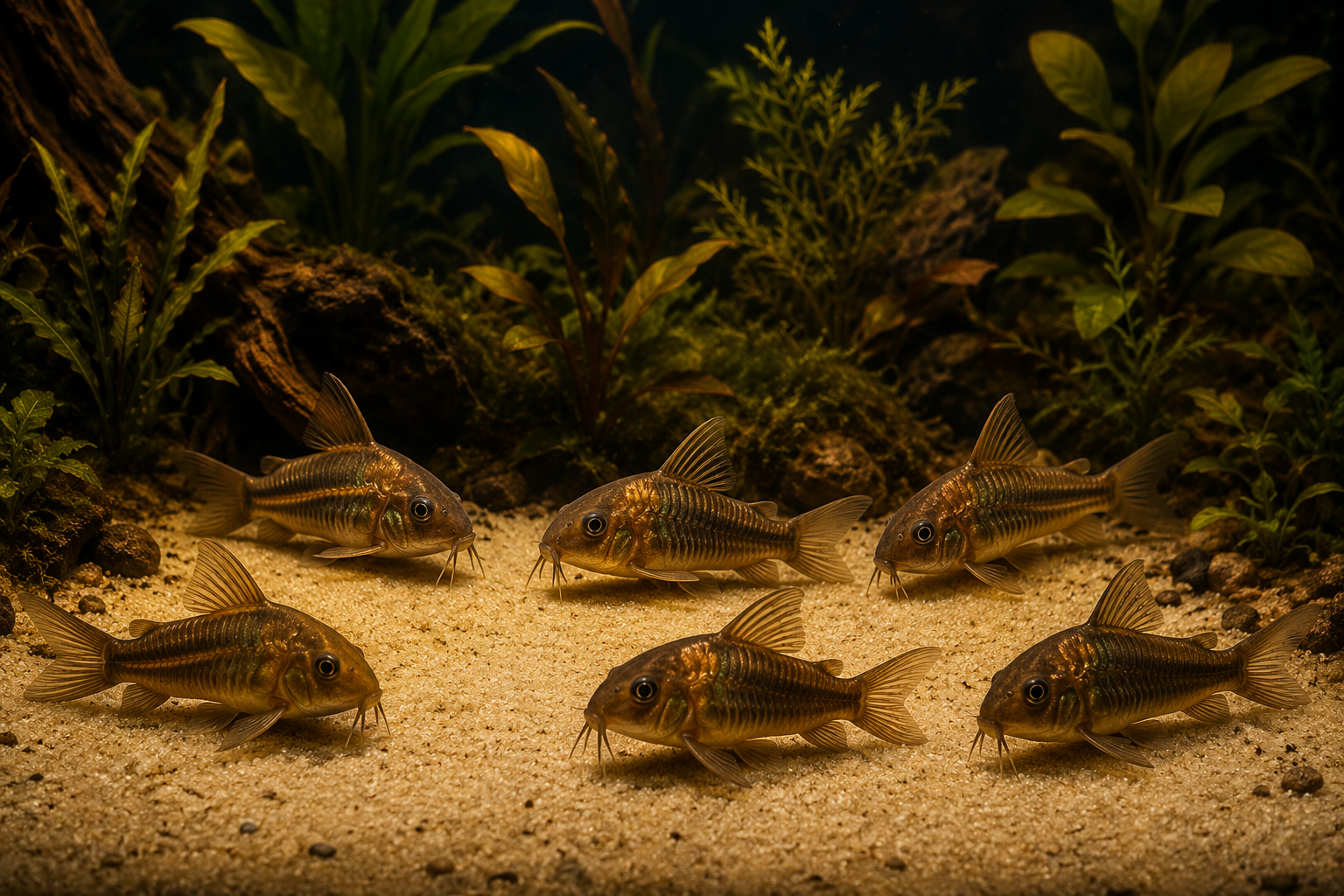
The bottom crew. Corydoras are armored, whiskered catfish that sift sand all day in sociable groups of six or more — pygmy cories (one inch) suit a ten gallon, bronze and albino cories (up to three inches) want twenty. Keep them at 72–78°F over soft sand substrate; gravel wears down the delicate barbels they smell with. Possibly the most peaceful fish in the hobby.
7. Cherry barb
Barbs have a nipping reputation — tiger barbs earn it — but the cherry barb is the family’s diplomat. Two inches, deep red males, 73–81°F, and genuinely peaceful in schools of six or more in a twenty gallon. If you want barb energy without barb crime, this is the one.
8. White cloud mountain minnow
The best cold-water fish nobody buys. White clouds want 60–72°F — no heater at all in most homes — and school beautifully at an inch and a half. The critical rule runs backwards: do not put them in a tropical tank, where the warm water shortens their lives. Pair them with other cool-water species or give them their own unheated ten gallon.
9. Chili rasbora
The five-gallon specialist. At under three-quarters of an inch, ten chili rasboras carry a smaller total bioload than one betta, and a school of them over dark substrate glows like embers. They want stable 74–82°F water and gentle filtration, and their size makes them shrimp-safe. We profile them and seven other tiny species in our micro fish guide.
10. Betta
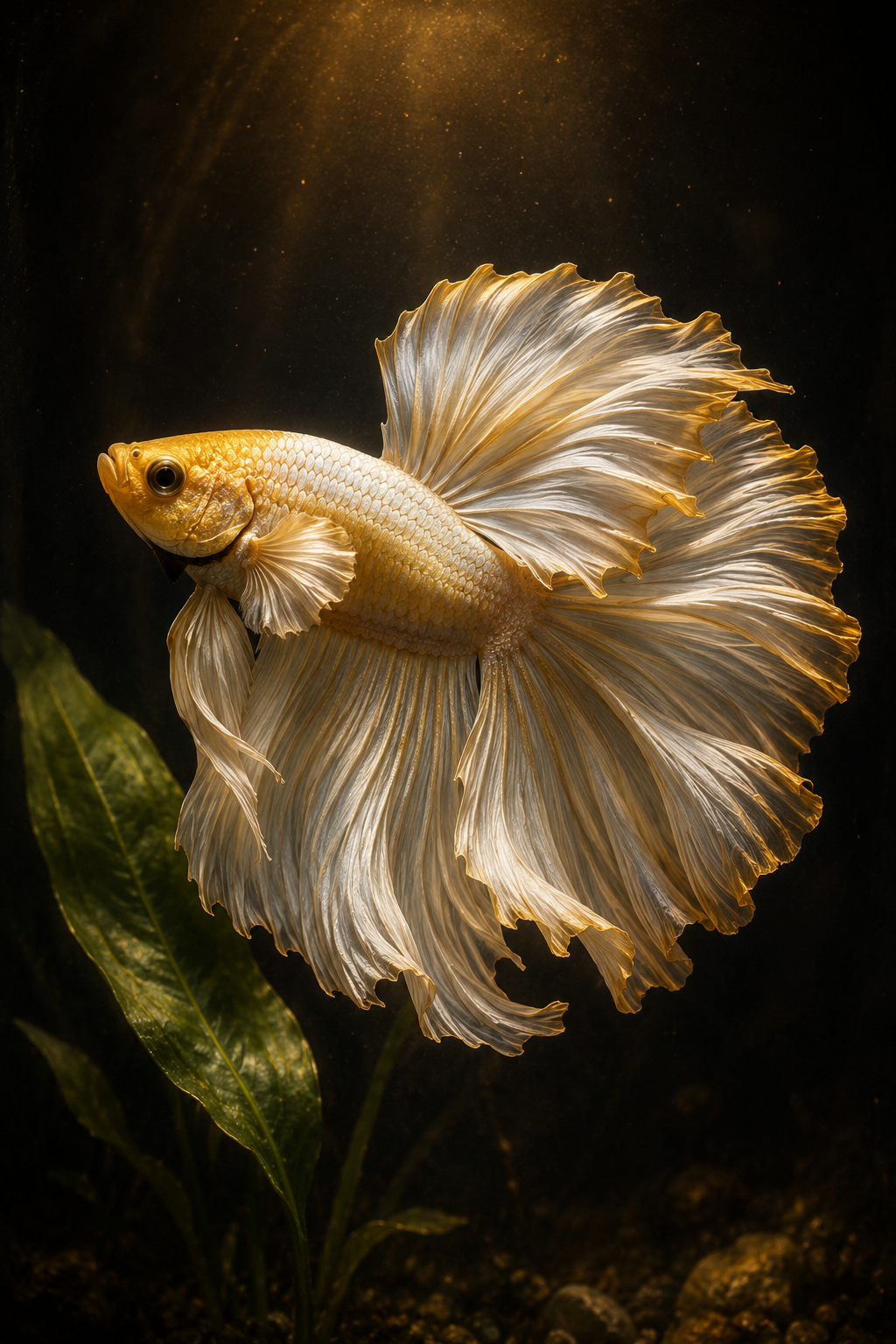
The warning-label pick. A betta is a spectacular solo pet — PetMD’s care sheet calls for 76–81°F, which makes an adjustable heater mandatory — but community life is conditional. No fin-nippers, no bright long-finned rivals, no cramped quarters, and always an exit plan if he decides the treaty is off. With calm schoolers like harlequin rasboras in twenty gallons, it often works. Often.
11. Honey gourami
The centerpiece that never starts trouble. Two inches of soft amber that cruises the upper water at 74–82°F, the honey gourami has the presence of its scrappier dwarf gourami cousin with none of the temper. One per tank in ten to twenty gallons, over a peaceful school — it’s the finishing touch fish.
12. Bristlenose pleco
The algae eater that actually fits. Where the common pleco hits eighteen inches, the bristlenose stops at four to five, grazing glass and driftwood at 72–80°F in a twenty-five to thirty gallon. It needs real food — sinking algae wafers, not leftovers — and a piece of driftwood to rasp. The bristles are decorative; the work ethic is real.
5 gallon fish tank species: the honest shortlist
Five gallons is where optimism goes to overstock. The honest ceiling for 5 gallon fish tank species is a single betta, or a school of ten chili rasboras, or an invertebrate setup — one of those, not a mix, and never the “community” the box art promises. Small volumes swing fast: the same feeding mistake that’s a rounding error in forty gallons is an ammonia spike in five. If a nano tank is the plan, our nano tank guide covers the setups under twenty gallons that genuinely work.
Saltwater fish tank species: a different game
Marine fish play by stricter rules — bigger startup cost, tighter stability requirements, and livestock that punishes shortcuts — but the beginner trio of saltwater fish tank species is well established: the ocellaris clownfish, the royal gramma, and the firefish goby. All three are hardy by marine standards, stay small, and coexist peacefully in a thirty-plus gallon tank.
Treat saltwater as its own project rather than an upgrade. Our saltwater fish for beginners guide ranks ten forgiving species, and the saltwater aquarium setup guide covers the equipment gap between fresh and marine before you commit a dollar.
Stocking rules that keep every species alive
Cycle first, stock second. The bacteria that detoxify ammonia take four to eight weeks to establish, and adding fish before that means the fish are swimming in their own untreated waste. A liquid test kit is how you know: when ammonia and nitrite hold at zero and nitrate is climbing, the tank is cycled and safe.
Schools need their numbers. Every schooling species above lists a minimum for a reason. A “school” of three tetras is three stressed animals that hide, nip, and fade; the same species at ten-plus behaves like the fish you saw in the store display. If the tank can’t hold the school size, it can’t hold the species — pick a smaller one instead.
Retire the inch-per-gallon rule. It fails exactly where beginners need it: a four-inch fancy goldfish produces several times the waste of four one-inch tetras, and a fast swimmer needs floor space no volume formula captures. Stock by adult mass, activity level, and filtration capacity — and when in doubt, understock. Nobody has ever regretted an understocked tank.
Add fish in small batches. Your bacteria colony sizes itself to the current bioload. Doubling the fish in one afternoon doubles the ammonia overnight, faster than bacteria multiply. Add one school or one centerpiece at a time, two weeks apart, and the biology keeps pace with your enthusiasm.
Pairings that always fail
Some combinations look reasonable in the store and end badly every single time. Learning the classics is faster than repeating them, so here are the ones we see most.
Tiger barbs with anything long-finned. Tiger barbs are gorgeous, active, and compulsive fin-nippers — a betta or a guppy in their tank is a target, not a tankmate. If you love barbs, the cherry barb above delivers the family’s color without the crime; the tigers need a species tank or fast, short-finned company.
Goldfish with tropical fish. A goldfish is a cold-water animal that wants 50–70°F and produces waste like a fish three times its size. Put one in a 78°F tropical community and both halves of the equation suffer: the goldfish runs a permanent fever while its bioload smothers the tank. Goldfish belong with goldfish, in bigger tanks than anyone expects.
The common pleco, anywhere. Sold at two inches, adult at eighteen — the common pleco outgrows nearly every home aquarium it’s sold for. It isn’t a bad fish; it’s a mislabeled one. The bristlenose in our list does the same job at a quarter of the size, permanently.
Two male bettas, ever. They’re called fighting fish because they are. Two males will fight through a divider’s gaps, through reflections, through anything short of separate tanks. One male per tank is not a guideline, it’s a law of nature.
Mixing temperature zones. White clouds with neon tetras is the subtle version of the goldfish mistake — a 65°F fish and a 76°F fish have no honest overlap, so one of them is always living at the stressful edge of its range. Check the ranges in the table below before you fall in love with a pairing.
Feeding a multi-species community
A community that eats at three levels needs food at three levels. Flakes and micro pellets feed the surface and mid-water crowd — the tetras, rasboras, guppies, and gouramis. Sinking wafers and pellets reach the corydoras and the pleco after the top-water fish have had their fill; without them, bottom dwellers slowly starve on leftovers while looking perfectly busy.
Feed once or twice a day, only what disappears in about two minutes, and skip a day each week without guilt — every one of these species handles a fast better than a binge. Overfeeding is the most common cause of cloudy water and ammonia trouble in new tanks, because uneaten food rots into exactly the compounds the cycle exists to remove. When in doubt, feed less than feels generous.
Picking healthy fish at the store
The best stocking plan dies with one sick fish, so inspect before you buy. Healthy fish swim level and alert, fins open, colors clear, bellies rounded but not swollen. Walk away from tanks with clamped fins, white spots like salt grains, ragged tails, or fish hanging listless at the surface — and walk away from healthy fish sharing water with sick ones, because the water carries what the symptoms show.
Bring new arrivals home in a dark, calm bag, float it to equalize temperature, and add the fish — never the store water — to your tank. Keepers who’ve been burned once quarantine new fish for two weeks in a bare spare tank before introducing them; it’s the cheapest insurance the hobby offers, and after your first outbreak you’ll wish you’d started sooner.
Fish tank species comparison table
| Species | Adult size | Min tank | Temp | School | Temperament |
|---|---|---|---|---|---|
| Neon tetra | 1.5 in | 15–20 gal | 72–78°F | 10+ | Peaceful |
| Harlequin rasbora | 1.75 in | 10–20 gal | 72–80°F | 8+ | Peaceful |
| Zebra danio | 2 in | 20 gal long | 64–77°F | 6+ | Boisterous |
| Guppy | 2 in | 10 gal | 72–82°F | 3+ males | Peaceful |
| Platy | 2.5 in | 10–20 gal | 70–80°F | 3+ | Peaceful |
| Corydoras | 1–3 in | 10–20 gal | 72–78°F | 6+ | Peaceful |
| Cherry barb | 2 in | 20 gal | 73–81°F | 6+ | Peaceful |
| White cloud minnow | 1.5 in | 10 gal | 60–72°F | 6+ | Peaceful, cold |
| Chili rasbora | 0.7 in | 5 gal | 74–82°F | 10+ | Peaceful, tiny |
| Betta | 3 in | 5 gal | 76–81°F | Solo | Conditional |
| Honey gourami | 2 in | 10–20 gal | 74–82°F | 1 | Peaceful centerpiece |
| Bristlenose pleco | 4–5 in | 25–30 gal | 72–80°F | 1 | Peaceful grazer |
The verdict: build a community, not a collection
If you want the shortcut, here it is. In a twenty gallon: ten harlequin rasboras, six pygmy corydoras, one honey gourami — three tiers of the tank occupied, zero conflicts, all the same water. In a ten: male guppies or a neon school over pygmy cories. In a five: one betta, warm and alone and perfectly happy about it.
The deeper lesson is that fish tank species are ingredients, not decorations — a good community is composed, the way a recipe is. Match adult sizes, match temperaments, match water, respect the school. Do that and the wall of possibilities at the fish store stops being a minefield and starts being a menu. For deeper species-by-species care, our best beginner freshwater fish guide is the natural next read.