
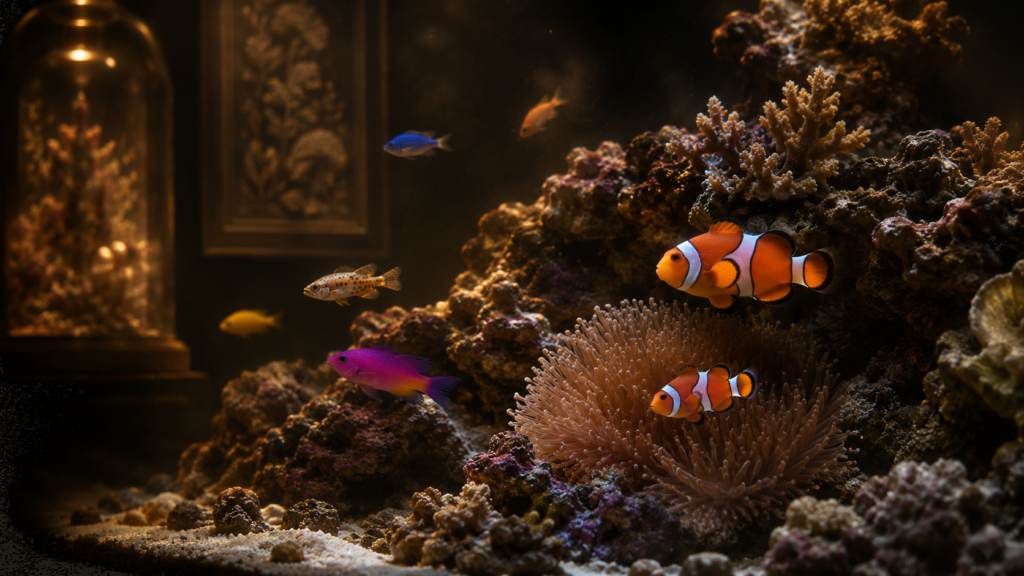
Saltwater tanks have a reputation for being difficult — and a decade ago
that was fair. Today, thanks to hardy captive-bred stock and better equipment, a
beginner can absolutely keep a thriving marine tank, as long as they start with
the right fish. Pick a forgiving species and the hobby is a joy; pick a delicate
or aggressive one and you’ll fight it for months. This guide covers ten of the
best saltwater fish for beginners, with honest notes on size, diet, and
temperament, plus the marine-tank basics that keep them alive.
ItsyBitsyPets is reader-supported. As an Amazon
Associate we earn from qualifying purchases — at no extra cost to you. See our
affiliate
disclosure.
What makes a saltwater fish good for beginners?
Not every marine fish is a good first fish, and the difference has almost
nothing to do with how it looks. A beginner-friendly saltwater fish shares a few
traits: it’s hardy enough to forgive the small water-quality swings every new
tank goes through, it’s widely available as tank-raised stock rather than
wild-caught, it eats prepared frozen and pellet foods without a fuss, and it’s
peaceful enough not to terrorize its tankmates. Every fish on this list clears
that bar.
The single biggest predictor of success, though, isn’t the fish at all — it’s
patience with the tank itself. A saltwater fish only thrives in stable water, and
stability comes from a properly cycled tank with live rock and steady salinity.
If you haven’t set up your system yet, start with our saltwater aquarium
setup guide and let it mature before a single fish goes in. The fish are the
reward for getting the water right.
The 10 best saltwater fish for beginners
These species are ranked roughly from most to least forgiving. Every one is a
solid choice, but the earlier entries tolerate rookie mistakes best, and the care
notes here line up with the hardiness rankings from marine specialists like AquariumStoreDepot.
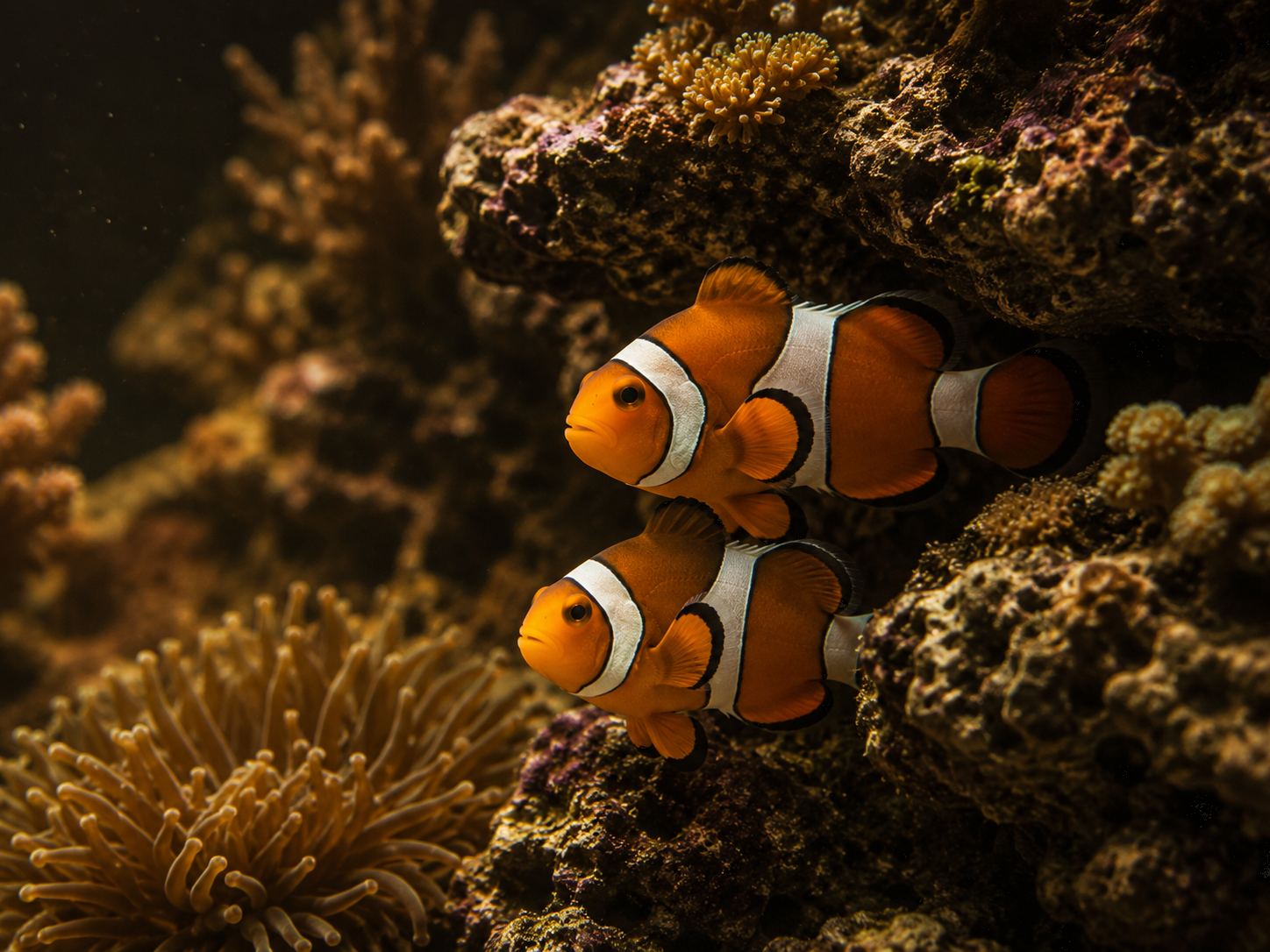
1. Ocellaris clownfish — the perfect first fish
If you buy one saltwater fish to start, make it a tank-raised ocellaris
clownfish. It’s the most beginner-friendly marine fish in the trade and earned
the reputation honestly: captive-bred specimens are tough, eat frozen and pellet
food from day one, and tolerate a wider range of parameters than wild-caught
fish. A pair is happy in as little as 10 gallons. And despite the movies, they do
not need an anemone — in fact you should hold off on one until the tank
is at least six to twelve months old. Two clownfish will pair up and defend a
little patch of rock, giving you real behavior to watch on day one.
2. Royal gramma — the peaceful jewel
The royal gramma is a small Caribbean basslet, purple in front and gold at the
tail, and it’s one of the most peaceful marine fish you can keep. It reaches about
3 inches, is comfortable in a 30-gallon reef, and spends its time hovering near a
cave or overhang it claims as home. It’s completely reef safe with corals and
invertebrates, and it even helps control bristle worms. Give it a rocky nook and
it will reward you with color and calm.
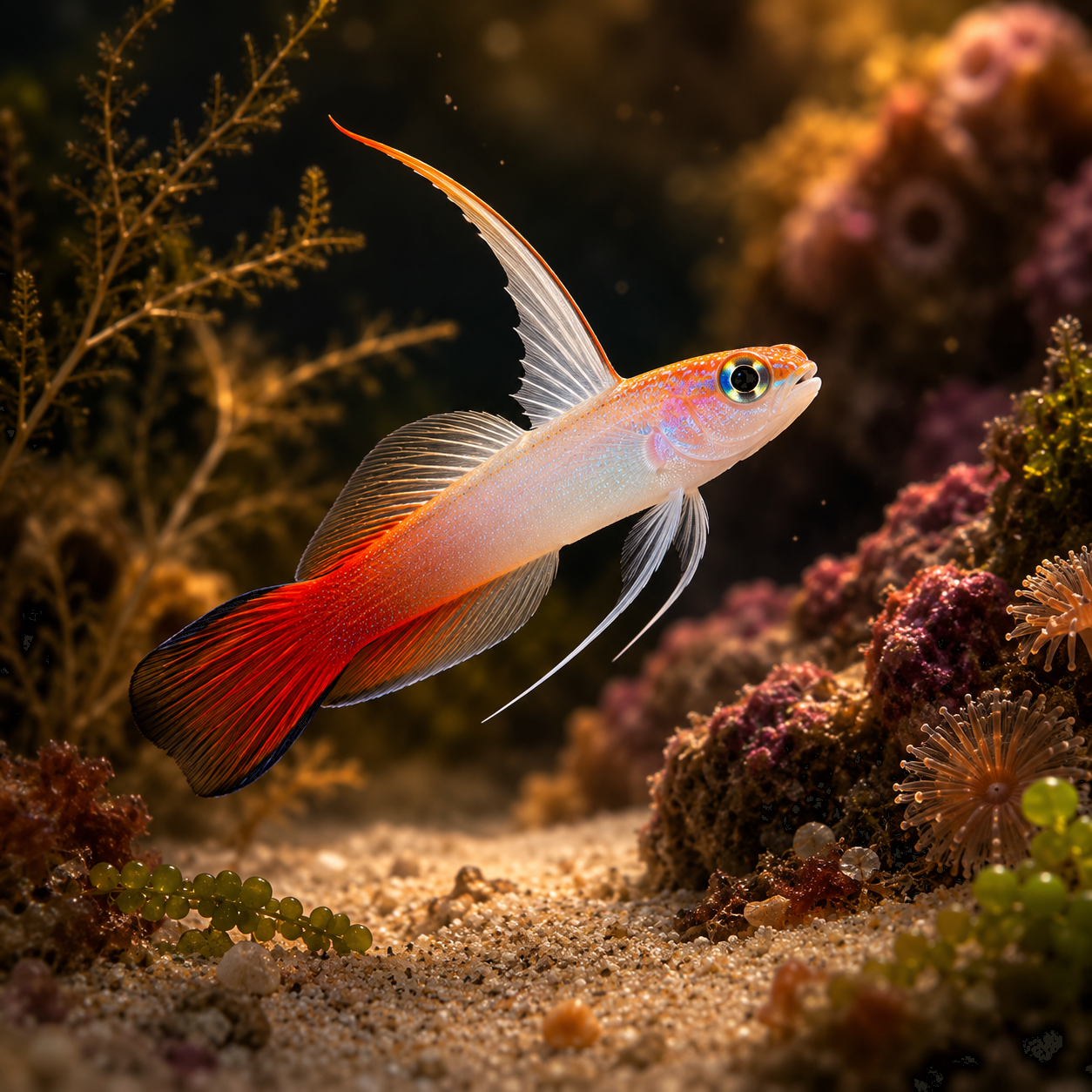
3. Firefish goby — elegant but flighty
The firefish is a slender, peaceful beauty with a white body, red tail, and a
tall dorsal fin it flicks like a signal flag. A pair is happy in a 20-gallon tank.
The one non-negotiable: firefish are champion jumpers, so a tight-fitting lid is
mandatory — most firefish losses are carpet accidents, not water problems. Keep it
singly or as an established pair; two strangers may squabble.
4. Yellow watchman goby — the shrimp’s roommate
This stout, spotted yellow goby is full of personality and does something no
other beginner fish does: it forms a symbiotic partnership with a pistol shrimp.
The shrimp digs a burrow they share, and the sharp-eyed goby stands guard at the
entrance — one of the most fascinating behaviors in the hobby. It’s hardy,
sifts sand, and stays out of trouble at around 4 inches in a 20-gallon or larger
tank.
5. Banggai cardinalfish — the striking schooler
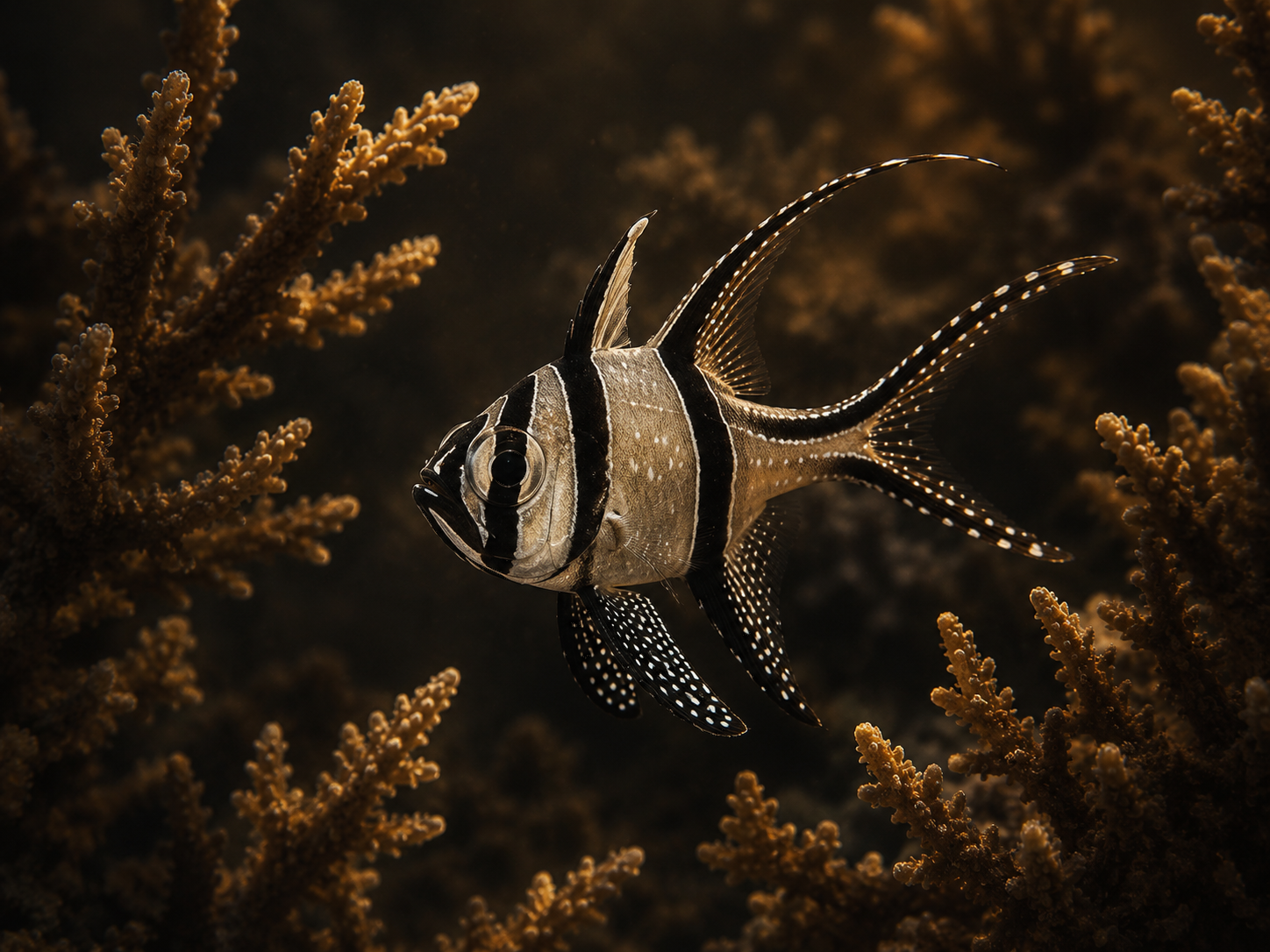
With bold black stripes and trailing fins, the Banggai cardinalfish looks
exotic but is genuinely beginner-appropriate. It’s a mouthbrooder that breeds
readily in captivity, so always buy captive-bred to protect the wild population,
which is under pressure. Keep it singly or as a bonded pair; larger groups turn
territorial once they pair off. It’s slow and deliberate, so tankmates shouldn’t
be fin-nippers.
6. Chromis — the affordable school
Green or blue chromis are inexpensive, shimmering, and the easiest way to get a
true schooling look in a marine tank. They’re hardy and peaceful toward other
species. The catch is internal: kept in small groups they pick each other off one
by one until a single fish remains, so start with a genuine school of five or more
in a tank with room to spread out.
7. Tailspot blenny — the tiny algae grazer
The tailspot blenny is a nano-sized character with big eyes and a habit of
perching on rocks to survey its kingdom. It grazes film algae, adds comic
personality, and fits happily in tanks as small as 10 gallons. Peaceful with
other species, it may bicker only with another blenny, so keep just one.
8. Coral beauty angelfish — the hardy splash of color
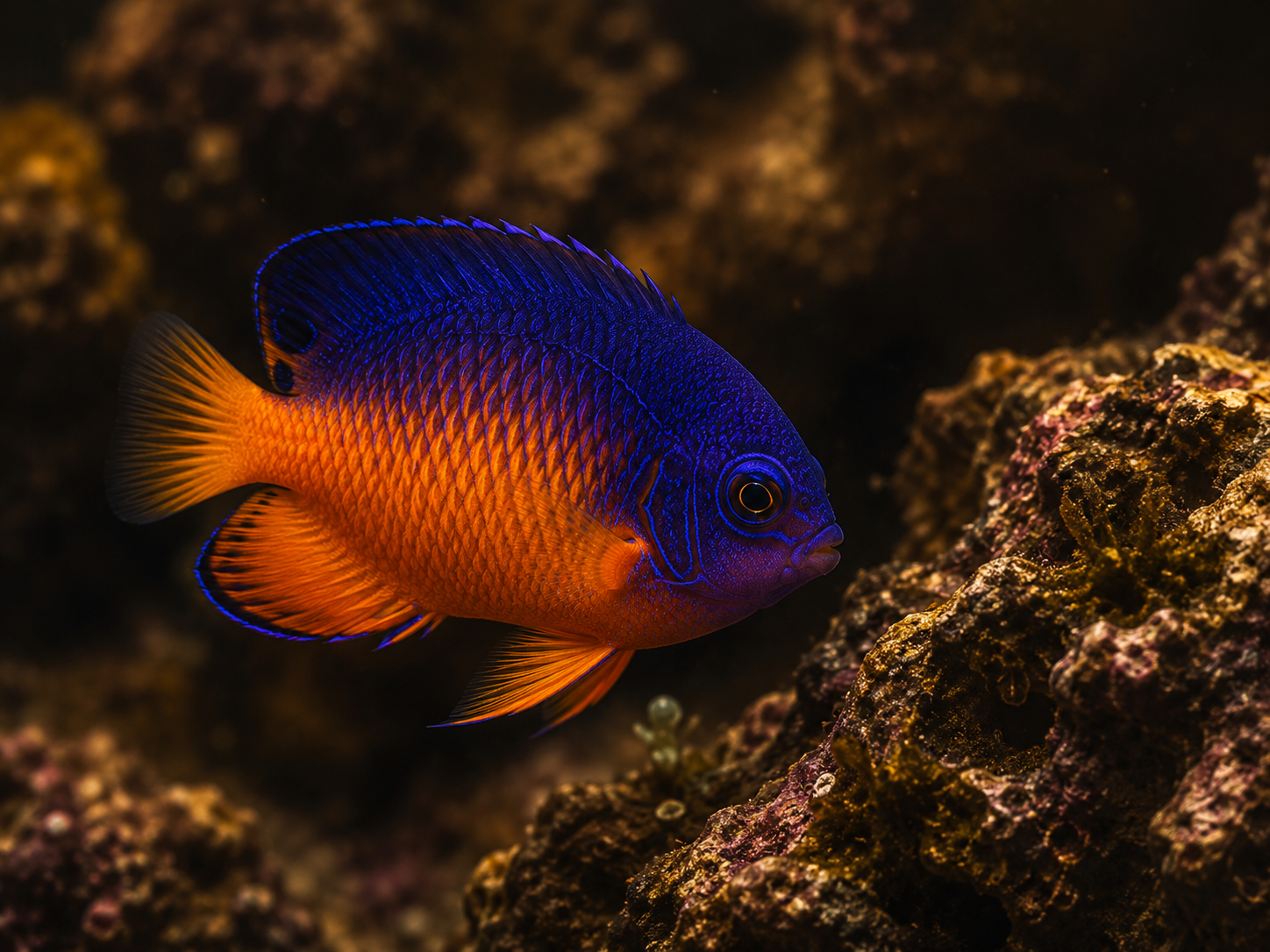
Among the dwarf angelfish, the coral beauty is the hardiest and most forgiving,
bringing deep blue and orange to a 30-gallon or larger tank. It’s usually
well-behaved, though like all dwarf angels it’s technically “reef safe with
caution” — a small percentage develop a taste for coral polyps. In a fish-focused
tank it’s a standout that shrugs off beginner mistakes.
9. Azure damselfish — the tough one to add last
Damselfish are the toughest saltwater fish in the trade — nearly indestructible
and perfect for handling a young tank’s parameter swings. The problem is
temperament: most damsels are territorial bullies that get meaner with age, and a
cheap little damsel can become the tank tyrant. If you want one, the azure damsel
is the least aggressive, and the rule is ironclad: add it last, so it
can’t claim the whole tank as its own before anyone else arrives.
10. Pajama cardinalfish — the gentle night owl
Rounding out the list, the pajama cardinalfish is a peaceful, slow-moving
oddball with a polka-dotted rear half and a red eye. It’s hardy, happy in small
groups, and most active in dimmer light, making it a calm counterpoint to the
busier fish. Like the Banggai, it appreciates unhurried tankmates that won’t
outcompete it at feeding time.
Fish to avoid as a beginner
Just as important as what to buy is what to skip, a point marine specialists at
TFH
Magazine stress as much as any recommendation. Steer clear of mandarin
dragonets (they need a mature tank teeming with live copepods and often starve in
new setups), most tangs (they need far more swimming room than a starter tank
offers and are prone to disease), and any wild-caught fish sold as a “cleaner”
that has specialized needs. The pattern is simple: avoid anything that depends on
a food source or tank size a new system can’t provide yet. Building a strong
foundation first, as our compact saltwater
tank guide lays out, is what lets you keep even the pickier species later.
The marine-tank basics every saltwater fish needs
No fish on this list can overcome bad water, so a few fundamentals matter more
than the livestock. Keep salinity stable at a specific gravity around 1.024–1.026
using a reliable refractometer rather than guessing. Hold temperature steady in the
75–80°F range with a quality aquarium heater. Test the water regularly with a saltwater test
kit, watching that ammonia and nitrite stay at zero. And mix new water with
quality reef
salt and RO/DI water for every water change.
Live rock is the other pillar — it’s the biological filter and the security
blanket, giving fish places to hide and graze. A well-cycled tank with good rock
and stable salinity is far more forgiving than any fancy gadget. For the full
build, our guide on how
to start an aquarium walks through cycling step by step.
Quarantine: the habit that saves saltwater fish
Here’s the practice that separates keepers who lose fish from keepers who
don’t: quarantine. Marine fish are prone to parasites like marine ich and velvet
that can sweep through a display tank and wipe it out in days, and new arrivals are
the usual source. A simple 10–20 gallon quarantine tank — bare-bottom, a heater, a
sponge filter, and a piece of PVC pipe for shelter — lets you observe and treat a
new saltwater fish for two to four weeks before it ever touches your main tank.
It feels like extra work, but it’s the single highest-return habit in the hobby.
Quarantine also does something gentler: it lets a stressed, just-shipped fish
recover and start eating in a calm space with no competition, so it enters your
display strong instead of frightened. Even if you skip formal medication, a
plain observation period catches problems while they’re still fixable. Once you’ve
lost a full tank to a disease that rode in on one unquarantined fish, you never
skip it again — so build the habit before you need the lesson.
Reading a saltwater fish before you buy it
The store is your first and best filter. A healthy saltwater fish shows a few
clear signs: it swims actively rather than hiding in a corner, its fins are open
and intact rather than clamped or ragged, its colors are bright, and its breathing
is steady rather than rapid and labored. Ask to see it eat — a fish that eagerly
takes food in the store is a fish that will likely eat for you at home, and refusal
to eat is the most common early warning of trouble. Check for white spots, cloudy
eyes, or scratching against rocks, all signs of parasites you don’t want to bring
home. A few minutes of observation at the counter prevents most beginner
heartbreak.
How many saltwater fish can I keep?
Marine fish need more elbow room than freshwater fish, so stock conservatively.
A reasonable guideline is about one inch of adult fish per five gallons of
actual water volume — and remember that live rock displaces water, so a
75-gallon tank might only hold 60 gallons of water. That volume comfortably houses
something like a pair of clownfish, a royal gramma, and a small blenny. Add fish
slowly, a couple at a time with weeks in between, so the tank’s biological filter
can keep pace. Overstocking is the most common beginner mistake, and it’s
invisible until the water crashes.
Freshwater fish vs. saltwater fish: what actually changes
If you’re coming from freshwater, the fish-keeping instincts transfer, but two
things are genuinely different. First, stability is stricter — marine fish tolerate
a narrower band of salinity, temperature, and pH, so consistency matters more than
in a freshwater tank. Second, the water itself is a mix you maintain, not just
dechlorinated tap, which means salinity becomes a parameter you monitor. Neither
is hard; they’re just new habits. If you keep both, our nano reef setup
guide is a gentle way to try marine on a small scale.
Common beginner mistakes with saltwater fish
Most early failures trace back to a short list of avoidable mistakes. The
biggest is impatience — adding fish before the tank has cycled, or adding too many
too fast, which overwhelms the biological filter and crashes the water. A close
second is overfeeding: uneaten food rots, spikes nutrients, and fuels algae, and
marine fish need far less than beginners assume. Skipping quarantine is the
mistake that wipes out whole tanks at once when a parasite rides in on a new fish.
And chasing beauty over hardiness — buying a delicate or aggressive species because
it looked stunning in the store — sets up a fight you’ll usually lose.
The subtler mistake is neglecting salinity stability. Freshwater keepers top off
evaporated water and move on, but in a marine tank, evaporation leaves the salt
behind and raises salinity over time, so you top off with fresh RO/DI water, not
saltwater. Letting salinity drift is a slow stressor that weakens fish before you
notice. None of these mistakes are hard to avoid once you know them — they’re just
the specific habits that marine keeping rewards, and every one of them comes down
to patience and consistency rather than money or fancy equipment.
Frequently asked questions
What is the easiest saltwater fish to keep?
The tank-raised ocellaris clownfish, hands down. It’s hardy, eats readily,
stays small, doesn’t need an anemone, and has enough personality to keep beginners
hooked.
How long should I wait before adding saltwater fish?
Wait until the tank has fully cycled — ammonia and nitrite reading zero,
usually four to six weeks with live rock. Rushing fish into an uncycled tank is
the number-one cause of early losses.
Can saltwater fish live in a small tank?
Yes — several species here, like the clownfish, firefish, and tailspot blenny,
thrive in nano tanks of 10–20 gallons. Smaller water volumes swing faster, though,
so they demand steadier maintenance, not less.
Start with a stable tank and one forgiving fish, add slowly, and marine
keeping turns out to be far more approachable than its reputation suggests. Get
the water right and a beginner saltwater fish like the clownfish will thrive for
years — and the reef world opens up from there. When you’re ready to add corals,
our compact
saltwater tank guide is the natural next step.