
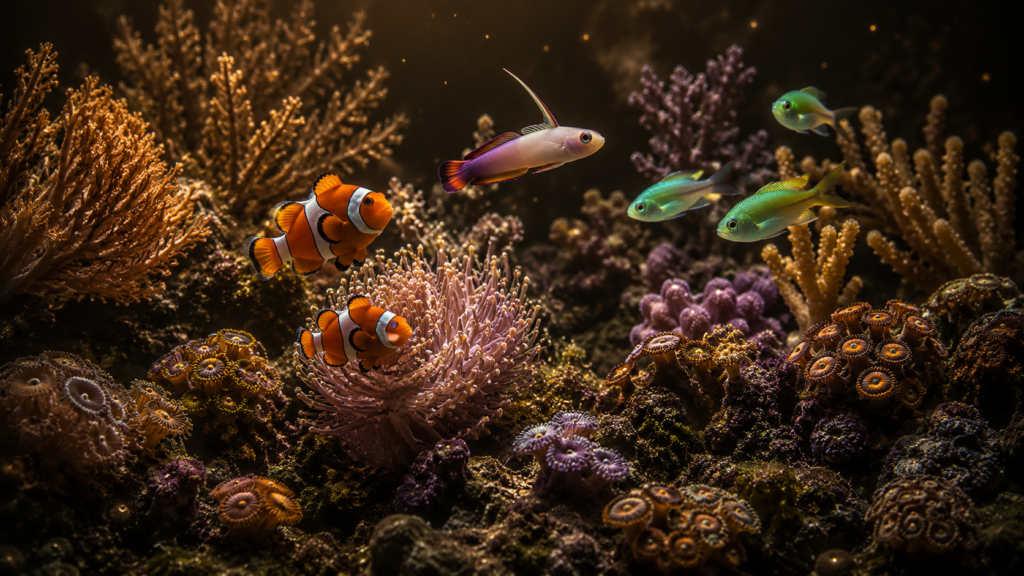
Building a reef tank is a different game from a fish-only setup. The moment
you add corals and ornamental invertebrates, your fish list narrows sharply —
because plenty of gorgeous, hardy marine fish will happily nip a coral to shreds
or pluck a cleaner shrimp off the rock. The term for a fish that leaves your
living investment alone is “reef safe,” and choosing the right reef fish is what
separates a thriving coral garden from an expensive lesson. This guide covers nine
of the best reef-safe fish, plus the tempting species you should keep out.
ItsyBitsyPets is reader-supported. As an Amazon
Associate we earn from qualifying purchases — at no extra cost to you. See our
affiliate
disclosure.
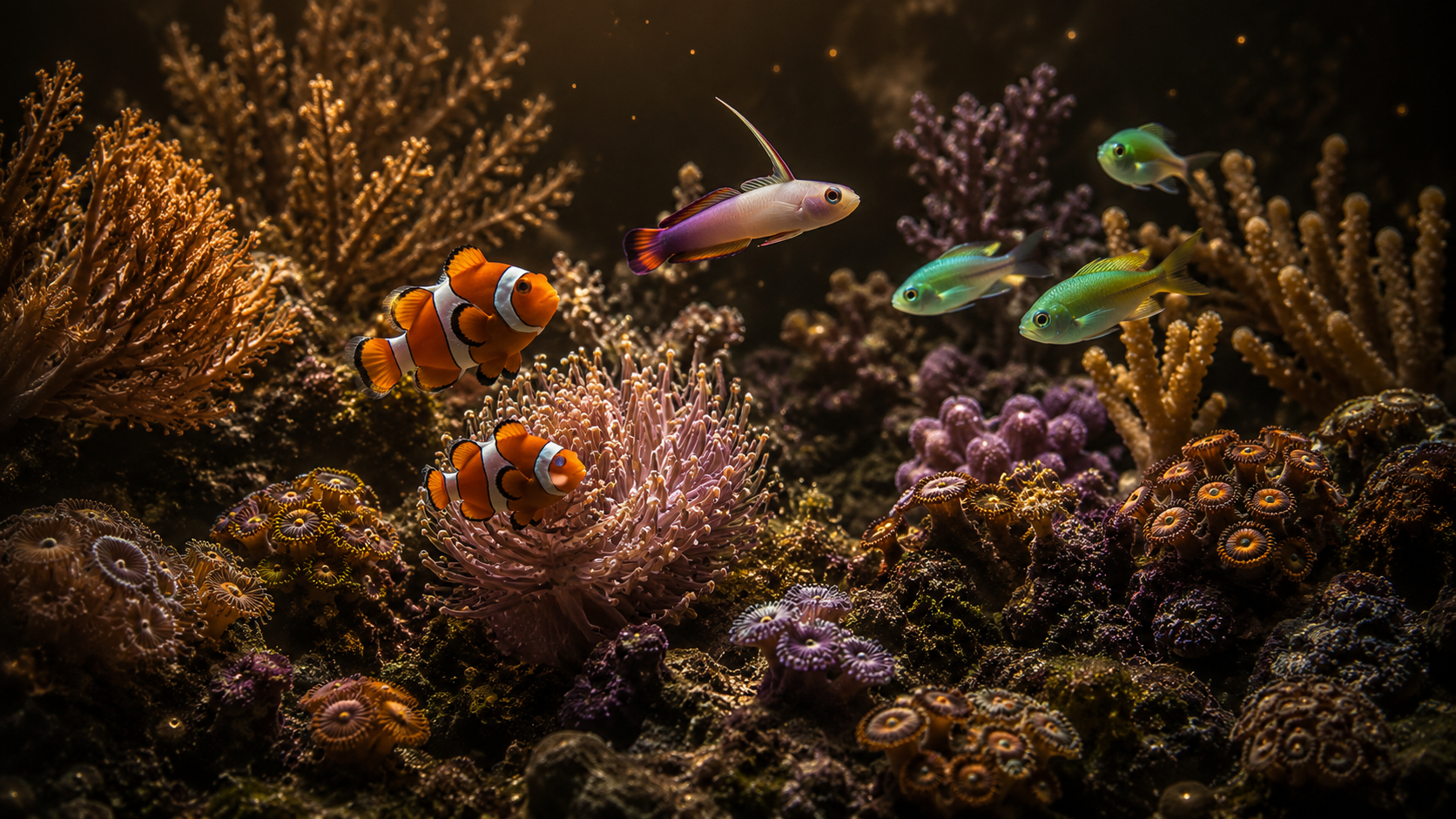
What does “reef safe” actually mean?
A reef-safe fish is one that won’t eat, nip, or harass the corals and
ornamental invertebrates in your tank. It’s not a formal certification — it’s a
behavioral track record. Some fish are bulletproof around coral; some will pick at
polyps or hunt shrimp; and a frustrating middle group is labeled “reef safe with
caution,” meaning most individuals behave but a few develop bad habits. Knowing
which bucket a reef fish falls into before you buy is the whole game,
because once a coral-nipper is loose in an established reef, getting it back out
means tearing the tank apart.
Every fully reef-safe fish below leaves corals and inverts alone. If your reef
isn’t built yet, start with our nano reef setup
guide — a stable, mature reef is what lets these fish and your corals thrive
together.
The 9 best reef-safe fish
These species are hardy, widely available, and genuinely reef safe, and they
line up with the compatibility guidance published by reef specialists like AllCorals. They’re ordered
roughly from easiest to slightly more demanding.
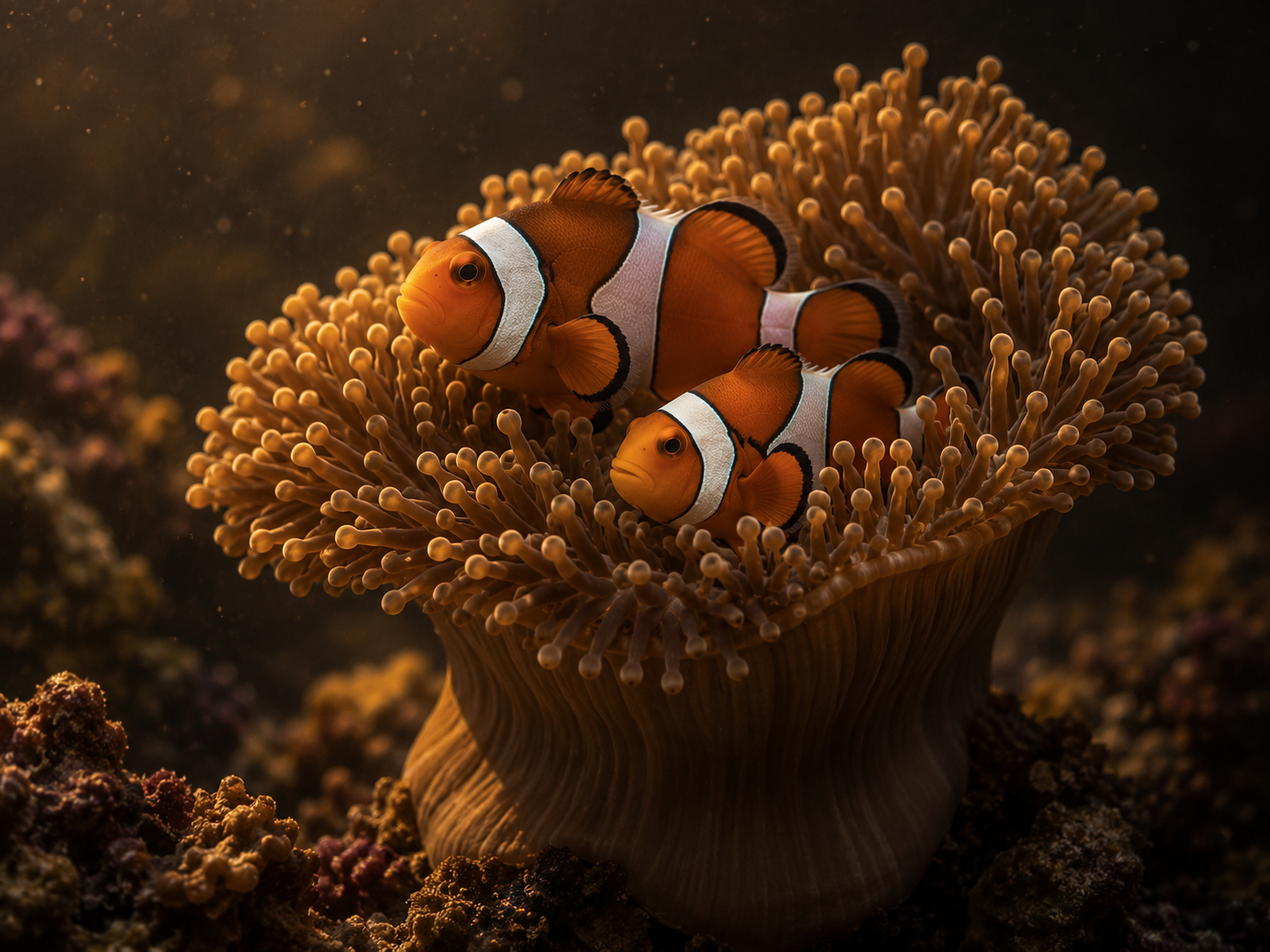
1. Ocellaris clownfish — the reef icon
The tank-raised ocellaris clownfish is the poster child of the reef tank for
good reason: hardy, endlessly watchable, and completely reef safe. It won’t touch
your corals, and in a mature tank it may even adopt a hardy coral like a toadstool
as a surrogate anemone, wriggling into it the way it would a host in the wild. A
pair thrives in as little as 10 gallons, making it perfect for nano reefs. Skip
the actual anemone until the tank is well established — the clownfish doesn’t need
one to be happy.
2. Royal gramma — reef safe and useful
The royal gramma is a jewel of a reef fish — vivid purple fading to gold —
and completely reef safe with corals, anemones, and ornamental shrimp. At about 3
inches it suits a 30-gallon reef, where it claims a cave and darts out to feed.
As a bonus, it helps keep bristle worm populations in check. Peaceful and hardy,
it only objects to other fish of a very similar shape, so it’s an easy addition to
most reef communities.
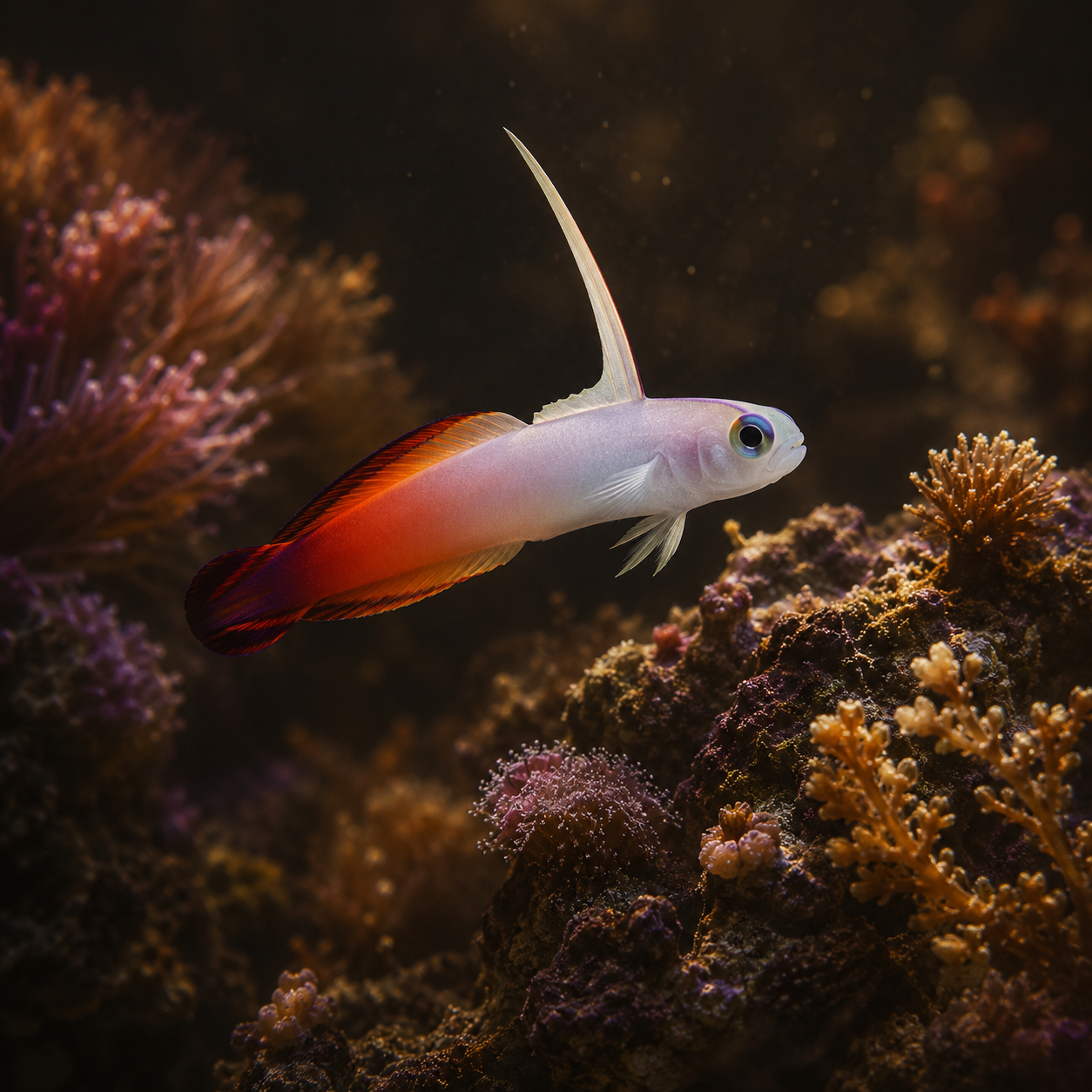
3. Firefish goby — peaceful to a fault
Few reef fish are as gentle as the firefish. This slender white-and-red beauty
won’t harm a single coral, polyp, or shrimp, and it hovers gracefully above the
rock with its signal-flag dorsal fin raised. Keep it as a single or a bonded pair
in a 20-gallon or larger reef, and bolt down a tight lid — firefish are notorious
jumpers, and that’s their only real hazard.
4. Yellow watchman goby — the sand-sifting partner
The yellow watchman goby is reef safe, hardy, and comes with a built-in show:
it pairs with a pistol shrimp in a shared burrow, standing sentry while the
near-blind shrimp excavates. It sifts and aerates your sand bed as it goes,
keeping detritus from settling. At around 4 inches in a 20-gallon or larger reef,
it stays low near the substrate and never bothers corals up in the rockwork.
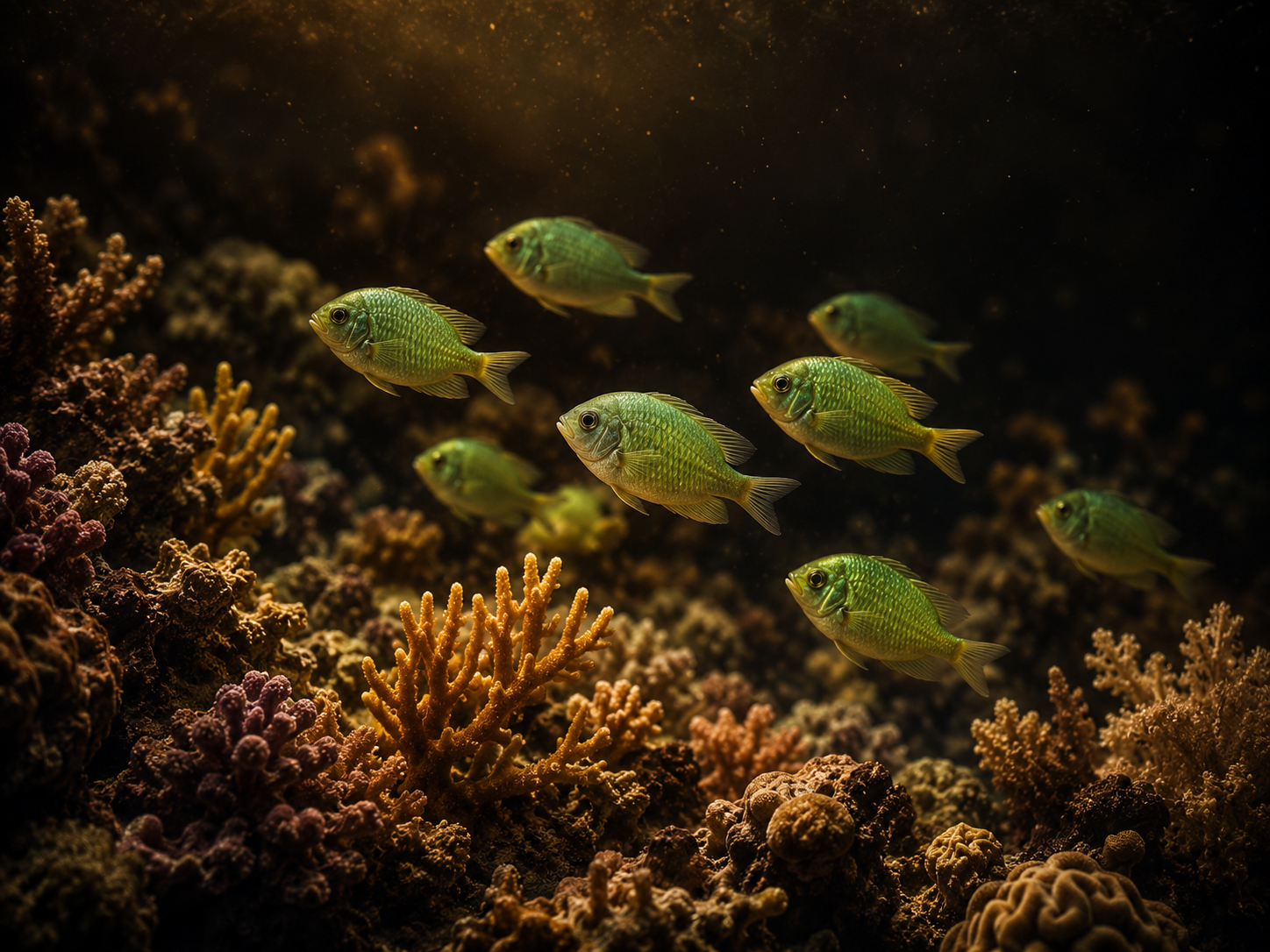
5. Green chromis — the reef-safe school
For that classic image of a shimmering school drifting over coral, the green
chromis delivers on a budget. They’re peaceful, reef safe, and the easiest true
schooling reef fish to keep. The one rule is numbers: kept in twos and threes they
harass each other down to a lone survivor, so start with a school of at least five
in a tank with open swimming space above the reef.
6. Tailspot blenny — the reef’s algae janitor
The tailspot blenny earns its place twice over: it’s reef safe and it grazes
nuisance film algae off the rock, doing real cleanup work. Full of personality, it
perches on ledges surveying the reef and fits in tanks as small as 10 gallons.
It’s peaceful with other species and only occasionally squabbles with another
blenny, so keep just one per tank. In rare cases a blenny may nip at clam mantles
or coral, but the tailspot is among the best-behaved of the group.
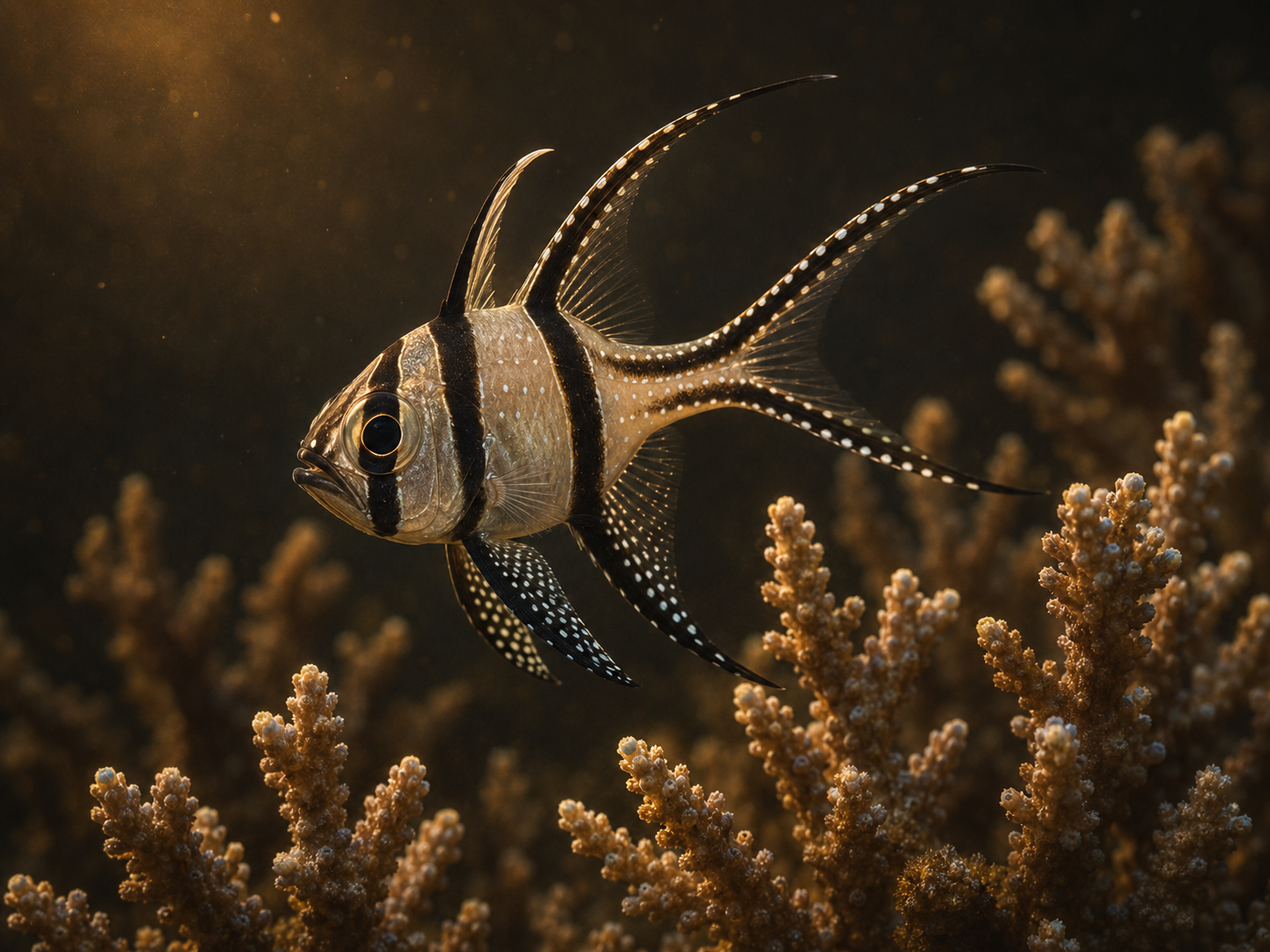
7. Banggai cardinalfish — the still-water statue
The Banggai cardinalfish hangs almost motionless among branching corals like a
striped ornament, and it’s completely reef safe. Always choose captive-bred to
protect wild stocks. It’s a mouthbrooder that will even breed in the reef, and it
does best singly or as a bonded pair, since groups turn territorial once they
pair. Its calm, slow nature suits a peaceful reef community.
8. Pajama cardinalfish — the gentle group fish
Unlike the Banggai, the pajama cardinalfish is happy in a small group, drifting
together in the calmer corners of the reef with their polka-dotted flanks and red
eyes. Reef safe and peaceful, they’re most active in subdued light and make a
mellow contrast to busier fish. Pair them with unhurried tankmates so they get
their share at feeding time.
9. Kaudern’s cardinal and other basslets — reef-safe finishers
Rounding out the list, chalk basslets and similar small basslets bring bold
color to a reef’s mid-water without threatening corals or larger ornamental
inverts. Hardy and adaptable, they occupy the same peaceful niche as the royal
gramma and make excellent final additions to a reef once the calmer residents are
settled in.
Reef fish to avoid (the tempting troublemakers)
Some of the most beautiful marine fish are the worst reef citizens, and they
trip up beginners constantly — a warning echoed in the reef-safe compatibility
notes from Extreme
Corals. Butterflyfish are gorgeous and almost universally
eat coral polyps — a reef death sentence. Large angelfish (emperors, queens) nip
corals and clams as they mature. Dwarf angelfish like the coral beauty are the
classic “reef safe with caution” gamble: many are fine, but a meaningful minority
develop a taste for polyps, so they’re a calculated risk, not a safe bet. And most
triggerfish and puffers will make a meal of your shrimp, crabs, and snails. The
rule of thumb: research a species’ reef record specifically before you buy, no
matter how tempting it looks in the store.
How to verify a fish is really reef safe before you buy
Because “reef safe” isn’t a regulated label, the responsibility falls on you to
check each reef fish individually — and it’s worth the five minutes. Start by
looking up the specific species, not just the common group: “dwarf angelfish” as a
category is a gamble, but individual species within it have very different track
records. Read multiple sources, because a single glowing product description isn’t
a behavioral study. Pay attention to the phrase “reef safe with caution,” which is
the hobby’s polite way of saying “usually fine, sometimes a disaster” — treat those
species as a calculated risk, not a safe default.
Also weigh the value of what’s in your tank. A fish that might nip a
cheap, fast-growing soft coral is a different risk calculation than the same fish
in a tank full of expensive, slow-growing SPS corals or prize clams. And remember
that individual fish have personalities: even a species with a spotless reputation
can occasionally produce a rogue that develops a taste for coral, which is exactly
why quarantine and close early observation matter as much for behavior as for
disease. When in doubt, choose the fish with the most boringly reliable reef
record — a peaceful, predictable reef is the goal.
Reef-safe invertebrates round out the cleanup crew
Reef fish aren’t the only residents that need to be reef safe — the cleanup crew
does the unglamorous work that keeps a reef stable. Peaceful shrimp like skunk
cleaner and peppermint shrimp, along with hermit crabs, snails, and sand-sifting
stars, graze algae and scavenge detritus without threatening corals. They pair
naturally with the peaceful fish on this list, and together they form a balanced
little ecosystem. Just confirm your fish choices won’t eat the inverts — a few
otherwise reef-safe fish will still hunt small shrimp, so check both directions of
compatibility before combining them.
Building a peaceful reef community
Even among reef-safe fish, how you combine and add them matters. Keep to one
fish per body-shape niche — a single firefish-type, a single gramma-type — to
avoid lookalike squabbles. Add the most peaceful fish first and any semi-assertive
ones last, so no one establishes the whole tank as its territory. And stock
slowly, a fish or two at a time with weeks between, so your biological filter keeps
pace and you can watch each new addition’s behavior before adding more. A calm,
well-sequenced reef community stays stable for years; a rushed one turns into a
turf war.
Feeding also keeps the peace: well-fed reef fish are far less likely to
“test-bite” a coral out of hunger. A varied diet of quality marine pellets
and frozen mysis
and brine shrimp keeps everyone satisfied. Target-feeding your corals with a
coral feeding
tool means the fish and the corals both eat without competition, and a simple
saltwater test
kit keeps the water stable enough for both to flourish.
Adding reef fish in the right order
Sequence is a quiet superpower in reef keeping. Because most conflict is about
territory, the order you add fish in largely determines whether your reef stays
peaceful. Add the shyest, most peaceful species first — a firefish or a royal
gramma — so they can settle in and claim a comfortable spot before anyone
assertive arrives. Save any semi-territorial fish, or a second fish of a similar
shape, for last, when the established residents already hold their ground and a
newcomer can’t dominate an empty tank.
Give each new reef fish a couple of weeks before adding the next, both so the
biological filter keeps pace and so you can watch its behavior around your corals
before committing to more livestock. If you’re introducing a fish that might be
slightly pushy, rearranging the rockwork just before it goes in resets everyone’s
territorial map and defuses established claims. These small moves cost nothing and
prevent the slow-motion turf wars that make a reef stressful instead of serene —
a calm tank is a healthy tank, for the fish and the corals alike.
Frequently asked questions
What is the most reef-safe fish?
The tank-raised ocellaris clownfish and the royal gramma are about as reef safe
as it gets — hardy, peaceful, and utterly uninterested in corals or inverts,
making either a perfect first reef fish.
Are clownfish reef safe?
Yes. Clownfish won’t harm corals, and in a mature tank they may host in a hardy
soft coral. They’re one of the most popular reef fish precisely because they’re so
reliably reef safe.
How many reef fish can I put in a reef tank?
Stock lightly — roughly one inch of adult fish per five gallons of actual water
volume, remembering that live rock displaces water. Reef tanks do best
understocked, which keeps water quality high for the corals. See our saltwater aquarium
guide for cycling and water-quality basics.
Choose reef-safe species, add them in the right order, and keep everyone
well fed, and your fish and corals will share the tank in harmony. The right reef
fish makes the whole system come alive — movement above the coral, color in every
corner — without ever threatening the living reef you’ve worked to build. When
you’re ready to expand, our step-by-step
aquarium guide covers the fundamentals that keep a reef stable.