
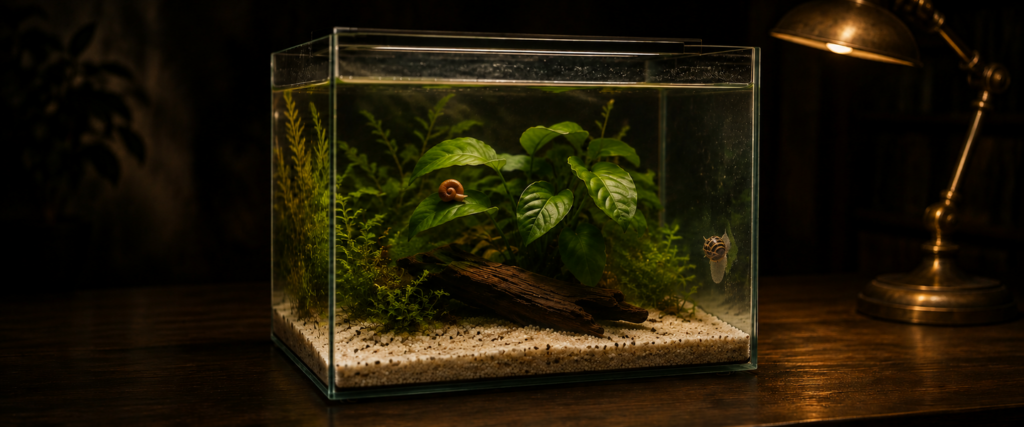
A small snail aquarium might be the most underrated setup in the fishkeeping hobby. Snails ask for almost nothing — no schooling groups, no swimming length, a bioload so tiny it barely registers — and in return they patrol the glass, eat the algae, and turn a desktop tank into a genuinely low-effort slice of nature. But small tanks are unforgiving about one thing: choosing the wrong snail. Pick a species that outgrows the tank, or one that breeds until it carpets every surface, and your peaceful nano becomes a rescue mission. This guide covers the six best snails for tanks from 2.5 to 10 gallons, and the two rules that keep the whole thing pleasant.
ItsyBitsyPets is reader-supported. As an Amazon Associate we earn from qualifying purchases — at no extra cost to you. See our affiliate disclosure.
If you already keep a larger tank and want the full freshwater roster, our freshwater snails guide covers all seven major species. This article is the nano edition: what actually works when every inch of glass counts.
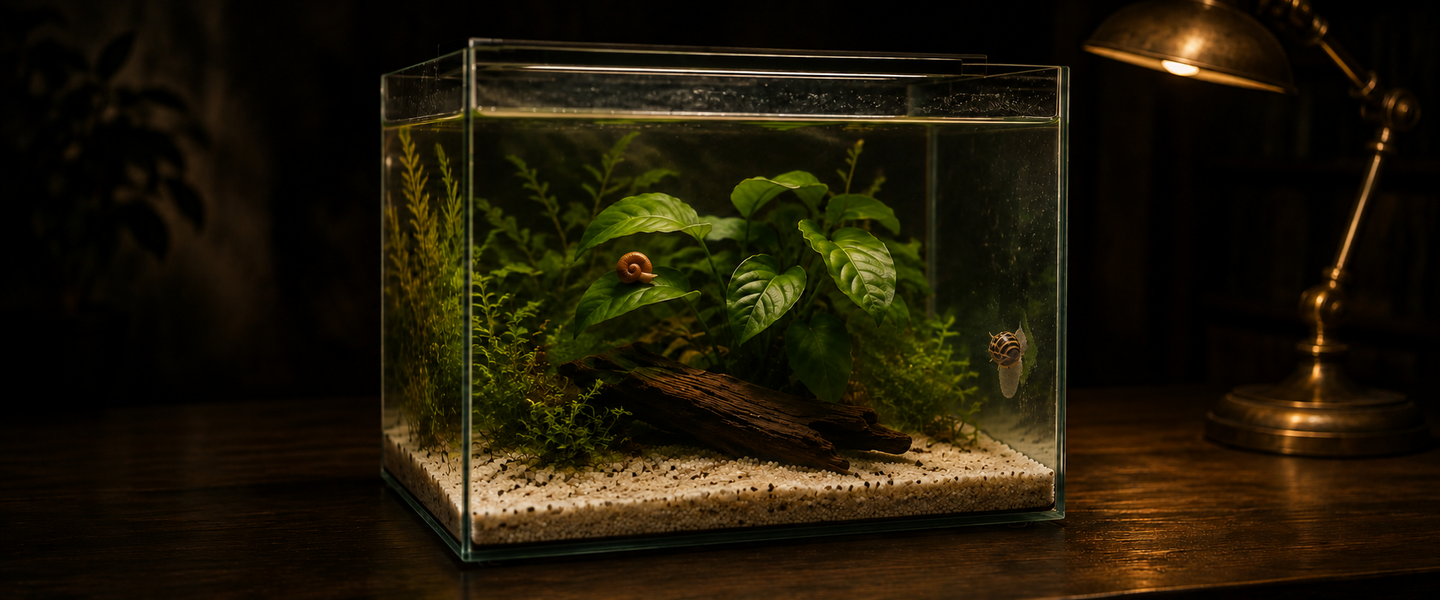
Why snails are the perfect nano inhabitants
Stocking a tank under ten gallons is an exercise in compromise — most fish need more room, more company, or more stability than a nano provides. Snails are the exception. The species in this guide stay at or under an inch, produce a fraction of the waste a fish does, and never feel cramped, because a snail’s territory is whatever surface it happens to be cleaning. That is why nano keepers so often land on a snail-and-shrimp setup, or a snail-only bowl-style tank with live plants: it is the rare stocking plan where a small tank isn’t a limitation at all.
They also work for a living. A couple of grazing snails keep glass film, diatoms, and leftover food under control in a way that spares you scraping a tank your hand barely fits inside. Pair them with micro fish in a ten-gallon and the snails quietly handle the cleanup those tiny fish leave behind.
There is a budget argument too. A complete snail nano — tank, filter, heater, livestock — costs less than a single fancy fish in some corners of the hobby, runs on pennies of electricity, and needs minutes of care a week. For a desk, a dorm, or a first tank for a careful child, it is hard to beat.
The two rules of a small snail aquarium
Rule one: check the adult size, not the store size. Nearly every snail in the shop is sold young and small. A mystery snail the size of a marble grows into a golf ball of 2 to 2.5 inches that really wants ten gallons — as comparisons like Splashy Fish’s mystery vs nerite guide spell out — while a nerite stays around an inch forever and thrives in five. In a 3-gallon, that difference is everything.
Rule two: check the breeding behavior, because in a nano it matters more than size. Nerites lay eggs constantly, but the eggs cannot hatch in freshwater — the larvae need brackish water — so your population stays exactly what you bought. Ramshorns, Malaysian trumpets, and hitchhiking bladder snails sit at the other extreme: they breed to the size of the food supply, and a small overfed tank can go from three snails to three hundred in a couple of months. Neither strategy is wrong. You just need to know, before you buy, which one you are signing up for.
The 6 best snails for small aquariums
1. Nerite snail — the algae-eating champion
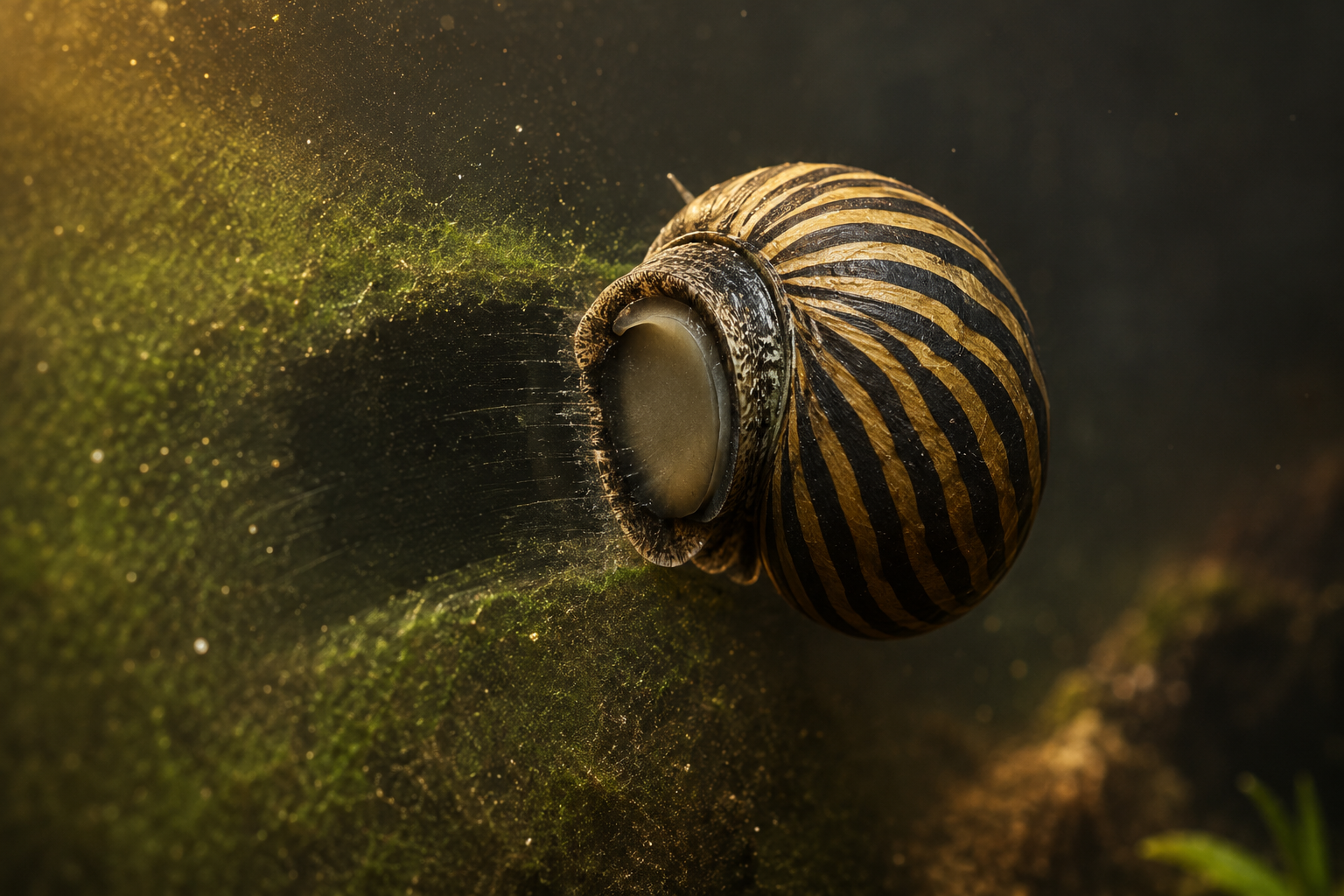
If the tank has an algae problem, the nerite is the answer. Aquarium Co-Op calls the nerite their favorite nano algae eater, and the reputation is earned: nerites clear soft film, diatoms, and even the stubborn green spot algae most cleaners refuse to touch, working glass, rock, and driftwood in tidy grazing trails. They come in beautiful patterns — zebra stripes, tiger bands, olive — stay around an inch, and live one to three years. Care stats: ~1 inch; 5 gallons and up; 72–78°F; pH 7–8.5; moderately hard water (6–12 dGH) for shell health; peaceful with everything.
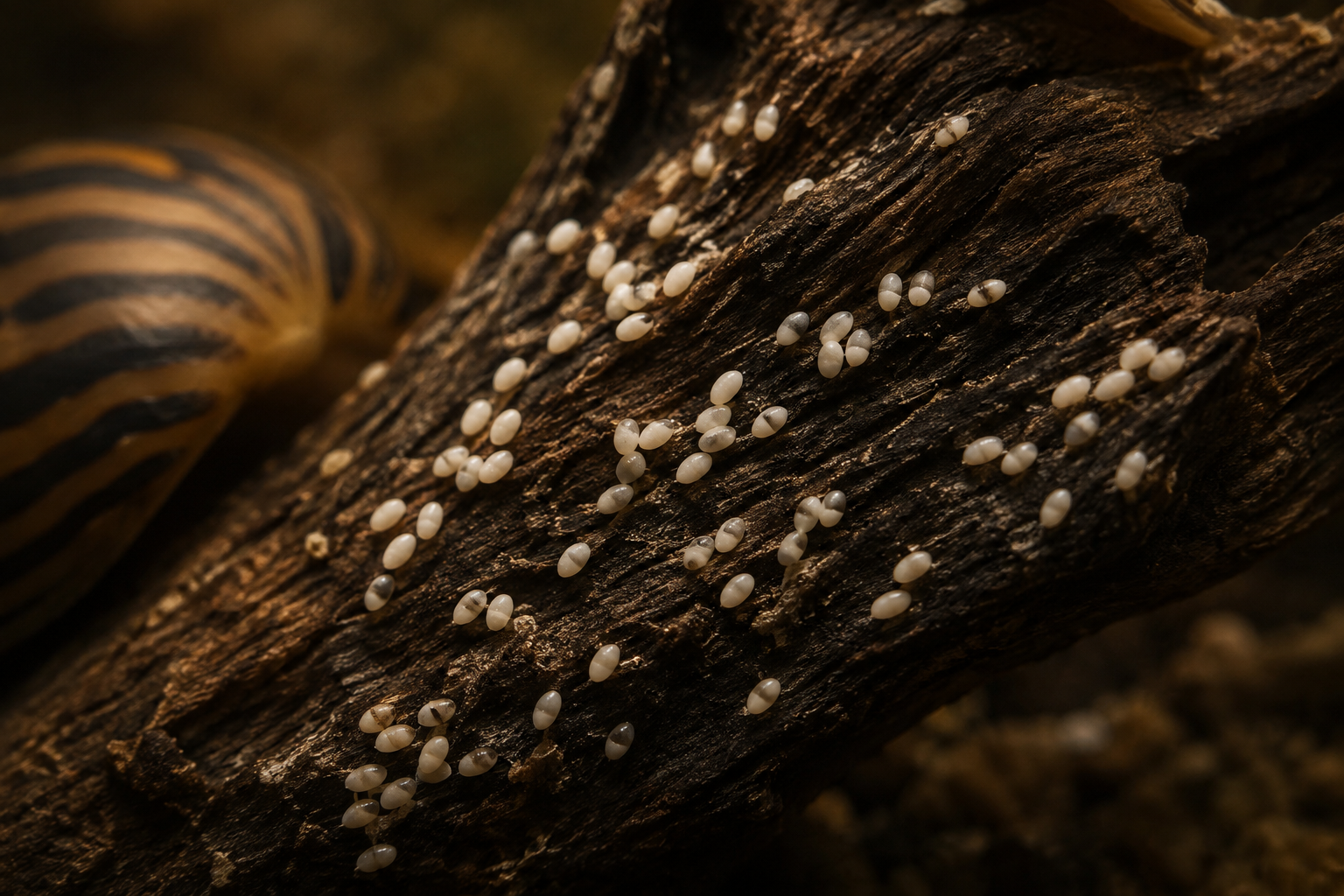
Their famous quirk: females scatter hard white eggs on wood and rock, and in pure freshwater those eggs never hatch. Some keepers find the white dots untidy; nano keepers should read them as a feature — a permanent, self-limiting population.
2. Horned nerite snail — the 2.5-gallon specialist
Everything good about the nerite in half the size. Horned nerites top out around half an inch, wear tiny dark spikes along the shell whorl, and bring the same relentless algae appetite to tanks as small as 2.5 gallons — the desktop cube, the planted bowl, the spare-bedroom pico tank. Because they physically cannot overgrow the space and cannot reproduce in it either, they are arguably the single safest livestock choice for the very smallest aquariums. Care stats: ~0.5 inch; 2.5 gallons and up; 72–78°F; pH 7+; the same freshwater egg immunity as their larger cousins.
3. Ramshorn snail — the colorful generalist
Ramshorns carry their flat spiral shells like little ammonites and come in red, pink, blue, and leopard-spotted morphs that look striking against green plants. They are tireless generalists — algae, uneaten food, decaying plant leaves — and genuinely hardy, with common types staying around an inch. The Shrimp Farm’s ramshorn guide notes a few do fine even in a 2.5-gallon, though five is the comfortable floor. The tradeoff is rule two: ramshorns are enthusiastic breeders, laying clear egg clutches on every surface, with population tracking food supply. In a lightly fed, well-planted nano they level off; in an overfed one they multiply. Care stats: ~1 inch; 5 gallons and up; 70–80°F; peaceful; breeds readily.
4. Malaysian trumpet snail — the substrate engineer
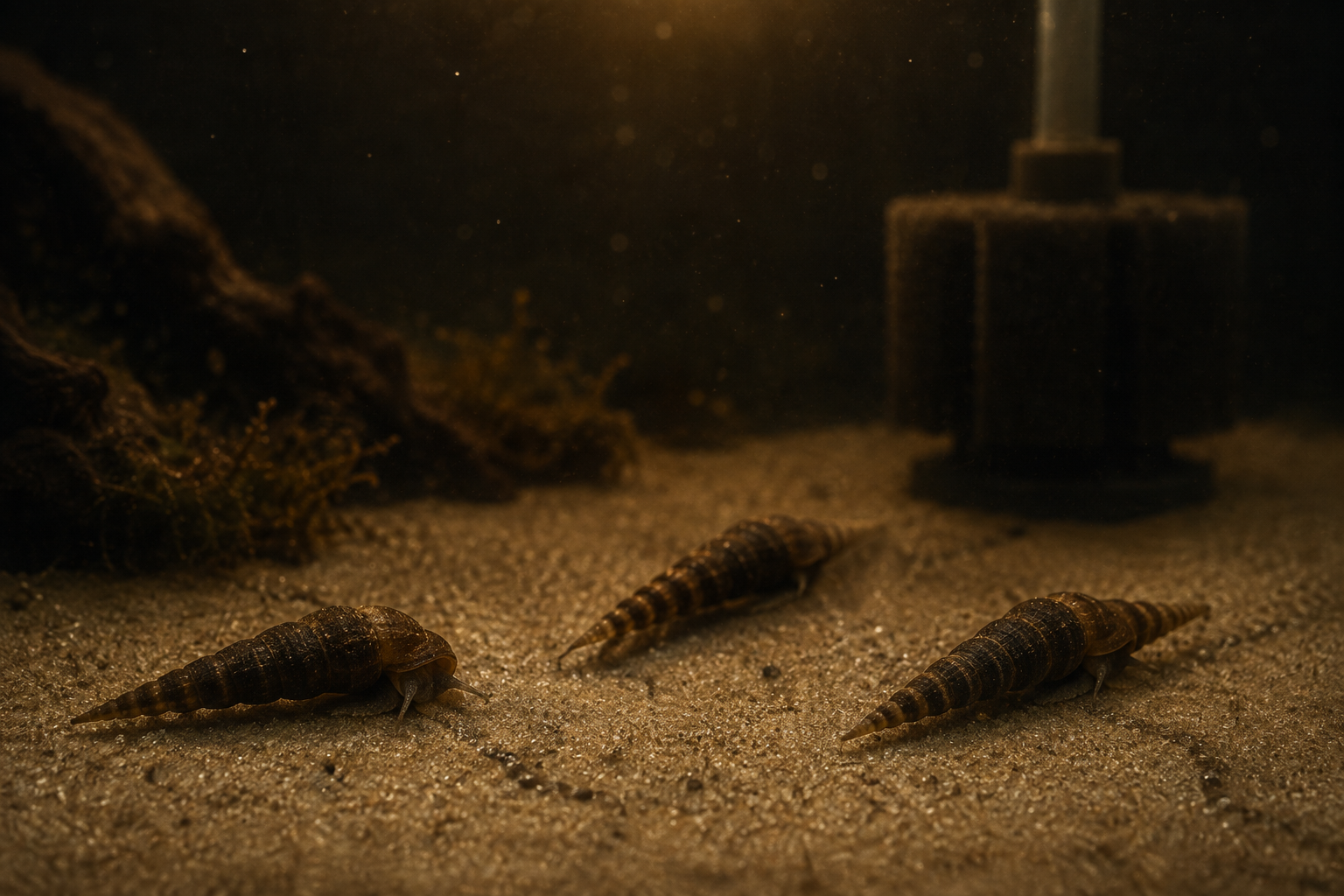
The Malaysian trumpet snail spends its days buried, tunneling through sand and gravel eating the detritus that settles there, then surfaces after lights-out like a tiny night crew. That burrowing keeps the substrate aerated and turned. In a small planted tank they do honest, invisible work. They are also livebearers that multiply fast when food allows, as Aquarium Source’s MTS guide stresses — most infestation stories start with heavy feeding, and their armored cone shells mean even snail-eating fish struggle with them. Add them deliberately, feed lightly, and they behave. Care stats: ~1 inch cone; any size tank; 70–82°F; peaceful; nocturnal burrower; population equals food supply.
5. Assassin snail — the population manager
The assassin snail is the elegant solution to the problem two entries above may create. This handsome yellow-and-brown striped whelk eats other snails — bladder snails, young ramshorns, small trumpets — hunting slowly through the tank and keeping prolific species in check without chemicals. Assassins themselves breed slowly, laying single eggs rather than clutches, so the cure does not become the next plague. In a snail-only nano they are livestock and pest control in one. Once the pest snails run out, they need feeding: sinking protein like bloodworms or leftover fish food. Care stats: ~1 inch; 5 gallons and up; 72–80°F; carnivore; safe with shrimp large enough not to be molested, and with all fish.
6. Mystery snail — the 10-gallon exception
Every list needs its asterisk. Mystery snails are the personality pick of the freshwater world — big, expressive antennae-waving grazers in gold, blue, ivory, and magenta that cruise the glass like slow parade floats. But they reach 2 to 2.5 inches with an appetite and waste output to match, which makes ten gallons the honest minimum. In a 10-gallon with a lid (they wander), one mystery snail plus a nerite or two is a lovely, workable crew. In anything smaller, choose from the five species above. Care stats: 2–2.5 inches; 10 gallons and up; 68–82°F; pH 7+ with hard water and calcium for that big shell; peaceful; lays pink egg clutches above the waterline, which are easy to remove if you don’t want babies.
Setting up a small snail aquarium
The setup is refreshingly cheap. A 5-gallon nano tank kit, a heater unless the room stays reliably in the low 70s, and a gentle sponge filter — which cannot trap a small snail the way a strong intake can — cover the hardware. Add a lid: nerites in particular are accomplished climbers that will graze their way over the rim of an open tank. Cycle the tank fully before anyone moves in, exactly as with fish; our aquarium startup guide walks through the nitrogen cycle step by step.
Water chemistry is where snail keeping differs from fish keeping: the shell is the priority. Acidic water below pH 7 slowly dissolves snail shells — erosion, pitting, and thin white patches follow — so aim for pH 7 to 8 with moderate to hard water, and verify with a GH/KH liquid test kit rather than guessing. If your tap water runs soft, a cuttlebone or calcium supplement in the tank gives shells the building material they need. And one absolute: no copper, ever. Copper-based medications and some plant fertilizers are lethal to every snail on this page.
Feeding a tank this small
In a mature tank, snails feed themselves on algae, biofilm, and whatever the other inhabitants miss. In a new nano there is a catch most beginners hit: a freshly set up 3-gallon is too clean. There is no algae yet, no biofilm lawn, and a nerite added in week one can genuinely starve in a spotless tank. Feed deliberately — a small piece of algae wafer once or twice a week, a slice of blanched zucchini left overnight — until the tank grows enough natural food, and keep supplementing the heavier grazers like mystery snails permanently.
The flip side is the golden rule of the next section: whatever food goes in and isn’t eaten becomes snail fuel. Remove uneaten vegetables the next morning, and treat feeding as a dial you can turn, because it is also your population control.
Population control, honestly
Say it plainly: aquarium snails do not “infest” tanks — food does. Ramshorns, trumpets, and hitchhiker bladder snails breed exactly as fast as the calories allow, so a population explosion is a feeding problem wearing a shell. The keepers drowning in snails are almost always overfeeding, and the fix that works long-term is the boring one: feed less, remove what isn’t eaten, and let the population shrink back to what the tank actually produces.
For faster cleanup, bait and remove: a piece of blanched vegetable dropped in at lights-out will be covered by morning, ready to lift out, snails and all — repeat for a week and the numbers fall fast. Assassin snails handle the stragglers at nano scale. What you should skip are chemical snail killers, which are copper-based, kill the snails you like along with shrimp, and leave a tank full of decaying bodies. And if you want zero risk from the start, stock nerites or horned nerites only — the species whose eggs can’t hatch make overpopulation literally impossible.
Tank mates for a small snail aquarium
The best companions for a small snail aquarium are the ones that ignore shells entirely. Dwarf shrimp are the classic pairing — cherry and amano shrimp graze the same biofilm without competing seriously, and the two groups make a nano look busy in the calmest possible way. In a ten-gallon, peaceful micro fish work beautifully overhead: chili rasboras, ember tetras, and other nano schoolers from our micro fish guide are far too small-mouthed to trouble even a baby ramshorn. A single betta is the popular wildcard — many bettas coexist peacefully with larger snails like nerites and mysteries, but some individuals peck at antennae relentlessly, so watch the first few days and have a plan B.
The list of bad roommates is short and worth memorizing. Loaches, most notably yoyo and clown loaches, are professional snail eaters — in bigger tanks they are the cleanup crew for pest snails, which tells you everything about keeping them with snails you like. Dwarf pufferfish regard a small snail aquarium as a buffet; crayfish and larger crabs will crack shells opportunistically; and goldfish will swallow anything that fits. Even some hermit-style behavior applies indoors: keep an eye on any tank mate that starts rasping at a shell, because a snail’s only defense is a door it can close.
Common beginner mistakes
The first mistake is adding snails to a brand-new tank on day one. An uncycled tank exposes them to ammonia spikes, and a freshly scrubbed one offers nothing to eat; both problems disappear if the tank runs planted and cycled for a few weeks first. The second is judging water by fish standards. Soft, slightly acidic water that a tetra loves is quietly dissolving every shell in the tank — in a small snail aquarium the test kit matters more than in any fish tank, because shell damage is permanent. Snails patch holes from the inside as best they can, but eroded whorls never regrow.
The third is the copper blind spot: a well-meaning keeper treats ich with a copper-based medication, and the snails are dead by morning. Read every label, including plant fertilizers, and keep a separate hospital tank for treating fish. The fourth is buying “just a few” of a prolific species for a tiny tank while feeding generously — rereading the population section above before purchase is cheaper than the bait-and-remove weeks after. And the fifth is forgetting the lid. Nerites especially treat the waterline as a suggestion; a snail found dried out on the carpet is a sad, entirely preventable ending. If one does wander and you find it in time, put it back in the water — snails survive surprising excursions if they haven’t dried.
Small aquarium snails at a glance
| Snail | Adult size | Min tank | Breeds in freshwater? | Best at |
|---|---|---|---|---|
| Nerite | ~1″ | 5 gal | No — eggs never hatch | Algae, incl. green spot |
| Horned nerite | ~0.5″ | 2.5 gal | No | Algae in the tiniest tanks |
| Ramshorn | ~1″ | 5 gal | Yes, readily | Cleanup, color, plant debris |
| Malaysian trumpet | ~1″ | Any | Yes, livebearer | Substrate aeration, detritus |
| Assassin | ~1″ | 5 gal | Slowly | Pest snail control |
| Mystery | 2–2.5″ | 10 gal | Egg clutches above water | Personality, visible grazing |
The verdict
For a 2.5 to 3-gallon: horned nerites, full stop. For a five: a nerite or two, a few ramshorns if you’ll feed with discipline, an assassin if the hitchhikers ever get ideas. At ten gallons the doors open — a mystery snail with personality to spare, trumpets working the sand, maybe a school of micro fish overhead. Whatever the size, the formula holds: match the adult snail to the tank, know its breeding strategy before you buy, keep the water hard and copper-free, and feed like the food is population fuel — because it is.
A well-chosen snail crew turns the smallest aquarium in the house into the easiest one: self-cleaning glass, stirred substrate, and unhurried little lives that reward a close look. Give a small snail aquarium a month of patience and light feeding, and it settles into the kind of balance big tanks need gadgets to fake. Start with the species that fit, and if the nano bug bites harder, our nano tank guide covers the next step up in detail.