
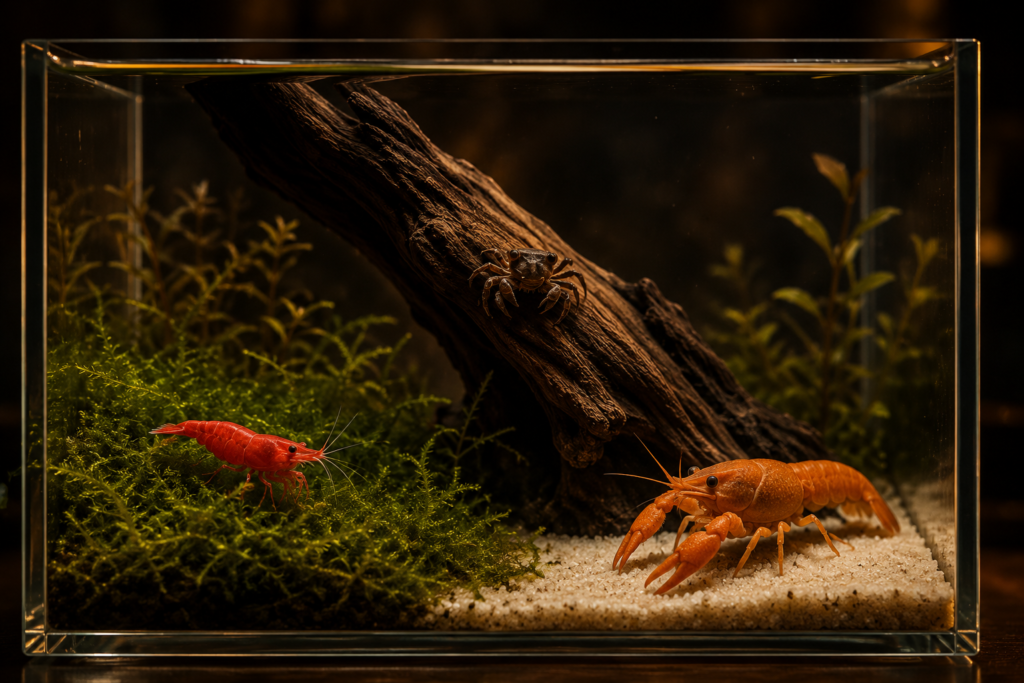
The first time you watch a cherry shrimp pick its way across a mat of moss, or a thumb-sized orange crayfish drag a leaf back to its cave, you understand why so many keepers get quietly obsessed. Freshwater crustaceans are the cleanup crew, the entertainment, and the living jewelry of a planted tank all at once — and most of them cost less than a fancy fish. They also ask for very little, once you understand the one thing that makes a crustacean a crustacean.
ItsyBitsyPets is reader-supported. As an Amazon Associate we earn from qualifying purchases — at no extra cost to you. See our affiliate disclosure.
This guide covers the eight best freshwater crustaceans for a home aquarium — dwarf shrimp, nano-tank crabs, and the underrated dwarf crayfish — grouped by the job they do and the skill they demand. But first, the biology that ties every one of them together, because it explains all of their care in a single idea.
What makes a crustacean a crustacean
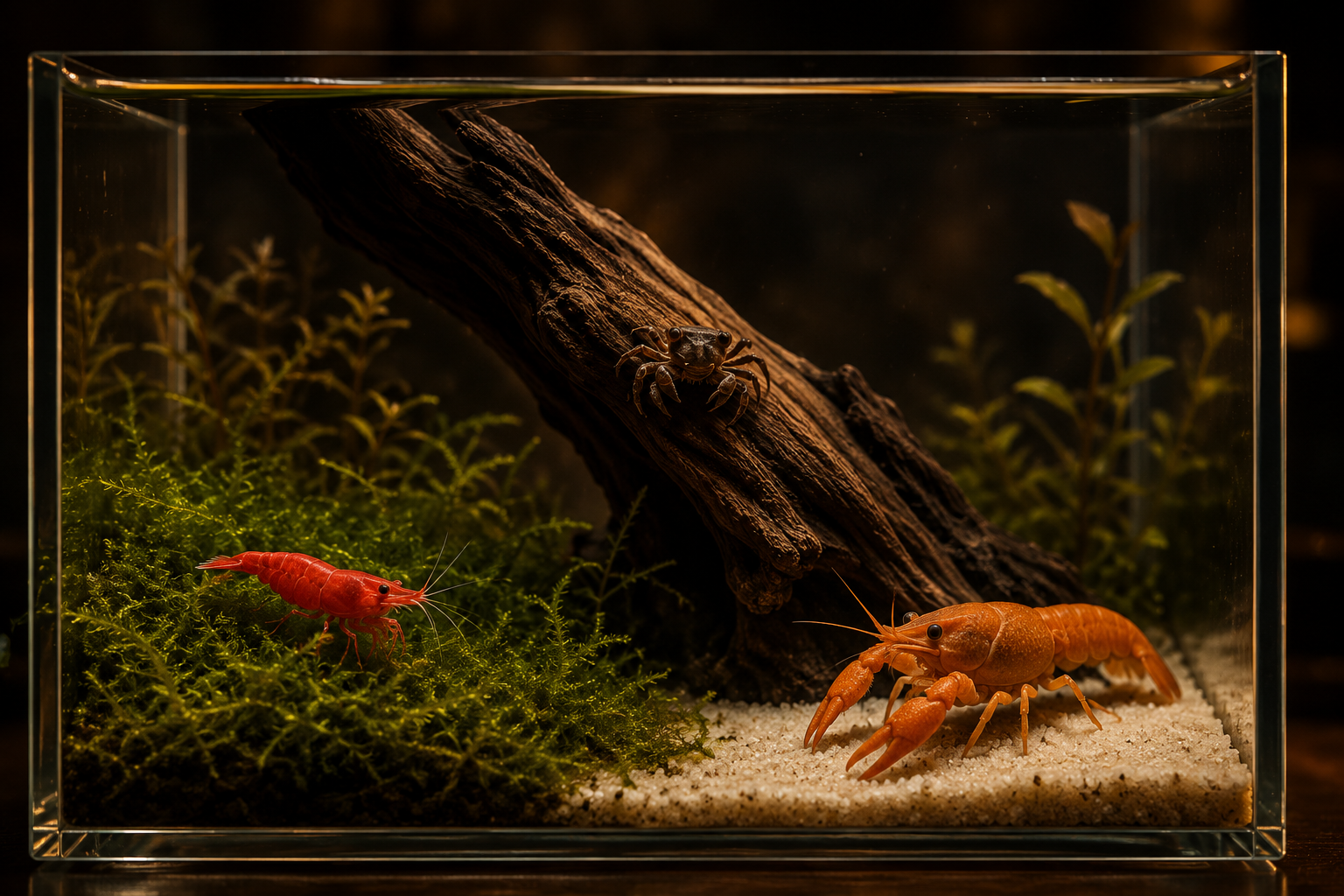
A crustacean wears its skeleton on the outside. That shell — an exoskeleton of chitin — cannot stretch, so the only way the animal can grow is to climb out of the old one and expand a new, soft shell underneath before it hardens. This process is called molting, and it happens over and over throughout the animal’s life. Everything you need to know about caring for freshwater crustaceans falls straight out of that single fact.
Because they must rebuild a shell repeatedly, crustaceans need a steady supply of calcium and reasonably hard water. Because a freshly molted animal is soft and completely defenseless for a day or two, they need hiding places where they can wait out the danger. And because the molt is a delicate chemical event, they need water that is free of the one contaminant that sabotages it: copper. Get those three things right — calcium, cover, and no copper — and you are most of the way to a thriving tank.
The care rules every freshwater crustacean shares
Before we get to individual species, here is the shared foundation. These rules apply to cherry shrimp and dwarf crayfish and micro crabs equally, and following them prevents the great majority of crustacean deaths.
Water quality has to be genuinely stable. Ammonia and nitrite must read zero, and nitrate should stay low — under roughly 10 to 20 ppm. Crustaceans are more sensitive to poor water than most fish, so a tank that a hardy guppy would shrug off can kill a colony of shrimp, as most crustacean care sheets stress. This is why a cycled, mature aquarium matters so much. A reliable liquid master test kit is the single most useful thing you can own as an invertebrate keeper.
Calcium builds the shell. Moderately hard water gives crustaceans the minerals they need to rebuild after each molt. In soft or acidic water you see failed molts and shell erosion — pitting and thinning of the exoskeleton. If your water is soft, a piece of cuttlebone or a bag of crushed coral in the filter slowly raises hardness and keeps shells strong.
Copper is the silent killer. It hides in many fish medications, in some plant fertilizers, and in old copper plumbing. Invertebrates are far more sensitive to it than fish — the University of Florida’s IFAS extension notes that copper causes harm to invertebrates at concentrations as low as around 10 micrograms per liter, a trace amount. Dose a copper-based fish medicine in a tank with crustaceans and you can lose the whole colony overnight. Read every label.
Never stock a brand-new tank. Many crustaceans graze on biofilm, the invisible bacterial film that coats every surface in a mature aquarium. That film takes weeks or months to build up. Adding grazers or filter feeders to a tank that has only been running a few weeks slowly starves them. Let the tank age first — the nitrogen cycle needs to finish anyway.
Acclimate slowly. Crustaceans react badly to sudden swings in temperature or water chemistry. Drip acclimation — letting new tank water drip into the bag or cup over 30 to 60 minutes — gives them time to adjust and dramatically improves survival on arrival.
Best beginner freshwater crustaceans: the dwarf shrimp
If you have never kept an invertebrate, start here. Dwarf shrimp are small, cheap, forgiving, and endlessly watchable, and a 5-gallon nano tank is enough for a starter colony. Our full pet shrimp care guide goes deeper on each, but these three are where nearly everyone begins.
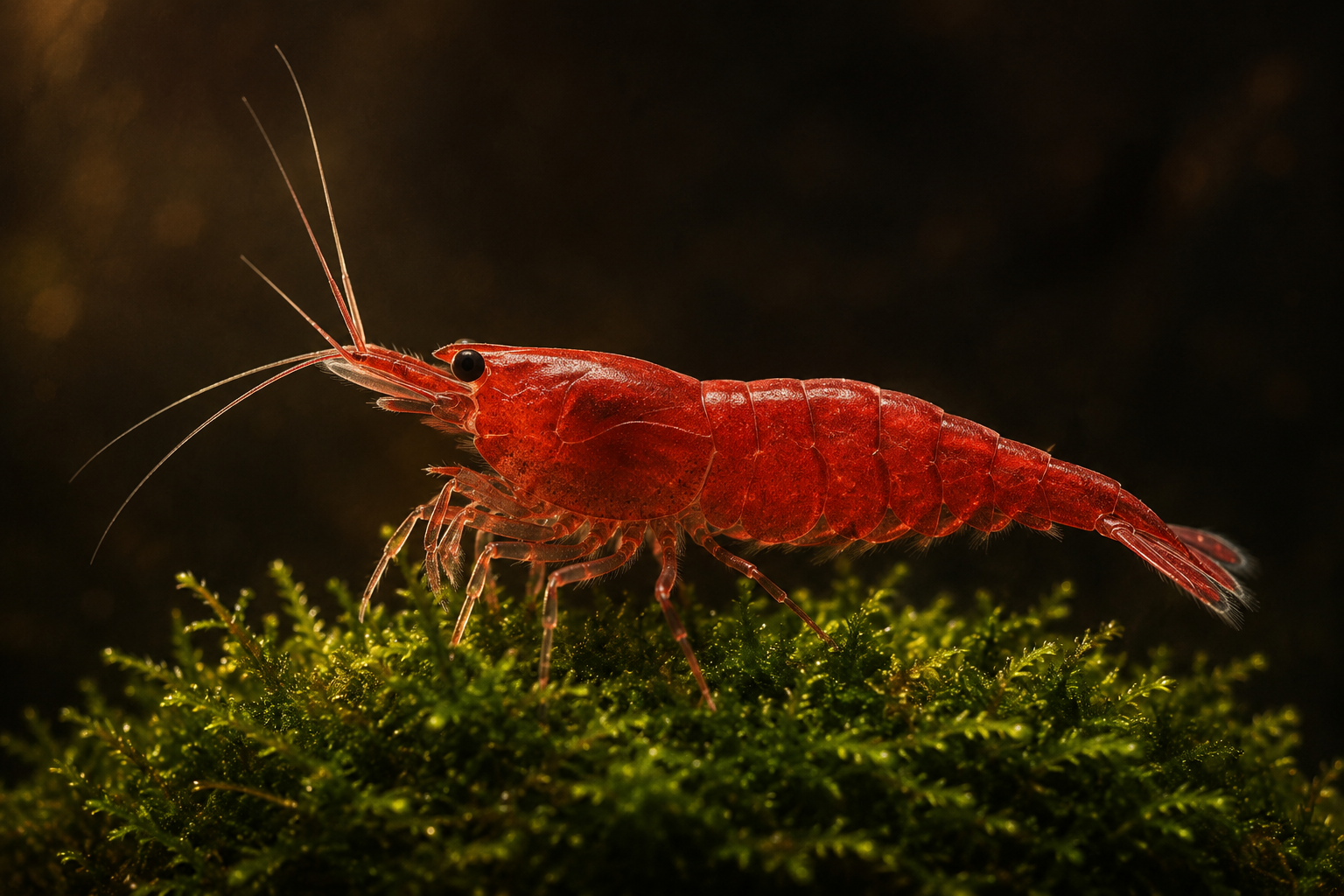
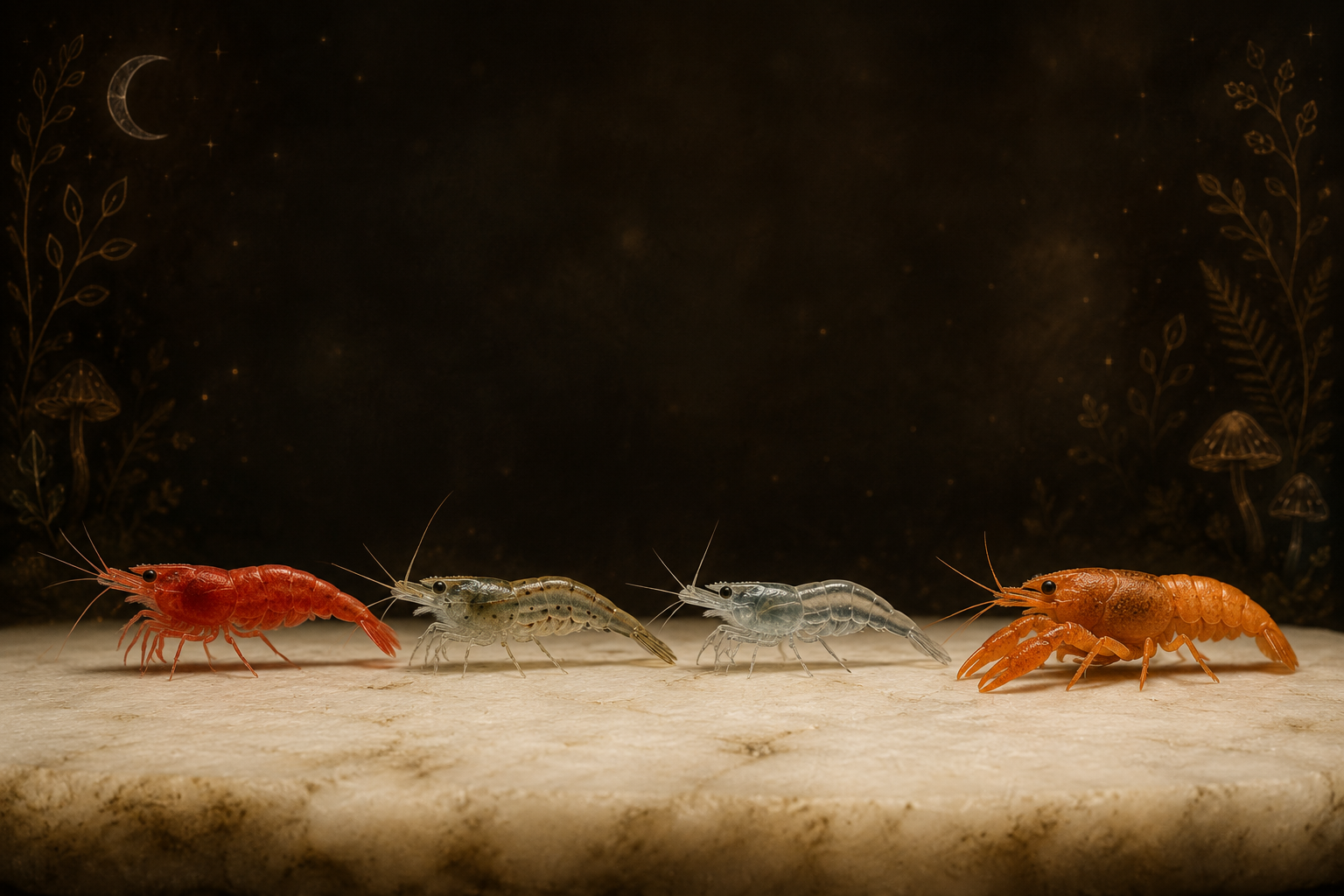
Cherry shrimp (Neocaridina davidi) are the number-one starter crustacean, and for good reason. They reach about 1.5 inches, tolerate a wide window of 65 to 80°F and pH from 6.5 to 8.0, and — crucially — they breed readily right in your freshwater tank, so a handful becomes a self-sustaining colony. Their bioload is tiny. If you want a single species to fall in love with the hobby, this is it. The bright red “fire” grade is the most popular, but they come in yellow, blue, green, and black too.
Amano shrimp (Caridina multidentata) are the workhorses. At around 2 inches they are the best hair-algae eaters in the hobby — a few Amanos will clear stubborn algae that nothing else touches. They want 70 to 80°F and pH 6.5 to 7.5. The one catch: they will not breed in a normal freshwater tank. The females release larvae, but those larvae need brackish (salty) water to develop, so home breeding almost never works. You keep Amanos for their appetite, not their offspring.
Ghost shrimp (Palaemonetes) are the cheapest entry of all, often sold as feeder shrimp for pennies. They are hardy, transparent, and excellent scavengers, which makes them a low-risk way to try shrimp keeping. They are slightly more predatory than cherries and will chase very small tankmates, but in a peaceful community they are tidy, useful little animals.
Small freshwater crustaceans for nano tanks
Some of the most charming small freshwater crustaceans are built for tanks of 5 gallons or less, where a full-size fish would be miserable. These reward a patient keeper with a mature, biofilm-rich tank.
Thai micro crab (Limnopilos naiyanetri) is one of the very few crabs that lives its entire life fully underwater in fresh water — no land, no brackish setup, no escape lid drama. Its carapace is under half an inch, and even counting the legs the whole crab barely reaches an inch. It is completely harmless, part filter feeder and part biofilm grazer, and it drifts around the tank like a tiny animated tumbleweed. The one requirement is patience: micro crabs depend on biofilm for most of their food, so the tank needs to be mature — two to three months past cycling — before you add them. A simple sponge filter is all the filtration a micro-crab nano needs, and it won’t vacuum them up.
Blue bee and crystal shrimp (Caridina) are the step up. These jewel-colored shrimp reach about an inch but want softer, more acidic water and steadier parameters than a cherry shrimp tolerates. Think of them as the intermediate crustacean: gorgeous, a little demanding, and the natural next project once a cherry colony has taught you how invertebrates behave.
Dwarf crayfish: a personality pet in a small shell
Mention “crayfish” and most people picture a big, blue, fish-murdering tank wrecker. Dwarf crayfish are the opposite, and they are one of the best-kept secrets in the hobby. The genus Cambarellus stays shrimp-sized — around 2 inches — while keeping every ounce of the personality that makes crayfish fun to watch.
The star is the Mexican dwarf orange crayfish (Cambarellus patzcuarensis), universally called the CPO. It tops out around 2 inches (4 to 5 cm), lives 2 to 3 years, and wants 65 to 75°F with pH 6.5 to 8.0 and moderately hard water — it genuinely needs that hardness to form a strong shell. A 10-gallon tank suits a small group. Unlike its full-size cousins, the CPO is mostly peaceful: it coexists with fast mid-water and top-swimming fish and is usually safe even with dwarf shrimp, though a hungry crayfish will occasionally catch one. What it demands above all else is hiding places — caves, cholla wood, PVC, plant cover — because it molts often and is helpless every time it does.
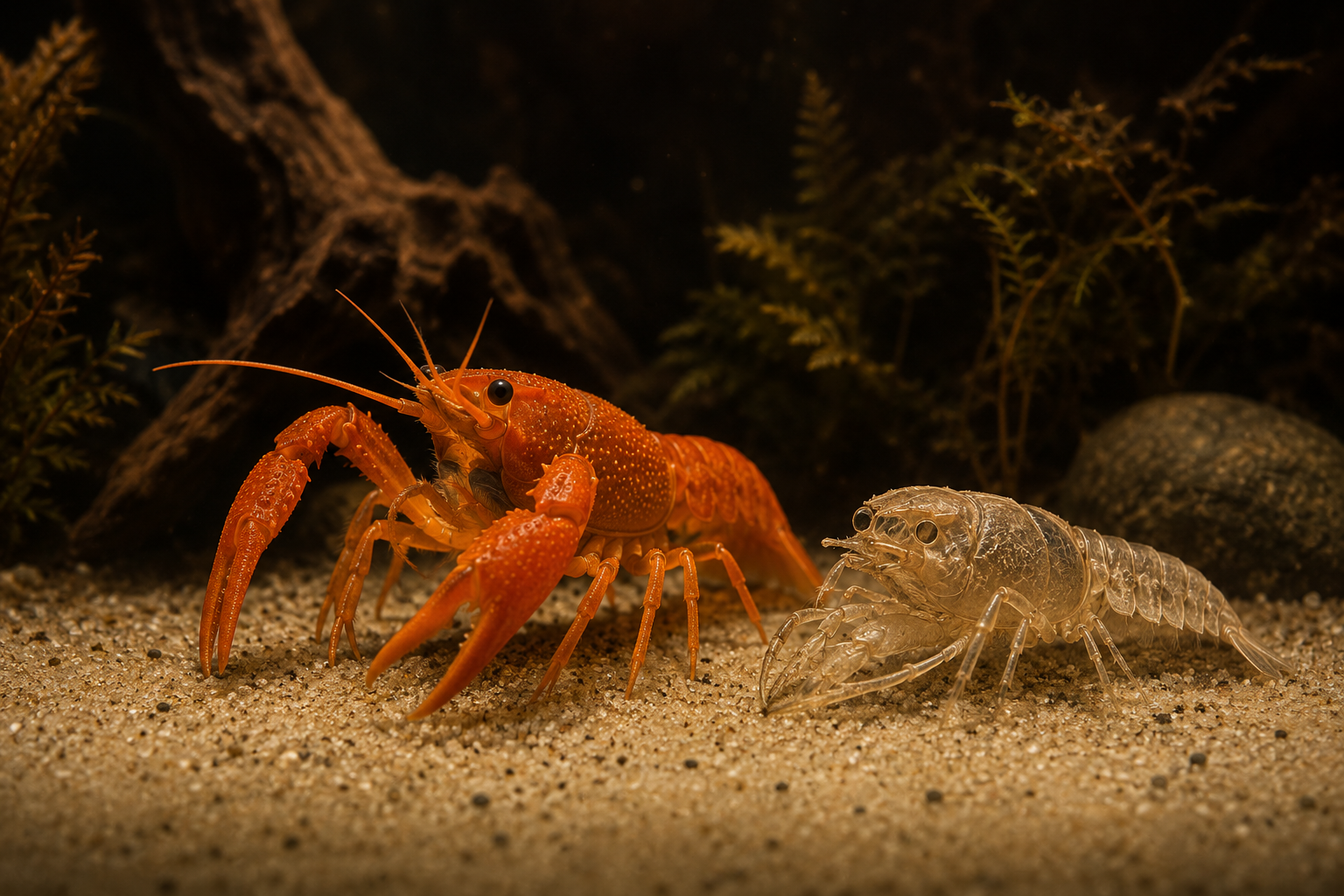
That molting is worth a closer look. A dwarf crayfish sheds its whole exoskeleton, legs and all, on a regular cycle, and a new keeper often panics at the sight of what looks like a dead crayfish lying on the sand. It is almost always just the empty shell. Leave it in the tank — the crayfish will eat it back to recover the calcium. Our guide to invertebrate molting walks through the whole process and how to tell a molt from a real loss.
One honest caveat applies to every crayfish, dwarf or not: they are opportunists. A crayfish will pinch or grab a slow, sick, or sleeping fish that rests on the bottom at night. Choose active swimmers that spend their time up in the water column as tankmates and skip anything that sleeps on the substrate.
Bamboo shrimp: the gentle filter feeder
Bamboo shrimp (Atyopsis moluccensis), also called wood or fan shrimp, are the largest crustacean most freshwater keepers will own at 3 to 4 inches, and they behave unlike anything else in the tank. Instead of scavenging, they perch in the current and unfold feather-like fans on the ends of their front legs, sweeping tiny food particles out of the moving water and combing them into their mouths. A bamboo shrimp posted on a piece of driftwood in the flow, fans open, is one of the quiet highlights of the hobby.
They want 75 to 81°F, a 20-gallon or larger established tank, and — this is the key — strong water flow carrying suspended food. A too-clean tank starves them. If you see a bamboo shrimp constantly picking at the substrate instead of fanning the current, that is the warning sign: there isn’t enough food in the water column, and you need to target-feed powdered food into the flow near where it sits. Like Amano shrimp, their larvae need brackish water, so breeding them at home rarely succeeds.
A note on saltwater crustaceans
The crustacean class doesn’t stop at the shoreline. Saltwater crustaceans — cleaner shrimp, peppermint shrimp, scarlet hermit crabs, emerald crabs — fill the very same cleanup and entertainment roles in a reef tank that shrimp and dwarf crayfish fill in fresh water. The difference is the environment around them: marine salinity, tighter stability, and a bigger budget. It is a related but distinctly pricier hobby.
What is striking is that the underlying biology is identical. The molt cycle, the calcium demand for building shell, and the absolute intolerance of copper carry over exactly. In a reef tank, the calcium and alkalinity that keepers dose for coral growth do double duty feeding crustacean exoskeletons. If you master freshwater crustaceans first, you already understand the animals — you are only learning a new kind of water.
Feeding freshwater crustaceans
Feeding splits cleanly along the line between grazers and filter feeders, and matching your food to the animal is half the battle.
Grazers — dwarf shrimp and dwarf crayfish — eat biofilm and algae off surfaces, blanched vegetables like zucchini and spinach, and sinking foods. A few sinking algae wafers a couple of times a week is plenty for a small colony. The classic beginner mistake is overfeeding: crustaceans are small and eat little, and uneaten food rots into ammonia that poisons the very animals you were trying to feed. Drop a small amount, watch them swarm it, and remove anything left after a few hours.
Filter feeders — bamboo shrimp and Thai micro crabs — cannot use a pile of pellets on the floor. They eat particles suspended in moving water and the biofilm on surfaces, which is why they need both flow and a mature tank rather than a heavy feeding schedule. Whatever the species, keep calcium available through cuttlebone, crushed coral in the filter, or a calcium supplement, so that every molt has the raw material it needs to succeed.
Tank setup and choosing tankmates
A crustacean tank doesn’t need to be elaborate, but a few details matter enormously. Put a sponge filter, or a pre-filter sponge over any intake, on the tank without exception — a bare filter intake will suck up shrimp and especially the tiny shrimplets that colonies produce. Live plants earn their place several times over: java moss, java fern, and anubias give cover for molting animals, grow the biofilm that grazers and filter feeders eat, and shelter babies. A generous clump of java moss is the single best thing you can add to a shrimp tank.
For tankmates, small and peaceful is the rule. Ember tetras, chili rasboras, and pygmy corydoras coexist beautifully with shrimp and dwarf crayfish, as do most snails — see our guide to freshwater snails for the aquarium for cleanup partners that share the same water. Avoid cichlids, loaches, goldfish, and anything with a mouth big enough to treat a shrimp as a snack. If you are planning the whole tank around invertebrates, our nano tank guide covers scaping a small setup around them, and the best beginner invertebrates roundup widens the field beyond crustaceans.
Common mistakes that kill freshwater crustaceans
Almost every crustacean loss traces back to one of four errors, and all four are easy to avoid once you know them.
The first is copper. Dosing a fish medication that contains copper in a tank with invertebrates is the fastest way to empty it. Before any medication touches an invert tank, read the active ingredients, and keep a separate hospital tank for treating sick fish.
The second is new-tank syndrome: adding grazers or filter feeders before biofilm has developed, which quietly starves them over weeks. The third is soft water with no calcium source, which leads to failed molts — the animal gets stuck halfway out of its old shell and cannot free itself, which is fatal. The fourth is simply the wrong company: a tankmate big enough to eat them, or a bare filter intake that inhales them. Fix those four things and freshwater crustaceans are among the most trouble-free animals you can keep.
Freshwater crustaceans at a glance
| Species | Adult size | Min tank | Temp | Level | Note |
|---|---|---|---|---|---|
| Cherry shrimp | 1.5 in | 5 gal | 65-80°F | Beginner | Breeds in freshwater |
| Amano shrimp | 2 in | 10 gal | 70-80°F | Beginner | Best algae eater; no home breeding |
| Ghost shrimp | 1.5 in | 5 gal | 65-82°F | Beginner | Cheap, hardy scavenger |
| Thai micro crab | 1 in | 5 gal | 72-82°F | Intermediate | Fully aquatic; needs mature tank |
| Crystal/bee shrimp | 1 in | 10 gal | 68-76°F | Intermediate | Soft, stable water |
| Dwarf orange crayfish (CPO) | 2 in | 10 gal | 65-75°F | Beginner | Personality; needs hides |
| Bamboo shrimp | 4 in | 20 gal | 75-81°F | Intermediate | Filter feeder; needs flow |
The verdict
Freshwater crustaceans give you more life and behavior per gallon than almost anything else in the hobby, and they do it for the price of a cheap fish. Start with a colony of cherry shrimp or a single dwarf orange crayfish in a mature, cycled tank, keep calcium available and copper out, and give them plenty of cover for the vulnerable hours after each molt. Do that, and you’ll have a tank full of tiny armored characters that clean up after themselves and never stop being interesting to watch. Once the shrimp bug bites, don’t be surprised when a second nano tank appears on the shelf.