
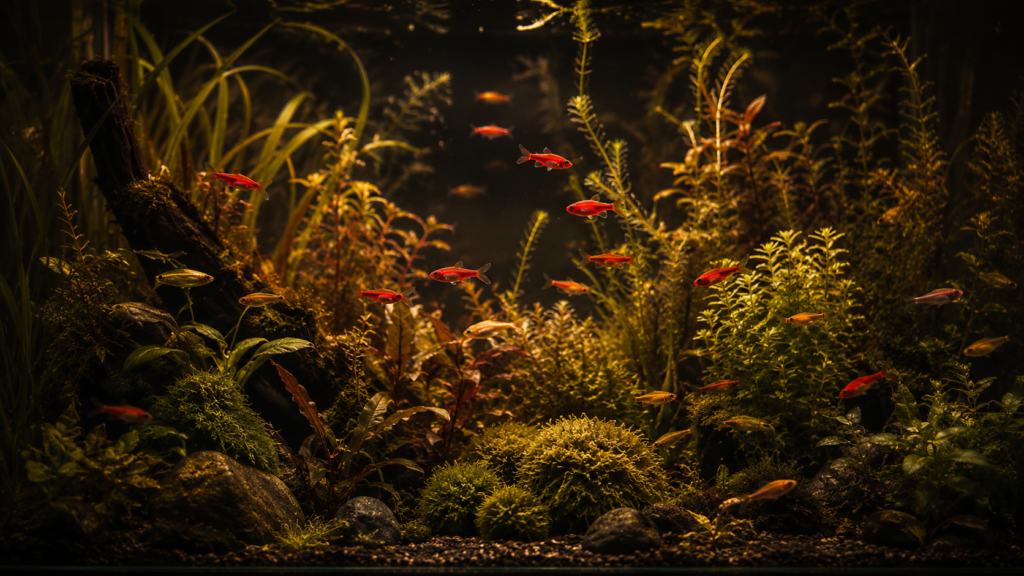
Not everyone has room for a big aquarium — and the wonderful news is you
don’t need one to keep a stunning, active tank. A whole world of micro fish stays
under an inch and a half full-grown, bringing schooling color and lively behavior
to tanks as small as ten gallons. These tiny species let a desk, shelf, or
countertop hold a complete little ecosystem. This guide covers the eight best micro
fish for small aquariums, how to keep them thriving, and why the smallest tanks
actually demand the steadiest hands.
ItsyBitsyPets is reader-supported. As an Amazon
Associate we earn from qualifying purchases — at no extra cost to you. See our
affiliate
disclosure.
What counts as a micro fish?
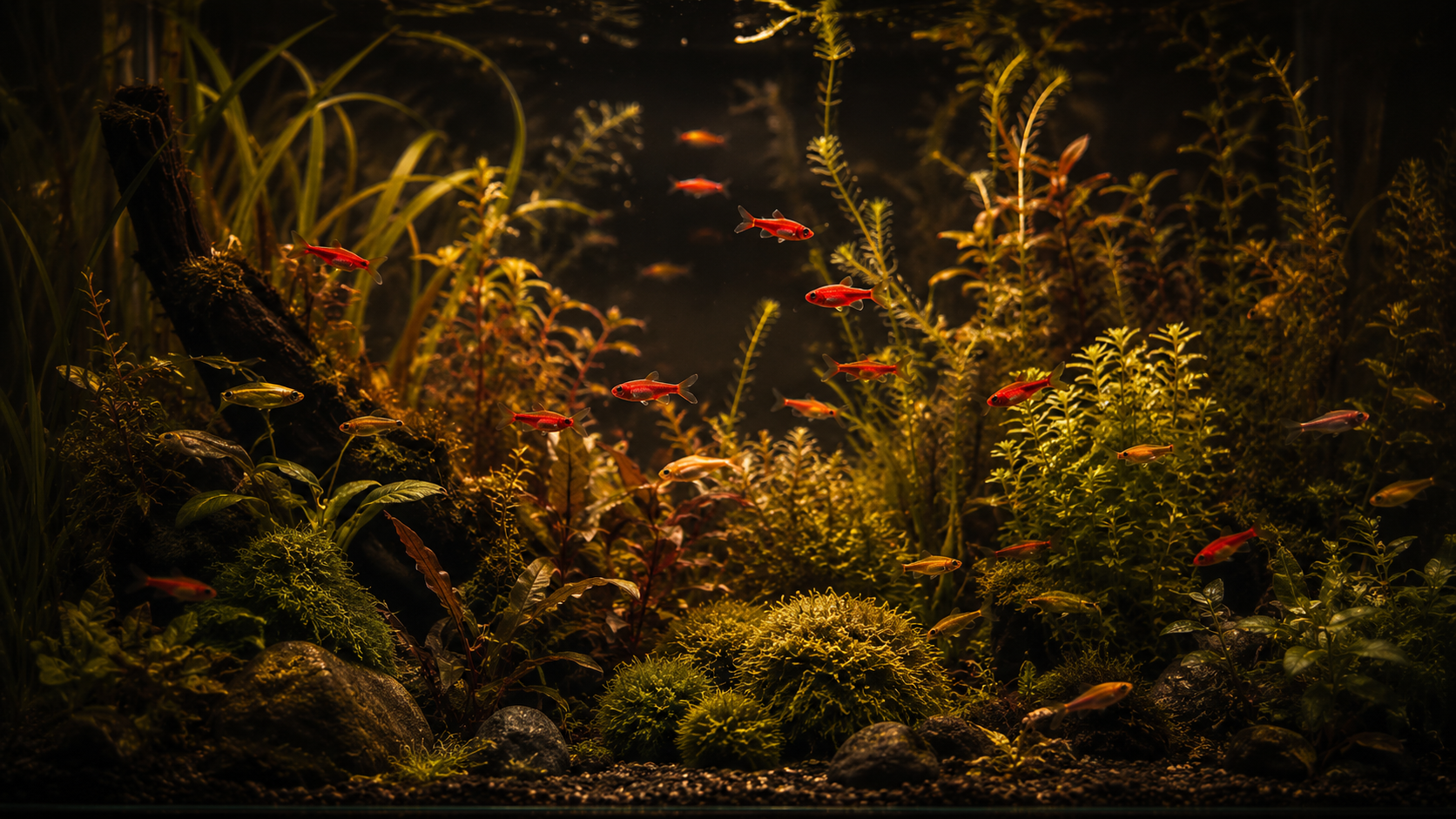
A micro fish is a species that stays genuinely tiny full-grown — typically
under about an inch and a half, with the smallest barely reaching two centimeters.
That miniature size is exactly what makes them special: a school that would need a
75-gallon tank if they were full-sized fish fits happily in a planted 10-gallon
nano. These tiny species let you keep a proper shoal — the shimmering, coordinated
movement that makes an aquarium come alive — in a footprint that sits on a desk. They’re the
key to a small tank that feels full of life rather than sparse.
The trade-off is that they show best, and behave most naturally, in numbers. A
lone micro fish is a nervous, faded version of itself; a group of eight or more is
confident, colorful, and constantly interacting. If you’re planning the tank
itself, our nano tank
guide covers the small setups these fish are made for.
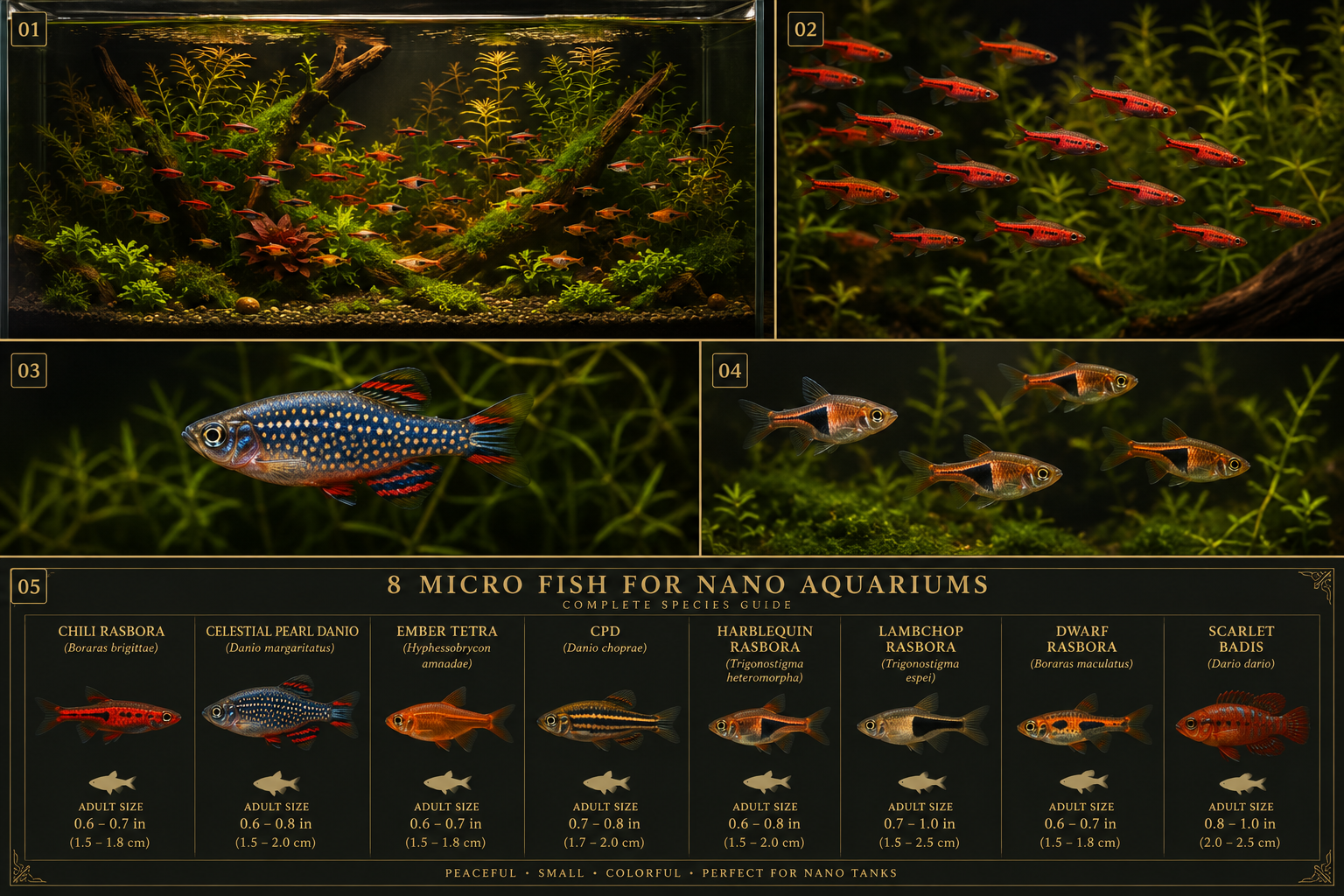
The 8 best micro fish for small aquariums
Every species here stays tiny and suits a nano tank, and the care notes align
with the nano-fish picks from specialists at Aquarium Co-Op.
The earlier entries are the showpieces; a couple later ones are the easiest for a
first-timer.
1. Chili rasbora — the fiery jewel
The chili rasbora is the crown jewel of the micro fish world: a slender fish
barely 0.8 inches long that glows a deep, fiery red as it matures, especially in a
group displaying to each other. It’s a showpiece, but a slightly demanding one — it
wants soft, acidic water, a heavily planted tank with dark substrate to bring out
its color, and a group of at least ten to feel secure. Given those conditions, a
shoal of chili rasboras in a planted nano is one of the most breathtaking sights in
the hobby.
2. Ember tetra — the forgiving firecracker
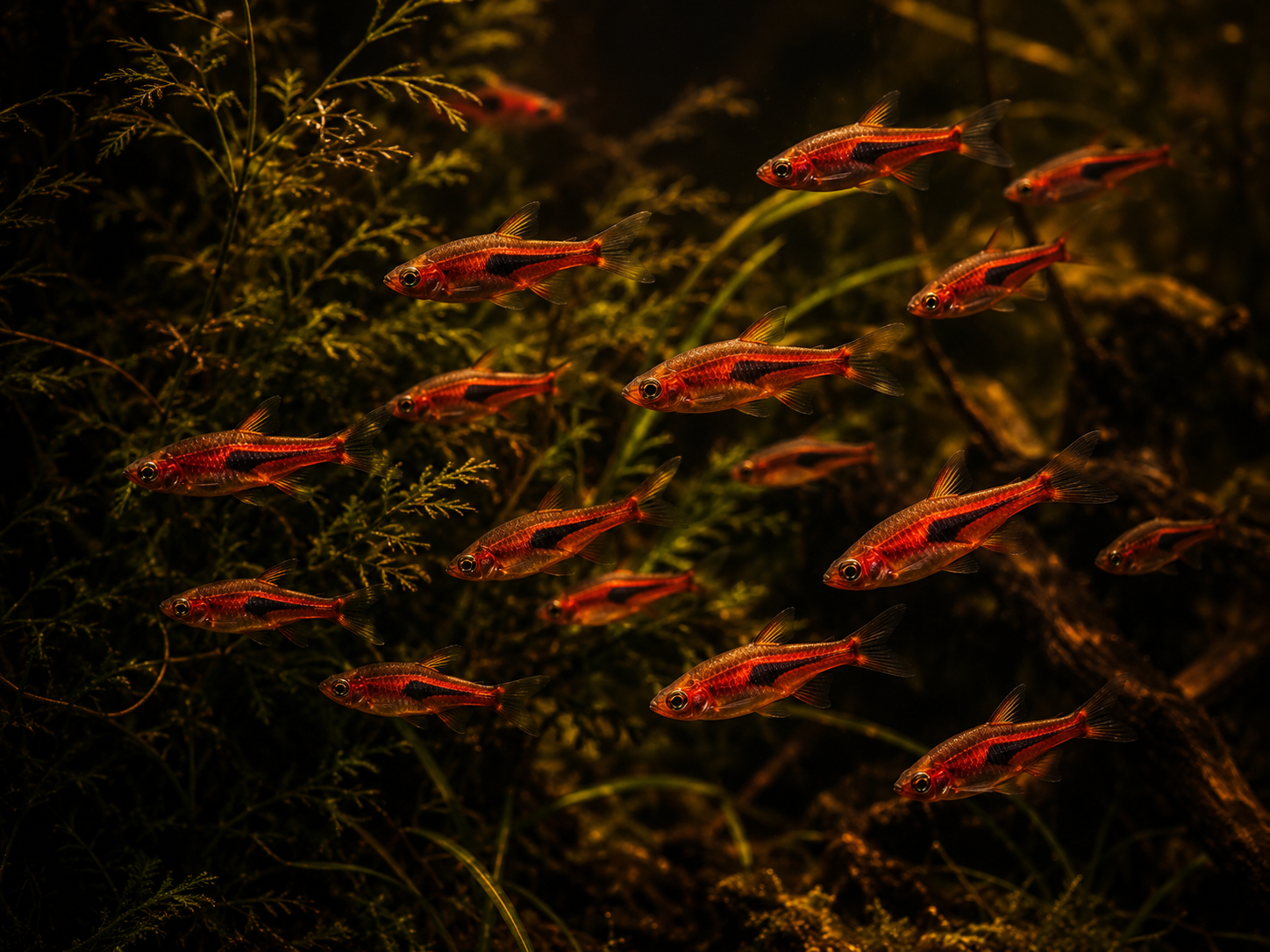
If the chili rasbora is the showpiece, the ember tetra is its easier cousin.
This 0.8-inch Brazilian tetra glows a warm orange-red and is genuinely hardy,
tolerating a wider pH range of roughly 5.5 to 7.5, which makes it one of the best
micro fish for newer hobbyists. It schools beautifully, is comfortable in a nano
tank, and looks spectacular in larger numbers — a group of twenty in a planted tank
looks like drifting embers. For most beginners wanting a small schooling fish, the
ember tetra is the perfect starting point.
3. Celestial pearl danio — the galaxy in a tank
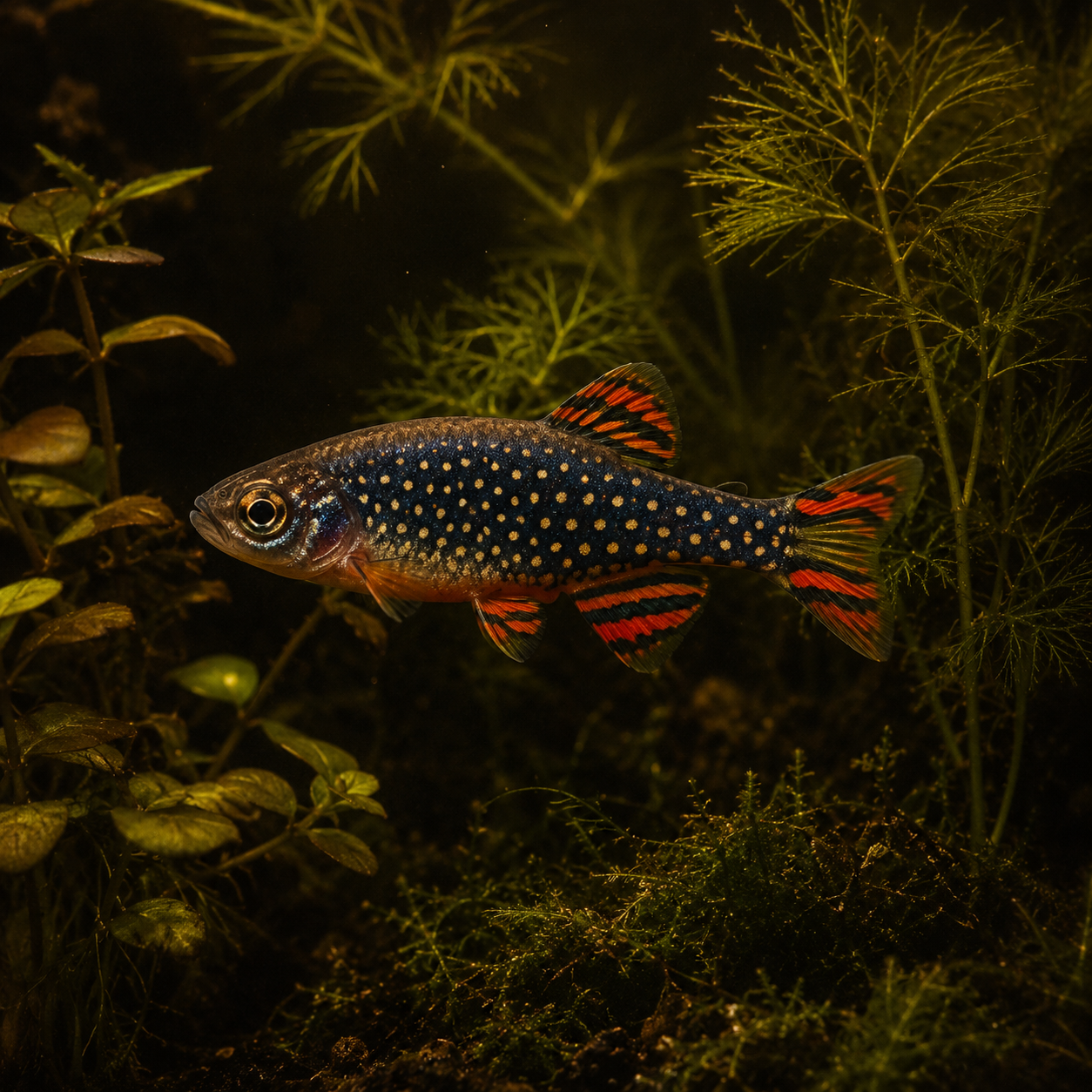
Also known as the galaxy rasbora, the celestial pearl danio is one of the most
stunning small fish in existence: a deep blue body dusted with pearl-white spots
and fins striped in red and black, like a little galaxy. It reaches about an inch
and does best in a group of six or more, where the males display their brightest
colors to one another. Hardy once settled and endlessly beautiful, it’s a favorite
centerpiece for planted nano tanks.
4. Pygmy corydoras — the tiny bottom crew
Most catfish get big, but the pygmy corydoras stays around an inch and brings
the charm of a cory school to a nano tank. Unlike its larger relatives, it swims in
midwater as well as along the bottom, moving as a coordinated little shoal that’s a
delight to watch. Keep a group of six or more over a soft substrate, and these
peaceful, active micro catfish add constant gentle motion to the lower levels of a
small tank.
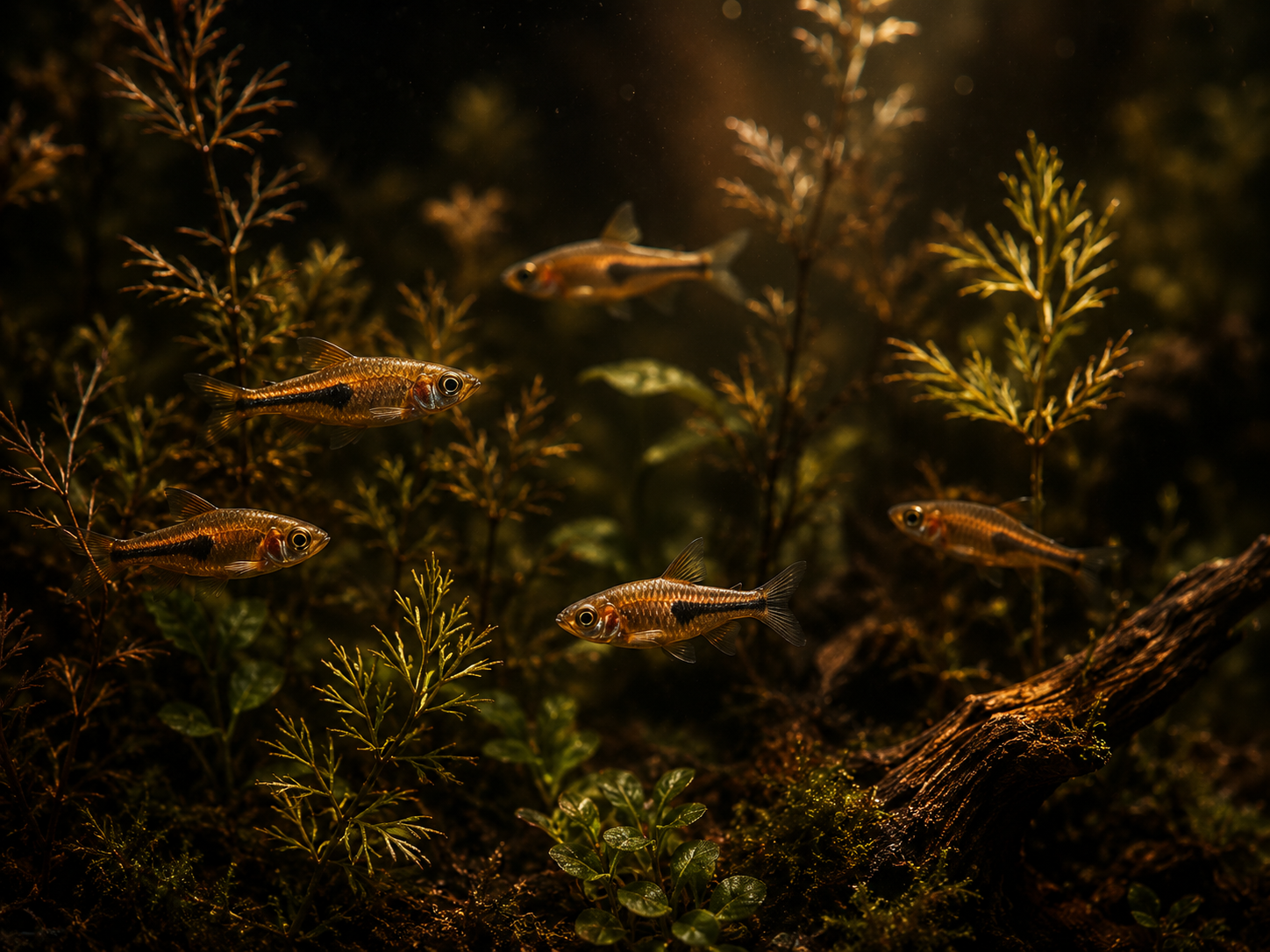
5. Dwarf rasbora — the understated schooler
The dwarf or least rasbora is a subtle beauty, a peaceful sub-inch fish with a
warm coppery-orange body and a small dark spot. It’s less flashy than a chili
rasbora but easier to keep and just as happy in a small, well-planted tank in a
group. For a keeper who wants a calm, natural-looking nano shoal rather than a bold
splash of color, the dwarf rasbora is an understated gem.
6. Endler’s livebearer — the colorful breeder
Endler’s livebearers are like miniature, extra-vivid guppies: males are barely
an inch long and splashed with electric orange, green, and black in wild patterns.
They’re exceptionally hardy, adapt to a range of conditions, and breed readily —
sometimes too readily — so a small starter group quickly becomes a lively,
ever-changing display. For a beginner who wants easy color and constant activity in
a nano tank, Endler’s are hard to beat.
7. Least killifish — the tiniest livebearer
The least killifish is one of the smallest fish in the entire hobby, with
females around an inch and males even tinier. Despite the name it’s a peaceful
livebearer, not an aggressive killifish, and it’s hardy and undemanding. It breeds
slowly and steadily, giving a gentle self-sustaining population without the
population explosions of other livebearers. It’s a fascinating, low-key choice for
a dedicated nano or planted tank.
8. Sparkling gourami — the vocal centerpiece
Rounding out the list, the sparkling gourami is a tiny labyrinth fish around an
inch and a half with iridescent blue-green speckling and red-edged fins — and
remarkably, it can produce audible croaking sounds. It has more individual
personality than most micro fish, works as a gentle centerpiece in a planted nano,
and appreciates calm water and plenty of plant cover. It’s a charming, characterful
finish to a small tank.
Why small tanks demand steadier care
There’s a counterintuitive truth about these tiny fish: the smaller the tank, the
less room for error. A small water volume swings faster — temperature, pH, and
waste concentration all change more quickly in ten gallons than in fifty — so a
mistake that a big tank would buffer can become a crisis in a nano. That doesn’t
mean nano tanks are hard; it means they reward consistency. Keep up with regular
small water changes, avoid overfeeding, and don’t overstock, and a nano stays
rock-steady.
The foundation, as with any tank, is cycling it fully before the fish arrive so
beneficial bacteria can process waste — our guide on how to start an
aquarium covers exactly that. A gentle sponge filter is ideal for micro fish because a strong
intake can pull in tiny bodies, and a small aquarium heater keeps these mostly tropical species in
their comfort zone. A water test kit lets you catch a swing before it becomes a problem.
Aquascaping for micro fish
Micro fish and planted aquascapes are a natural match, and a little thought
about the layout makes a small tank feel like a slice of a wild stream. Fine-leaved
plants, mosses, and floating cover give tiny fish the security they need to come out
and school in the open rather than hiding, and the smallest species show their best
color against a dark substrate and dim, dappled light. Driftwood and leaf litter
not only look natural but also lower the pH and release tannins that many micro
fish, especially blackwater species like chili rasboras, genuinely prefer — a point
echoed in the nano-fish guidance from AquariumStoreDepot.
Scale matters in a nano aquascape: use small-leaved plants and finer hardscape
so the tank doesn’t dwarf its tiny residents, and leave open swimming lanes between
planted areas so a school has room to move. A well-planted nano is also more
stable, since live plants consume the nitrogen waste that would otherwise
accumulate quickly in a small volume. The result is a tank that’s both beautiful
and healthier — the plants do real work while framing your micro fish like living
jewelry.
Feeding and planting a micro fish tank
Micro fish have micro mouths, which is the one feeding detail that trips people
up: standard flake food is often too big. Offer finely crushed flakes, micro
pellets, or small live and frozen foods like baby brine shrimp and micro-sized fish
food, and feed small amounts once or twice a day. A heavily planted tank helps
enormously — plants give micro fish security, break sightlines so they school
calmly, and grow the biofilm and tiny organisms these fish love to pick at between
feedings. Live plants and a stable, cycled tank are the two ingredients that turn a
nano into a thriving little world.
These little schoolers also make superb tankmates for other peaceful nano life. They coexist
beautifully with dwarf shrimp and small aquarium
snails, forming a complete miniature community where fish shoal above while the
cleanup crew works below.
Building a nano community
One of the joys of keeping tiny fish is combining a few compatible species into
a layered little community that uses the whole tank. Because each species tends to
occupy a different zone — some shoal in open midwater, some hug the plants, pygmy
corydoras patrol the bottom — a thoughtful mix fills the tank with activity at every
level without crowding it. The trick is to keep each species in a proper group of
its own kind rather than buying one of everything; three species of six beats six
species of one, both for the fish’s comfort and for the natural look of coordinated
schools.
Compatibility is straightforward at this scale, since almost all nano species
are peaceful, but match their water needs and temperaments: pair blackwater-loving
chili rasboras with other soft-water species, and don’t mix a shy, slow fish with a
boisterous, faster one that will outcompete it at feeding time. Keep the total
stocking light — a common mistake is treating tiny fish as license to overstock, but
bioload still adds up fast in a small volume. A restrained, well-matched community
stays healthier and looks more natural than a crammed one.
Frequently asked questions
What is the smallest aquarium fish?
Among commonly kept species, the chili rasbora and least killifish are about as
small as it gets, with adults barely reaching 0.8 to 1 inch. Both are true micro
fish suited to nano tanks.
How many micro fish can I keep in a 10-gallon tank?
Roughly 6 to 10 micro fish suit a well-filtered, planted 10-gallon tank, with a
school of 6–8 of one species being an ideal, natural-looking display. Don’t
overstock — small volumes foul quickly.
Do micro fish need to be in groups?
Yes. Nearly all micro fish are schooling or shoaling species and are stressed,
faded, and skittish when kept alone or in tiny numbers. A group of at least six —
ideally more — is essential for their health and color.
Micro fish prove that a small tank can be every bit as alive and beautiful
as a large one. Start with hardy ember tetras or Endler’s, keep them in a proper
group, cycle the tank, and hold the water steady, and a nano aquarium of tiny
schooling fish becomes a mesmerizing little jewel box on your desk. For the small
setups these fish call home, our aquarium guides
cover every fundamental.