
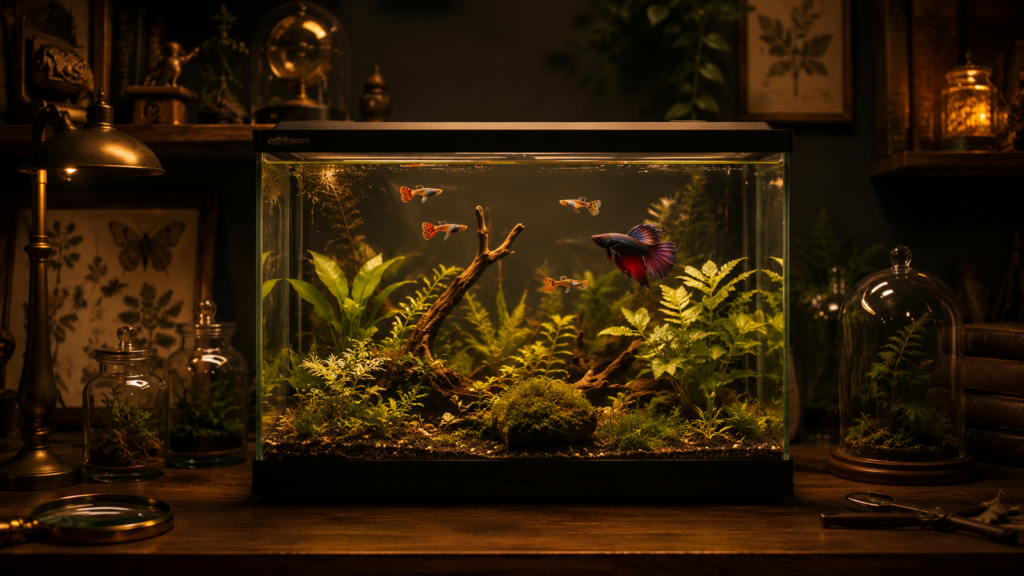
A pet fish is many people’s first pet, and for good reason: fish are
peaceful to watch, fit almost any space, and a well-run aquarium becomes a living
centerpiece in a room. But “just a fish” hides a small science — the difference
between a fish that lives for years and one that doesn’t often comes down to a few
fundamentals nobody mentions at the pet store. This beginner’s guide walks you
through choosing your first pet fish, deciding between freshwater and saltwater,
and the care basics that actually keep fish alive and thriving.
ItsyBitsyPets is reader-supported. As an Amazon
Associate we earn from qualifying purchases — at no extra cost to you. See our
affiliate
disclosure.
Is a pet fish right for you?
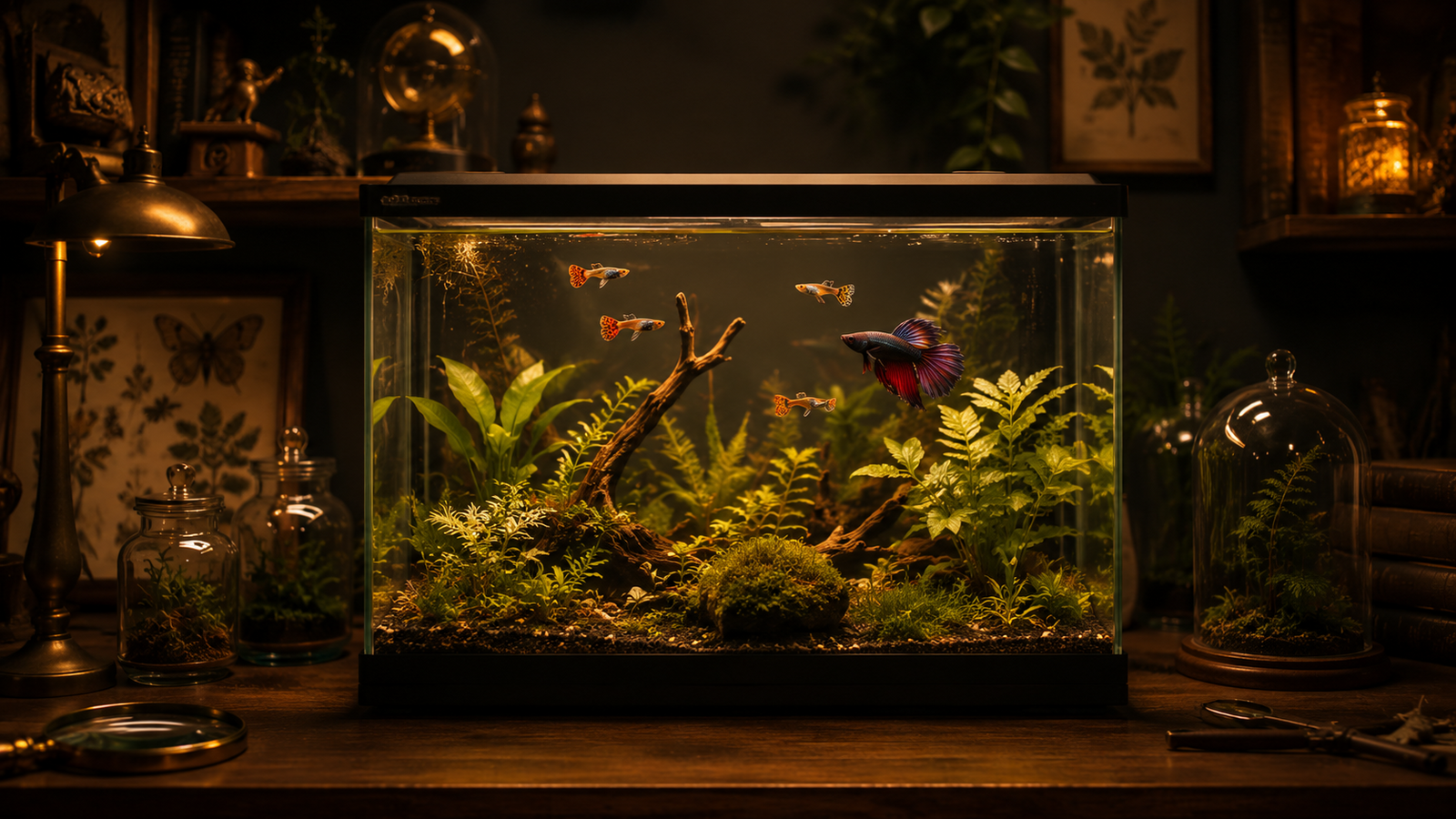
A pet fish is often sold as a low-effort starter pet, and while fish don’t need
walking or daily attention the way a dog does, they aren’t a no-maintenance
decoration either. A healthy aquarium is a small ecosystem you maintain: a bit of
weekly upkeep, steady feeding, and attention to water quality. The reward is real —
watching a planted tank of active fish is genuinely calming, and the hobby scales
from a single betta on a desk to an elaborate community tank. If you want a
beautiful, absorbing pet that lives quietly in the background of your home, a pet
fish is a wonderful choice. Just go in knowing it’s a living system, not an
appliance.
Freshwater vs. saltwater: where to start
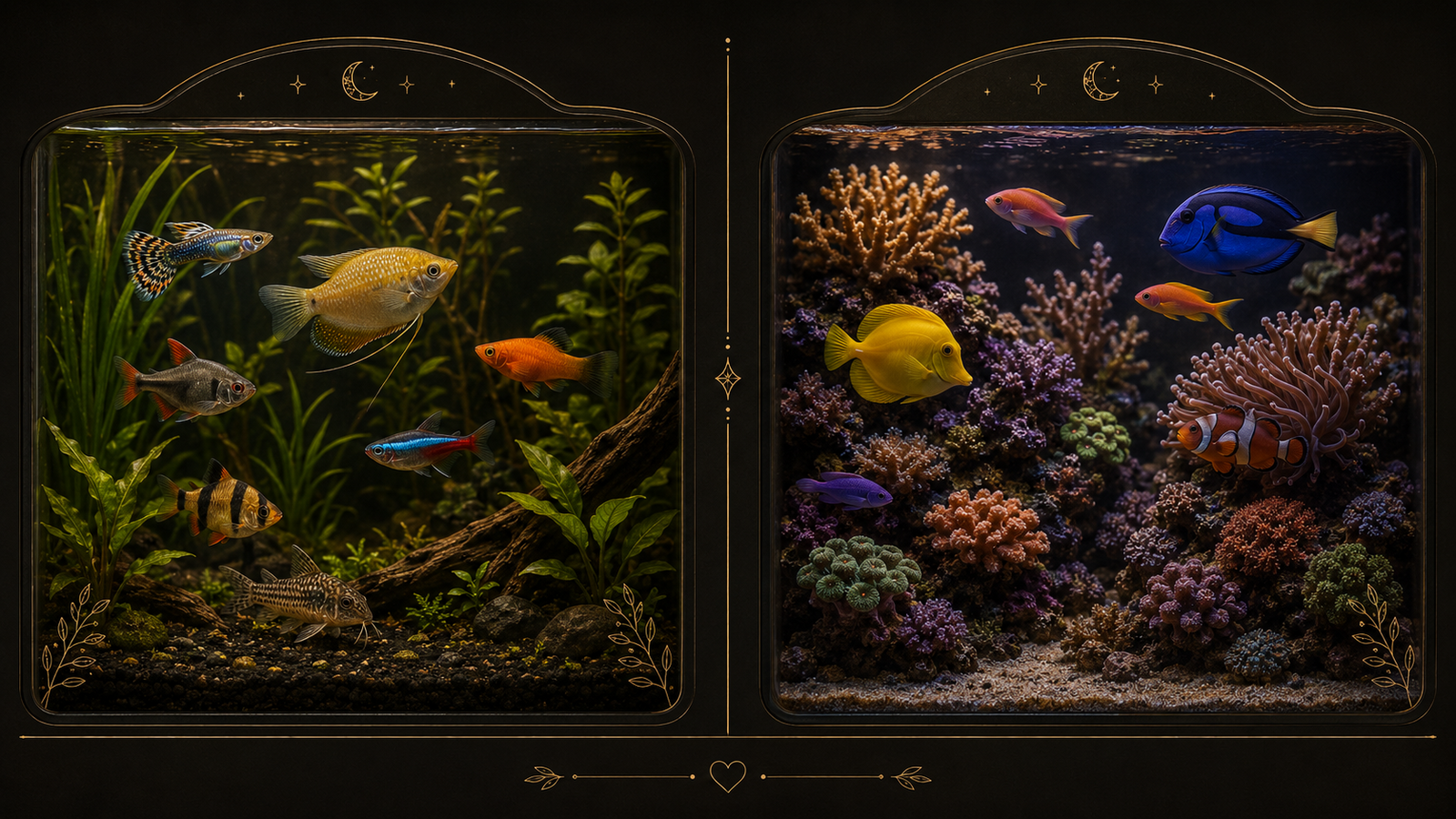
The first big fork is freshwater or saltwater, and for almost every beginner the
answer is freshwater. Freshwater fish are hardier, cheaper, more forgiving of
mistakes, and need less equipment, which makes them the right place to learn the
fundamentals. Saltwater tanks are stunning — the colors of a reef are hard to beat —
but they demand tighter water control, more gear, and a bigger budget, so they’re
better as a second step once you’ve kept a freshwater tank successfully.
If freshwater is your starting point, our guide to the best nano tank
setups is a gentle on-ramp. And when you’re ready to explore the marine side,
our roundup of the best saltwater
fish for beginners shows which species forgive a new reefer’s mistakes. There’s
no wrong path — just start where the learning curve is kindest.
The best beginner pet fish
A few freshwater species have earned their reputation as ideal first pet fish:
hardy, forgiving, and full of character. The betta is a classic — a single male in
a properly heated 5-gallon-plus tank is colorful, personable, and undemanding.
Guppies and platies are lively, colorful livebearers that adapt to a range of
conditions and breed easily. Corydoras catfish are peaceful bottom-dwelling
charmers that work the substrate in a friendly little group. And for a splash of
schooling color, small tetras and rasboras shine in a planted tank.
Each of these deserves its own deeper look before you buy, because even easy
fish have specific needs — a betta wants warmth and a lid, corydoras want company
and a soft bottom. We cover the full lineup in our guide to the best beginner
fish, but the principle holds across all of them: match the fish to your tank
size and don’t overcrowd.
The one thing beginners skip: cycling the tank
Here’s the single most important thing to learn before buying a pet fish, and
the step most beginners skip: cycling the tank. When fish produce waste, it breaks
down into ammonia, which is toxic. In an established tank, beneficial bacteria
convert that ammonia into nitrite (also toxic) and then into far less harmful
nitrate. Growing that bacteria colony — the “nitrogen cycle” — takes a few weeks,
and it must happen before your fish move in, or they’ll be poisoned by
their own waste in a fresh tank. This one invisible process is behind the majority
of “my fish keep dying” heartbreaks.
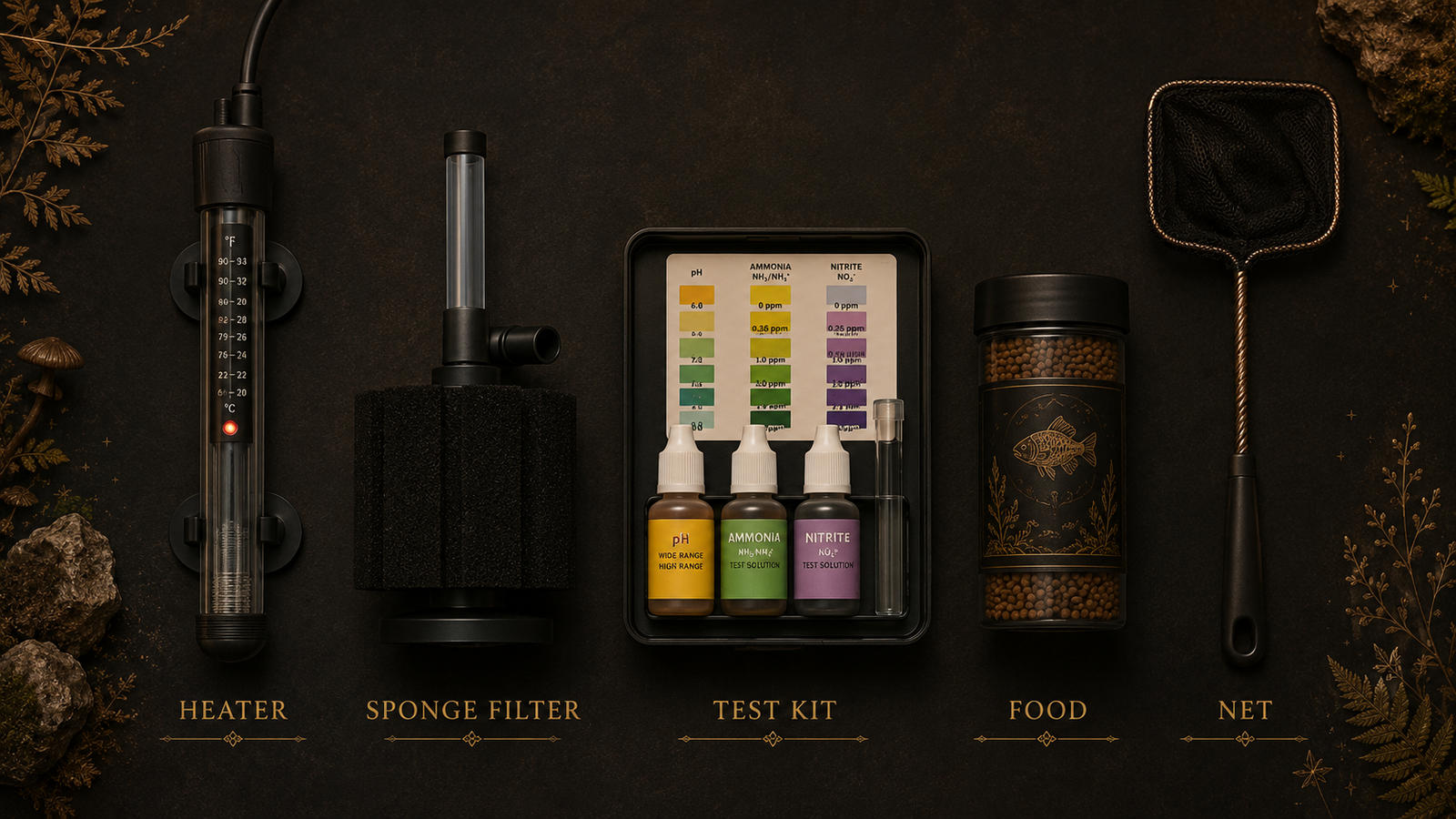
Cycling isn’t hard, it just takes patience and a water test kit to
track ammonia and nitrite dropping to zero. Our step-by-step guide on how to start an
aquarium walks through the whole process, and it’s the most valuable half hour
a new fishkeeper can spend. Do this one thing right and you’ve avoided the biggest
beginner mistake there is.
Pet fish care basics
Once your tank is cycled and stocked, keeping fish healthy comes down to a
short, repeatable routine. Feed small amounts once or twice a day — only what’s
eaten in a couple of minutes — because overfeeding is the fastest way to foul the
water. Change about 25% of the water each week with temperature-matched, dechlorinated
water to keep waste from building up. Keep tropical fish warm and stable with a
reliable aquarium
heater, and give the tank gentle filtration sized to its volume.
Beyond the routine, the golden rule is patience and stability. Fish thrive on
consistency — steady temperature, steady water quality, no sudden changes — and
most problems come from rushing: adding too many fish too fast, or before the tank
is ready. Add livestock gradually, watch how everyone behaves, and let the tank
find its balance. A gravel vacuum makes water changes quick and doubles as substrate
cleanup. None of it is difficult once it’s a habit.
Choosing tankmates and a complete cleanup crew
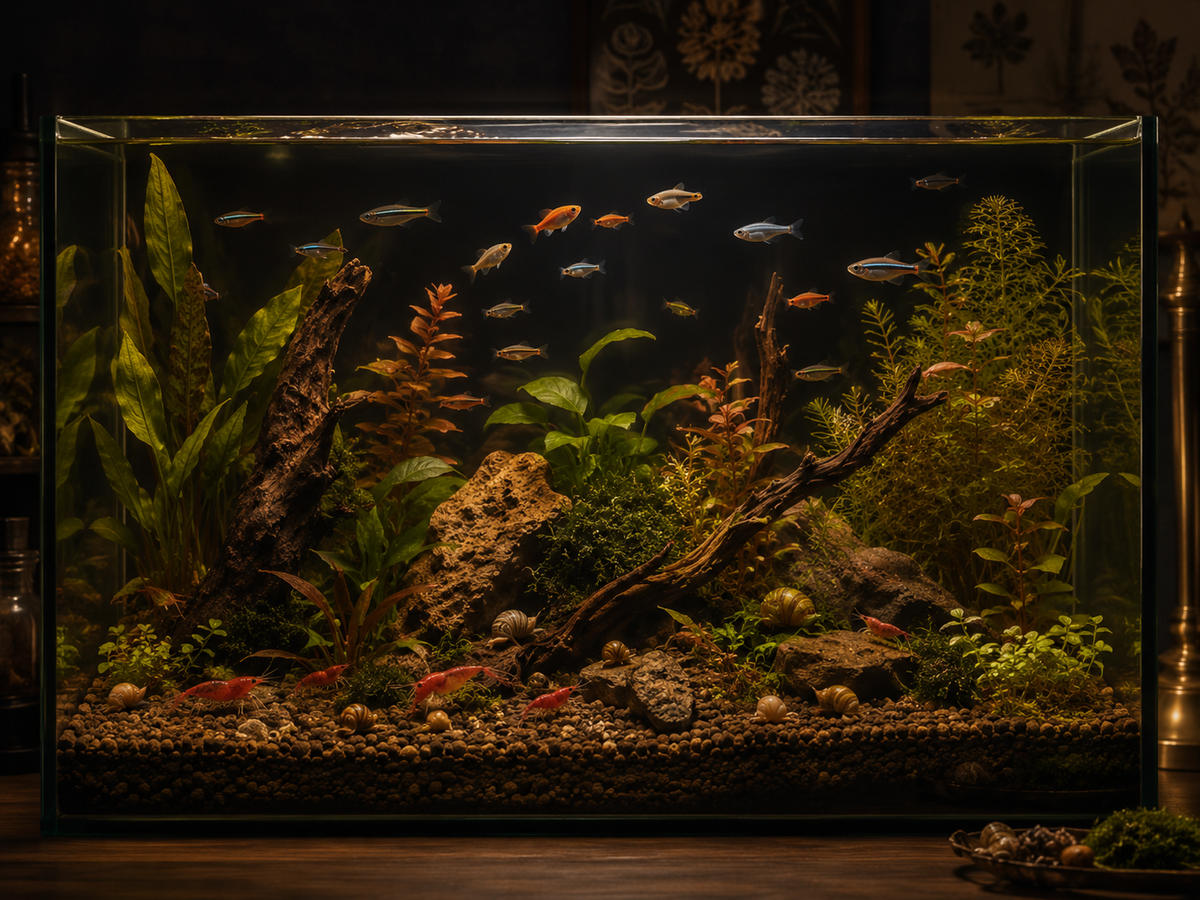
Half the fun of a pet fish tank is building a little community, but not every
resident is a fish. Peaceful aquarium
snails and dwarf shrimp make excellent tankmates that also earn their keep,
grazing algae and scavenging leftover food that fish miss. Together with your fish
they form a balanced cleanup crew that keeps the tank healthier with less work from
you.
The key to a peaceful community is compatibility: choose species with similar
temperaments and water needs, avoid mixing fin-nippers with long-finned fish like
bettas, and never combine animals where one sees the other as food. A little
research before each addition prevents most conflict. Start peaceful, add slowly,
and a mixed community of fish, snails, and shrimp becomes a self-balancing little
world.
Small tanks and small fish
You don’t need a large tank to keep a pet fish — you just need to match the fish
to the space. A common beginner mistake is putting a fish that gets big, or needs a
school, into a tiny bowl. The better approach for small spaces is to choose fish
that genuinely stay small and thrive in nano tanks, like chili rasboras, ember
tetras, or celestial pearl danios — the kind of tiny schooling species featured in
nano-fish roundups from Aquarium Co-Op.
These micro fish bring schooling color to tanks as small as 10 gallons, as long as
the water stays stable — smaller volumes swing faster, so they need steady
maintenance, not less. Choosing the right small fish is the secret to a beautiful
desk or shelf aquarium that stays healthy.
Don’t forget the cleanup crew
A complete pet fish setup usually includes more than fish. Snails and shrimp
round out the tank as a working cleanup crew, and there’s more variety than
beginners expect — the overview of aquarium snail types from Aqueon shows
just how many peaceful, useful species are available. A nerite snail grazing algae
off the glass or a group of cherry shrimp working the substrate does real
maintenance work while adding interest, and both coexist peacefully with most
community fish. Building your tank as a small ecosystem — fish above, cleanup crew
below — makes it healthier and more self-sustaining than fish alone.
How long do pet fish live?
One thing many new keepers don’t realize is how long a well-cared-for pet fish
can live — these are not disposable animals. A betta typically lives three to five
years, guppies and platies two to three, corydoras catfish up to ten, and goldfish
(which need far more space than a bowl) can live well over a decade. Those lifespans
assume good care: a cycled tank, stable water, proper diet, and enough space. The
sad reality is that most pet fish die young not from old age but from preventable
problems — an uncycled tank, a bowl that’s too small, or poor water quality.
Framed positively, that means your pet fish will likely be with you for years,
so it’s worth setting the tank up properly from the start. Choosing an appropriate
species for your space, giving it room to grow, and keeping a steady maintenance
routine turns a fish from a short-lived impulse buy into a long-term companion. The
investment of getting the fundamentals right at the beginning pays back in years of
a healthy, active tank rather than repeated heartbreak and restarts.
Frequently asked questions
What is the easiest pet fish to keep?
A betta in a heated 5-gallon-plus tank, or a small group of guppies or platies,
are among the easiest pet fish for beginners — hardy, colorful, and forgiving,
provided the tank is cycled first.
Do pet fish need a heater and filter?
Most popular pet fish are tropical and need a stable heater, and nearly all need
gentle filtration to keep the water clean. A few coldwater fish are exceptions, but
for beginners, plan on both a heater and a filter.
How big a tank does a pet fish need?
Bigger is easier — larger volumes stay more stable and forgive mistakes. A
10–20 gallon tank is a great, manageable starting size for most beginners, and far
kinder to fish than a small bowl.
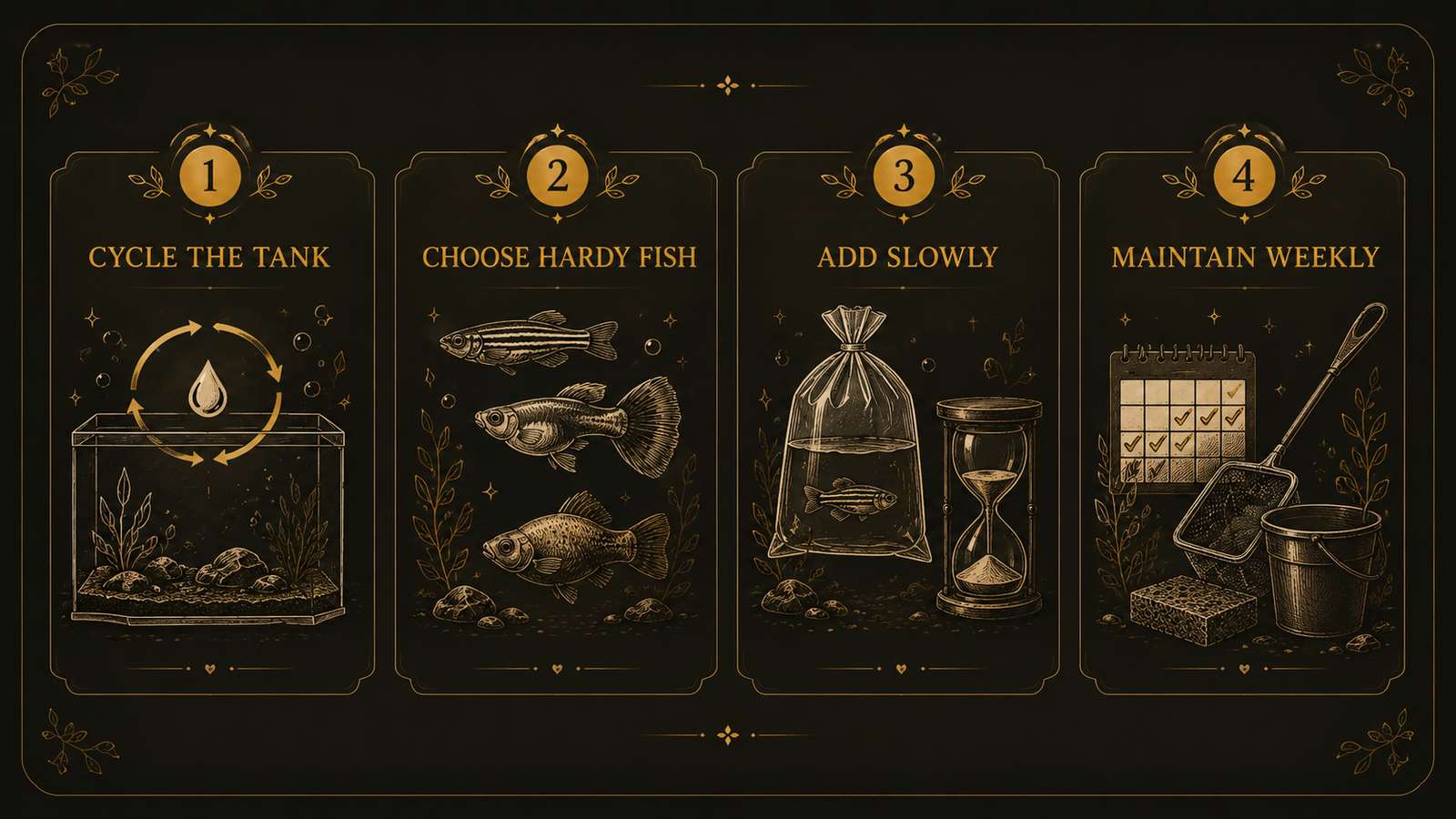
A pet fish rewards a little knowledge enormously: cycle the tank first,
start with hardy freshwater species, add slowly, and keep the water stable, and
you’ll have a thriving aquarium that brings years of quiet enjoyment. Whether you
grow toward a planted community, a marine reef, or a nano tank full of tiny
schooling fish, the fundamentals here carry you the whole way. Start with our aquarium setup
guides and build from there.