
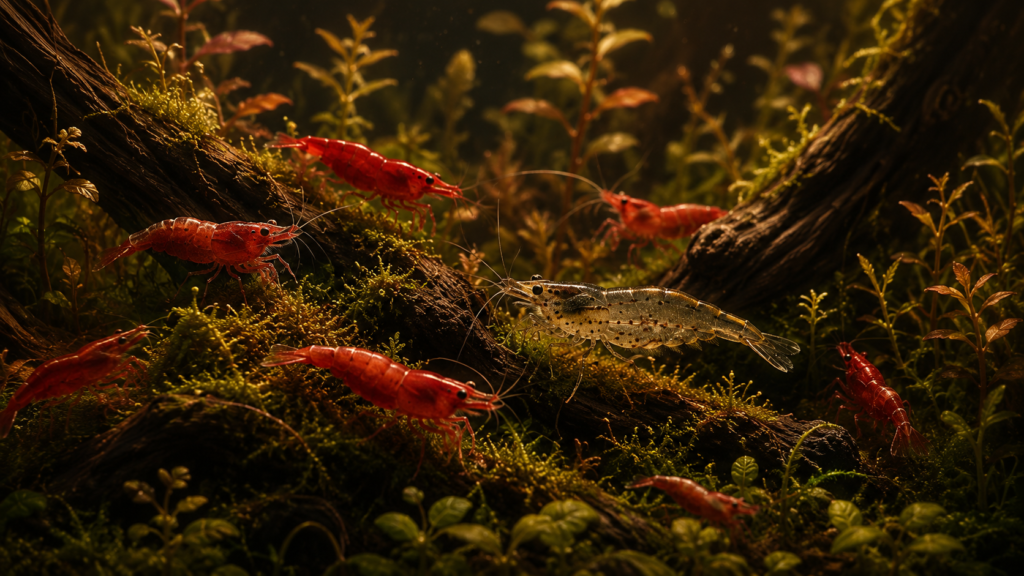
Small, colorful, endlessly busy, and genuinely useful, freshwater shrimp
have become one of the most beloved additions to the planted aquarium — and for
good reason. A good pet shrimp cleans up algae and leftover food, breeds into a
self-sustaining colony, and adds jewel-bright movement to a tank without needing
much space. But shrimp are also more sensitive than most fish, and one invisible
mistake can wipe out a whole colony. This guide covers the seven best pet shrimp
for freshwater aquariums, how to care for them, and the copper warning every
keeper needs to hear.
ItsyBitsyPets is reader-supported. As an Amazon
Associate we earn from qualifying purchases — at no extra cost to you. See our
affiliate
disclosure.
Why keep a pet shrimp?
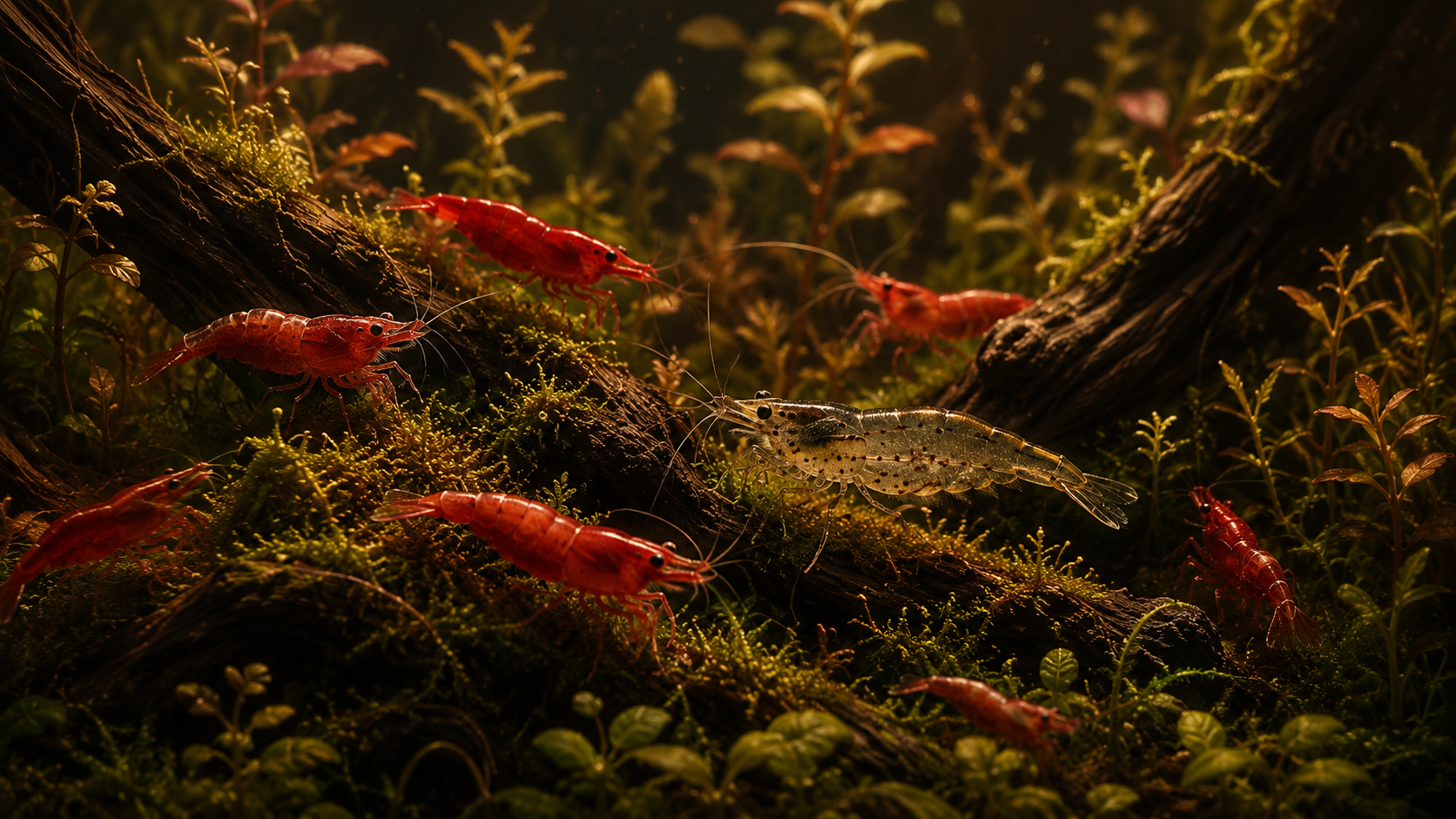
A pet shrimp earns its place three times over. First, it’s a tireless cleanup
crew: shrimp graze algae, pick apart uneaten food, and scavenge decaying plant
matter, keeping a tank tidy in the corners fish never reach. Second, many species
breed readily in a stable tank, so a starter group of a dozen can become a
self-sustaining colony you never have to restock. And third, they’re simply
captivating to watch — constantly foraging, molting, and, in the colorful species,
glowing like tiny gems against a green planted background.
They’re also perfectly suited to small spaces. Most dwarf shrimp are happy in a
nano tank, which makes them an ideal first invertebrate for a desk or shelf setup.
If you’re building that kind of small planted world, our nano tank guide
covers the setup that shrimp thrive in, and they pair beautifully with peaceful
aquarium
snails as a combined cleanup crew.
The one rule that matters most: no copper
Before any species, learn the rule that saves shrimp colonies: copper is
lethal. Shrimp and other invertebrates are killed by copper at concentrations far
too low to affect fish, and it hides in ordinary places — many fish medications,
some plant fertilizers, algaecides, and tap water that has sat in copper plumbing.
Before you add anything to a shrimp tank, read the label, and never dose a
copper-based medication with shrimp present. When in doubt, a water change with
dechlorinated water is always safer than a chemical, a point that specialists at
Aquarium
Co-Op stress for every new shrimp keeper.
The second rule is stability. Shrimp need ammonia and nitrite reading zero at
all times and nitrates kept low, ideally under 10 ppm, so they belong only in a
fully cycled, established tank. A cheap water test kit is non-negotiable shrimp equipment.
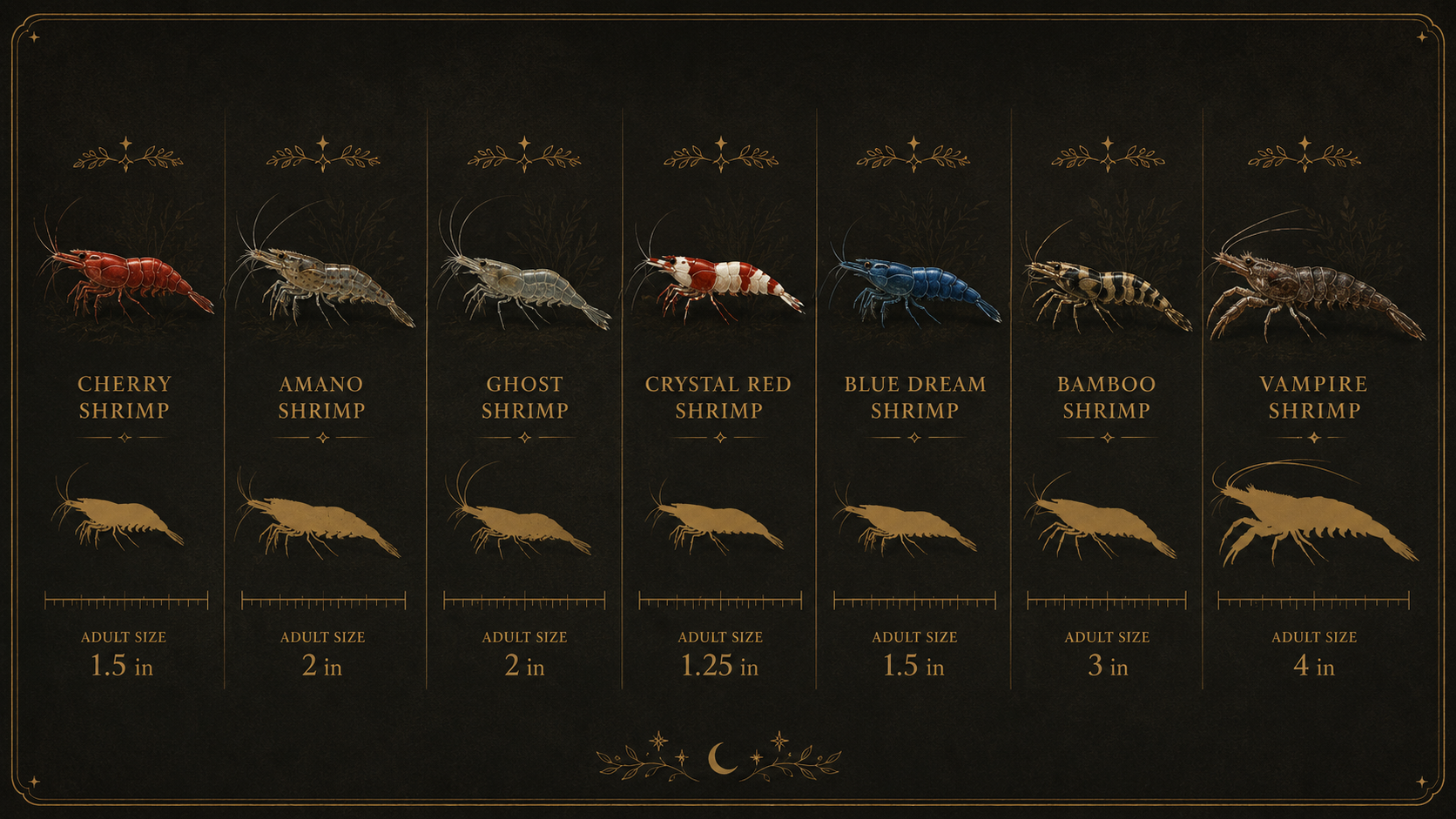
The 7 best pet shrimp for freshwater aquariums
These species range from bulletproof beginner shrimp to fascinating filter
feeders. Every one is widely available and rewarding, but the earlier entries
forgive mistakes best.
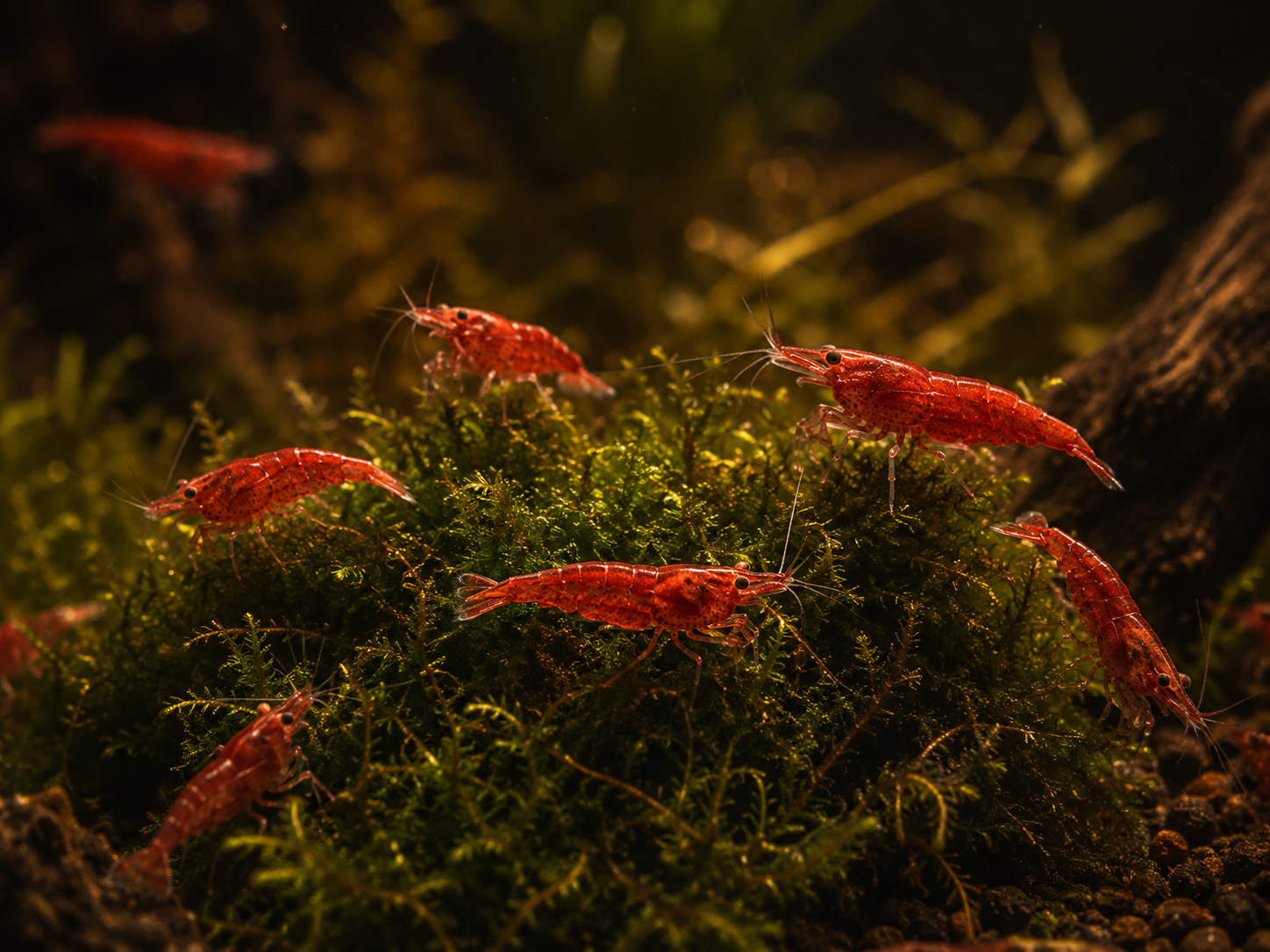
1. Cherry shrimp — the perfect beginner
If you keep one pet shrimp, make it a red cherry shrimp. It’s the best starting
point in the hobby: hardy, adaptable, and quick to breed into a thriving colony in
stable water. The females glow a deep fire-red that pops against green plants, and
a group is happy in a tank of 10 gallons or less. They ask for nothing exotic —
stable, clean water, some plants or moss to graze, and no copper — and they reward
you by multiplying on their own. For most people, cherry shrimp are where the
shrimp obsession begins.
2. Amano shrimp — the algae-eating workhorse
The amano shrimp is the best algae eater in the freshwater hobby, and it earns
that title by tackling the tough stuff — green hair algae and black brush algae
that most other shrimp and fish ignore. Larger and translucent-green with a dotted
racing stripe, it’s a workhorse rather than a showpiece, comfortable in groups in
a 10-gallon or larger tank. One quirk to know: amano shrimp cannot breed in
freshwater, because their larvae need brackish water to develop, so your amanos
won’t overpopulate — you buy the number you want and keep them for their cleanup
muscle.
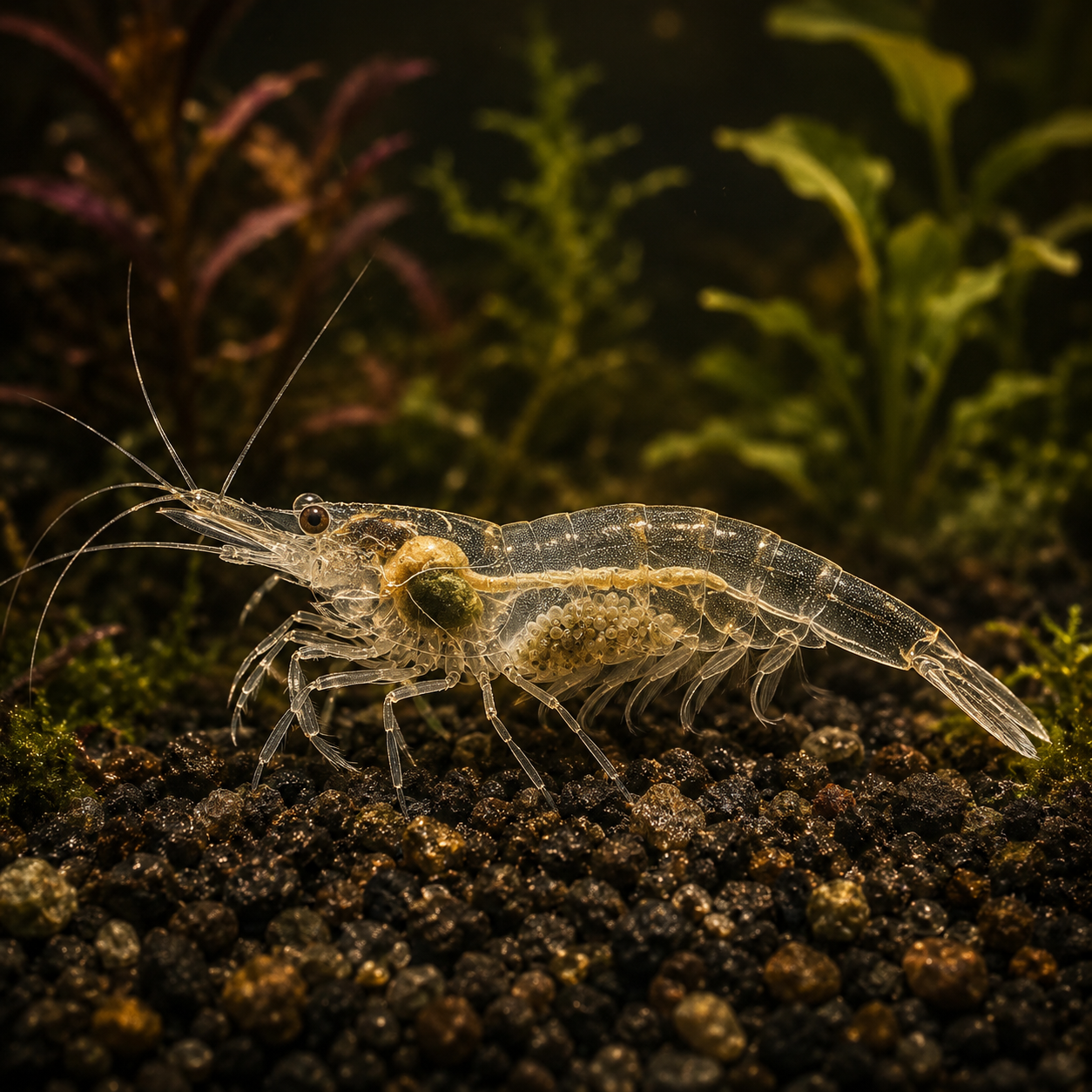
3. Ghost shrimp — the budget scavenger
Ghost shrimp are the cheapest shrimp in the trade and among the hardiest,
which makes them a popular first invertebrate and a handy cleanup crew. Nearly
transparent, they’re fun to watch actually digest their food, and they’re
adaptable about water chemistry as long as extremes are avoided. The trade-off is
lifespan: ghost shrimp are short-lived, often around a year, so think of them as a
low-cost, high-turnover scavenger rather than a long-term colony.
4. Bamboo shrimp — the fascinating filter feeder
The bamboo shrimp does something no other common pet shrimp does: it feeds by
fanning fine particles out of the water current with specialized feather-like
appendages, then sweeping them into its mouth. It’s larger, reddish-brown, and
completely peaceful, and watching it perch in the flow with its fans open is one of
the quiet joys of the hobby. Because it filter-feeds, it needs decent water
movement and a mature tank with enough suspended food, plus more room — a 20-gallon
or larger tank suits it best.
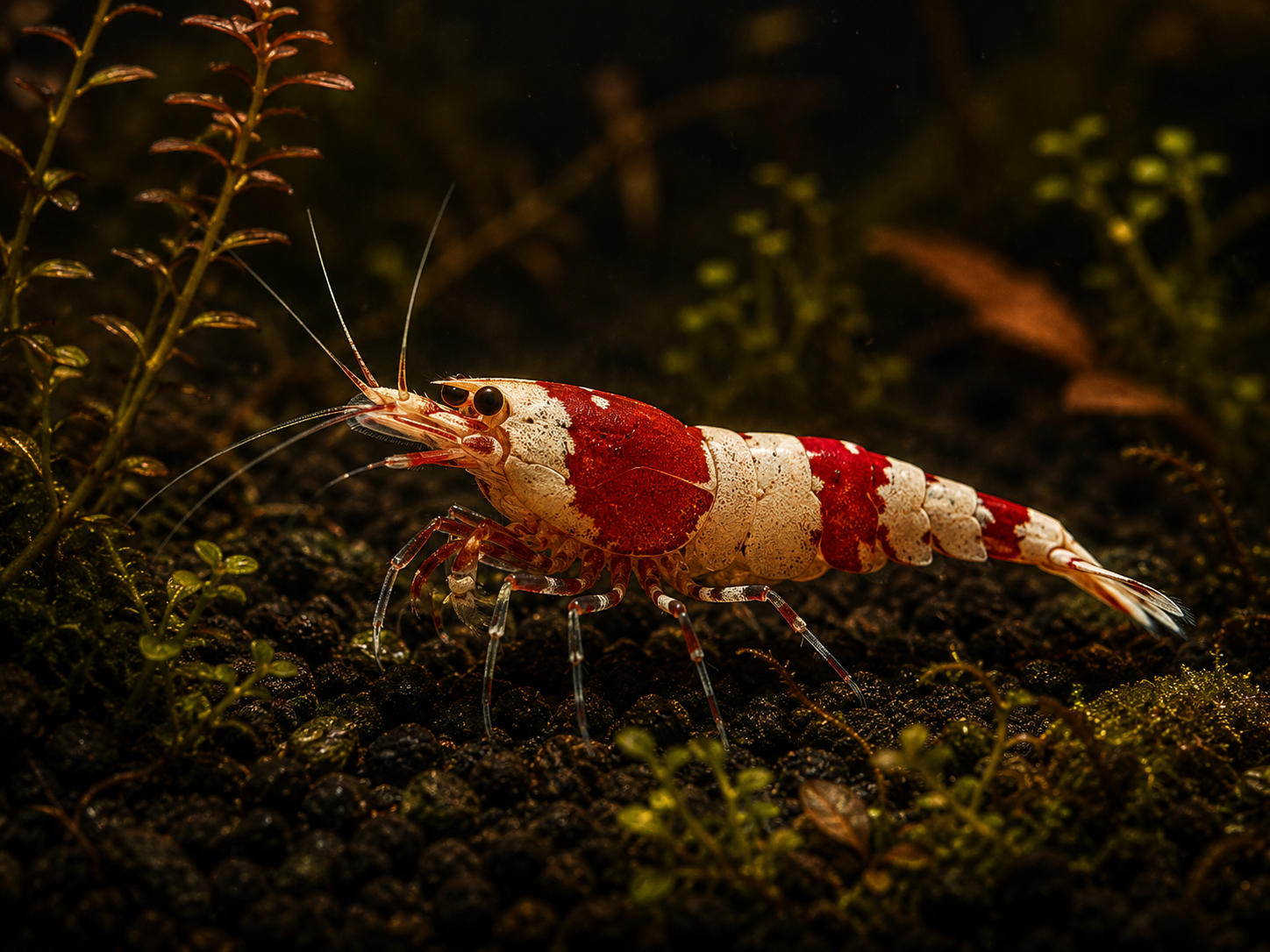
5. Crystal red shrimp — the collector’s jewel
For keepers ready to level up, crystal red shrimp bring striking white-and-red
banding to a nano tank. They’re closely related to cherries but more demanding
about water: they want soft, slightly acidic conditions and rock-steady
parameters, so they reward a keeper who already has stable water dialed in. Kept in
a dedicated 10-gallon or smaller tank with the right chemistry, they breed and form
gorgeous colonies that are a genuine showpiece.
6. Blue dream shrimp — the color variant
Blue dream shrimp are a selectively bred color form of the same species as
cherry shrimp, and they bring a deep, solid blue to the tank while keeping all the
hardiness and easy breeding that make cherries so beloved. Care is identical to
cherry shrimp — stable water, no copper, plants to graze — so they’re a fantastic
choice for a beginner who wants blue instead of red, or for adding a second color
to a shrimp-keeping setup in a separate tank.
7. Vampire shrimp — the gentle giant filter feeder
Rounding out the list, the vampire shrimp (also called the viper or Cameroon
fan shrimp) is a larger, dramatic filter feeder with a hardy reputation and a shy,
peaceful nature. Like the bamboo shrimp, it fans food from the current and prefers
flow and a mature tank, and it can grow impressively large for a shrimp. It hides
while settling in, so give it caves and driftwood, and be patient — once
comfortable, it becomes a fascinating centerpiece invertebrate.
Setting up a shrimp tank
Shrimp keeping is less about equipment and more about stability. Start with a
fully cycled tank — never add shrimp to a new setup — and plant it generously, since
plants and moss give shrimp grazing surfaces, hiding spots, and biofilm to eat. A
gentle sponge
filter is the standard choice because it won’t suck up shrimp or babies the way
a strong intake can. A dark aquarium substrate makes colorful shrimp pop and supports plant
growth, and a small piece of cuttlebone or a mineral supplement keeps the water hard enough for
healthy molting.
Molting is worth understanding, because it’s when shrimp are most vulnerable.
As a shrimp grows it sheds its whole exoskeleton, leaving behind a ghostly empty
shell that beginners often mistake for a dead shrimp — don’t remove it, as the
shrimp will eat it back for its minerals. Steady calcium and stable water make
molts go smoothly; sudden swings can cause a failed molt, which is often fatal. Get
the water right and molting takes care of itself. Our guide on how to start an
aquarium covers the cycling that underpins all of it.
Feeding and tankmates
In an established planted tank, shrimp find much of their own food in algae and
biofilm, but a small supplement keeps a colony thriving. Offer a sinking shrimp food or
blanched vegetables a couple of times a week, feeding only what’s cleaned up in a
few hours — overfeeding fouls the water shrimp depend on. As for tankmates, the
golden rule is peaceful and small: shrimp mix beautifully with snails, nano fish,
and other shrimp, but most fish will happily eat baby shrimp, and larger or
aggressive fish will hunt adults too. A species-only shrimp tank, or one with only
tiny peaceful fish, is where a colony truly flourishes.
Common pet shrimp mistakes to avoid
Most shrimp losses trace back to a handful of avoidable errors, and knowing
them upfront saves a colony. The biggest is adding shrimp to a tank that isn’t
fully cycled or is too new — shrimp are far less tolerant of ammonia and nitrite
than hardy fish, and an uncycled tank kills them quickly. The second, as covered
above, is copper exposure from medications or fertilizers. The third is
temperature and parameter swings: dumping shrimp straight from a bag into
different water shocks them, so always drip-acclimate new shrimp slowly over an
hour, as the freshwater shrimp care guidance from Aqueon
recommends.
A quieter mistake is impatience with breeding. New keepers often assume their
shrimp have failed to breed when really the colony is just establishing — give a
stable cherry shrimp tank a few months and the population usually takes off on its
own. Resist the urge to constantly tinker with the water; shrimp reward a keeper
who sets up stable conditions and then largely leaves them alone. Overfeeding and
overcleaning both do more harm than good. With shrimp, boring and steady is
exactly the goal.
Frequently asked questions
What is the easiest pet shrimp for beginners?
The red cherry shrimp, without question. It’s hardy, forgiving about water
chemistry within reason, breeds on its own, and is inexpensive — the ideal first
shrimp.
Can I keep shrimp with fish?
Yes, but only with small, peaceful fish, and expect that baby shrimp may be
eaten. Nano fish like ember tetras or a few peaceful species work; anything large
or aggressive does not.
How many shrimp should I start with?
Start with a group of at least ten of a breeding species like cherry shrimp.
Shrimp are social and a larger starting colony breeds faster and establishes more
reliably than a handful.
Start with hardy cherry shrimp in a stable, cycled, copper-free tank, and
pet shrimp turn out to be some of the most rewarding low-effort animals in the
hobby — a self-sustaining, jewel-bright cleanup crew that practically keeps itself.
From there, the colorful variants and fascinating filter feeders are an easy next
step. For the peaceful planted setup shrimp love best, our aquarium guides
walk through every fundamental.