
This post contains affiliate links. If you purchase through our links, we may earn a small commission at no extra cost to you. See our Affiliate Disclosure for details.
Terrarium plants transform a simple glass enclosure into a thriving miniature ecosystem. Whether you’re building a bioactive vivarium for reptiles, a lush habitat for dart frogs, or a stunning standalone display terrarium, choosing the right plants is the foundation of success. The best terrarium plants are hardy, humidity-loving species that thrive in enclosed environments with limited airflow and indirect light — and in this guide, we’ll cover every option worth considering.
Bioactive setups have exploded in popularity among reptile and amphibian keepers because they create self-sustaining environments where live plants, microfauna, and beneficial bacteria work together to maintain clean, healthy conditions. According to Wikipedia’s overview of terrariums, these enclosed plant ecosystems have been cultivated since the Victorian era. Today’s bioactive hobbyists have taken the concept further, combining terrarium plants with cleanup crews like springtails and isopods to create low-maintenance habitats that benefit both the animals and the keeper.
Best Terrarium Plants for Beginners
If you’re new to bioactive setups, start with forgiving species that tolerate a range of conditions. These terrarium plants handle beginner mistakes like overwatering, low light, and temperature fluctuations without dying on you.
Pothos (Epipremnum aureum)
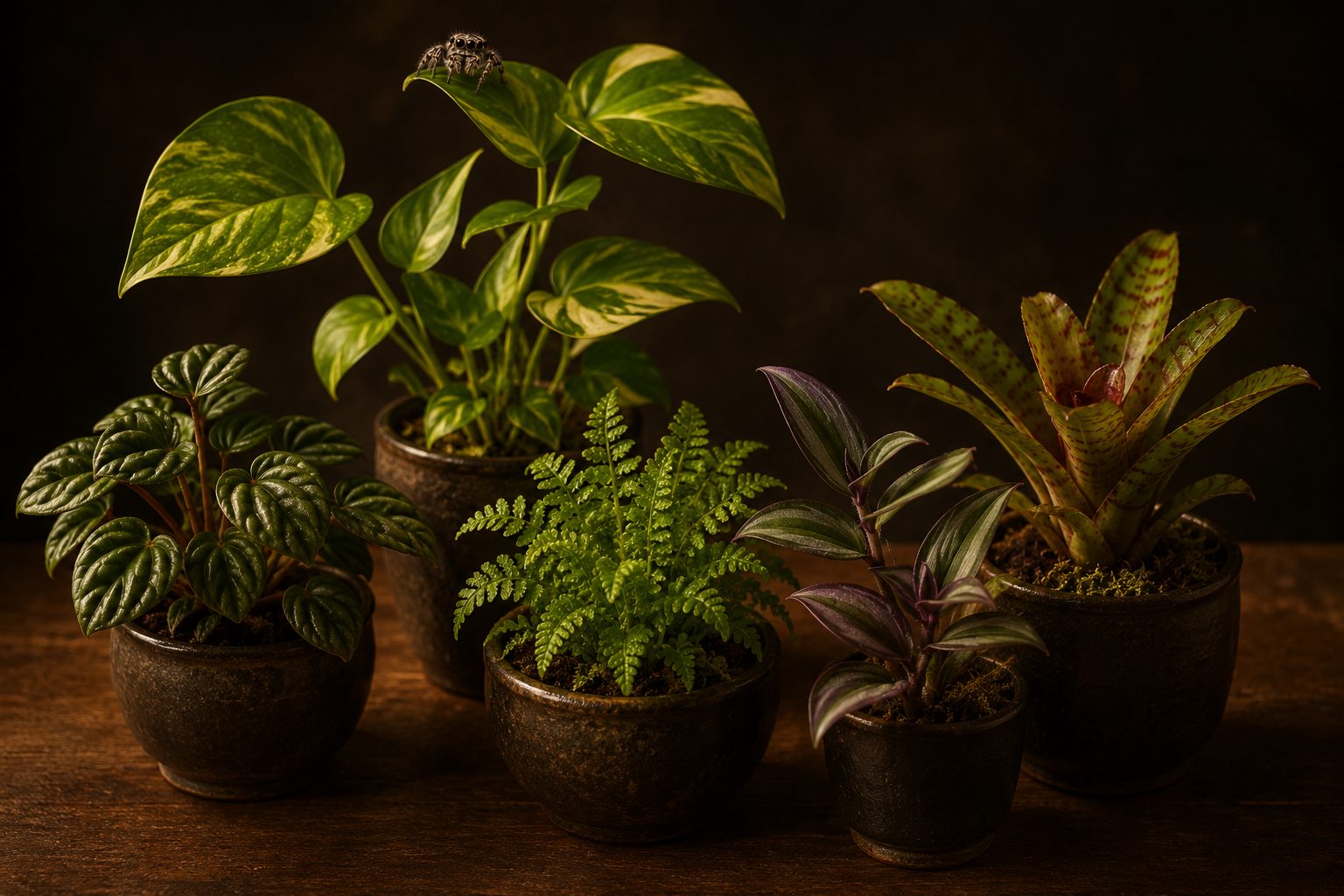
Pothos is arguably the single best terrarium plant for beginners. It’s nearly indestructible, grows quickly in high humidity, and tolerates low to moderate light. The trailing vines create natural climbing structures for arboreal species like crested geckos and jumping spiders. Pothos roots easily in water or substrate, spreads aggressively, and helps absorb excess nitrates from animal waste. Golden pothos, neon pothos, and marble queen are all excellent varieties for bioactive builds.
Spider Plant (Chlorophytum comosum)
Spider plants are non-toxic, fast-growing, and incredibly resilient. They produce arching leaves that provide cover for ground-dwelling animals and look fantastic in larger terrariums. Spider plants tolerate a wide humidity range and bounce back quickly from damage caused by active reptiles. They also produce plantlets (baby spider plants) that you can transplant into other enclosures.
Wandering Dude (Tradescantia zebrina)
Tradescantia is a colorful, fast-growing trailing plant with striking purple and silver striped leaves. It thrives in the warm, humid conditions found in most tropical terrariums and provides dense ground cover. Cuttings root within days when placed directly in moist substrate, making it one of the easiest terrarium plants to propagate. It does require moderate light to maintain its vibrant coloration.
Best Terrarium Plants for Tropical Bioactive Setups
Tropical bioactive enclosures for animals like crested geckos, dart frogs, day geckos, and chameleons need terrarium plants that love warmth (75–85°F) and high humidity (60–90%). These species are tailor-made for those conditions.
Bromeliads (Neoregelia, Vriesea, Guzmania)
Bromeliads are the crown jewels of tropical terrarium plants. Their central cup collects water, creating natural drinking pools for dart frogs and small geckos. Neoregelia species are the most popular for bioactive builds because they stay compact, produce vibrant colors, and tolerate lower light levels. Mount them on cork bark or driftwood using sphagnum moss — their roots are primarily for anchoring, not nutrient absorption.
Ferns (Nephrolepis, Asplenium, Davallia)
Ferns are quintessential terrarium plants that thrive in the consistently moist, humid conditions of enclosed setups. Boston ferns (Nephrolepis exaltata) work well in larger enclosures, while bird’s nest ferns (Asplenium nidus) provide broad, sturdy leaves that small animals can perch on. Rabbit’s foot ferns (Davallia) feature fuzzy rhizomes that add textural interest and do well mounted on hardscape. Most ferns prefer indirect light and consistent moisture.
Pillow Moss and Sheet Moss (Leucobryum, Hypnum)
Live moss is essential for creating the lush, natural carpet that defines a beautiful bioactive terrarium. Pillow moss forms rounded mounds that look stunning as ground cover, while sheet moss spreads flat across substrate and hardscape. Both types maintain humidity, provide hiding spots for microfauna, and give the terrarium an established, forest-floor appearance. Keep moss consistently moist but not waterlogged for the best results.
Peperomia Species
Peperomia is a diverse genus with hundreds of species perfect for terrarium use. Peperomia prostrata (string of turtles) creates delicate trailing displays, while Peperomia caperata offers textured, compact rosettes. Most peperomia species stay small, tolerate low light, and thrive in the warm humidity of tropical setups. Their succulent-like leaves store water, making them more forgiving of inconsistent watering than many other terrarium plants.
Best Terrarium Plants for Arid and Semi-Arid Setups
Not all bioactive setups are tropical. Bearded dragons, leopard geckos, and other desert-dwelling species benefit from terrarium plants adapted to drier conditions with lower humidity and brighter light.
Haworthia and Gasteria
These small succulents are perfect for arid bioactive terrariums. They tolerate the heat and bright lighting typical of desert setups while staying compact enough not to overcrowd the enclosure. Haworthia species like H. fasciata (zebra plant) add visual interest with their striped, textured leaves. Both genera are non-toxic and handle the occasional bumping from active lizards.
Tillandsia (Air Plants)
Air plants require no soil at all, making them incredibly versatile terrarium plants for arid setups. Mount them on driftwood, rocks, or cork bark to create elevated visual interest. They absorb moisture and nutrients through their leaves and only need occasional misting. Tillandsia ionantha and T. xerographica are popular choices that add sculptural beauty to desert vivaria.
Aloe Vera and Dwarf Aloe
Aloe species are tough, drought-tolerant terrarium plants that handle the high temperatures and low humidity of arid setups. Dwarf aloe varieties stay small enough for most enclosures while providing attractive rosette forms. They need well-draining substrate and bright light to prevent stretching. Aloe is non-toxic to most reptiles, though the bitter sap usually deters any nibbling.
Terrarium Plants for Aquatic and Paludarium Setups
Paludariums — enclosures that combine land and water areas — need terrarium plants that can handle partial or full submersion. These species bridge the gap between aquatic and terrestrial environments.
Java Moss (Taxiphyllum barbieri)
Java moss is the go-to aquatic plant for paludarium water features. It attaches to rocks and driftwood, grows in low light, and creates natural filtration. Above the waterline, it transitions into an emersed growth form that looks equally lush. Java moss provides excellent hiding spots for shrimp and small fish in the aquatic portion of your setup. For more on aquatic setups, explore our aquatic pets guide.
Anubias Species
Anubias are bulletproof aquatic plants that grow equally well submerged or emersed. Their thick, leathery leaves resist damage from curious animals, and they grow slowly enough that they won’t take over your setup. Attach them to hardscape rather than burying their rhizomes in substrate. Anubias nana and Anubias barteri are the most common species used in paludarium builds. Check out our aquascaping section for more ideas.
How to Choose Terrarium Plants for Your Setup
Selecting the right terrarium plants depends on three main factors: the animal species you’re housing, the climate conditions in your enclosure, and the available light. Start by matching plants to your enclosure’s temperature and humidity range. Tropical frogs need tropical plants; desert lizards need arid-adapted species. Then consider the size of your enclosure — small nano terrariums need miniature plants, while large vivaria can accommodate full-sized ferns and bromeliads.
Always verify that any terrarium plants you choose are non-toxic to your specific animal. While most common terrarium plants are safe, some popular houseplants like dieffenbachia and philodendron can be problematic for certain species. When in doubt, stick to the proven safe options listed in this guide.
Terrarium Plants Care Tips for Bioactive Success
Lighting Requirements
Most terrarium plants need 10–12 hours of light daily. LED grow lights designed for terrariums provide the right spectrum without generating excessive heat. For tropical setups, a 6500K daylight spectrum works well for most plant species. Position lights so they illuminate the plants without creating hot spots that could stress your animals.
Substrate and Drainage
A proper bioactive substrate is crucial for terrarium plants to establish strong root systems. The standard approach uses a drainage layer of clay balls or lava rock, topped with a mesh barrier, then an ABG mix (tree fern fiber, peat moss, charcoal, orchid bark, and sphagnum moss). This layered approach prevents root rot while maintaining consistent moisture levels throughout the substrate.
Recommended: Zoo Med Terrarium Moss — a natural top-dressing that holds moisture, softens the substrate layer, and finishes plantings beautifully.
Humidity and Watering
In sealed or semi-sealed terrariums, the water cycle is largely self-sustaining. Moisture evaporates from the substrate, condenses on the glass, and returns to the soil. For open-top or well-ventilated setups, you’ll need to mist regularly — usually once or twice daily for tropical species. Automated misting systems take the guesswork out of humidity management and are well worth the investment for serious builders.
Pruning and Maintenance
Regular pruning keeps terrarium plants looking their best and prevents aggressive growers from smothering slower species. Trim pothos vines, tradescantia runners, and moss overgrowth monthly. Remove any dead or yellowing leaves promptly to prevent mold growth. Most trimmings can be replanted directly in the terrarium or used to start new builds.
Common Mistakes with Terrarium Plants
The most frequent mistake beginners make is overcrowding their terrarium with too many plants at once. Start with 3–5 species and allow them to establish before adding more. Overwatering is another common problem — bioactive substrates should be damp, not soggy. Also avoid using plants treated with pesticides or systemic insecticides, as these chemicals can be lethal to the microfauna (springtails and isopods) that make bioactive setups function. Always quarantine new plants for at least two weeks and rinse roots thoroughly before adding them to an enclosure with animals.
Where to Buy Terrarium Plants
Specialty online retailers like Josh’s Frogs, Glass Box Tropicals, and NEHERP (New England Herpetoculture) offer terrarium plants specifically grown for bioactive use — meaning they’re free of harmful pesticides and sized appropriately for enclosures. Local garden centers can work too, but you’ll need to thoroughly clean and quarantine any plants before introducing them to a vivarium with animals. Avoid big box store plants that have been treated with systemic pesticides, as these remain in the plant tissue for months.
Recommended: Mini Terrarium Ferns (3 Live Plants) — a ready-made variety pack of terrarium-sized plants — an easy way to start without hunting nurseries for miniatures.
Final Thoughts
The right terrarium plants do more than look beautiful — they create healthier environments for your animals, support beneficial microfauna, and reduce maintenance time. Whether you’re setting up your first bioactive crested gecko vivarium or building an elaborate paludarium, start with proven species from this guide and expand from there. For more setup advice, browse our complete care guides or explore specific habitat guides like our invertebrates section for enclosure inspiration.