
This post contains affiliate links. If you purchase through our links, we may earn a small commission at no extra cost to you. See our Affiliate Disclosure for details.
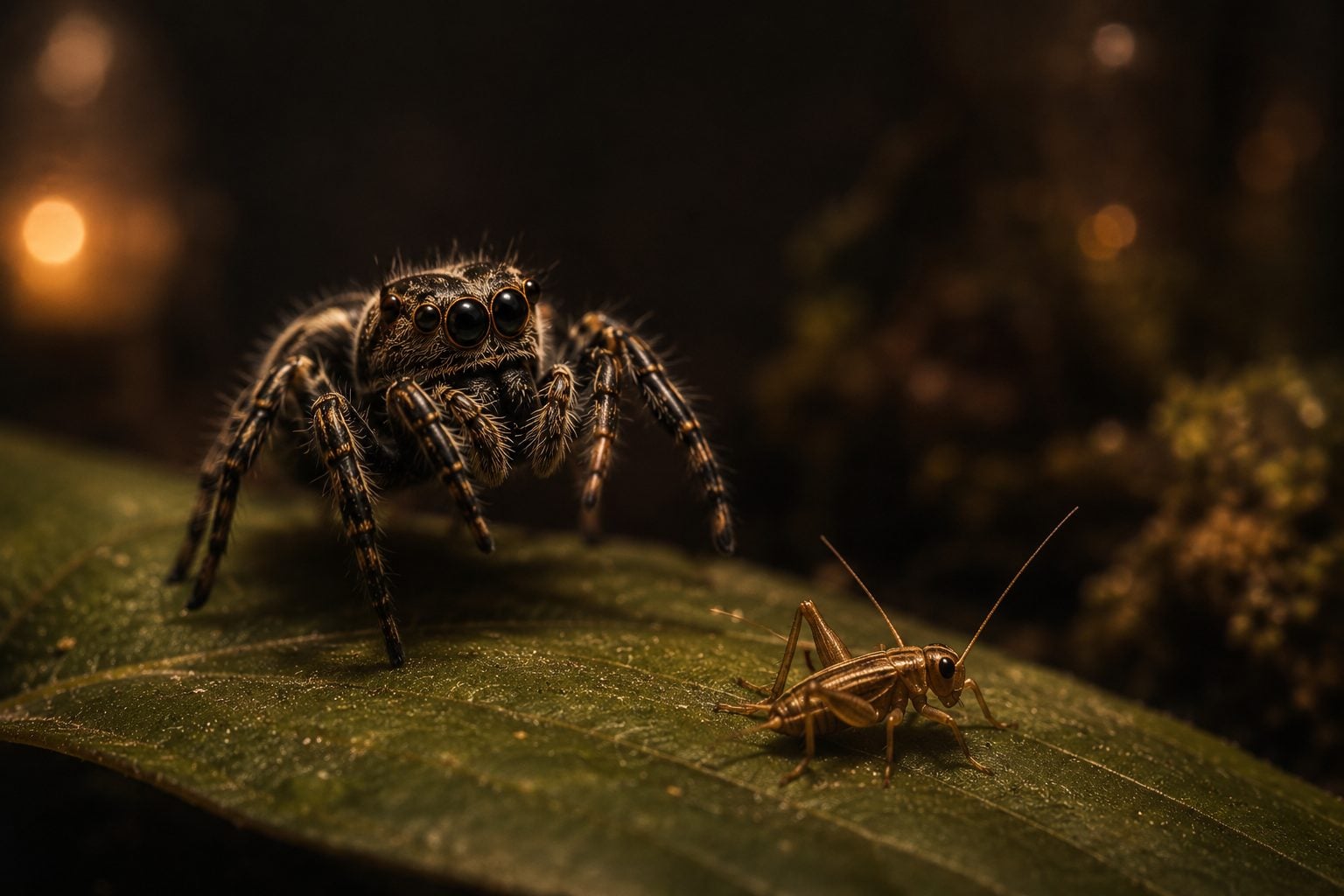
What do jumping spiders eat? It’s one of the first questions every new spider owner asks — and getting the answer right is key to keeping your pet healthy and thriving. Whether you just brought home your first Phidippus regius or you’re caring for a tiny Salticus scenicus you found on your windowsill, understanding what do jumping spiders eat in both the wild and captivity is essential for keeping them healthy, active, and thriving.
Unlike many arachnids that sit passively in webs waiting for prey, jumping spiders are active hunters with exceptional eyesight. According to research published by the Encyclopedia Britannica, they stalk, pounce, and overpower their meals — which means their diet needs to match that high-energy lifestyle. In this guide on what do jumping spiders eat, we’ll cover everything from the best feeder insects to feeding schedules, portion sizes, and common mistakes to avoid.
The Natural Diet of Jumping Spiders
In the wild, jumping spiders eat a surprisingly diverse range of prey. They’re opportunistic predators found on every continent except Antarctica, and their diet varies based on their size, habitat, and what’s available. Wild jumping spiders commonly eat flies, mosquitoes, gnats, small moths, ants, aphids, and even other spiders.
The Feeding Kit
Feeder culture, something to hold the food, and something to hold the feeder. That’s genuinely all of it.
- Josh’s Frogs hydei fruit fly culture — flightless, correctly sized, and it keeps producing for weeks
- Extra-long feeding tongs — keeps your fingers out of the enclosure on feeding day
- Tiny feeding dishes (3-pack) — stops escapees wandering off into the substrate
Larger species like the bold jumping spider (Phidippus audax) and the regal jumping spider (Phidippus regius) can take down prey nearly their own size. Researchers have documented them catching small crickets, beetles, and even the occasional small lizard or hummingbird — though those cases are rare and mostly involve larger tropical species.
What makes jumping spiders unique is their hunting strategy. They use their massive anterior median eyes to judge distance with incredible precision, then leap up to 50 times their body length to land on prey, as documented by arachnology researchers. This active hunting style burns significant energy, which is why proper nutrition matters so much in captivity.
Best Feeder Insects for Pet Jumping Spiders
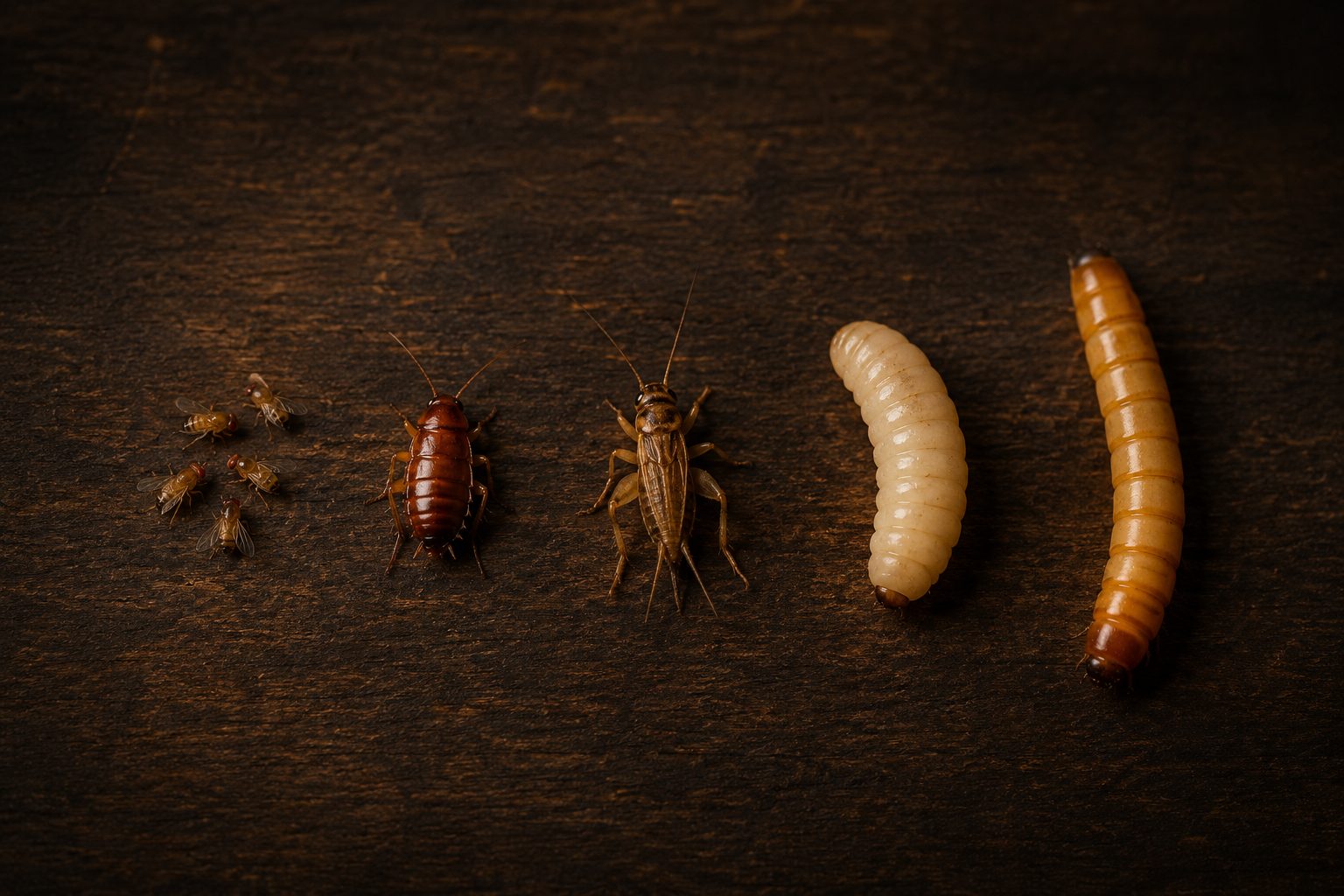
When keeping a jumping spider as a pet, you’ll want to offer feeder insects that are nutritious, appropriately sized, and easy to source. Here are the top options ranked by how well jumping spiders respond to them. Knowing what do jumping spiders eat in terms of specific prey items will help you provide the best nutrition possible.
Fruit Flies (Drosophila) — The #1 Staple Food
Fruit flies are the gold standard for feeding jumping spiders, especially smaller species and spiderlings. Flightless fruit flies (Drosophila hydei and Drosophila melanogaster) are available at most pet stores and online suppliers. The flightless varieties are essential — they can’t escape and your spider can easily catch them.
D. melanogaster (smaller) works best for spiderlings and tiny species. D. hydei (larger) is ideal for juvenile and adult spiders of small to medium species. A single culture of flightless fruit flies typically lasts 3 to 4 weeks and costs very little, making them extremely cost-effective.
Pinhead Crickets — Great for Medium Spiders
For larger jumping spider species like Phidippus regius, pinhead crickets (newly hatched, about 1/8 inch long) make excellent prey. They trigger strong hunting responses because they move erratically, which excites the spider’s predatory instincts. Only offer crickets that are smaller than your spider’s body length — a cricket that’s too large can actually injure or stress your spider.
Recommended: NutriCricket Small Live Banded Crickets (1/4”–3/8”) — correctly sized live crickets for adult jumpers, shipped right to your door.
Small Mealworms and Waxworms — Occasional Treats
Mealworms and waxworms can be offered occasionally to larger jumping spiders, but they shouldn’t be a primary food source. Waxworms in particular are high in fat, making them more of a treat than a staple. Think of them like the candy of the feeder insect world. Offer one every week or two as a supplement, not a main course.
Blue Bottle Flies and House Flies — Advanced Option
Blue bottle fly spikes (larvae) can be purchased and hatched at home. Once they emerge as adult flies, they’re a fantastic food source that closely mimics what jumping spiders hunt in the wild. The downside is that adult flies can escape easily, so you’ll need to work in an enclosed space or chill them in the refrigerator for a few minutes to slow them down before feeding.
Springtails and Isopods — For Spiderlings Only
Tiny spiderlings (first and second instar) may be too small for even D. melanogaster fruit flies. In these cases, springtails make an excellent first food. They’re tiny, soft-bodied, and easy for baby spiders to catch. You can culture springtails at home on charcoal with brewer’s yeast as food — they reproduce quickly and are essentially a self-sustaining food source.
How Often Should You Feed a Jumping Spider?
Feeding frequency is just as important as knowing what do jumping spiders eat. It depends on your spider’s age, size, and species. Here’s a general schedule that works for most jumping spider keepers.
Spiderlings (1st-3rd instar): Feed every 1 to 2 days. Young spiders are growing rapidly and have high metabolic demands. Offer 1 to 2 fruit flies or a few springtails per feeding. Remove any uneaten prey after 24 hours.
Juveniles (4th-6th instar): Feed every 2 to 3 days. At this stage, you can start introducing slightly larger prey like D. hydei fruit flies or pinhead crickets. Offer 1 to 3 prey items per feeding depending on size.
Adults: Feed every 3 to 5 days. Adult jumping spiders have slower metabolisms and don’t need daily feeding. One or two appropriately sized prey items per feeding session is plenty. You’ll notice adults often refuse food when they’re not hungry — this is completely normal.
Our pick
a hydei fruit fly culture — flightless and correctly sized for anything from a sling upward
Pre-molt spiders: Stop feeding entirely. When your spider is preparing to molt, it will typically refuse food, become lethargic, and its abdomen may appear darker or duller. Don’t offer prey during this time — an uneaten cricket left in the enclosure could actually harm a molting spider.
How to Tell If Your Jumping Spider Is Hungry
Jumping spiders are remarkably communicative about their appetite if you know what to look for. A hungry jumping spider will actively track movement with its large front eyes, adopt a stalking posture (low body, legs slightly spread), and pounce immediately when prey is introduced. Their abdomen may also appear smaller or slightly wrinkled compared to a well-fed spider.
A spider that’s full or not interested will often ignore prey entirely, or may even retreat to its web sac to rest. Some keepers on the r/jumpingspiders subreddit describe their spiders literally turning their backs on fruit flies — a clear “not interested” signal. If your spider refuses food for more than a week while not in pre-molt, check your enclosure temperature and humidity, as environmental factors can suppress appetite.
Proper Prey Size: The Golden Rule
The most important feeding rule is this: never offer prey larger than your spider’s abdomen. Ideally, prey should be about half the size of your spider’s body or smaller. Oversized prey can injure your spider, cause stress, or simply be ignored. This is especially critical for spiderlings, which can be overwhelmed by prey that seems small to us but is enormous relative to their body.
The Feeding Kit
Feeder culture, something to hold the food, and something to hold the feeder. That’s genuinely all of it.
- Josh’s Frogs hydei fruit fly culture — flightless, correctly sized, and it keeps producing for weeks
- Extra-long feeding tongs — keeps your fingers out of the enclosure on feeding day
- Tiny feeding dishes (3-pack) — stops escapees wandering off into the substrate
When in doubt, go smaller. A jumping spider that takes down three small fruit flies gets more nutrition (and enrichment) than one struggling with an oversized cricket. Remember that in the wild, jumping spiders primarily eat small prey — they’re precision hunters, not brute force predators.
Water and Hydration for Jumping Spiders
While not technically “food,” hydration is just as important as feeding. Jumping spiders get most of their water from their prey, but they also drink water droplets directly. Lightly mist one side of the enclosure every 1 to 2 days with a small spray bottle. You should see tiny water droplets forming on the walls — your spider will drink from these.
Don’t over-mist or leave standing water in the enclosure. Jumping spiders are not aquatic and excess moisture can lead to mold growth or drowning, particularly for spiderlings. A light misting that evaporates within a few hours is perfect. Some keepers use a damp cotton ball placed in a bottle cap as an alternative water source.
Recommended: Daerky Jumping Spider Water Dispenser — a magnetic hanging dispenser that keeps fresh water available without soaking the enclosure — a favorite with our readers.
Common Feeding Mistakes to Avoid
Leaving uneaten prey in the enclosure overnight. Live crickets and mealworms can bite or stress a resting spider. Always remove uneaten prey within a few hours, especially crickets. Fruit flies are generally safe to leave since they can’t harm the spider.
Our pick
long feeding tongs — for the days you’re offering something bigger than a fly
Feeding wild-caught insects. Bugs from your garden or house may carry pesticides, parasites, or diseases that can kill your spider. Always use captive-bred feeder insects from a reputable supplier. This is non-negotiable for the health of your pet.
Overfeeding. A spider with a round, tight, shiny abdomen is well-fed. A spider with an abdomen that looks like it might burst is overfed. Obesity in jumping spiders can shorten their lifespan and make molting more difficult. If your spider’s abdomen is significantly larger than its cephalothorax (the front body section), reduce feeding frequency.
Feeding during or right after a molt. Freshly molted spiders have soft exoskeletons and are extremely vulnerable. Wait at least 3 to 5 days after a molt before offering food, and start with something small and easy to catch. Their fangs need time to harden before they can effectively capture and consume prey.
Can Jumping Spiders Eat Dead Insects?
Generally, jumping spiders prefer live prey because movement triggers their hunting instinct. However, some keepers have success with pre-killed insects by using tweezers or tongs to gently wiggle the dead insect in front of the spider’s face, simulating movement. This technique works best with spiders that are already comfortable with their keeper.
This method is sometimes called “tong feeding” in the jumping spider community, and it’s become increasingly popular on platforms like YouTube and TikTok where jumping spider content has exploded in popularity. Cities like Portland, Austin, and Denver have particularly active jumping spider keeper communities, with local exotic pet shops stocking supplies specifically for spider owners.
Recommended: Stainless Feeding Tongs (2-Pack, Straight + Curved) — the safe way to offer pre-killed prey and remove uneaten leftovers without stressing your spider.
Foods to Never Feed a Jumping Spider
Beyond understanding what do jumping spiders eat safely, it’s critical to know what to avoid. Some foods are dangerous or simply inappropriate for jumping spiders. Never feed your spider any human food, including meat, fruit, or sugar water. While there are viral videos online of spiders appearing to “drink” honey or juice, these are not nutritionally appropriate and can harm your spider.
Also avoid ants (they can bite and contain formic acid), fireflies and lightning bugs (toxic to spiders — the lucibufagins they contain are lethal), bees and wasps (obvious stinging danger), and any insect you’ve found dead outside (likely pesticide exposure or disease).
Setting Up a Feeder Insect Colony
If you’re keeping jumping spiders long-term, culturing your own feeder insects saves money and ensures a constant food supply. Flightless fruit fly cultures are the easiest to maintain. You’ll need a 32-ounce deli cup with a ventilated lid, fruit fly culture medium (available online or you can make your own with instant mashed potatoes, vinegar, and sugar), and a starter culture of flies.
Start a new culture every 2 to 3 weeks by transferring a few dozen flies to fresh medium. This rotation ensures you always have producing cultures. Keep cultures at room temperature (72°F to 78°F) away from direct sunlight. A single culture produces hundreds of flies over its 3 to 4 week productive lifespan, costing just pennies per feeding session.
Recommended: Josh’s Frogs Hydei Fruit Fly Culture Kit (Makes 10 Cultures) — everything you need to breed your own hydei feeders at home — far cheaper than buying cultures one at a time.
Feeding Schedule Quick Reference
| Spider Life Stage | Best Food | Frequency | Amount |
|---|---|---|---|
| Spiderling (1st-2nd instar) | Springtails, D. melanogaster | Every 1-2 days | 1-3 tiny prey |
| Spiderling (3rd instar) | D. melanogaster fruit flies | Every 1-2 days | 2-3 flies |
| Juvenile (4th-6th instar) | D. hydei fruit flies, pinhead crickets | Every 2-3 days | 1-3 prey items |
| Sub-adult | D. hydei, small crickets, waxworms | Every 3-4 days | 1-2 prey items |
| Adult | D. hydei, crickets, blue bottle flies | Every 3-5 days | 1-2 prey items |
| Pre-molt | None — do not feed | N/A | N/A |
Where to Buy Feeder Insects
The Feeding Kit
Feeder culture, something to hold the food, and something to hold the feeder. That’s genuinely all of it.
- Josh’s Frogs hydei fruit fly culture — flightless, correctly sized, and it keeps producing for weeks
- Extra-long feeding tongs — keeps your fingers out of the enclosure on feeding day
- Tiny feeding dishes (3-pack) — stops escapees wandering off into the substrate
You can find feeder insects at most pet stores that carry reptile supplies, but online suppliers typically offer better variety, fresher cultures, and lower prices. Specialty exotic pet suppliers carry feeder insects specifically sized for jumping spiders, which can be harder to find at big box pet stores that primarily stock feeders for reptiles and amphibians.
When ordering online, plan ahead — live insects ship Monday through Wednesday in most cases to avoid weekend transit delays. In summer months, add a cold pack to your order to prevent die-offs during shipping. In winter, heat packs prevent freezing. Most reputable suppliers include these automatically when temperatures warrant it.
Stocking up? Browse the complete jumping spider supplies guide for everything your spider needs in one place.
Final Thoughts
Now that you know what do jumping spiders eat, you’ll find that feeding time is one of the most entertaining aspects of keeping these fascinating pets. Watching them track, stalk, and pounce on prey never gets old, and providing proper nutrition ensures your spider stays healthy, colorful, and active throughout its life. Start with flightless fruit flies, match prey size to your spider’s body, feed on a consistent schedule, and you’ll have a happy, well-fed jumping spider for years to come.
For more on jumping spider husbandry, check out our complete jumping spider care guide, learn about the different invertebrates you can keep as pets, or browse our full care guides library for all types of small and exotic pets.